




Twelve years usually pass between the high school leaving exam and the stamp with the inscription "specialist psychiatrist", and most of these decisions are made without knowing what work in the ward is like. This is the crux of the problem: you choose medicine at the age of nineteen, you choose your specialization seven years after that decision, and you can find out whether psychiatry suits your temperament only during a postgraduate internship or during your first shifts. In addition, there is something that is rarely talked about when planning a career: the rules of the game change throughout. In June 2026, the Ministry of Health submitted for consultation a project that shortens the postgraduate internship by more than half and eliminates the public database of questions for LEK. Anyone who starts medicine today ends it in a different system than they expected.
Who is a psychiatrist and how does he differ from a psychologist and psychotherapist?
A psychiatrist is a doctor who, after six years of medical studies, completed five years of specialization and passed the State Specialization Examination. This definition sounds dry, but it has very specific legal consequences: only a psychiatrist can order pharmacotherapy, conduct electroconvulsive therapy, issue a sick leave, issue a decision for ZUS or the court, as well as make a decision on admission to hospital without the patient's consent under the Act of August 19, 1994 on mental health protection. No other helping profession has these credentials.
The psychologist completes five years of psychology studies. Since January 2026, this profession has been regulated separately: the Act of January 23, 2026 on the profession of psychologist and the professional self-government of psychologists introduces a register, the right to practice the profession and disciplinary liability, with the full entry into force of the regulations only scheduled for May 2028. What is important from the point of view of someone who is considering different paths: during the work on this act, psychotherapy was removed from the closed catalog of psychological services. A psychologist's diploma alone does not open a simplified path to conducting psychotherapy.
A psychotherapist is another matter. The Sejm has been working on a parliamentary bill on the profession of psychotherapist (form 1345) for over a year, which assumes professional self-government, a register and a training requirement of at least 1,200 hours. As of August 2026: there is still no law, and in public health care, conducting psychotherapy requires a certificate issued by a recognized training society.
This is where the most common misunderstanding comes from. There is a belief that after psychology it is possible to "reach" psychiatry through some shortened path, through postgraduate studies or additional specialization. It's impossible. There is no bridge between psychology and medicine. A person with a psychology degree who wants to undergo pharmacological treatment must start medical studies from the first year, just like this year's high school graduate. Five years of psychology does not shorten a single semester of medicine.
However, the opposite relationship works. A psychiatrist can additionally complete four years of psychotherapeutic training and work in both roles simultaneously: conducting pharmacotherapy and psychotherapy for the same patient or different patients. Many psychiatrists do just that, because the specialization itself only provides the basics in this area, which I will discuss in a moment.
Where to start, i.e. six years that set the stage for the whole start?
The medical field is a uniform master's degree program lasting six years. Recruitment is based on the results of the advanced secondary school leaving examination, usually in biology and chemistry; at some universities, physics or mathematics are also included. Point thresholds at public universities are among the highest in the country and realistically mean the need to write extensions for results well above eighty percent.
Full-time studies at public universities are free of charge. Part-time studies and medical studies at private universities involve tuition fees, the amount of which is published by the universities themselves and which must be checked directly from the source, because the differences between the centers are large. From the 2024/2025 academic year, new education standards will apply, more focused on practical learning, with the last year designed as a clinical year.
And here comes something that has a real impact on your chances of being recruited for residency, and which is easy to miss in the third year. In the qualification procedure, points for scientific publications count: 0.5 points for participation in one publication, maximum 5 points. The degree of Doctor of Medical Sciences gives another 5 points. During recruitment, where the place is sometimes decided by fractions of points, two articles written in a student psychiatry research club can outweigh one poorly solved question on LEK. Anyone who is thinking about psychiatry while still in college should join a scientific club early and lead at least one topic to publication, not to a poster at a conference.
The second thing to do in college is much less tangible. You have to spend time in the psychiatric ward outside of your mandatory classes. Teaching classes in psychiatry take place mainly in 24-hour wards, where students see patients in the most acute phase of the disease, and this distorts the image of the entire field. A psychiatrist's daily work consists largely of a mental health clinic, a community treatment team and consultations in non-psychiatric wards. Volunteering or practicing in such a place gives a completely different idea than a week in a closed ward.
LEK, postgraduate internship and changes prepared by the Ministry of Health
The Medical Final Examination is one test on which more depends than on the entire studies. It consists of 200 multiple-choice questions with five answers, lasts four hours and has no negative points. The pass mark is 56 percent, or 112 points. The first attempt is free of charge, each subsequent application in Polish costs PLN 250.
The exam takes place twice a year. The spring session is in February, and the application is due by November 30 of the previous year. The fall session is in September, with an application deadline of July 15. In 2026, the autumn LEK is scheduled for September 5.
The scale of this exam is impressive only in numbers. 11,030 people took the spring LEK in 2026, the average result was 157.1 points, and 353 people, i.e. 3.2 percent of the candidates, did not reach the 56 percent threshold. The pass rate is high, but psychiatry is not about passing the exam. It's about the percentage result, because it translates directly into points in recruitment for a specialization.
From the spring session of 2021, 70 percent of tasks, i.e. 140 out of 200 questions, are drawn from the database openly published by the Medical Examination Center. The Ministry of Health decided that such a model no longer measured knowledge, and in the draft amendment to the Act on the medical and dental professions, submitted for public consultation on June 8, 2026, proposed full secrecy of the questions. The same project shortens the postgraduate internship of doctors from thirteen to six months, changes the rules for completing residency and introduces a state competence examination during specialization training.
It's important to know where this is before someone starts planning their career around these changes. As of August 2026: the regulations are not in force. The project is after consultations, and according to the ministry's representatives, the shortening of the internship would only apply to people starting in October 2027. The Supreme Medical Council, the Residents' Association of OZZL and student organizations expressed their opposition, arguing that six months would not be enough to master procedures that most students do not perform on their own during their studies. The Conference of Rectors of Academic Medical Universities supported the abolition of the internship.
For the future psychiatrist, this has one specific side effect. The Chairman of the Residents' Agreement pointed out that most doctors decide to choose a specialization during their internship, observing work in subsequent departments. The postgraduate internship in its current form includes rotations through various fields, including psychiatry. Shortening it to half a year means that the decision about the field will be based more on imagination than experience.
What does recruitment for a psychiatry residency look like?
A person who has completed a postgraduate internship, has the right to practice the profession and passed the LEK with a result of at least 56 percent can take part in the qualification procedure. The entire procedure takes place in the Education Monitoring System, abbreviated as SMK, and is fully nationwide.
Recruitment takes place twice a year. Applications are submitted from February 1 to 28, for proceedings lasting from March 1 to March 31, and from September 1 to 30, for proceedings lasting from October 1 to 31. The application can indicate as many as fifteen selection variants, where the variant means a combination of field, voivodeship and mode, and for each variant up to three specific units in the preferred order. After the formal assessment, the application returns to the doctor at SMK and there is only two days to raise objections to the awarded score. After this date, errors cannot be recovered.
The scoring is simple and ruthless:
| Element | Maximum points |
|---|---|
| LEK or LDEK result | 200 |
| 1st or 2nd degree specialization exam or PES | 200 |
| Doctor of medical sciences degree | 5 |
| Publications in rated journals (0.5 points each) | 5 |
| At least 3 years of employment in an accredited entity (non-residential mode only) | 5 |
Psychiatry and child and adolescent psychiatry are on the list of priority fields of medicine specified by the regulation of the Minister of Health of December 27, 2022 (consolidated text: Journal of Laws 2024, item 791). The list currently includes 23 fields. Priority means two things: a higher basic salary in the residency mode and a larger pool of training places.
But priority doesn't mean easy entry. Psychiatry has been one of the fields that attract a lot of applicants for several years, and is sometimes mentioned, along with radiology, dermatology and anesthesiology, among the most popular choices in subsequent recruitment processes. In the spring procedure of 2026, CMKP made 4,039 residential and 8,221 non-residential places available, and the Minister of Health decided to launch an additional, third stage of the procedure, which started on April 20 and was addressed only to unqualified doctors who indicated priority areas. This third stage is a real second chance, which many people do not know about, because it is launched on a discretionary basis and only for fields from the list.
After qualifying, the doctor receives a referral from SMK and has three months to start training. The field may be changed once during the first twelve months of residency, without giving a reason. A change of unit is possible one year after issuing the referral. However, this second loophole may be narrowed: the June draft amendment includes a provision according to which a resident, after choosing a place, will not be able to change it while retaining the residence place. With five years of specialization and a decision often made at the age of twenty-five, this is a significant change.
What exactly does a five-year specialization in psychiatry include?
The specialization program developed by CMKP in 2023, prepared by a team under the supervision of a national consultant in the field of psychiatry, covers five years of courses, internships, on-call duties and specific, quantifiable procedures. The training lasts 261 weeks including holidays, of which the training itself is 220 weeks and 4 days.
There are eight courses. It starts with a five-day introductory course in the first year and ends with a five-day attestation course in the last year, before PES, preceded by a colloquium testing knowledge of the entire training. The largest of them is a ten-day course in forensic psychiatry and forensic-psychiatric opinions, including 40 hours of lectures and 40 hours of exercises devoted to practical opinion writing. The sheer size of this course speaks volumes about how much of a psychiatrist's work involves paperwork rather than treatment.
There are nine internships:
| Internship | Duration | Place of implementation |
|---|---|---|
| Basic in psychiatry | 148 weeks | General psychiatric ward, PZP, community treatment unit, day ward or CZP |
| Neurotic disorders and psychotherapy | 12 weeks | Neurosis treatment department or clinic |
| Mental Health Center | 12 weeks | Accredited body managing CZP |
| Child and adolescent psychiatry | 8 weeks | Clinic, day or 24-hour ward for children |
| Addiction treatment | 8 weeks | Addiction therapy, detoxification or counseling center |
| Forensic psychiatry | 8 weeks | A branch with enhanced or maximum security |
| Internal diseases | 6 weeks | Internal medicine department, first year recommended |
| Consultative psychiatry | 6 weeks | Psychiatric ward in a multi-specialty hospital |
| Neurology | 4 weeks | Neurological department, recommended 1st or 2nd year |
The first 36 weeks of basic internship must be completed exclusively on a general psychiatric ward. This is intentional: the resident starts in the most difficult environment before seeing the clinic or community care.
The program also lists procedures that cannot be included in the declaration. In the basic internship alone, there are 98 of them in code A, i.e. performed independently with assistance or under supervision. Among them: 20 assessments of mental state using standardized scales, 20 opinions on the validity of admission to a psychiatric hospital without consent, 20 psychiatric consultations for doctors of other specialties, 10 applications of direct coercive measures in accordance with the Mental Health Protection Act, 5 qualifications and carrying out electroconvulsive procedures, 5 forensic-psychiatric opinions in criminal cases and 3 in civil cases, as well as the management of five patients treated with clozapine and lithium. In addition, there are 40 procedures in code A and 80 in code B during specialist internships.
The resident is on duty for an average of 10 hours and 5 minutes a week or works in shifts. Passes four colloquiums with the head of the specialization, covering psychopathology and pharmacotherapy, basics of nervous system sciences, psychotherapy and community psychiatry, as well as jurisprudence and consultative psychiatry. He must also write a scientific paper published in a peer-reviewed journal or a review paper. He is entitled to 6 days a year for self-study, and unused days do not carry over to the next year.
The whole thing ends with the State Specialization Examination consisting of a test part and an oral exam with problem questions.
There is one thing about this show that tends to be a source of disappointment. The entire formal psychotherapeutic education within the specialization consists of a five-day "Introduction to Psychotherapy" course and a twelve-week internship in neurotic disorders. It's a foundation, not a qualification. A physician who wants to provide psychotherapy must begin separate, comprehensive training, usually four years, paid out of pocket and completed concurrently with or after residency. Anyone who assumes that they will be conducting therapy after PES should include this cost and time in the plan from the beginning.
How much does a psychiatry resident and a specialist earn?
The resident's remuneration comes directly from the state budget and results from the regulation, not from negotiations with the hospital. From July 1, 2026, the following gross basic salary rates apply:
| Situation | First 2 years of residency | After 2 years of residency |
|---|---|---|
| Priority field (including psychiatry) | PLN 11,654.76 | PLN 12,714.29 |
| Other areas | PLN 10,595.24 | PLN 10,913.10 |
| Specialist doctor after PES (statutory minimum) | PLN 12,910.16 | PLN 12,910.16 |
The difference between psychiatry and a field not on the priority list is over one thousand zlotys a month at the start and nearly two thousand after two years. The minimum for a specialist results from the work coefficient of 1.45 and the base amount of PLN 8,903.56, i.e. the average salary in the national economy for 2025 announced by the Central Statistical Office.
The resident's basic salary may be supplemented by the so-called patriotic voucher, introduced in 2018 and regulated in Art. 16j of the Act on the professions of doctor and dentist. For priority areas it is PLN 700 gross per month, for other areas it is PLN 600. In return, the doctor undertakes to work in Poland, in an entity providing services financed from public funds, for a total of two years within five years of completing specialization training.
This is where caution comes in handy, as residents themselves say. Failure to fulfill the obligation or interruption of specialization means a refund of 75 percent of the product of the number of months of receiving the allowance and the amount of PLN 600, with the penalty being reduced in proportion to the period actually worked. For five years of psychiatry, we are talking about a sum of several dozen thousand zlotys. The Ministry has already confirmed that the obligation can also be worked off under a civil law contract, and the time is calculated in calendar days. The allowance is attractive, but it is a loan against the next seven years of your working life, not a bonus.
The amounts given are the gross basic salary, i.e. the base. The actual salary depends primarily on the number of shifts, because they are converted into an hourly rate calculated from the base rate. The specialist receives an internship allowance, increasing by 1 percent for each year of work after five years of internship, up to a maximum of 20 percent. After PES, access is also available to contracts settled completely differently than full-time employment and to private practice, where psychiatry has an advantage over many fields in that it does not require an operating theater or expensive equipment. An office, a quiet room and time are in practice the entire background.
Adult psychiatry or child and adolescent psychiatry?
These are two separate specializations, both five-year, both on a priority list, and you choose between them at the application stage, not during training. An adult psychiatrist does not treat children by virtue of his title, although his program includes an eight-week residency in child and adolescent psychiatry.
The scale of the deficiency in child psychiatry is different than in adult psychiatry. According to data from the Ministry of Health, the number of doctors specializing in child and adolescent psychiatry increased from 415 in 2015 to 573 in 2023, of which 546 practiced the profession. For comparison, there are approximately five thousand adult psychiatrists in Poland. In its audits, NIK paid attention not only to the number, but also to the age structure of the staff and the fact that some training places in this field remain unfilled.
The work is more different than its name suggests. The specialization program in child and adolescent psychiatry includes internships in community psychological and psychotherapeutic care centers of the first reference level, in psychological and pedagogical counseling centers, kindergartens and genetic counseling centers. A child psychiatrist works with the system in which the patient functions: with parents, school, family court, foster care. The consequences can be severe because some decisions are made in an overloaded system where patients with extremely different needs are placed in one ward.
If someone feels good in contact with families and accepts that the effect of treatment depends on factors outside the office, child psychiatry offers enormous scope for action and job security in every province. However, if someone values a one-on-one relationship and the opportunity to talk to the patient as an adult, responsible partner, it is better to choose adult psychiatry and not expect that working with teenagers will be a lighter version of it.
The paths do not end at this fork. After psychiatry, you can go into sexology, forensic psychiatry, addiction treatment or psychogeriatrics, and from 2023 there is also a separate specialization in addiction psychotherapy, available, among others, to people with medical degrees.
For whom psychiatry will not be a good choice?
This part rarely comes up in conversations about choosing a specialization, but it determines whether someone will stay in the profession for twenty years.
Psychiatry is a field in which the doctor regularly deprives the patient of his freedom. Twenty opinions on the validity of admission without consent and ten uses of direct coercion are not an academic exercise, but the minimum curriculum. The patient is immobilized by several people, the patient is often insulting, threatening, and sometimes physically aggressive, and the Patient Ombudsman in his materials directly describes that clothes are torn or scratched. There is no version in which this can be avoided by choosing a "quieter" unit.
The effects of treatment may be slow and partial. Antidepressants take a few weeks to work, schizophrenia therapy involves managing a chronic illness, and some patients return to the ward year after year. Those who need clear, immediate feedback between their own actions and the improvement of the patient's condition will find it in surgical medicine.
Then comes the most serious risk. A psychiatrist works with patients in crisis and sooner or later will face a situation in which treatment was not enough. This is a burden that cannot be closed with the documentation at the end of the shift.
Separately, it is worth mentioning something that psychiatrists talk about among themselves: the stigmatization of the field within the medical community. It has a long tradition and although the situation is improving, it is still visible. Anyone who needs prestige that is perceived as obvious by other doctors may be disappointed.
Finally, the simplest and most often neglected issue: work with voice, attention and presence, carried out for many hours in a row. Ten hours of on-call duty in psychiatry means ten hours of conversations, including difficult conversations with people who are not always willing to talk. A person who is tired of intense contact with people and regenerates in silence should calculate this honestly before completing the application at SMK.
Who is psychiatry suitable for? People who can withstand ambiguity, enjoy differential thinking without a conclusive test result, thrive in teamwork with psychologists, community therapists and recovery assistants, and accept that part of their job will involve writing reports for the court rather than providing treatment.
What does everyday work look like and what should you actually take with you to the ward?
A day on a general psychiatric ward looks different than on most hospital wards. There is no trolley round with dressings, but a series of conversations, each requiring full attention, interspersed with writing, phone calls to families and consultations. Being on duty means the emergency room, decisions about hospitalization, sometimes interventions in the middle of the night.
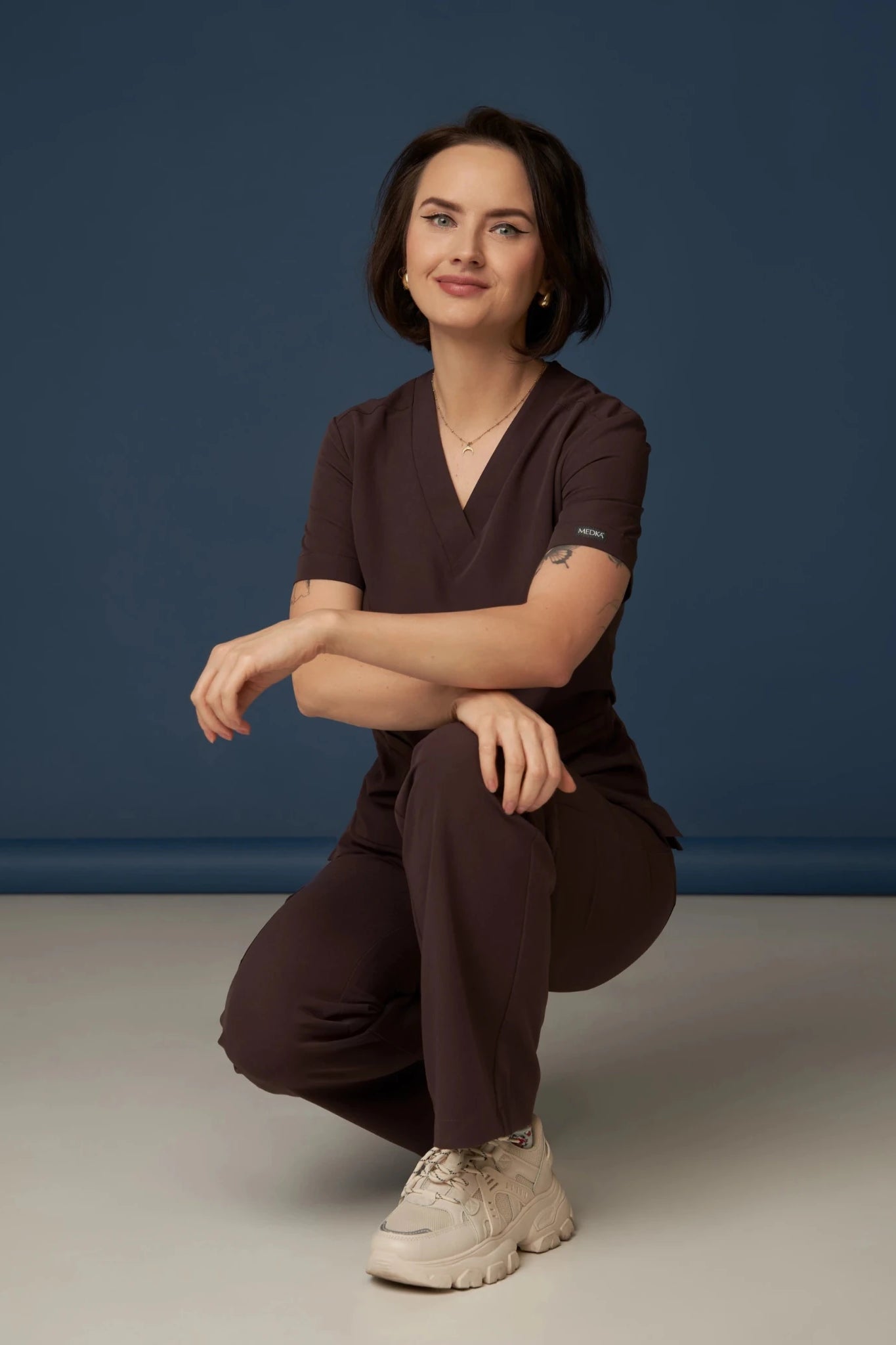
There is a detail in this that surprises people coming from other departments. In psychiatry, the white coat is sometimes consciously put aside. Not because no one wants to, but because it increases the distance where contact is the working tool. Many psychiatrists choose neutral clothes or scrubs to make it easier for the patient to speak. Color is also not neutral: subdued blues and greens have a calming effect, while bright combinations in a place where agitation is treated can be disturbing.
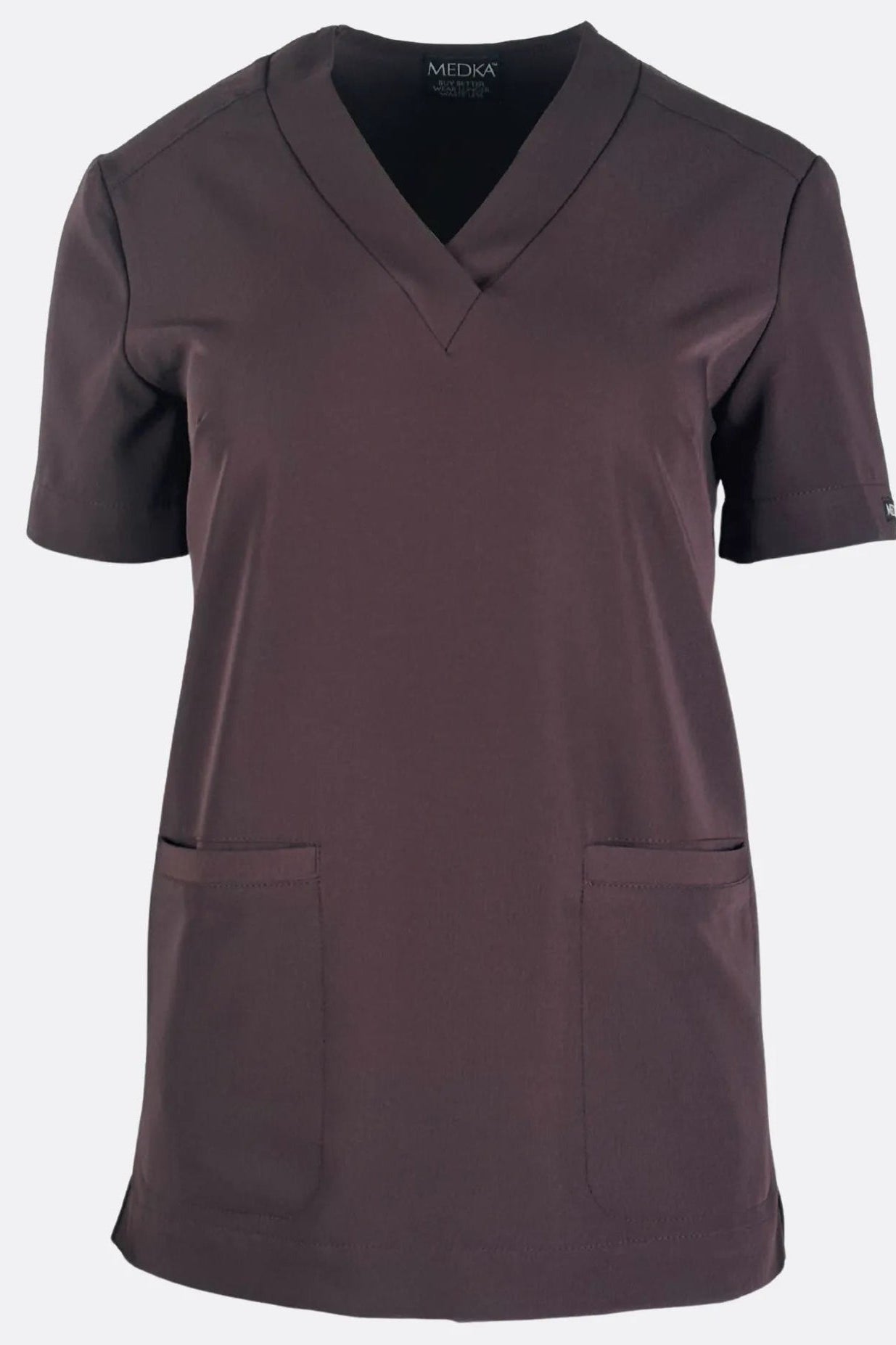
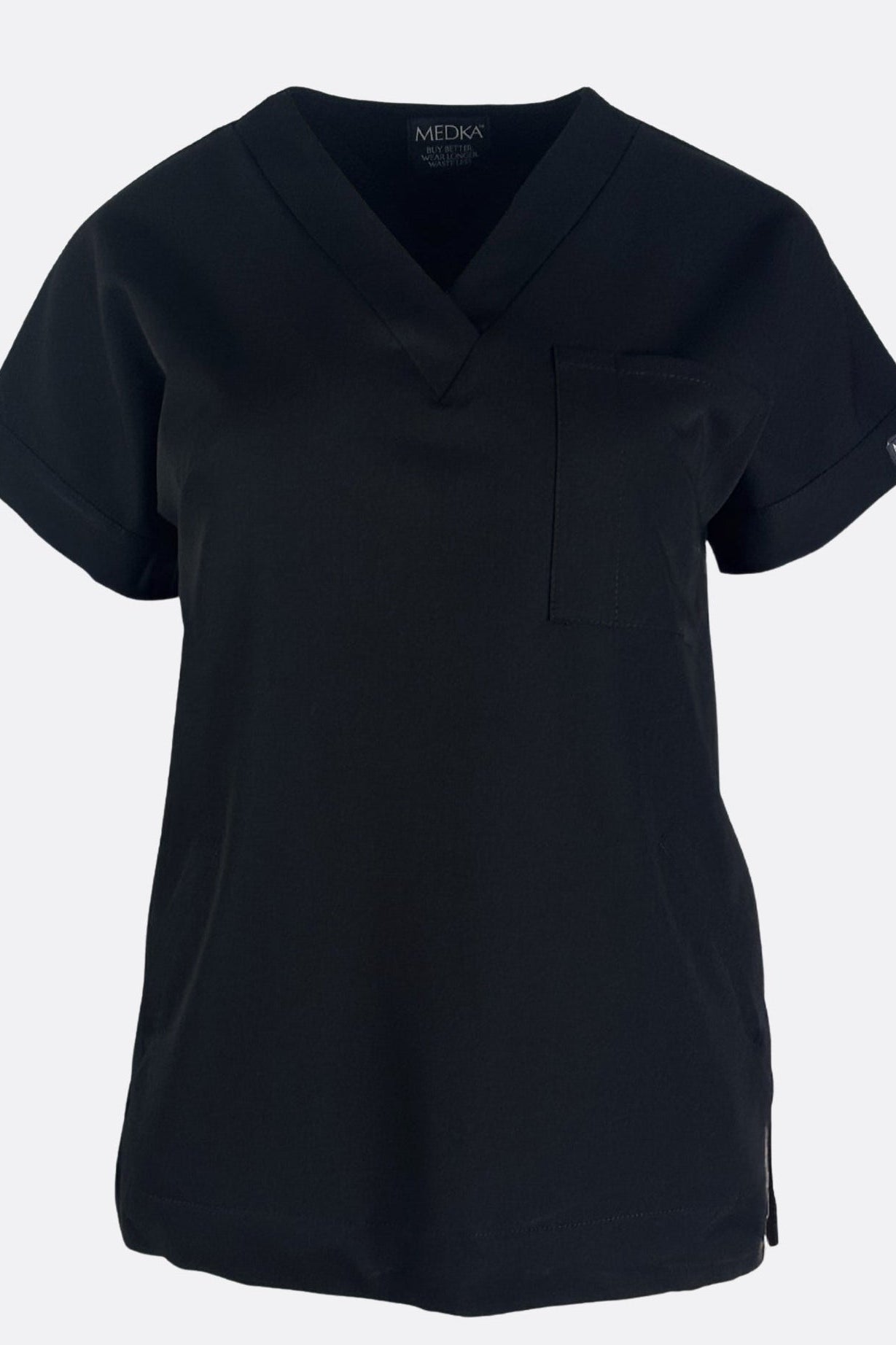
In addition, there are purely practical requirements. Medical clothing in a psychiatric ward, it must endure frequent washing at high temperatures and not deform after the twentieth cycle. It must have pockets in places that can be reached while sitting, because a psychiatrist spends most of his shift sitting. There should be nothing on it that can be grabbed or tightened: a long ID badge lanyard, a tie, a hanging necklace. In interventions using direct coercion, torn clothing is not uncommon, so the seams and material quality are no longer an aesthetic issue.
Clothing tailored to these requirements is offered by Polish stores, among others, medka.eu, a brand that designs and sews in Poland, with an assortment that includes sets scrubs, sweatshirts, pants, aprons and medical footwear, available in women's and men's versions. The store offers free delivery over PLN 450 and gives you a 60-day return period, which is important when ordering without trying on, because the size and cut only work after the first full change. The offer includes both classic, subdued colors that work well in psychiatry, as well as stronger colors for those who work in a clinic or a private office and want to move away from the hospital aesthetics.
However, it must be set in the right proportions. Clothing will not build a therapeutic relationship or replace interviewing skills. But in a profession where you have to be present for ten hours in a row, a comfortable suit and a pocket in a good place are one of the few things on which a doctor has full influence, unlike staffing on duty or the number of beds in the ward.
Summary
The path to psychiatry is long and well-defined, which paradoxically makes planning easier. Six years of studies, LEK with a result well above the threshold of 56 percent, postgraduate internship, recruitment at SMK in February or September, five years of specialization with nine internships and nearly two hundred procedures to be performed, at the end of PES. About twelve years since high school.
Three things are worth deciding early on. First: the LEK result is the main currency in recruitment, and publications from the scientific club add up to five points to it, so work on both starts during studies, not after them. Second: psychiatry is a priority field, which gives a higher salary and more places, but it is also a popular field, so the priority does not eliminate competition for a place. Third: if you plan to conduct psychotherapy, specialization alone will not ensure this and separate training must be included in the budget and calendar.
The rest depends on an honest answer to the question whether we are comfortable with a job in which conversation is the tool, results come slowly, and part of the responsibility is making decisions that limit someone's freedom. Whoever answers yes will enter a field in which there will certainly be no shortage of work in the next twenty years.
Legal status and figures: August 2026. Since the regulations regarding postgraduate internship, LEK and residency rules are undergoing changes, it is worth checking the current announcements from CMKP, CEM and the Ministry of Health before submitting an application.
Frequently asked questions
Below are short, specific answers to the most frequently asked questions when planning this path. They concern formal matters, costs and unusual situations that are difficult to ask about in the dean's office.
How many years does it take to become a psychiatrist in Poland?
Approximately twelve years from the start of studies: six years of medical studies, thirteen months of postgraduate internship (to be shortened to six months) and five years of specialization culminating in PES. In addition, there is the waiting time between submitting the application and the start of the residency, as well as possible extensions due to holidays or layoffs.
Can you become a psychiatrist with a medical degree obtained abroad?
Yes, but the procedure depends on the country. Diplomas from European Union countries are subject to automatic recognition under EU regulations, while diplomas from outside the EU require nostrification at a Polish medical university. In both cases, recruitment for specialization requires a Polish license to practice the profession and a passed LEK. Details are agreed with the district medical chamber competent for the place of residence.
Can I earn extra money during my psychiatry residency?
Yes. The resident is employed under an employment contract, but there is no prohibition against taking up additional work outside training hours, for example on duty at another facility or working in night and holiday medical care. The limitations are the regulations on working and rest time and the real efficiency, because the specialization program itself assumes on-call duties of on average over ten hours a week.
What happens if I don't pass PES the first time?
The exam can be repeated in subsequent sessions, which take place twice a year, in spring and autumn, and application deadlines are published by the Medical Examination Center. Failure to pass does not invalidate completed specialization training. Until the doctor passes, he works as a doctor without specialization, with remuneration according to a lower coefficient.
Can a psychiatrist open his own office immediately after obtaining his specialist title?
Yes. This requires registration of the business and entry in the register of entities performing medical activities kept by the relevant district medical chamber, as well as meeting sanitary and premises requirements for the practice. Psychiatry is a field with a low entry threshold because it does not require diagnostic equipment or treatment facilities.
Is it possible to start psychotherapy training during residency?
Yes, and many doctors do this, because comprehensive training usually lasts four years and it is easier to spread it out parallel to specialization than to start from scratch after PES. However, you must take into account the costs covered from your own funds, mandatory supervision and your own therapy required by most training centers, as well as the fact that classes are usually held on weekends.
What Matura subjects are needed for medical studies?
In practice, biology and chemistry at the advanced level, and at some universities, physics or mathematics is a third subject. The point thresholds are among the highest in the country, and each university publishes its own rules for converting results, so the list of subjects and weights should be checked in the recruitment guide of a specific center for a given year.
See alsoż: