




Orthodontics is a field of dentistry in which medicine perfectly combines with precision and art. The specialist not only corrects malocclusions, but also influences the patients' health and self-confidence. In the article, we will present what exactly an orthodontist does, what features are necessary in this profession, how to obtain appropriate qualifications and what benefits professional medical clothing offers in everyday work.
Who is an orthodontist?
A dentist who specializes in diagnosing and treating malocclusions is an orthodontist. His work combines health and aesthetic aspects. Correct tooth positioning affects not only chewing comfort and proper jaw development, but equally important - the patient's self-confidence related to the appearance of his smile.
The scope of work of an orthodontist includes various duties. These include consultations with patients, analysis of X-ray images, and detailed treatment planning. However, a key element of his work is the installation of fixed or removable braces. The specialist then monitors the progress of the therapy and modifies the treatment plan if necessary. The work takes place both in private offices, dental clinics and within my own practice.
Interesting fact: Orthodontics is one of the few areas of dentistry in which the effects of treatment are visible in the long term. Patients return every few weeks, and the doctor observes gradual changes, which gives satisfaction from the real impact on the patients' health and smile.
What qualities should an orthodontist have?
The profession of an orthodontist involves not only medical knowledge, but also appropriate character traits.
Precision is definitely the key element here. Even the smallest mistake when putting on the brace can significantly change the final treatment effect. Another essential quality is certainly patience. The process of bite correction for minor defects may take only a few months, but in most cases the entire treatment takes years and requires constant support of the patient.
Communication skills and empathy are no less important. The doctor must be able to explain complex procedures in a clear and understandable way and, in the case of children, communicate in a gentle and reassuring manner without causing additional stress regarding the treatment. Stress resistance and concentration are also integral elements in the work of an orthodontist, especially during complex procedures. Additionally, creativity and analytical skills have a direct impact on planning treatment individually tailored to each patient.
All the above-mentioned features mean that the orthodontist not only conducts treatment effectively, but also builds the trust of patients who feel safe and professionally taken care of in the office.
It is also worth adding that orthodontic specialization also involves regular work in an interdisciplinary team. The orthodontist often cooperates with oral surgeons, prosthodontists and speech therapists.
How to become an orthodontist step by step?
1. Medical studies (dentistry)
The first stage on the path to a career as an orthodontist is the completion of five-year uniform dental studies, the program of which covers both theory and practice, including diagnostics, dental treatment, surgery and prevention. Then you must complete a postgraduate internship lasting 12 months. The entire learning stage until passing the exam lasts 6 years.
2.LDEK Examination - Medical Dental Final Examination
After completing your studies, it's time to take LDEK, which gives you the right to practice as a dentist in Poland.
3. Specialization in orthodontics
Specialization usually takes 3 to 4 years. It includes learning how to plan the treatment of malocclusions, installing fixed and removable braces, radiological diagnostics and therapy for children and adults. After completing it, the doctor obtains the title orthodontic specialist.
4. Alternative path - orthodontic courses and training
It is worth emphasizing, however, that completing specialization is not currently required if we want to work in an orthodontic office. Many dentists decide to take extensive orthodontic courses and training, which enable them to acquire practical skills in the treatment of malocclusions.
Thanks to these trainings, the dentist can provide orthodontic treatment even though he has not obtained the title of orthodontic specialist. This solution is often chosen by doctors who want to start working in the office faster and at the same time constantly develop professionally by improving their practice. It is worth mentioning that, as in any field of medicine, the presence of a person who not only has experience but is also willing to share practical knowledge is extremely valuable. Such presence can not only inspire, but also significantly facilitates learning and professional development.
How much does an orthodontist earn?
The earnings of orthodontists in Poland are not clear. They depend on experience, place of work and the reputation of the office. A beginner orthodontist can count on about 6 000 - 8 PLN 000 gross per month. Specialists with several years of work experience usually earn PLN 10 000 - 15 000 PLN gross, and running your own practice can generate income of over PLN 20 PLN 000 per month.
Additionally, participation in further training courses, international consultations and work in renowned clinics are always included in the price. These activities significantly increase your earning potential and professional development.
Where can an orthodontist buy the best medical clothing?
A professional appearance in an orthodontic office is as important as the specialist's skills. Comfortable, durable and functional medical clothing allows you to work comfortably with patients while maintaining sterility and an elegant image.
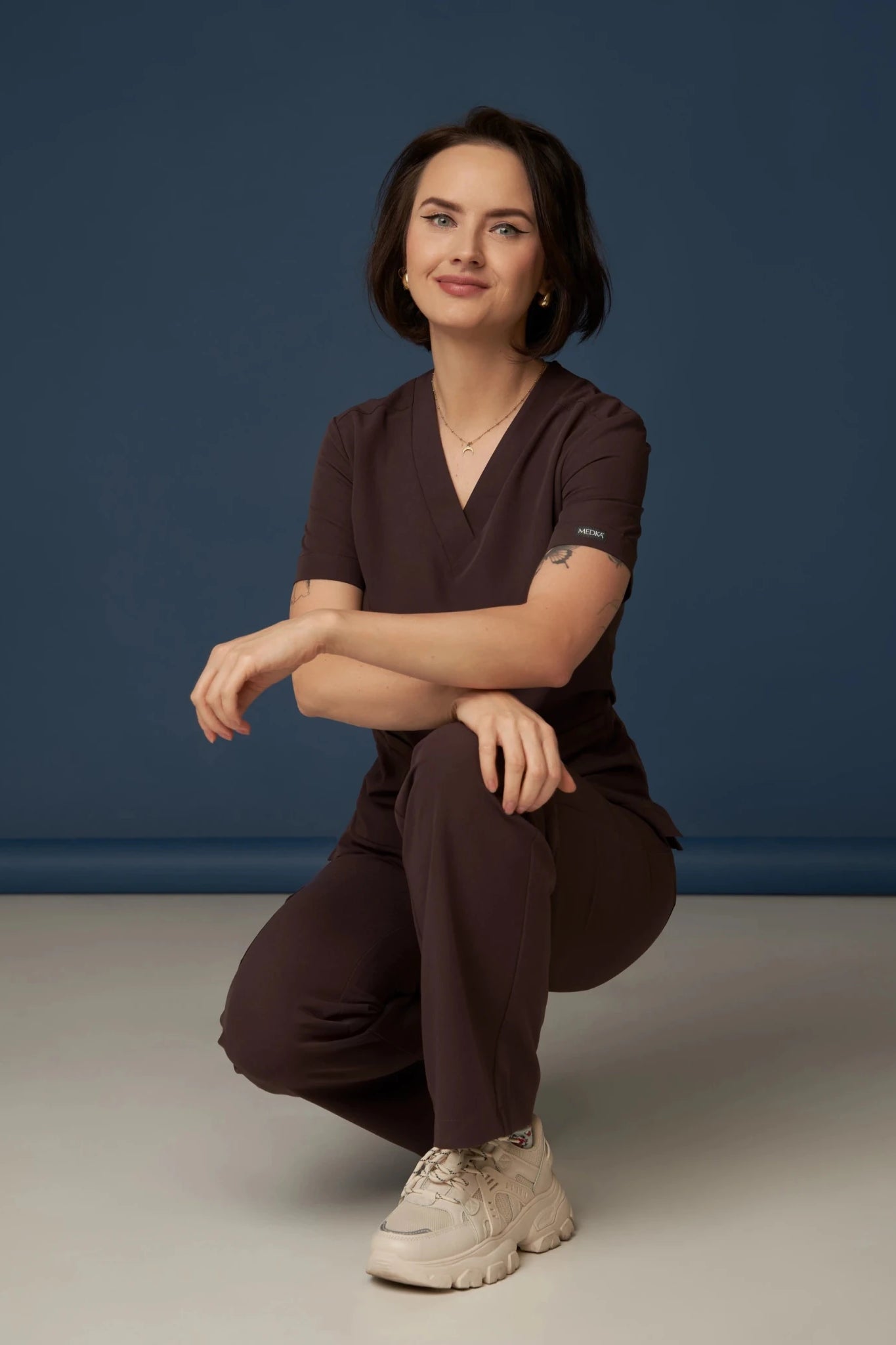
The best choice for orthodontists who are looking for the highest quality medical clothing is Medka. Medical clothes are characterized by solid workmanship, durable materials and careful finishing, thanks to which they withstand intensive daily work in the office. Ergonomic cuts ensure full freedom of movement, and a wide range of patterns and colors allow you to match the outfit to your own style.
Summary
Orthodontics is a very demanding profession, but also extremely satisfying. Each treatment ends with something much more than just a simple bite - it is a new, confident smile for the patient. Seeing this change is the greatest reward for a specialist and confirmation of the sense of his work. It is a profession in which science, precision and empathy combine to restore people's health, joy and beauty of smiles.
🔍FAQ – frequently asked questions
-
Is orthodontics a difficult specialty to get into?
Recruitment for specialization in orthodontics is limited, so there are fewer places than those willing to take part. A high LDEK result and clinical experience are of great importance. Despite the difficulties, many doctors decide to apply more than once, because specialization offers real professional benefits. -
Does an orthodontist only deal with fixed braces?
The scope of an orthodontist's work is much broader and also includes treatment with removable braces, aligners and therapy for jaw development disorders. The specialist assesses not only the teeth, but also muscle functions and facial proportions. Interdisciplinary treatment, e.g. with an oral surgeon, is also playing an increasingly important role. -
How much does it cost to become an orthodontist?
Apart from the studies and specialization itself, you have to take into account the costs of numerous courses, conferences and training. In addition, there are investments in good diagnostics, e.g. intraoral scanners or treatment planning software. In the long run, this expense usually pays off because orthodontics is one of the most profitable fields of dentistry. -
Does an orthodontist need to know advanced digital technologies?
Modern orthodontics relies heavily on digital 3D models, scanners and treatment planning in CAD software. Knowledge of these tools facilitates precise therapy and shortens work time. More and more offices require doctors to be proficient in digital technologies from the very beginning. -
Does the work of an orthodontist involve a lot of responsibility?
Planning the treatment of malocclusions affects the chewing function, aesthetics and health of the patient for many years. Each therapeutic decision should be preceded by thorough diagnostics and analysis. It is a profession that requires patience, systematicity and great awareness of the consequences of performed procedures. -
Can an orthodontist perform aesthetic treatments, e.g. whitening?
A doctor after dental studies has the right to also perform aesthetic treatments not directly related to orthodontics. In practice, many orthodontists offer additional procedures to expand the office's offerings. It is crucial to maintain high safety standards and only perform services in which the doctor feels competent.
See alsoż: