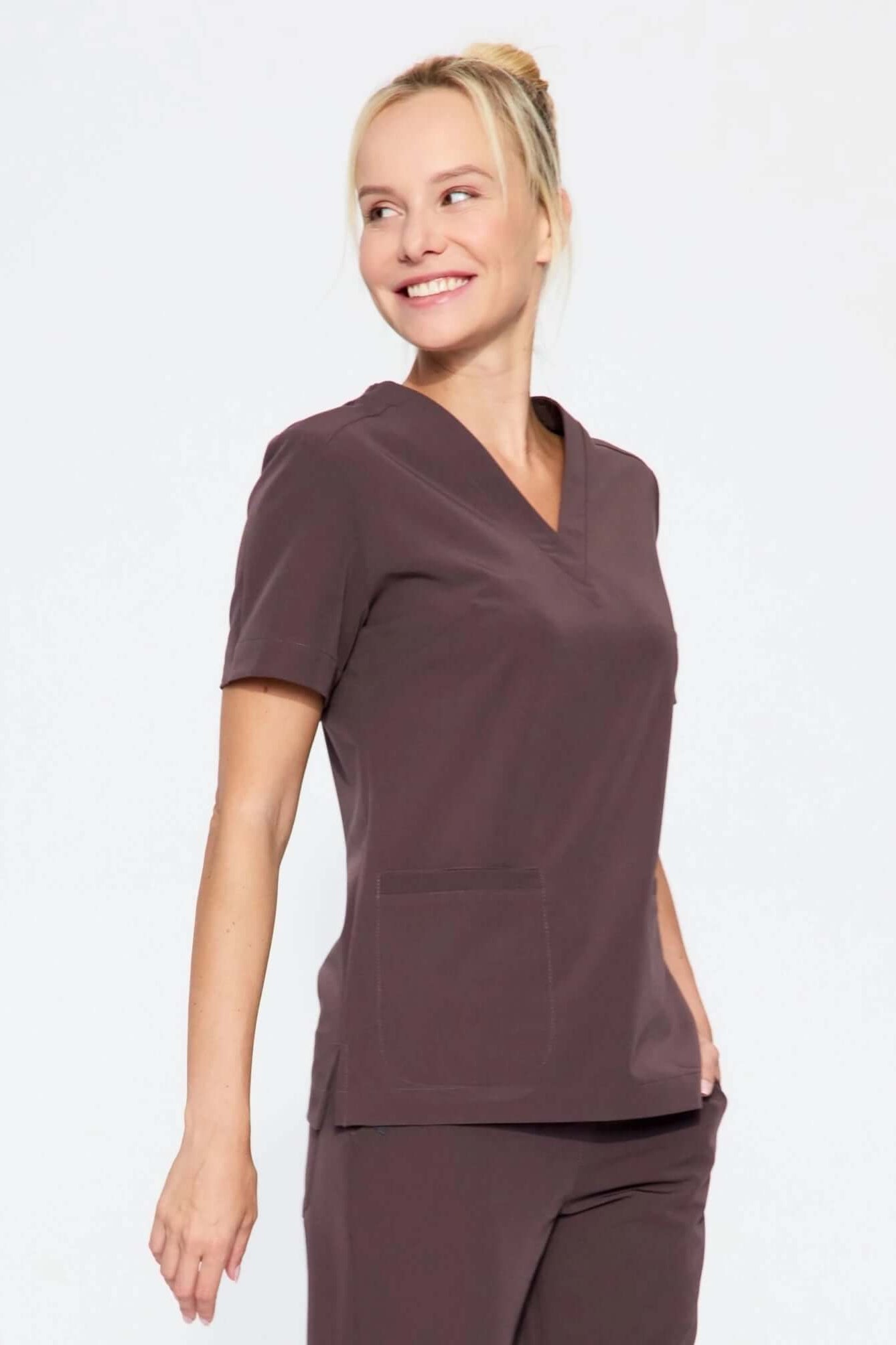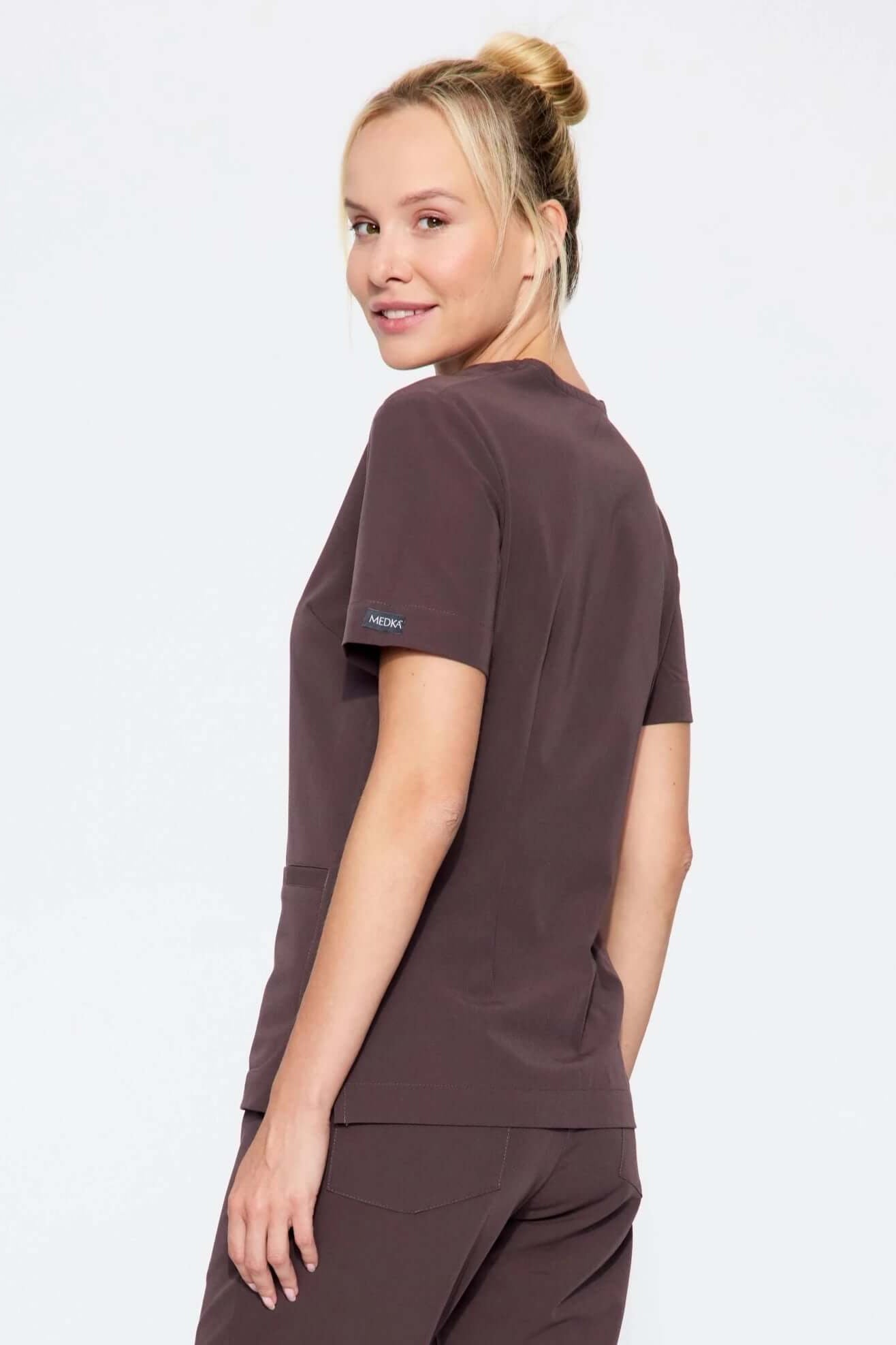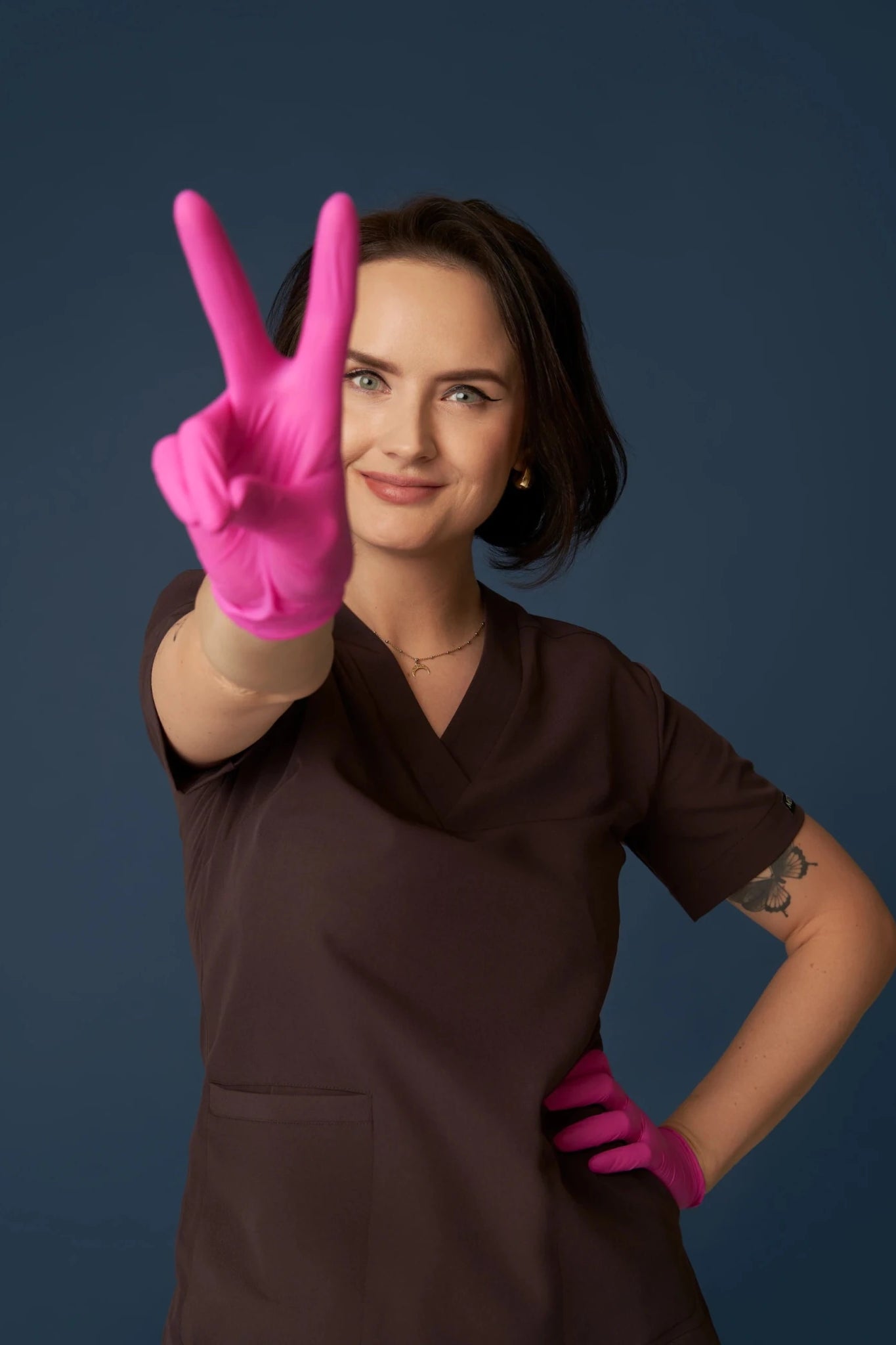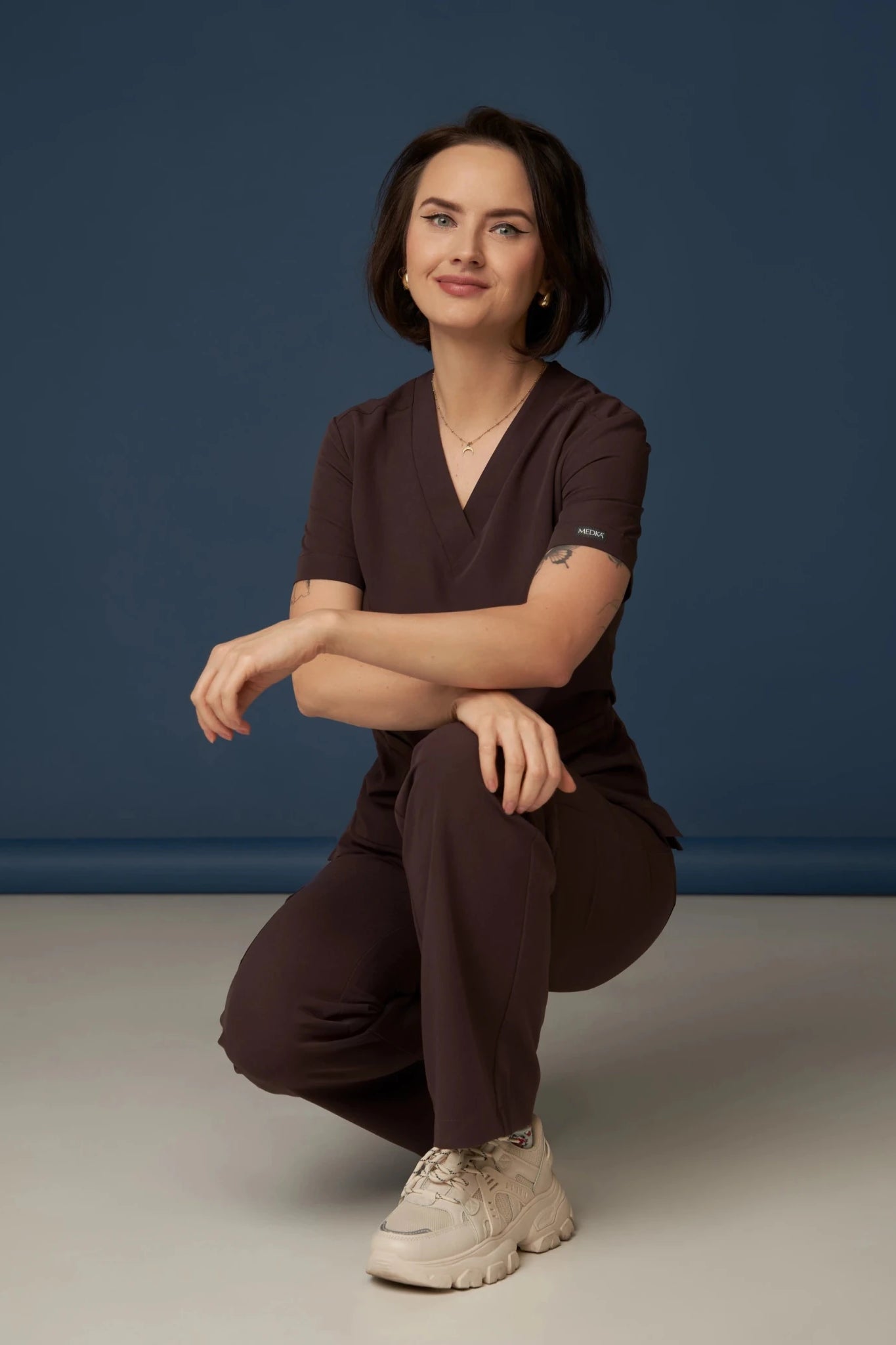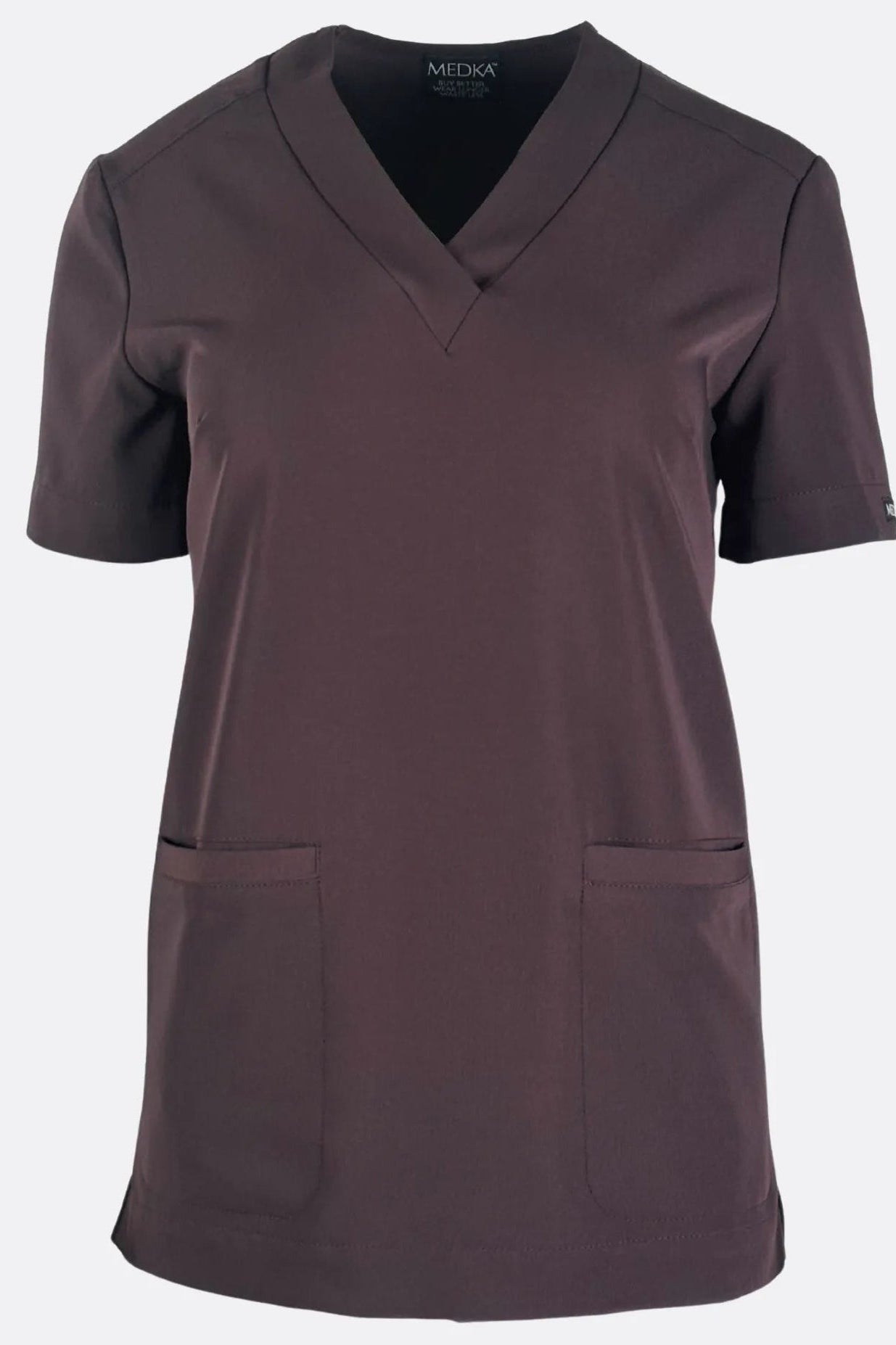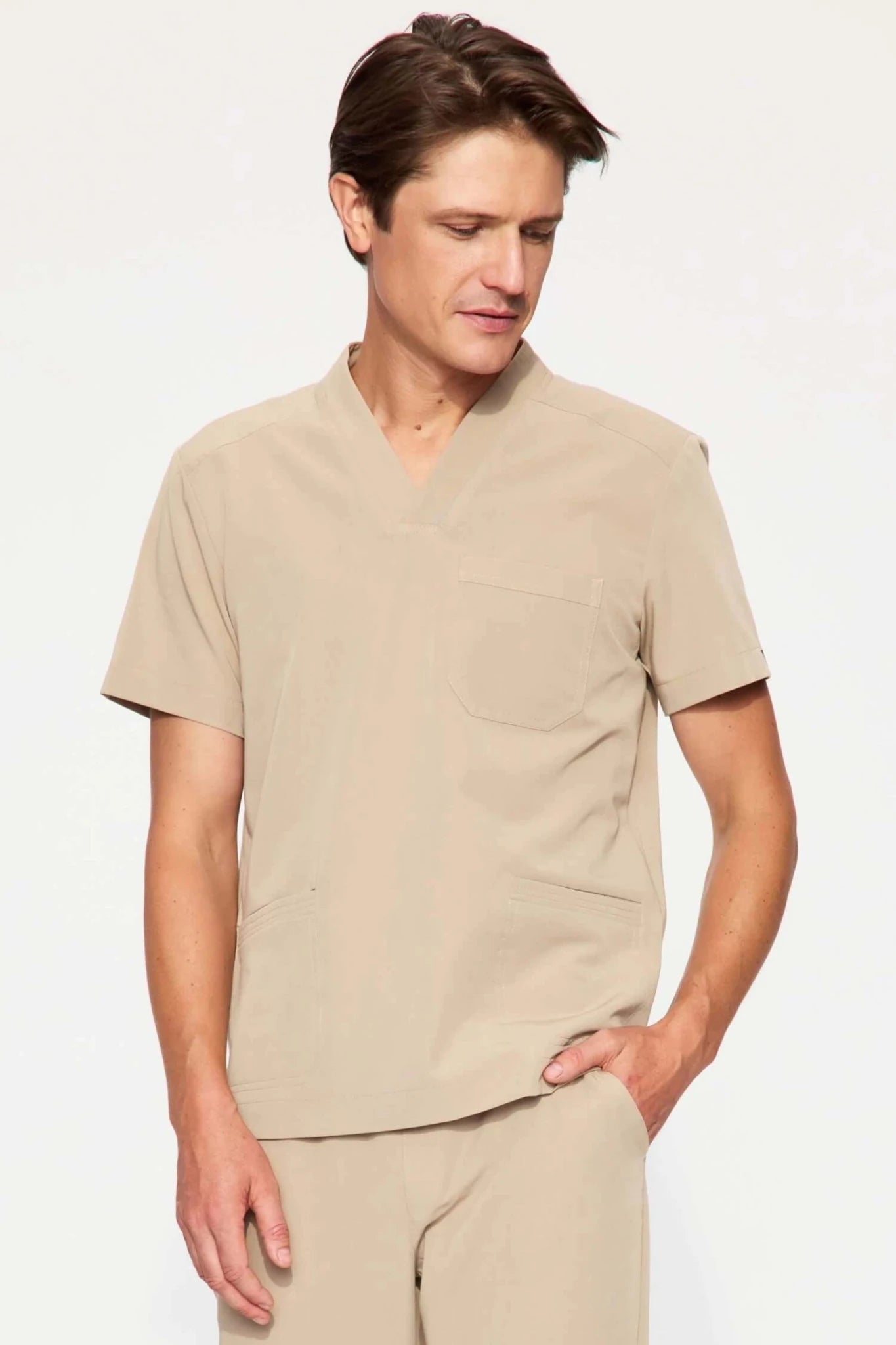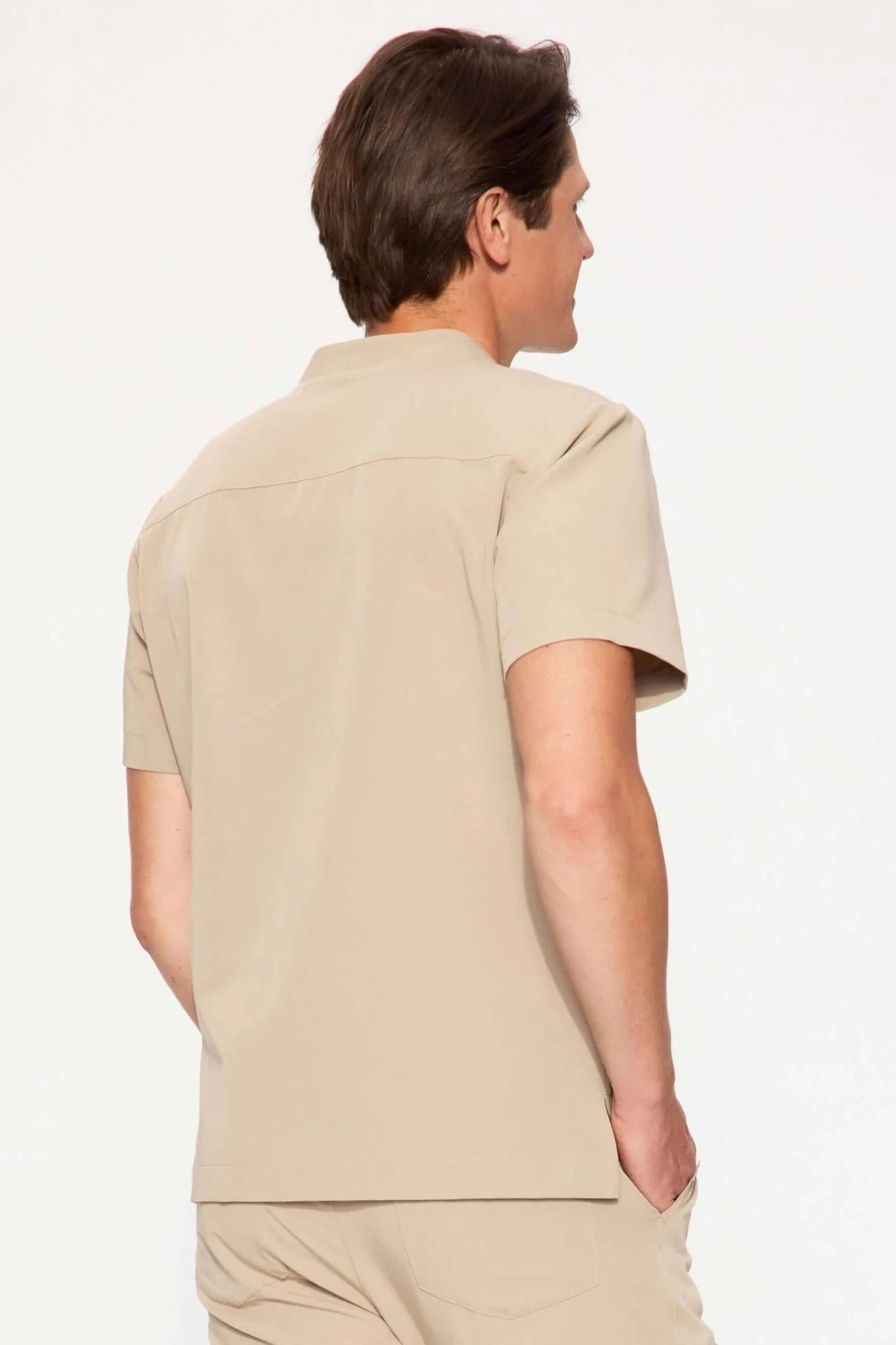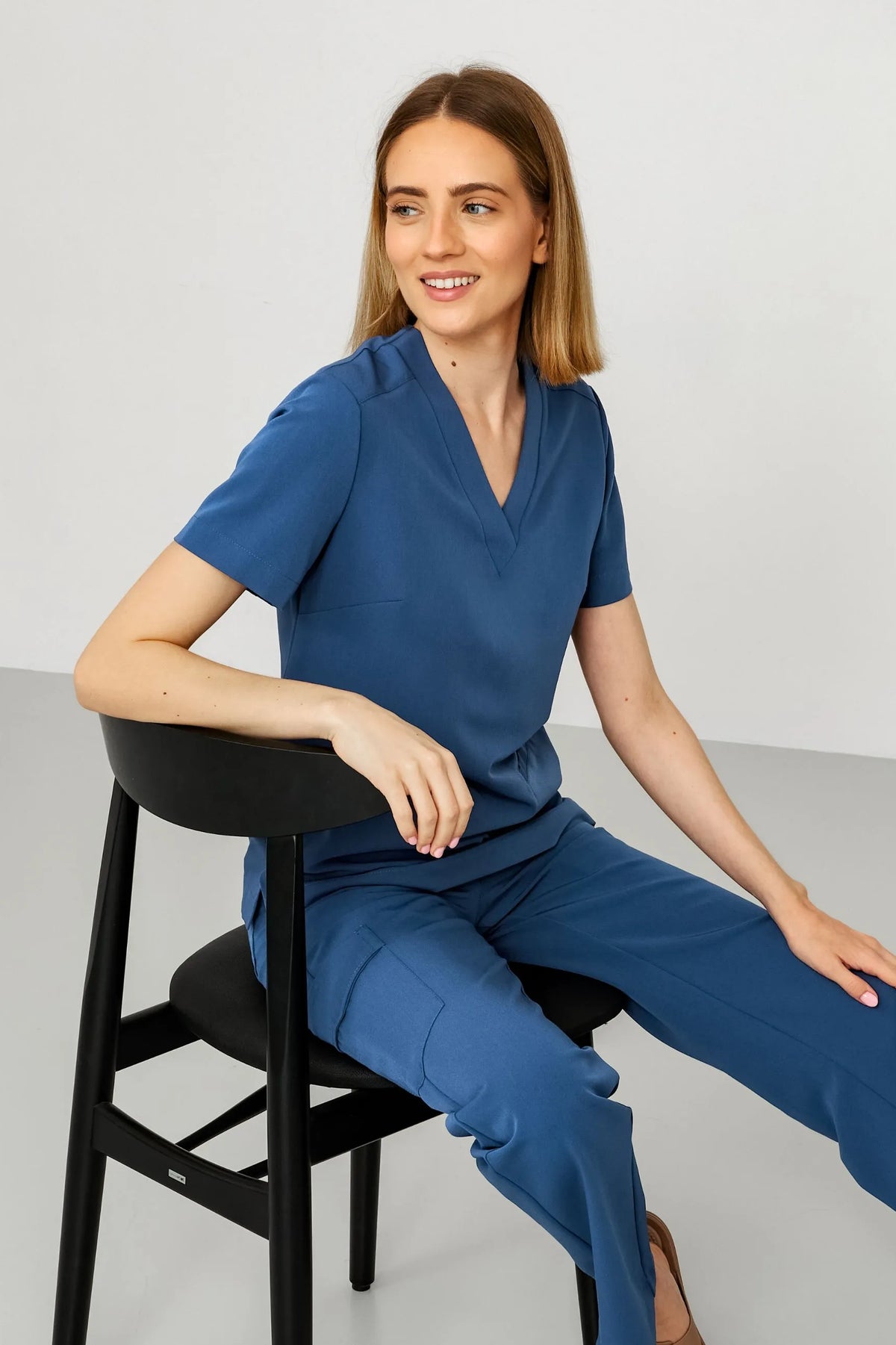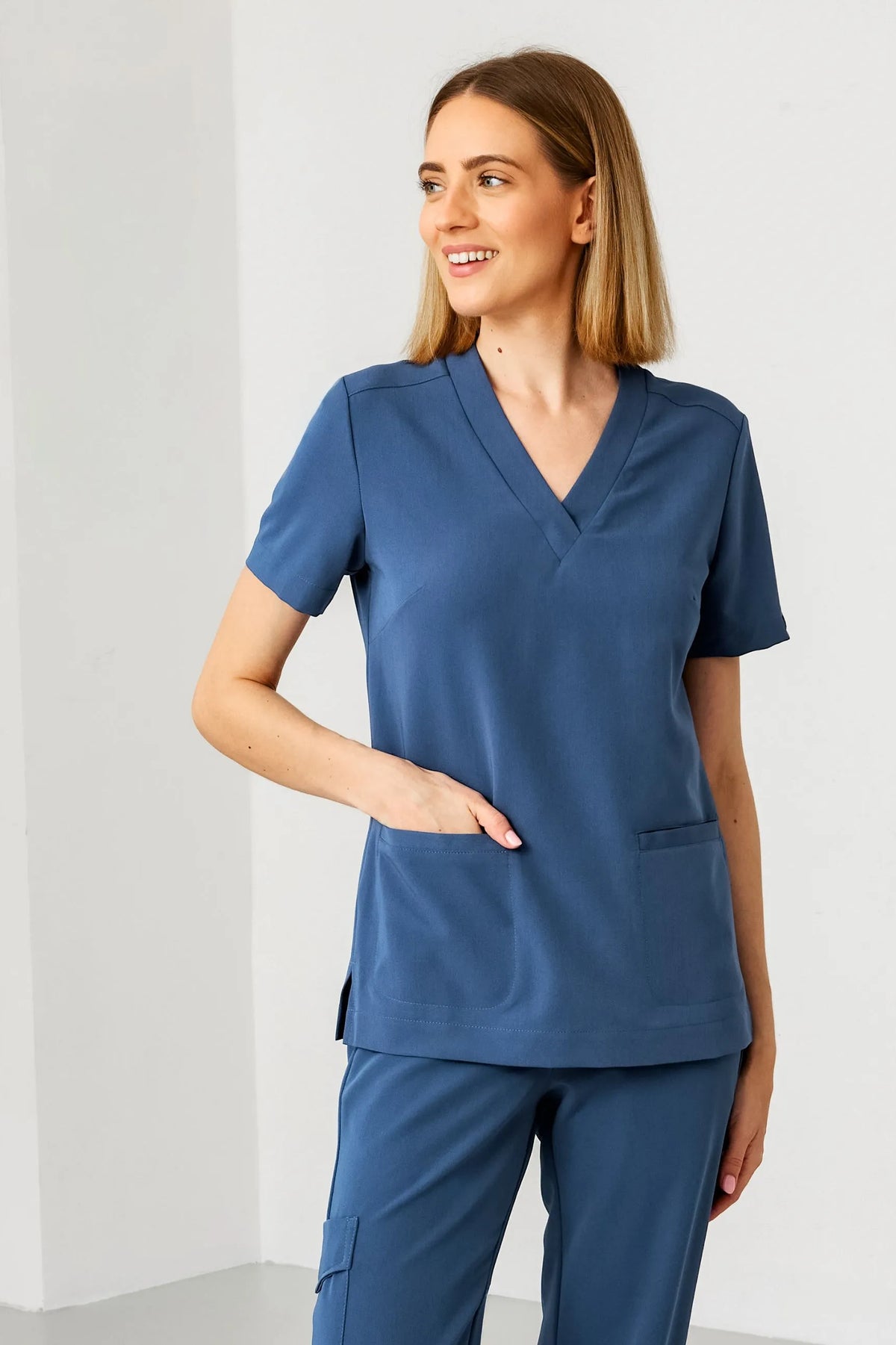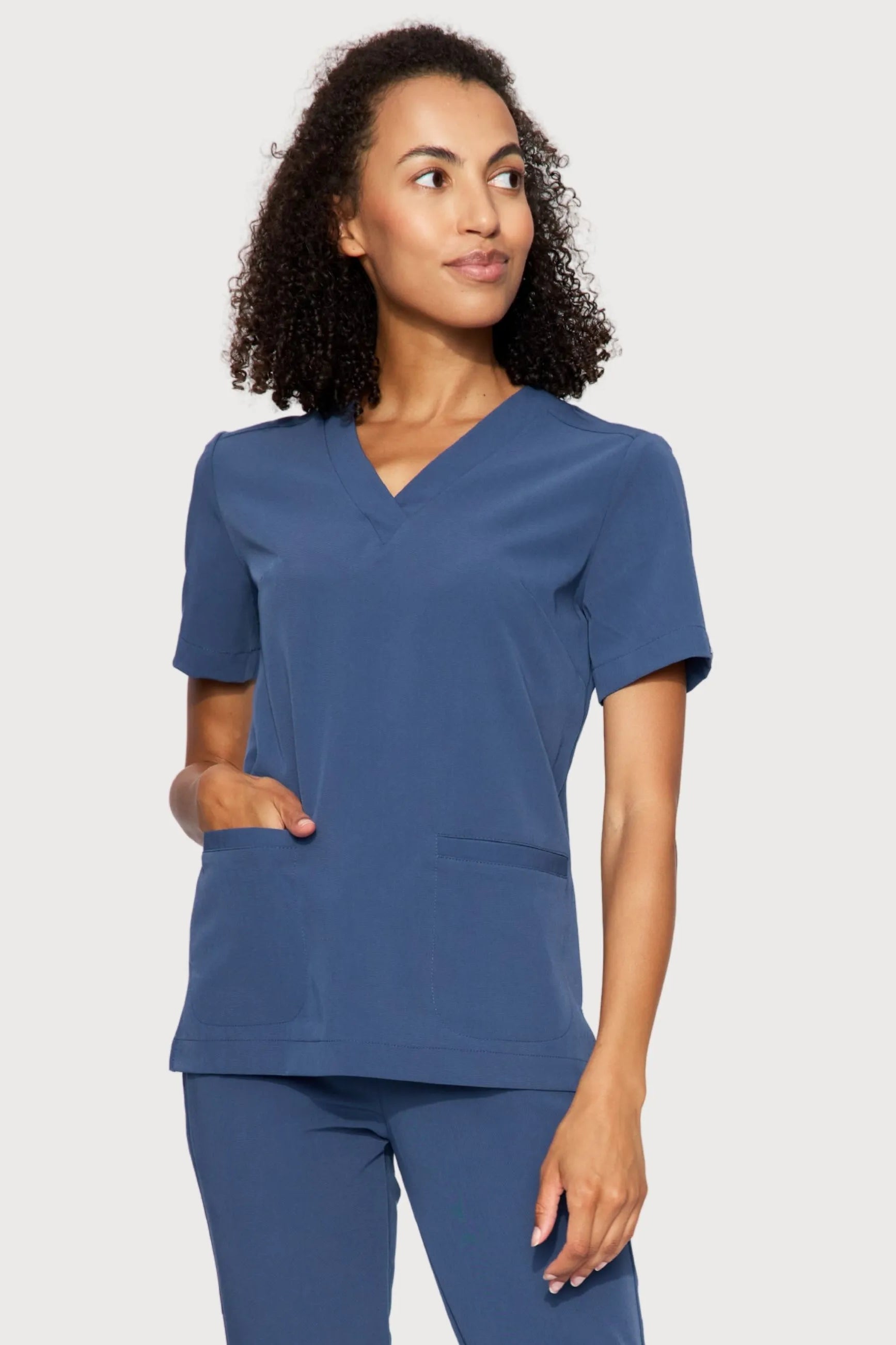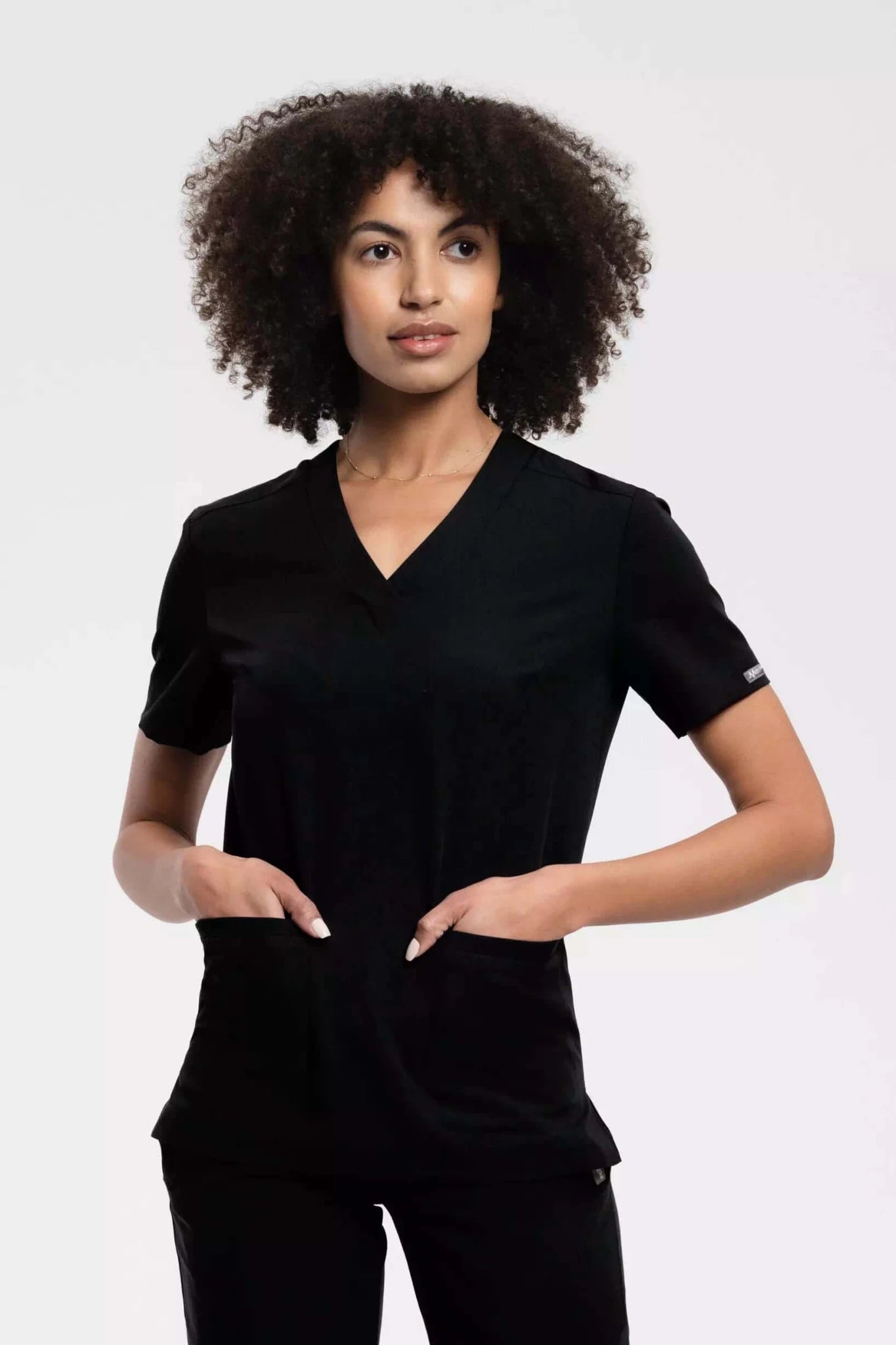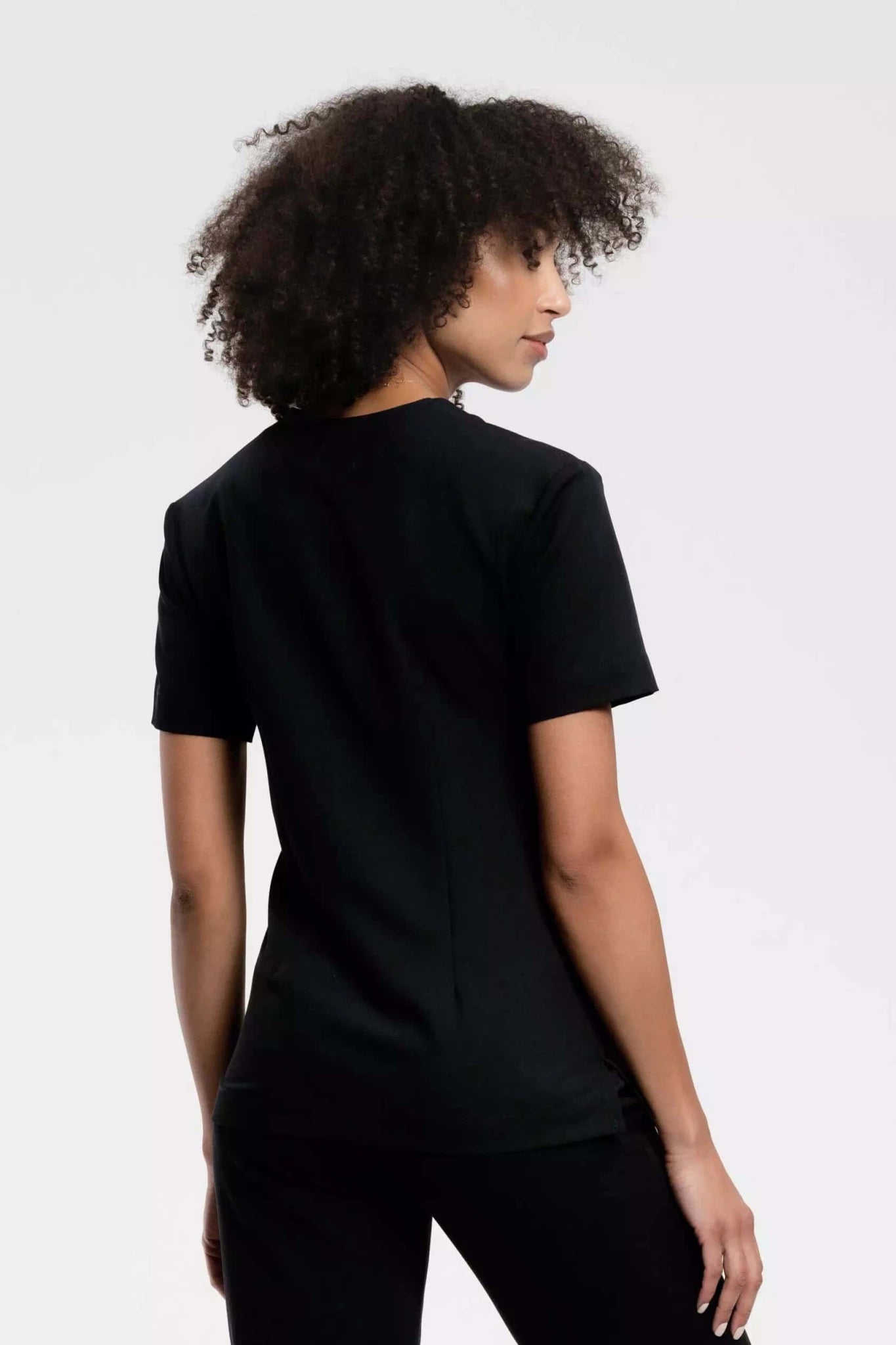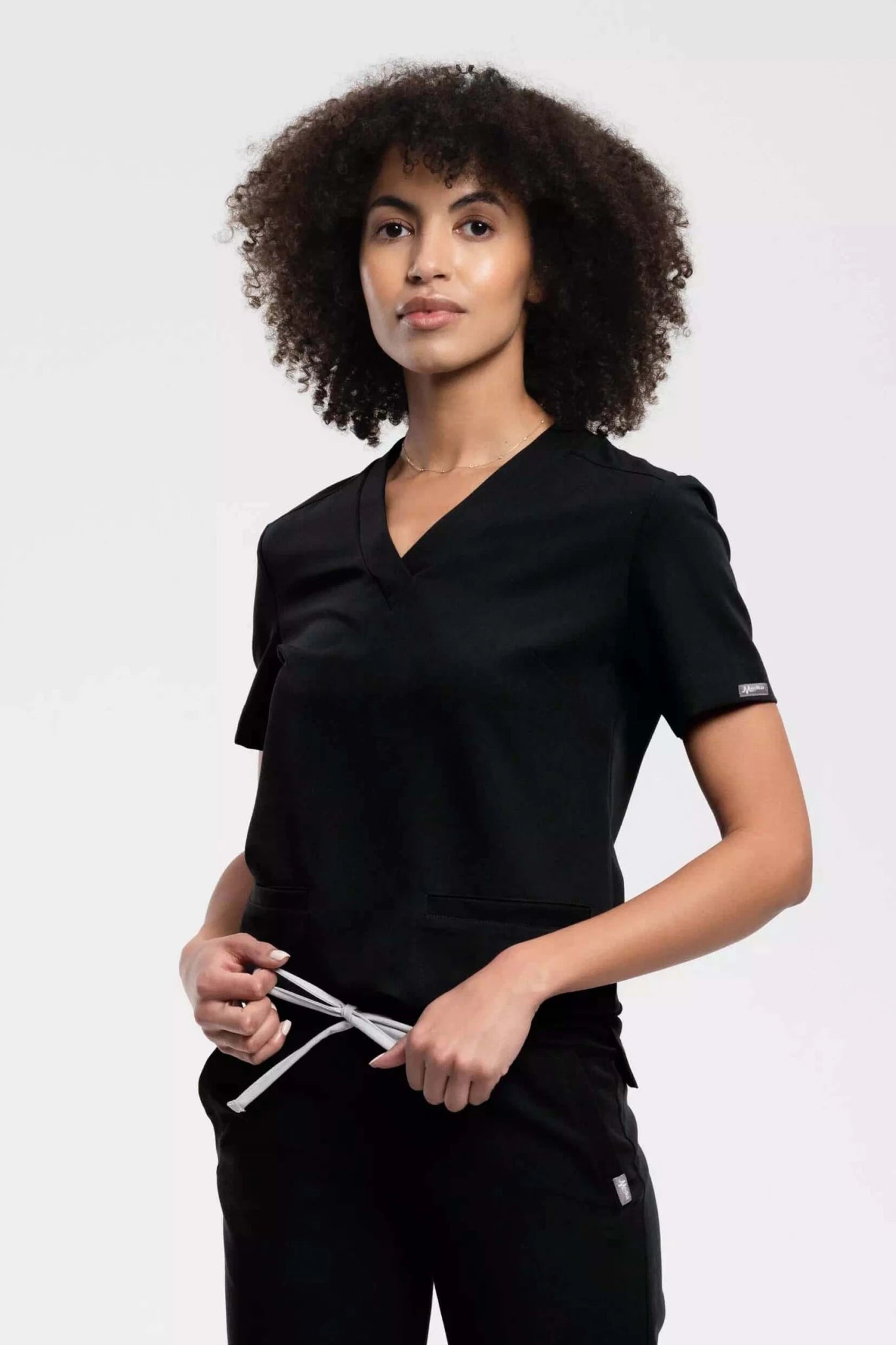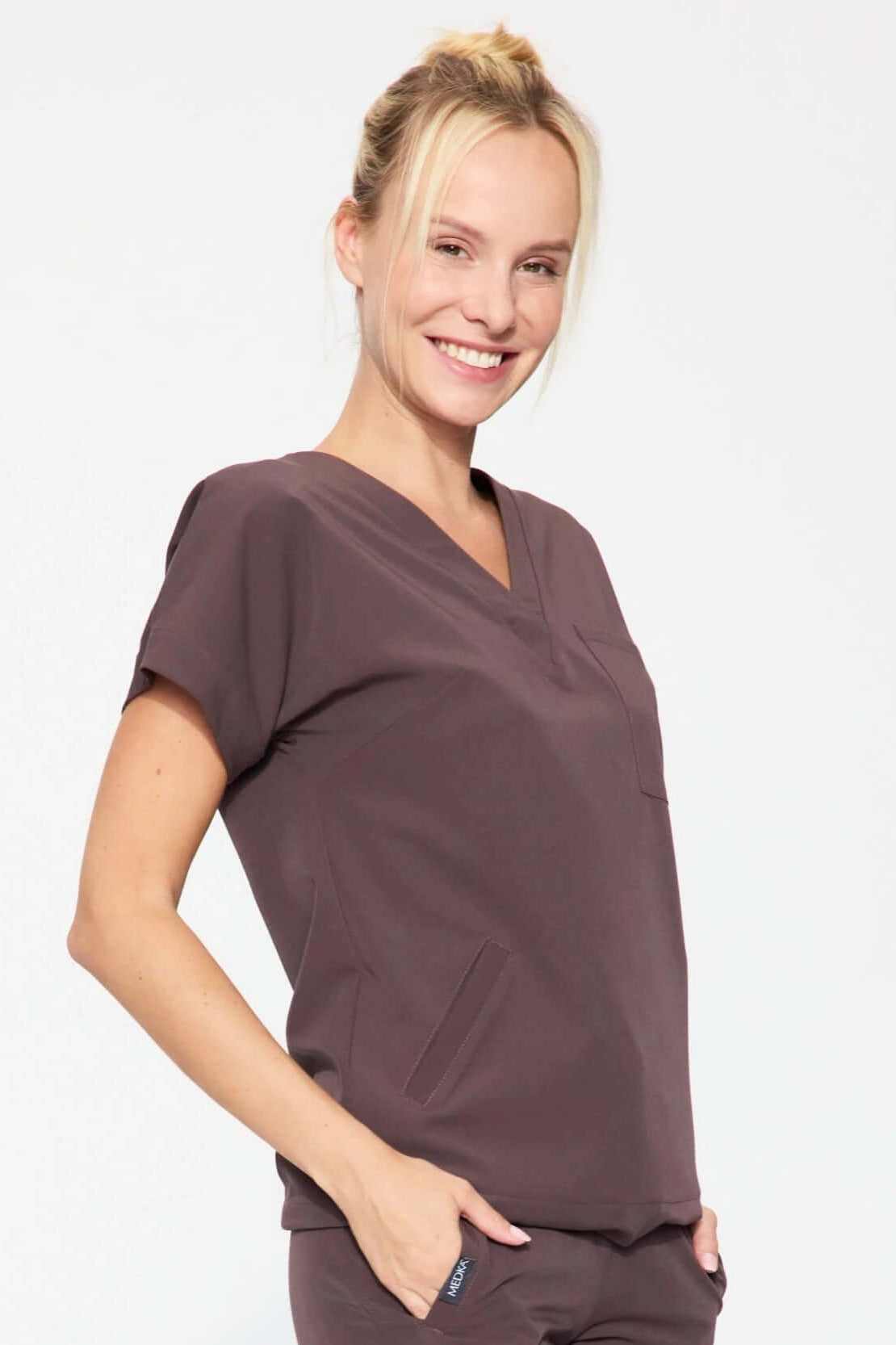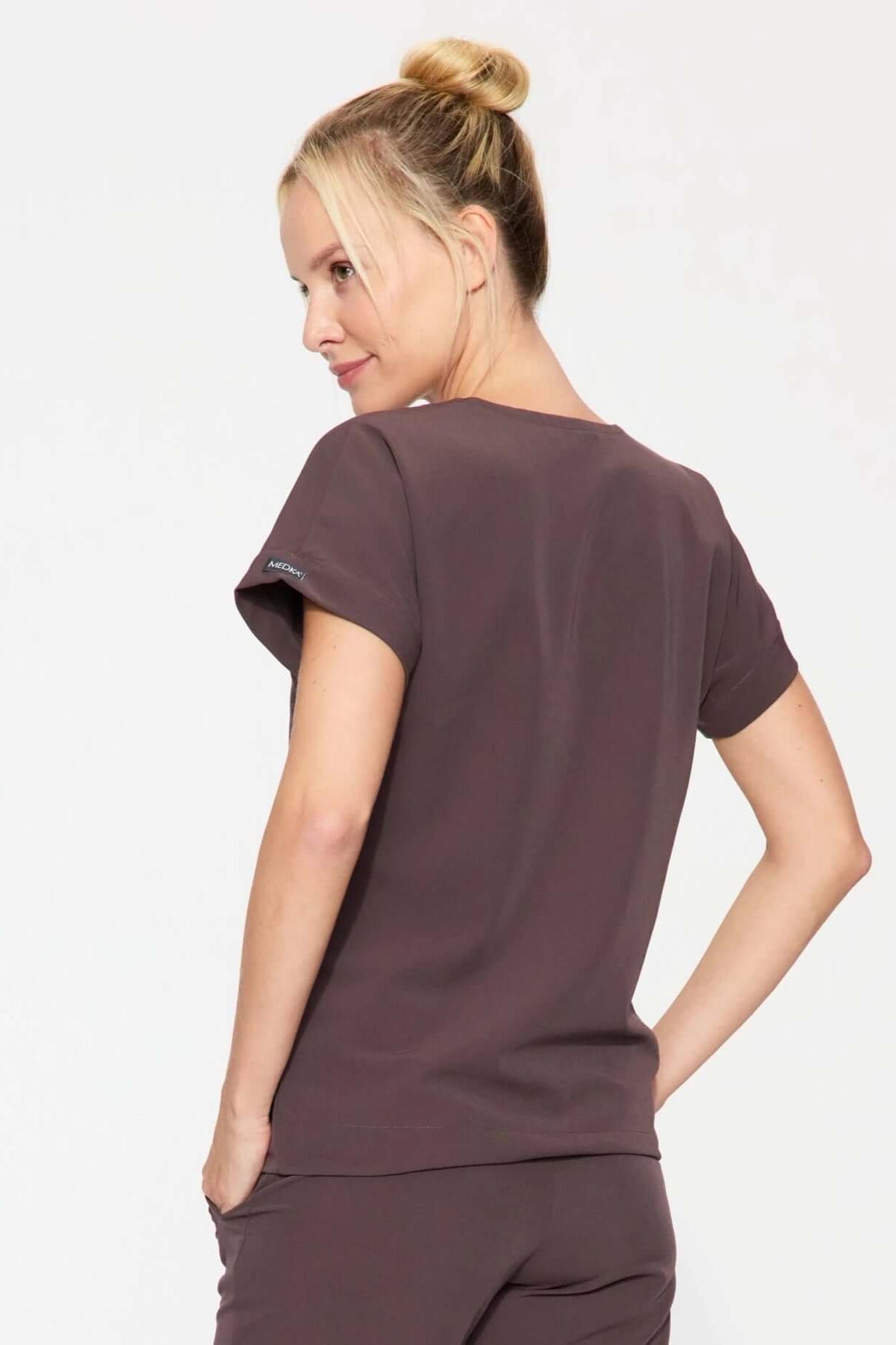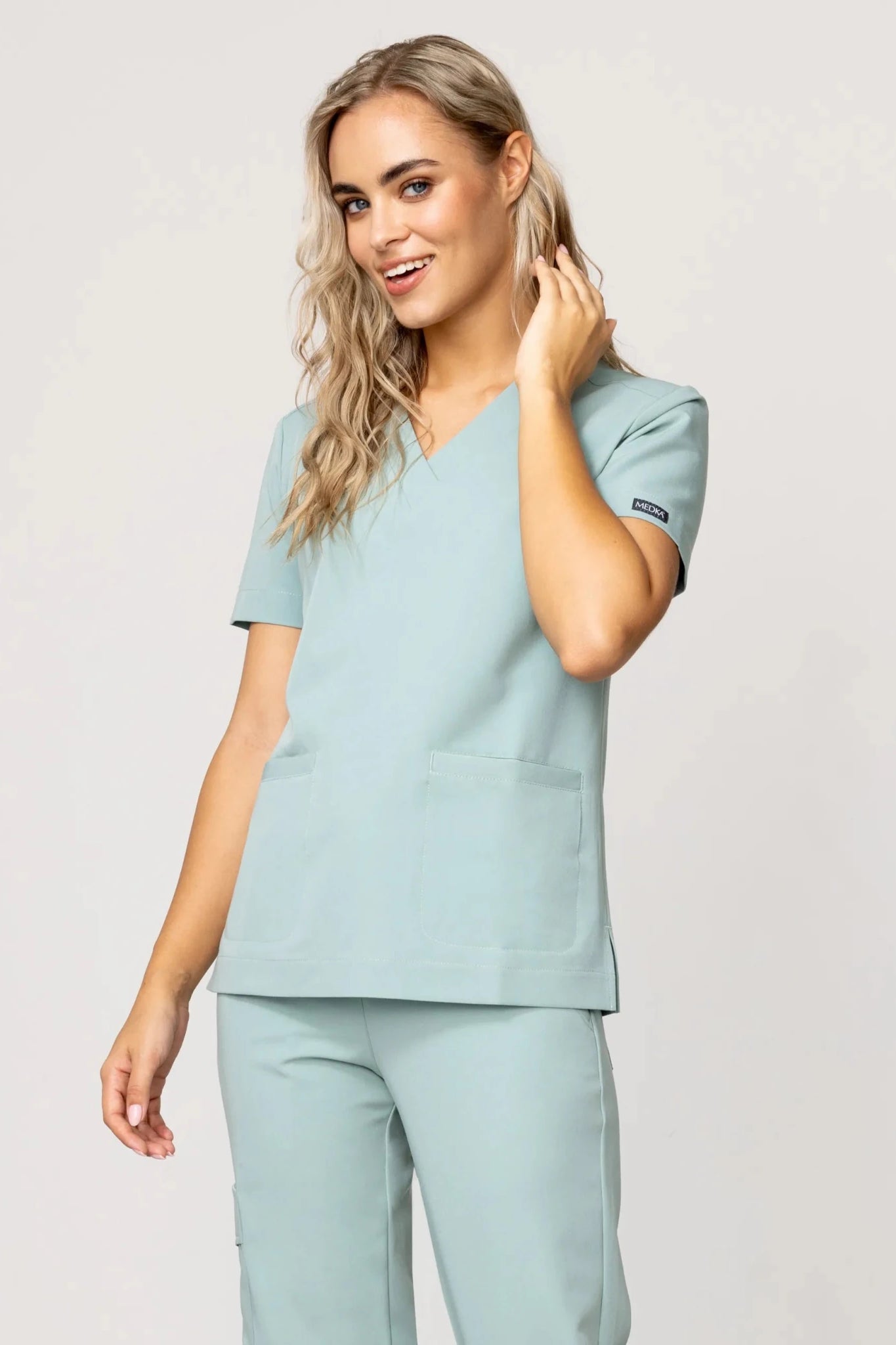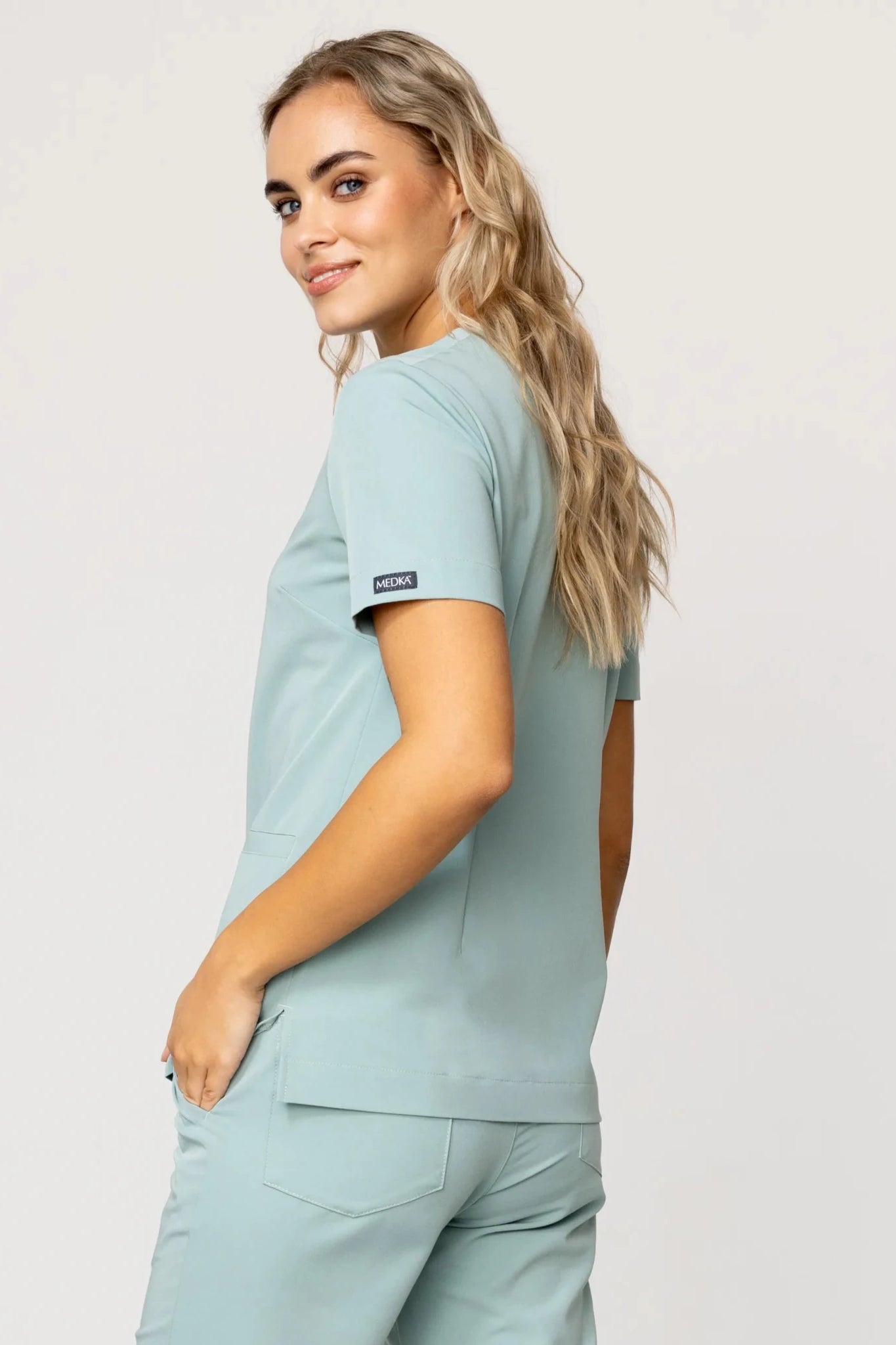





The masseur stands, bends and works with the whole body most of the day and regularly deals with oils, massage candles and moisture. These are two factors that ruin ordinary clothing: the fabric either restricts movement or after a month it looks like an oil-stained cloth. Choosing an outfit in this profession does not come down to "something comfortable and neat". It's about the specific material composition, specific cut and specific resistance to what happens on the couch. Below, I break down this choice into factors that actually determine whether the set will last two seasons or two years.
Why is regular sportswear not enough?
The first thought of most novice masseurs is: since freedom of movement is important, leggings, a loose T-shirt and sports pants will be enough. From the point of view of the movement itself, this is true. The problem is that the work of a masseur has two sides that the training outfit knows nothing about.
The first is image. A client who lies half-naked on a couch and puts his body in someone else's hands makes a decision based on trust. The medical uniform acts as a signal: this is an office, this is a procedure, this is a professional. The tracksuit does not send this signal, even if you technically perform the massage in the same way. In an industry where a large portion of revenue is based on returning customers and referrals, first impressions have tangible value.
The second face is hygiene and protection. Medical clothing acts as a barrier between your private clothes and everything that lands on the fabric during work: oils, balms, sweat, remnants of warming preparations. The materials used in medical clothing are designed to withstand frequent washing at high temperatures, which is why an ordinary cotton T-shirt will not survive without losing its shape and color. This is a difference that becomes visible only after a dozen or so washing cycles, but then it is merciless.
The composition of the fabric, i.e. the parameter on which the most depends
If I were to point out one piece of information that is worth looking at before any other parameter, it is the material composition label. The cut can be assessed by eye, the color is a matter of taste, but how the fabric will behave after oiling and after the sixtieth wash is determined by the fiber proportions.
There are three basic components in medical clothing, each with a different role. Cotton is responsible for softness, breathability and pleasant contact with the skin. It is natural and hypoallergenic, which is important when worn for long hours. However, it has two disadvantages that are important for the masseur: it absorbs moisture and holds it for a long time, and at the same time it creases easily and dries slower. Polyester has the opposite effect. It does not absorb sweat, dries quickly, maintains its shape and color even after many washes, and is resistant to stains and high temperatures. Its disadvantage is less breathability and a tendency to electrify. Elastane, typically found in 3 to 8 percent, is responsible for one thing: stretch. It makes the fabric "work" with the body, stretches when bending and returns to shape without bulging on the knees or elbows.
For a masseur, the most sensible choice is a mixture, not any of these ingredients in their pure form. One hundred percent cotton sounds noble, but it fails during intense movement: it holds moisture for too long and quickly looks tired. Pure polyester can be stuffy during hours of physical exertion. A well-composed mixture combines the advantages while minimizing the disadvantages of each ingredient individually.
| Fabric composition | Strengths | Weaknesses | For the masseur |
|---|---|---|---|
| 100% cotton | Soft, airy, hypoallergenic | It creases, takes a long time to dry, retains moisture, and fades | Probably not for intense work |
| 100% polyester | Dries quickly, stain resistant, holds color | Less airy, electrified, synthetic to the touch | Good in summer, worse for sensitive skin |
| Elanocotton (35/65 or 50/50) | Compromise: durability plus comfort, creases less | Without elastane, it limits stretchability | A solid base, it is worth looking for one with the addition of elastane |
| Polyester + viscose + elastane | Flexible, breathable, soft, crease-resistant | Usually washed only at 40°C | Very good for dynamic work |
| Cotton + polyester + elastane (approx. 55/40/5) | Cotton breathability plus stretch and durability | Price usually higher | A universal, comfortable all-year-round choice |
In practice, it is worth looking for compositions in which there is a noticeable share of polyester responsible for oil and stain resistance, a few percent of elastane for freedom of movement and either cotton or viscose as an ingredient responsible for comfort and breathability. For example, medical suits with a composition of 60 to 70 percent polyester, 25 to 35 percent viscose and 5 to 8 percent elastane, available from some medical clothing manufacturers, fit this profile very well: they are stretchy, crease-resistant and pleasant to the touch, with the recommendation of washing at 40 degrees.
A cut that doesn't fight movement
Massage is not just about moving your hands. It is the work of the whole body: shifting the body weight, bending over the couch, reaching to the side, sometimes kneeling at a lower table. A cut that looks great on a hanger, but pulls under the arm when you raise your arm, starts to bother you after an hour and can cause real fatigue after a day.
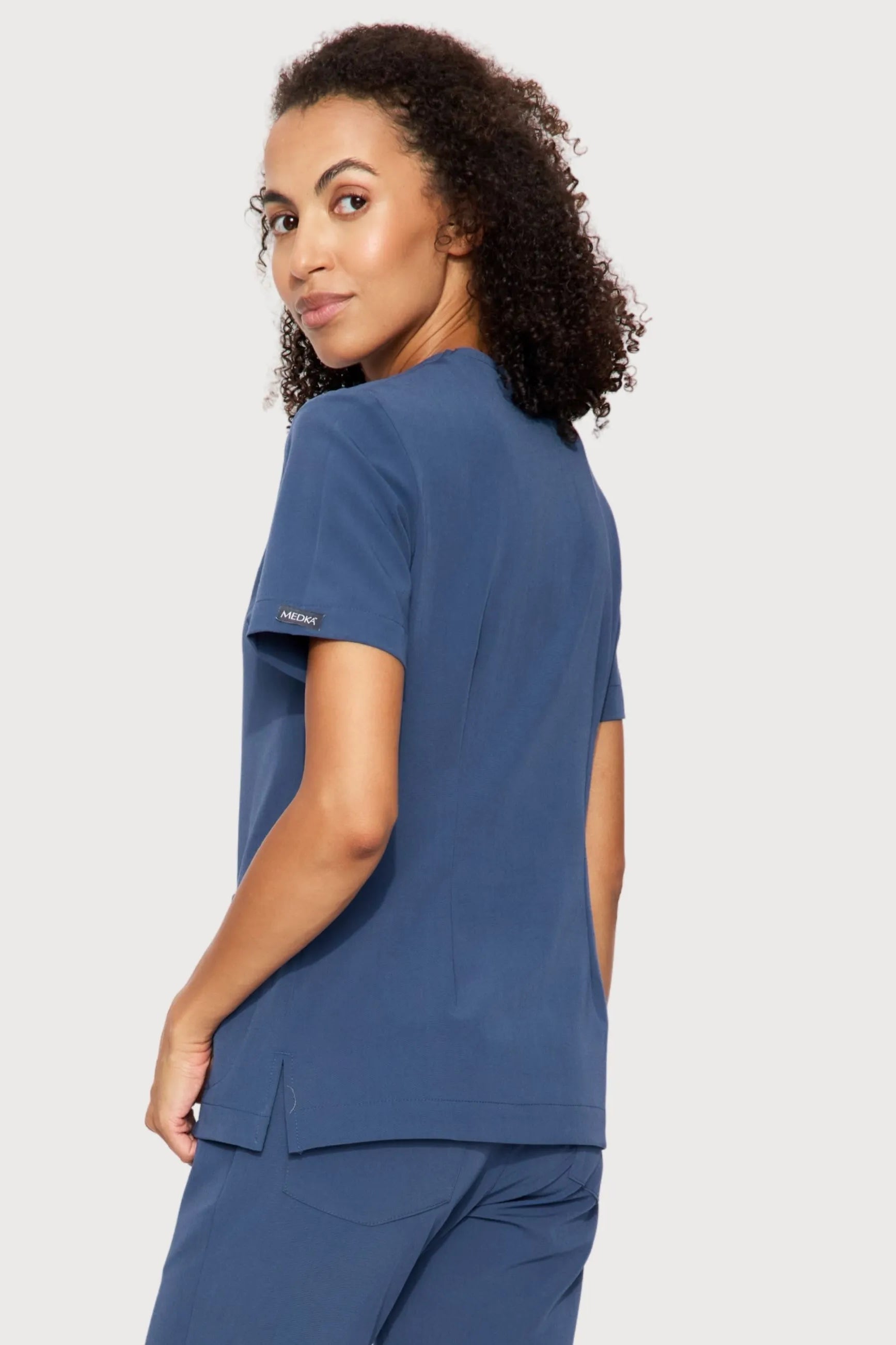
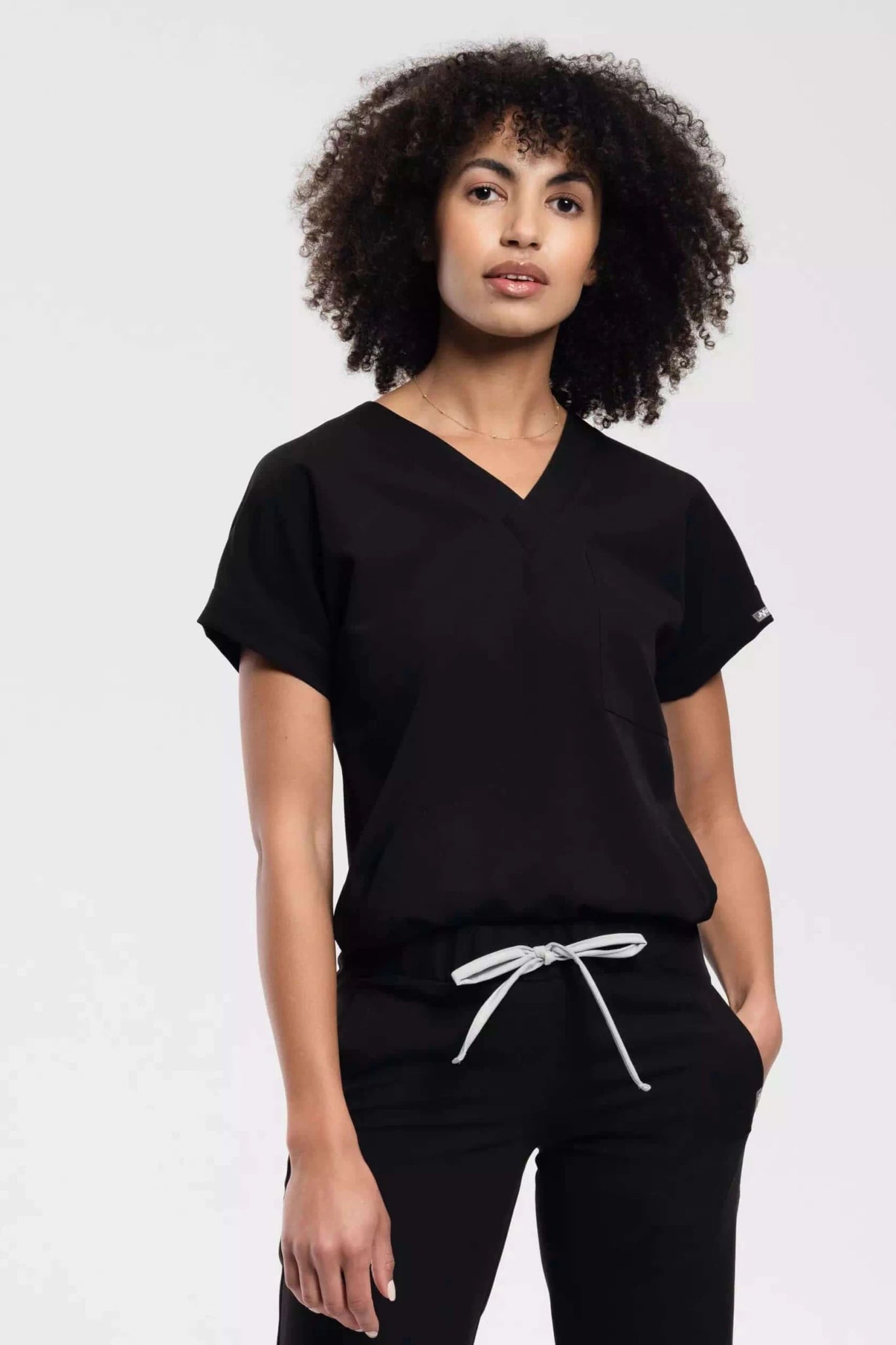
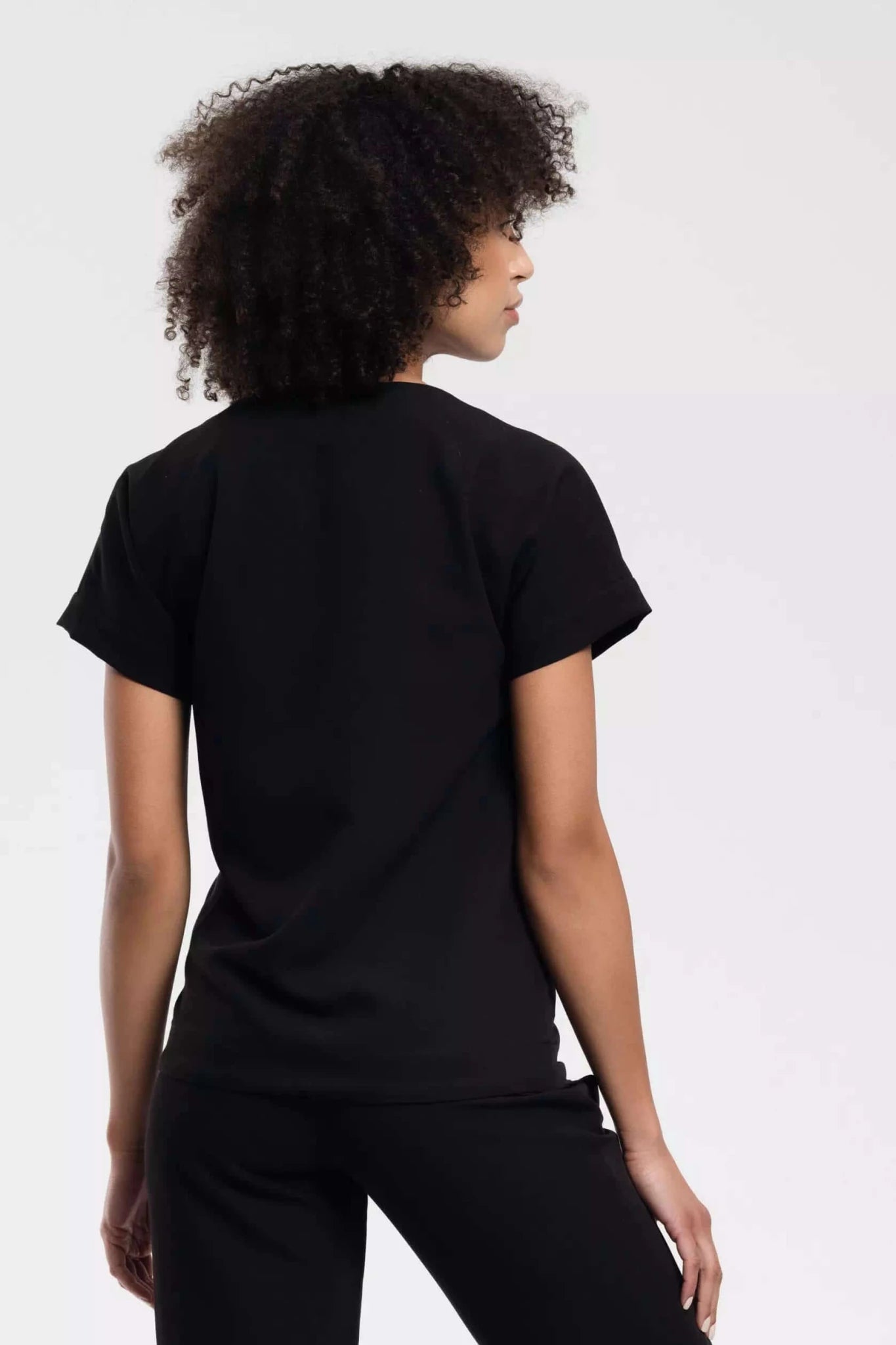
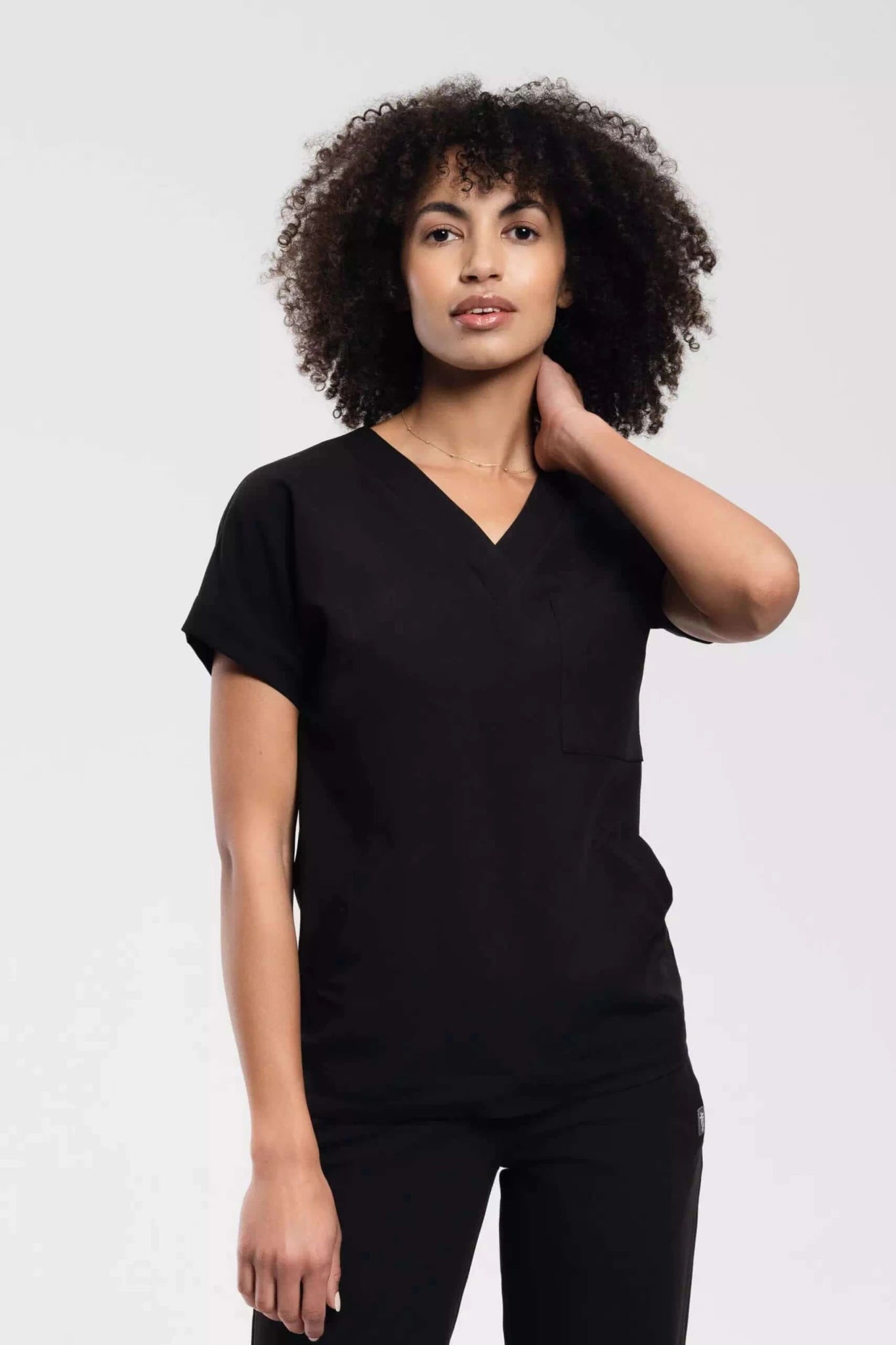
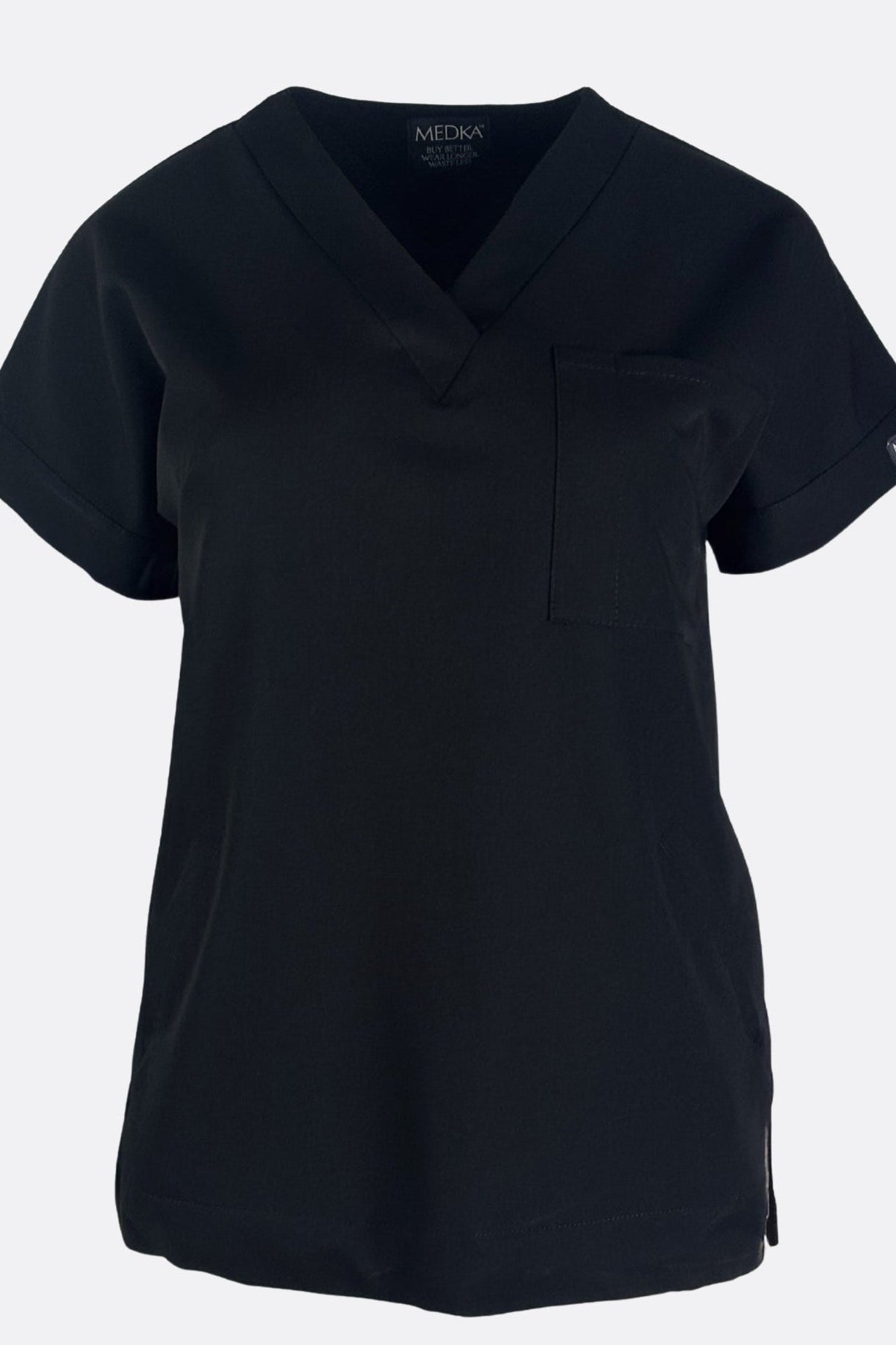
The standard in this profession is a two-piece uniform: a medical shirt and trousers. The sweatshirt should have a looser, non-constricting cut, with some space around the armpits and shoulders, because that's where the most movement occurs. The classic V-neck works well because it does not pull when bending. The length is also important: a sweatshirt that is too short will ride up every time you raise your arms, revealing your back at the most inopportune moment.
When it comes to pants, the profession has clearly moved towards joggers in recent years. The drawstring at the ankle prevents the leg from catching on the legs of the couch or your own shoes when you kneel, and the elastic, non-constricting drawstring at the waist, preferably made of cotton, does not dig into the stomach when bending. Classic straight medical trousers also work well, especially if you want a more subdued, "office" look, but with very dynamic techniques, joggers give you noticeably more freedom.
Pockets are a separate topic. A masseur does not carry as much equipment as a nurse, but the phone, tissues, sometimes small oil or a notebook have to go somewhere. Well-placed, deep pockets that do not fall out when you bend down are a detail that you will only appreciate while working. Pockets that are too shallow or placed in such a way that they tighten with movement are more decoration than function.
Oils, balms and stains - the daily fabric test
This is the area where the work of a masseur differs from that of most medical staff, and at the same time the one that is easiest to overlook when purchasing one. Massage oils, balms, candles and warming preparations are fats, and fat behaves completely differently on fabric than water.
Vegetable oil stains, if not treated immediately, penetrate the weave and may remain permanently after washing at standard temperatures. This is where the advantage of fabrics with a high percentage of polyester comes to light: they do not absorb fat as easily as pure cotton, so the stain stays more on the surface and can be removed. Some manufacturers additionally use hydrophobic finishes or coatings to facilitate cleaning, which is of particular importance when working intensively with oils.
It is also worth making a realistic assumption in advance: when working with oils every day, no fabric is indestructible. A more sensible strategy than looking for one "perfect" set is to have several and rotate them. Two or three sets worn alternately wear out slower than one washed every day, and you always have a fresh outfit at hand, even when one is drying after dealing with a stubborn stain.
One practical tip that saves more sets than any fabric choice: treat a stain immediately. You can remove a fresh trace of oil much easier than one that has dried on the couch all day. A stain remover stick kept in the office is an investment of several zlotys, which can save a sweatshirt worth PLN 200.
A color that makes the oil less noticeable
The colors of a masseur's outfit are governed by slightly different rules than in the rest of medicine. In a hospital, the color is often dictated by the facility or function. In a private massage parlor you usually have complete freedom, and this is both a freedom and a trap.
Classic white looks clean and professional, but when working with oils it is demanding: every stain is immediately visible, and with a bit of transparency, the fabric when wet can reveal more than you would like. On the other hand, dark colors, navy blue, graphite, black, bottle green, mask greasy marks much better and look neat longer between washes. This is a practical argument, which aesthetic guides often do not mention, and which saves a lot of nerves in everyday work.
It is also worth thinking about the consistency of the image. If you run your own practice and build a brand, the color of your outfit may match the interior design or logo. Subdued, warm colors, such as beige, sage or subdued pink, fit well with the relaxing nature of the massage and have a calming effect on the client. Strongly bright colors can be energizing, but in the context of a calming treatment they may be counter-effective. It's a subtlety, but massage is a profession where subtleties make up the entire client experience.
Care that determines the durability of the set
Even the best fabric composition can be ruined by poor washing, and vice versa: an average set can last a surprisingly long time if you treat it according to the label. This is an area where small habits translate into real money, because good quality medical clothing costs around PLN 200 to PLN 400 per set.
The basic principle concerns temperature. Cotton-polyester blends usually tolerate washing at 60 degrees, which is of hygienic importance because this temperature eliminates most microorganisms. Fabrics with a higher proportion of elastane or viscose, however, most often require a milder temperature of 40 degrees, because the higher temperature over time damages the elastic fibers and the clothing loses its elasticity and color intensity. Therefore, the label is not a formality, but an instruction that determines whether the stretch will last a year or a half.
A few habits extend the life of your set more than you might think. Giving up the use of fabric softener is one of the most important: the liquid settles on the fibers, reduces the ability to wick moisture and can neutralize the antibacterial properties of modern fabrics. Instead, half a cup of white vinegar added to the rinse works, as it softens naturally. Drying at high temperature is the shortest way to shrink the fabric and destroy the elastane, so hanging the set right after washing usually pays off, especially since well-hanged blended clothing often does not require ironing at all. For hygiene reasons, it is also worth washing work clothes separately from everyday clothes.
| Fabric type | Recommended temperature | Dryer | Practical note |
|---|---|---|---|
| Cotton 100% (white) | Up to 90°C | Be careful, it's shrinking | It disinfects well, but creases badly |
| Cotton + polyester | About 60°C | Rather avoid | Good hygiene/durability compromise |
| Polyester + viscose + elastane | 40°C | Do not tumble dry | Higher temperature destroys the stretch |
| Stretch blends (with elastane) | 40°C | No | Without softener, hang up immediately |
How does the type of massage change your priorities when choosing?
Massage varies from massage to massage, and many buyers choose their attire as if the profession were homogeneous. Meanwhile, classic relaxation massage, sports massage and massage in the rehabilitation context place slightly different requirements on clothing, and it is worth taking this into account instead of looking for one solution for everything.
When it comes to relaxing and classic massages, often performed in intimate offices or spa areas, aesthetics and the calming atmosphere come to the fore. The pace of work is moderate, so breathability, while important, is not critical. Subdued colors and soft-to-touch fabrics containing viscose or cotton will work well here, as they look elegant and create a mood.
Sports massage is a different league of effort. Intensive kneading, working on large muscle groups, fast pace, and often warmer rooms. This is where breathability and moisture removal become crucial, because you sweat more than with a gentle facial massage. The composition with a predominance of polyester with the addition of elastane, designed to quickly wick away moisture, will outperform pure cotton, which will become damp and heavy after an hour of work.
Work in the context of rehabilitation and medical facilities can be the most formally demanding. There may be the issue of fabric certificates, the need to wash at higher temperatures for sanitary reasons, and sometimes the colors imposed by the facility. If you operate in such an environment or plan to, it is worth checking immediately whether the fabric has an Oeko-Tex Standard 100 certificate, confirming the lack of harmful substances, and whether it tolerates disinfecting washing temperatures.
Case study: two sets, two purchasing strategies
Let's consider two masseuses who started at a similar time, both with a starting budget of around four hundred zlotys.
The first one bought one high-end set for the entire amount: 100% premium cotton, white, very pleasant to the touch. The choice seemed reasonable because the material was soft and elegant. The problems started in practice. When working with oils every day, the whiteness turned out to be merciless, every stain was visible immediately, and the cotton absorbed grease so that some traces remained permanently. Washing one set every day meant there was no spare set on days when it didn't have time to dry. After a few months, the set looked tired and the white turned greyish. Real time of service: about half a year until she no longer felt professional in it.
The second one divided the budget into two cheaper sets, composed mainly of polyester with the addition of elastane, in graphite and navy blue. Each individually had a less luxurious feel, but the colors hid any traces of oil, the fabric dried quickly, and rotating two sets meant she always had fresh outfits and neither was washed every day. After a year, both still looked neat and workable. For the same initial amount, it achieved approximately four times longer real life.
The conclusion is not that cotton is bad or that expensive sets are not worth it. The conclusion is that for a masseur who works with oils every day, durability, color that hides stains and rotation of several pieces beats a single luxury purchase. If the same first masseuse worked mainly with dry massage, without oils, her choice would look completely different and she could defend herself.
How much does a sensible outfit really cost and where to start?
The prices of medical clothing for masseurs range quite widely. Single low- and mid-shelf items start at around PLN 150 to PLN 220 for a sweatshirt or pants, and complete sweatshirt and pants sets from good manufacturers usually cost around PLN 380 to PLN 400 or more, as of early 2026. Personalization, i.e. embroidery with the name or logo of the office, is usually an additional cost and longer order processing time.
If you're just starting out and have a limited budget, it makes more sense than one expensive set to buy two cheaper ones that you can rotate. This ensures better hygiene, longer life of each piece and the comfort of having a spare. When choosing a specific model, pay attention in this order: first the composition of the fabric on the label, then the cut and freedom of the shoulders, then the color resistance to stains, and finally the aesthetics and fit to the character of your office.
It is also worth using the size charts available in every decent store, instead of buying by eye. Clothing in the right size allows for freedom of movement, while clothing that is too tight, even with elastane, will restrict dynamic techniques. If you have the option of returning it within 30 days, which most stores offer, treat the first set as a test: try it on, make a few movements imitating work, check whether there is any pulling and whether the sweatshirt does not ride up.
Finally, a practical choice: there is no one outfit that is perfect for every masseur. A person who works mainly for relaxation in a cozy spa and a sports masseur in a warmer office have different priorities. Choosing an outfit means matching the composition, cut and color to what you actually do on the couch, and not to the general idea of "medical clothing".
Frequently asked questions
Below I have collected short, specific answers to the questions that most often arise when choosing an outfit for massage work. They are intended to help quickly resolve doubts that remain after the main choice of fabric and cut.
Does a masseur have to wear medical clothing or is regular sportswear enough? There is no regulation requiring medical clothing in a private massage parlor, so technically any comfortable clothing will suffice. In practice, however, a medical uniform builds the image of a professional and protects your clothes against oils and moisture, which a tracksuit does not. In medical and rehabilitation facilities, medical clothing is already a requirement.
What material is best for working with massage oils? Fabrics with a high percentage of polyester, often with the addition of elastane, work best because they do not absorb fat as easily as pure cotton and allow the stain to be removed before it penetrates the weave. An additional advantage is hydrophobic finishes. Pure cotton is the most difficult to remove when working with oils every day.
At what temperature should a masseur's medical clothing be washed? Cotton-polyester blends are usually washed at 60°C, which disinfects the fabric well. Materials with a higher proportion of elastane or viscose usually require 40°C, because higher temperatures destroy elastic fibers and weaken the color. Always follow the label of a specific product.
Joggers or classic straight pants for a masseur? Joggers with a cuff at the ankle allow more freedom when bending and kneeling, and the leg does not catch on the couch, which is why they are increasingly chosen by masseurs when working dynamically. Classic straight trousers look more office-like and formal. Both cuts are good, the choice depends on your work style and image preferences.
What color outfit best hides oil stains? Dark colors, such as navy blue, graphite, black or bottle green, hide greasy marks much better than white and look neat longer between washes. White looks very professional, but when working with oils it is demanding to maintain. Subdued, warm colors also fit well with the relaxing nature of the massage.
Is it worth paying extra to personalize your outfit with embroidery or a logo? Personalization with embroidery with the name or logo of the office strengthens a consistent, professional image and can be profitable when you are building your own brand and want recognition. However, it involves additional costs and extended order processing time. To start, with a limited budget, it is usually more important to buy two sets for rotation than to embroider one.
How many sets of clothes does a masseur need to start? A minimum of two sets is reasonable, so that you can rotate them, wash each one less often and always have a fresh outfit when the other one dries. Rotation actually extends the life of each piece and improves hygiene. Three sets provide even greater comfort, especially during daily, intensive work with oils.
See alsoż:
- What does that mean? scrubs and what is this type of clothing?
- Colors of clothes in the hospital and their meaning
- How to wash medical clothing?
- How to recognize high-quality medical clothing and what to look for?ociattention?
- Medical clothing without ironing - how to recognize it?
- What medical clothing is appropriate for a pediatrician?
- How should a beautician be dressed?
- What does a basic page look like?oh for the surgeon?