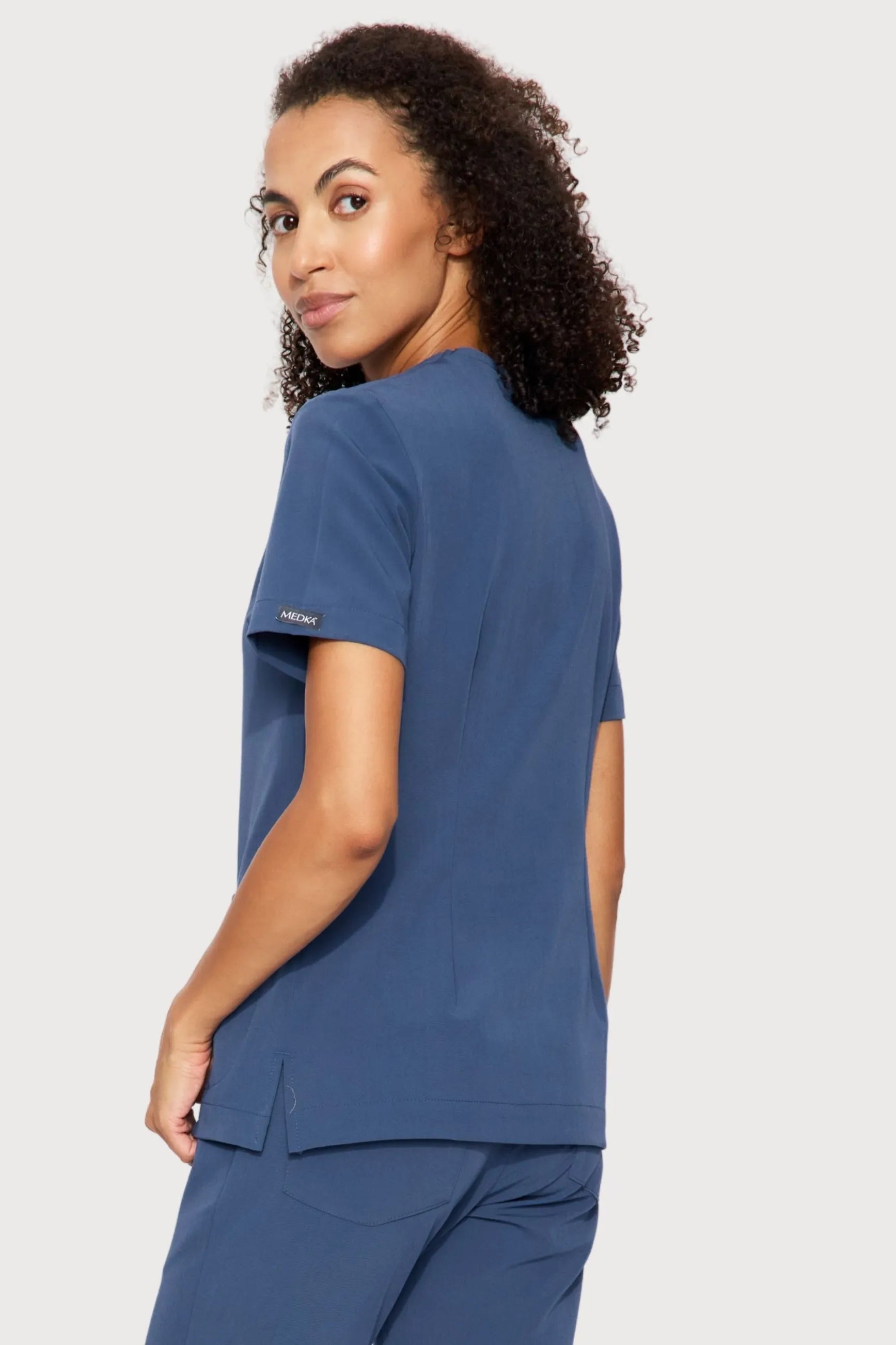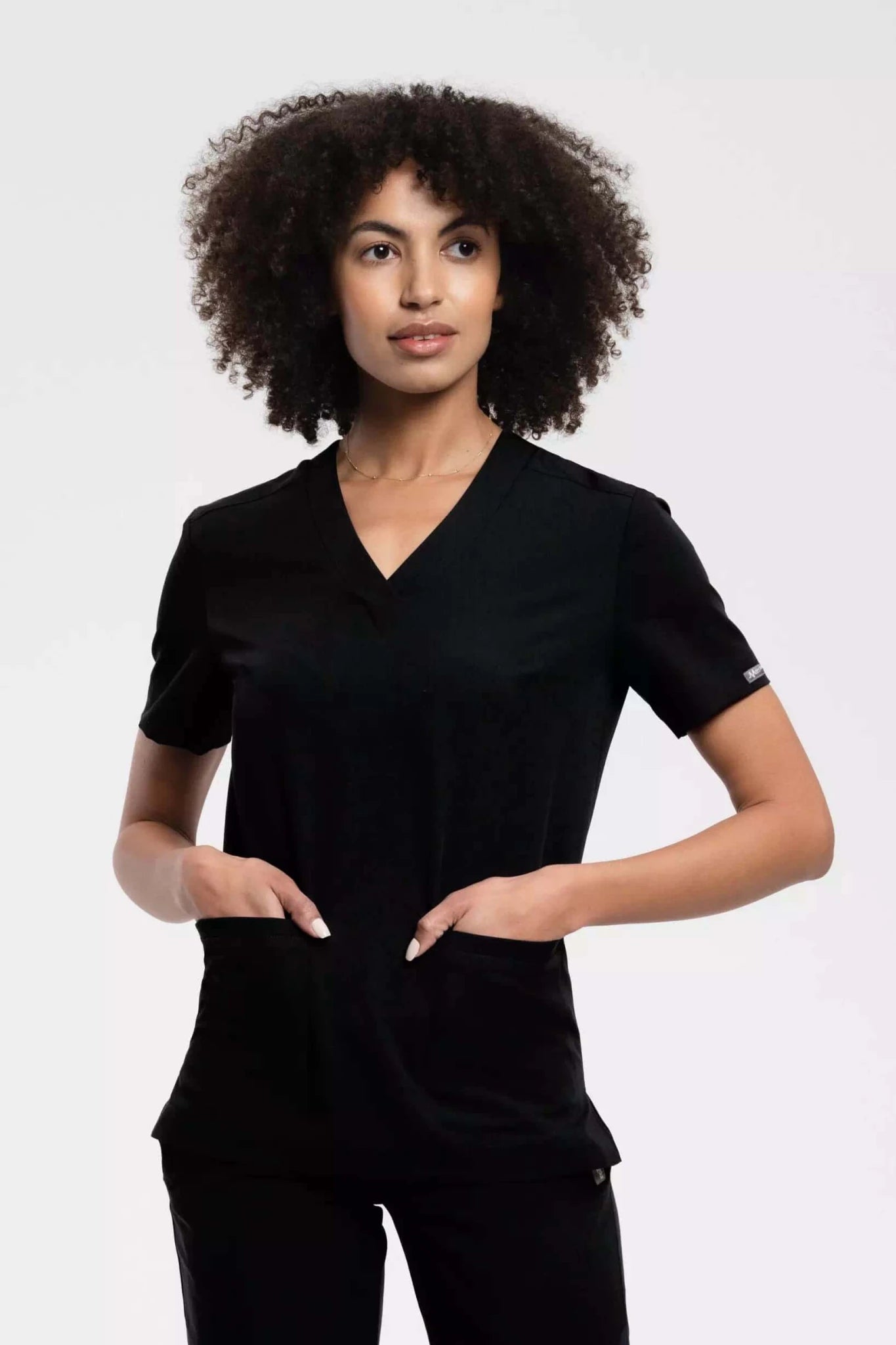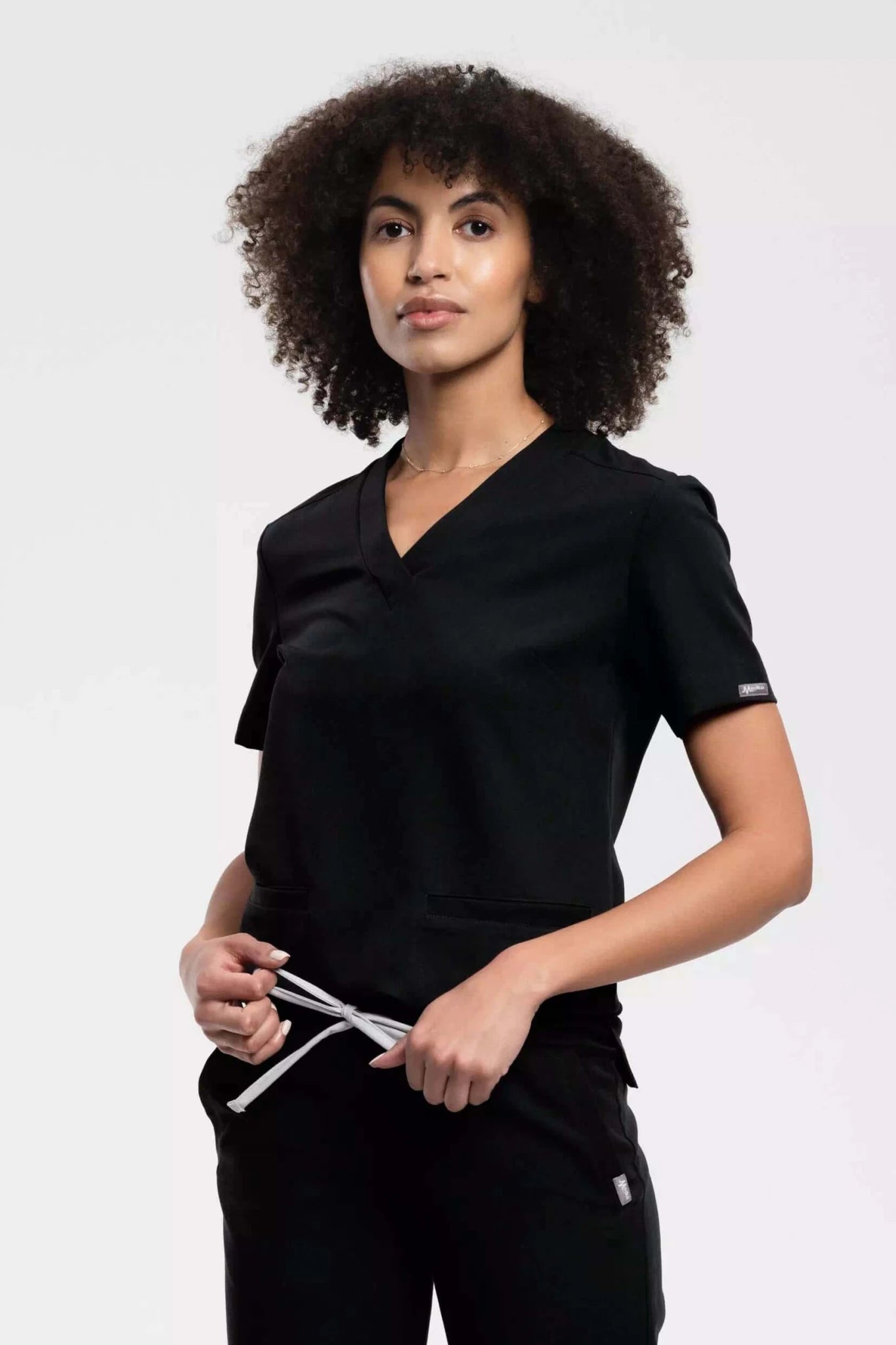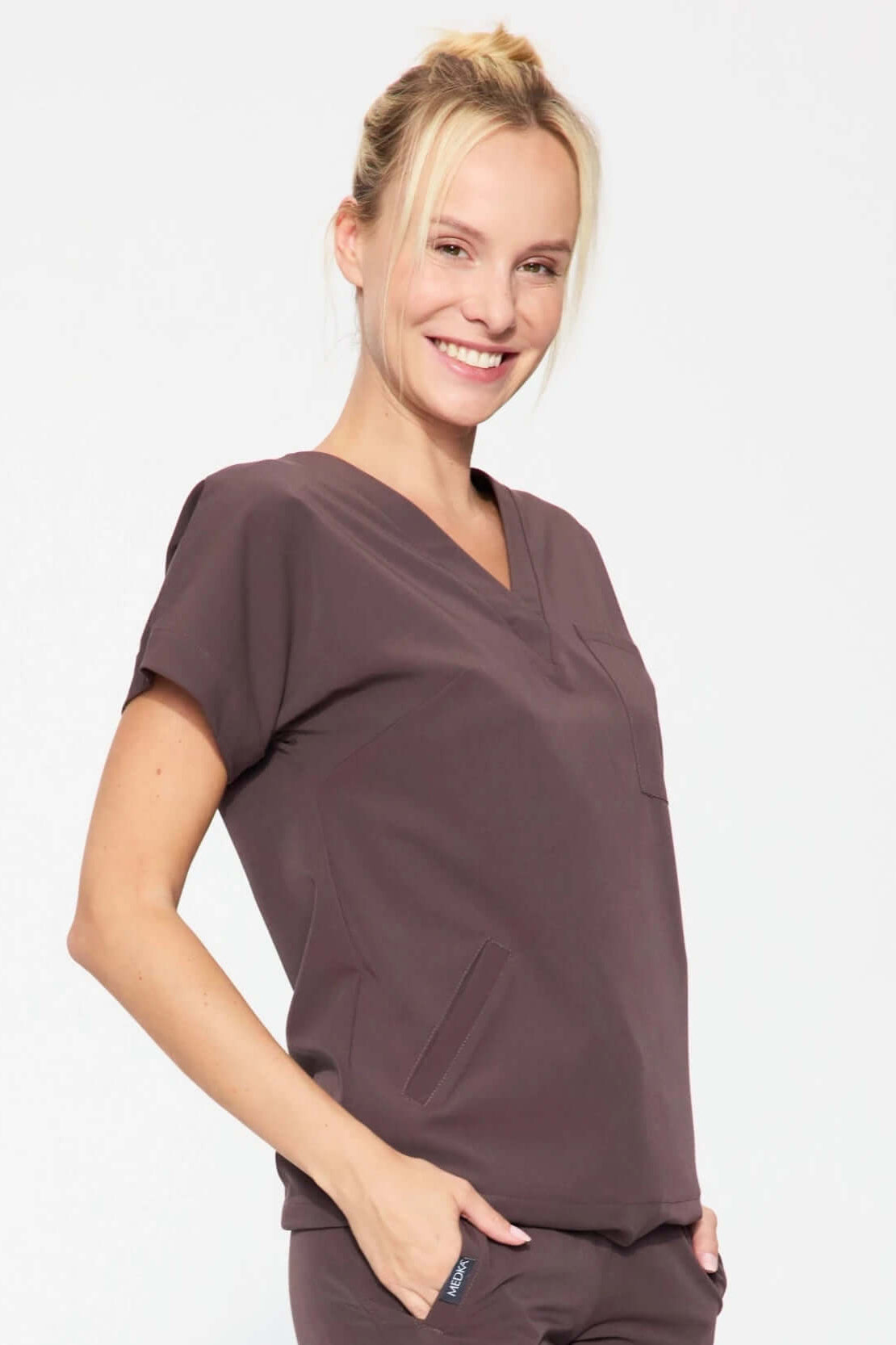




The surgeon's outfit only appears to be one set of clothes. In fact, it is a system of layers, each of which operates in a different zone of the operating theater and performs a different function, and confusing them with each other is the most common misunderstanding on this topic. The sweatshirt and trousers associated with medical series are only the base layer in which the surgeon moves around the block. The operation itself includes a sterile apron, mask, cap, gloves and a whole host of rules that have nothing to do with fashion and everything to do with the microbiological barrier. In addition, there is a question that almost everyone asks: why green or blue and not the classic white. The answer goes back to the physiology of the eye and a specific date in the history of surgery. So let's break down this outfit, layer by layer, along with what is a requirement and what is a matter of convenience or tradition.
What does a surgeon's outfit consist of and why is it there at all?
Let's start with the function, because it explains every element. Surgical attire exists to maintain a barrier between the staff and the surgical field in both directions: to protect the patient from microorganisms on the surgeon's body and clothes, and to protect the surgeon from contact with blood and body fluids. This is not a uniform in the aesthetic sense, but an element of the infection control system.
This is the key distinction that we need to start with, because without it everything else becomes blurred. The surgeon's outfit is actually two different types of clothing with different purposes. The first is basic clothing, i.e. a sweatshirt and surgical pants, commonly called scrubs, in which the staff works in the block outside the operation itself. The second is sterile clothing worn immediately before the procedure: a sterile surgical gown and sterile gloves, put on only after surgical hand washing. These two layers differ in material, method of installation, disposability and standards to which they are subject.
The full picture also includes elements common to both situations, worn almost all the time in the operating zone: a surgical mask, a cap covering the hair and dedicated block shoes. It is the sum of these layers that creates what we colloquially call a surgeon's uniform, which is why describing it as a single set of shirt and trousers is misleading.
| Element | Layer/zone | Main function | Disposable? |
|---|---|---|---|
| Scrubs (sweatshirt and pants) | Base, whole block | Work clothes, work comfort | No, reusable |
| Sterile surgical gown | Operational, at the table | Microbiological barrier | Usually yes |
| Sterile gloves | Operational, at the table | Hand barrier | Yes |
| Surgical mask | Operational zone | Respiratory protection | Yes |
| Cap | Operational zone | Covering the hair | Usually yes |
| Block shoes | Operational zone | Hygiene and ergonomics | No, washable |
Scrubs, the surgeon's base layer
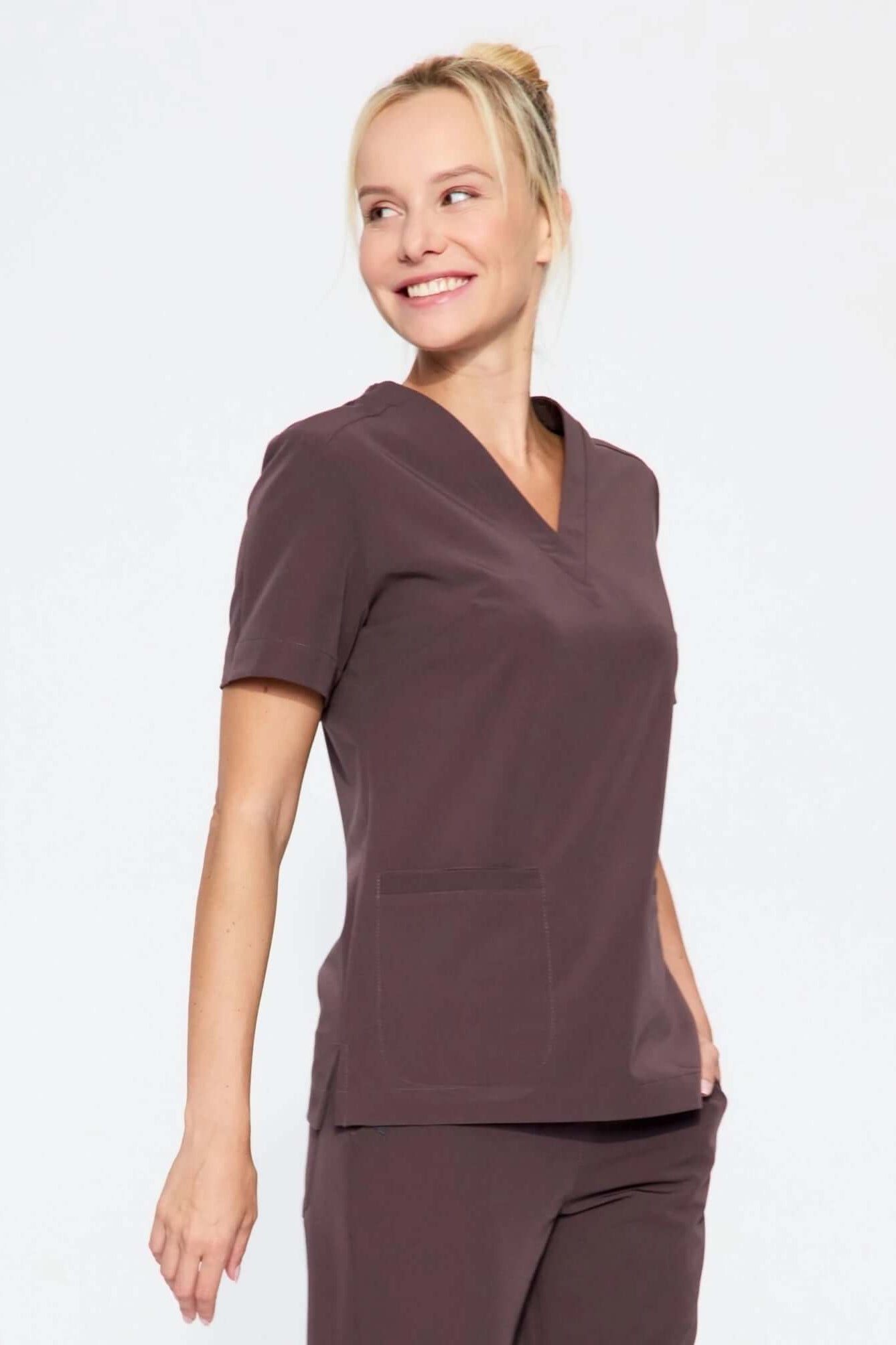
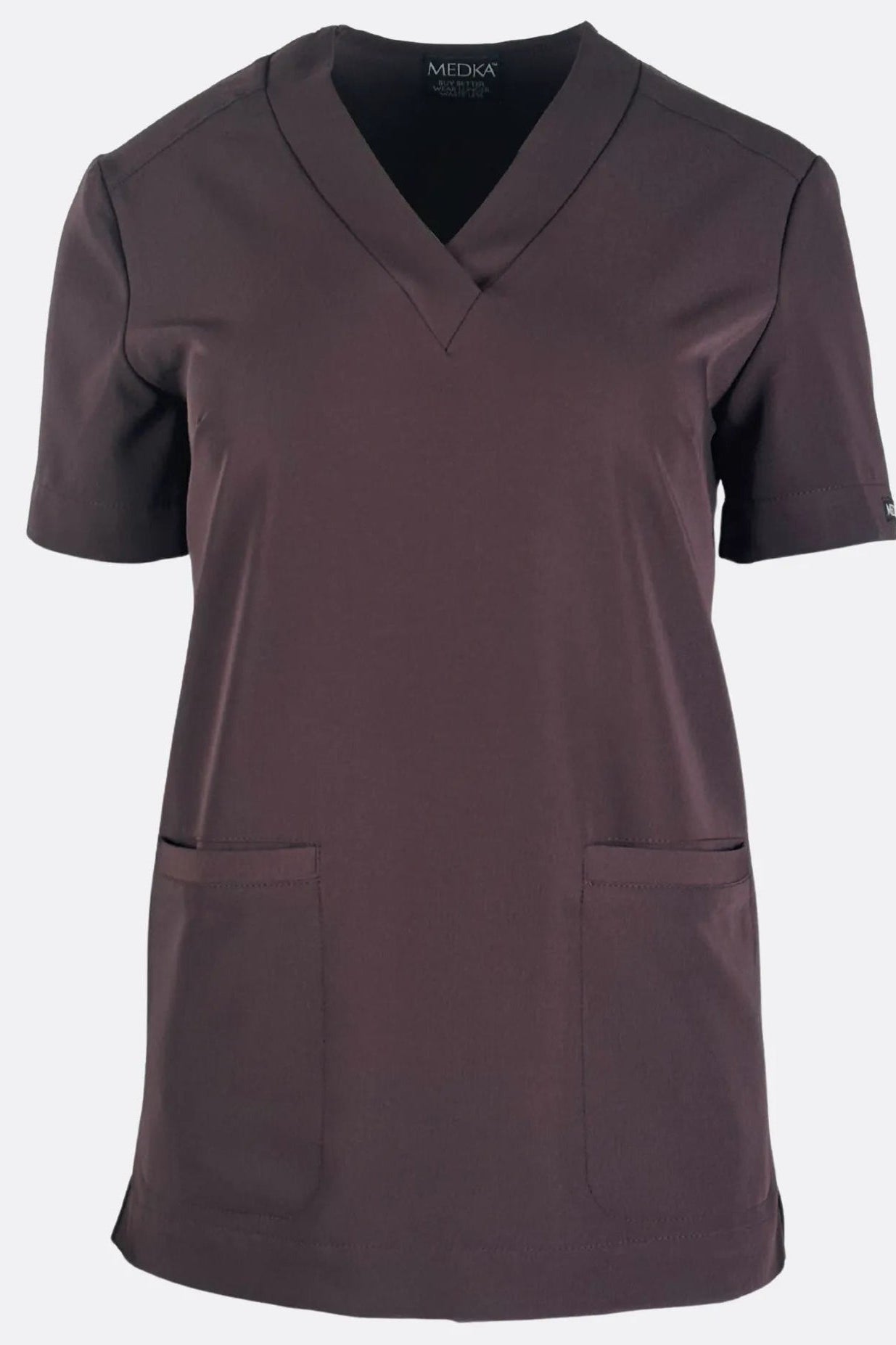
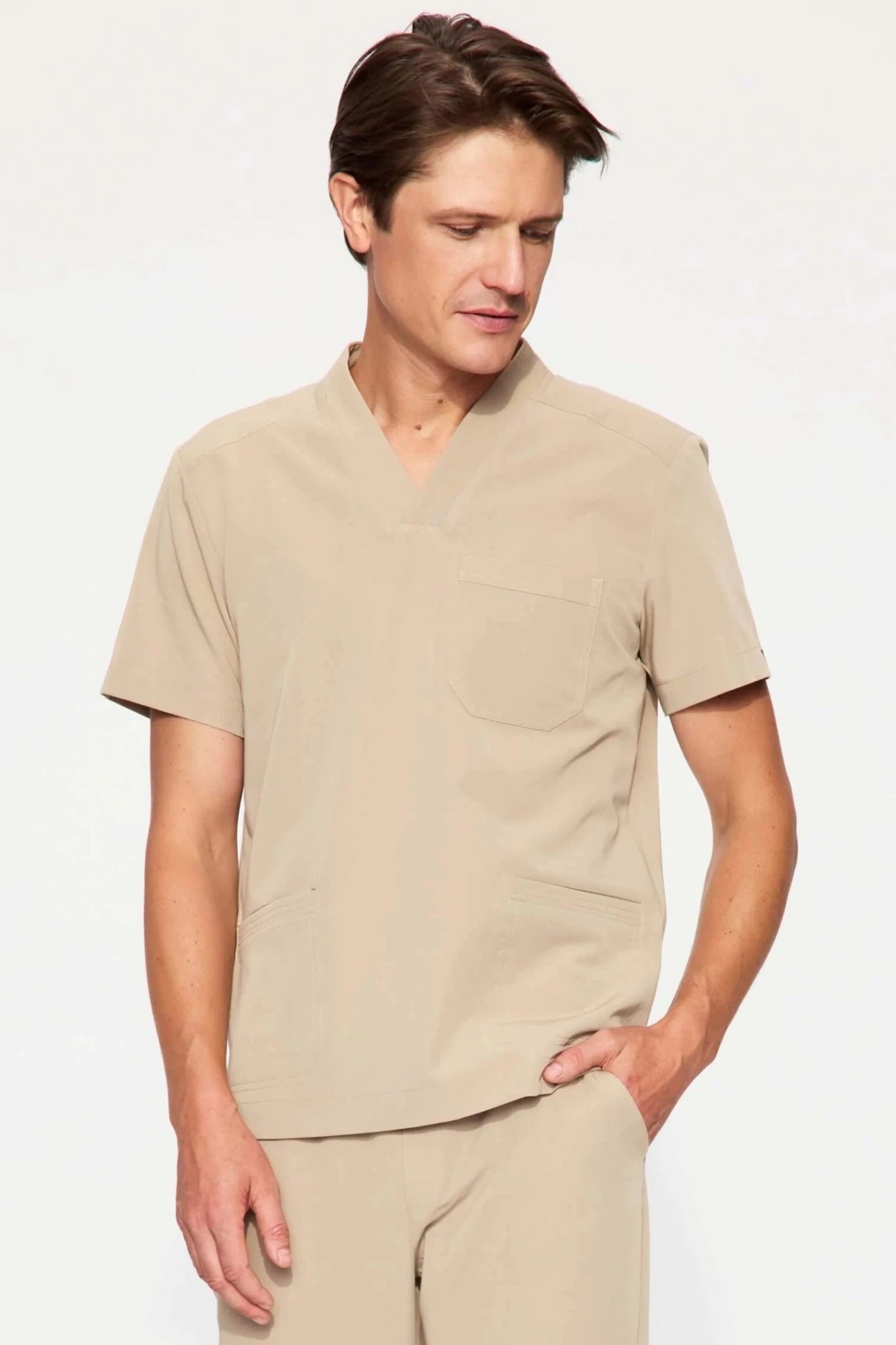
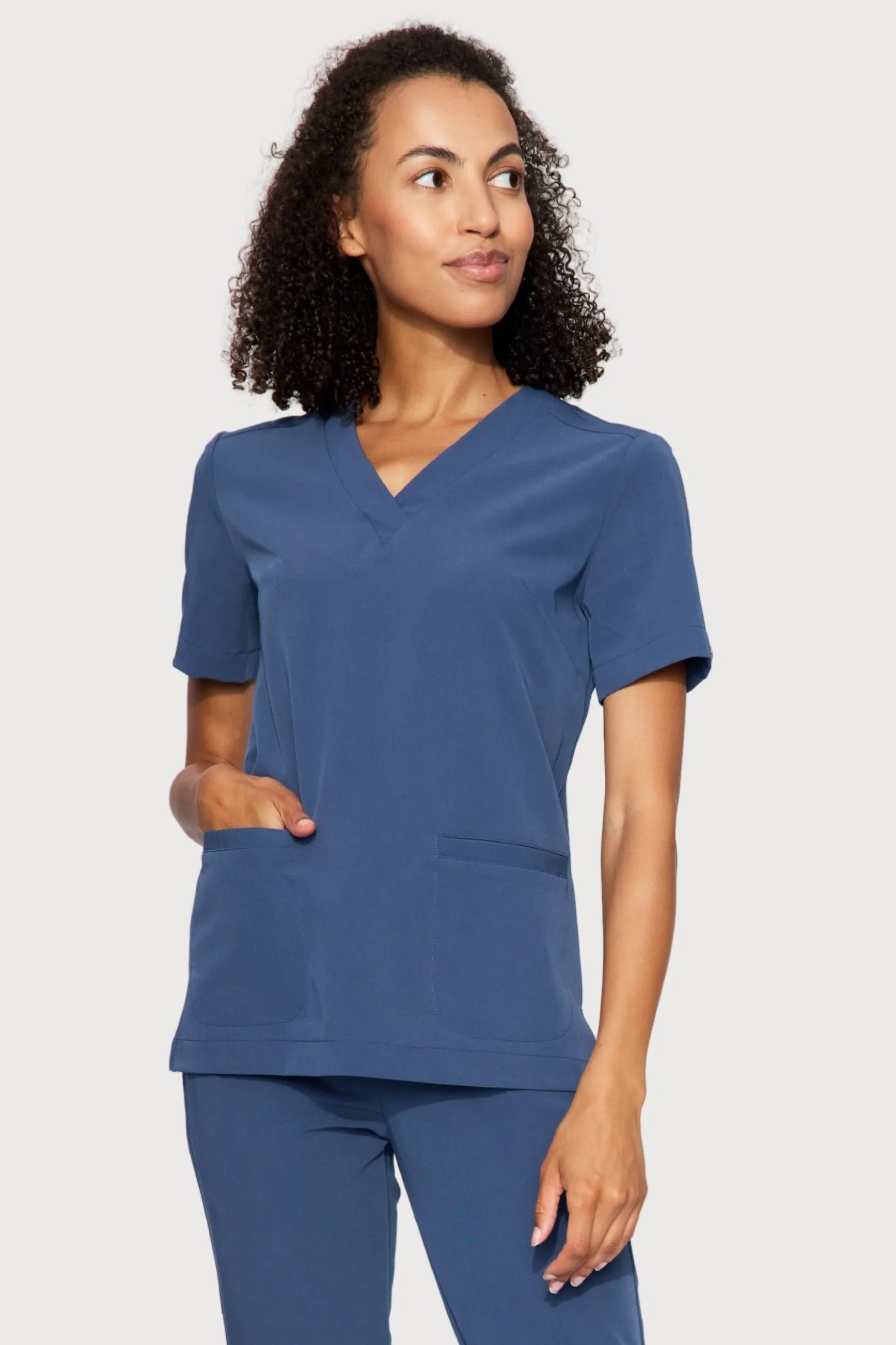
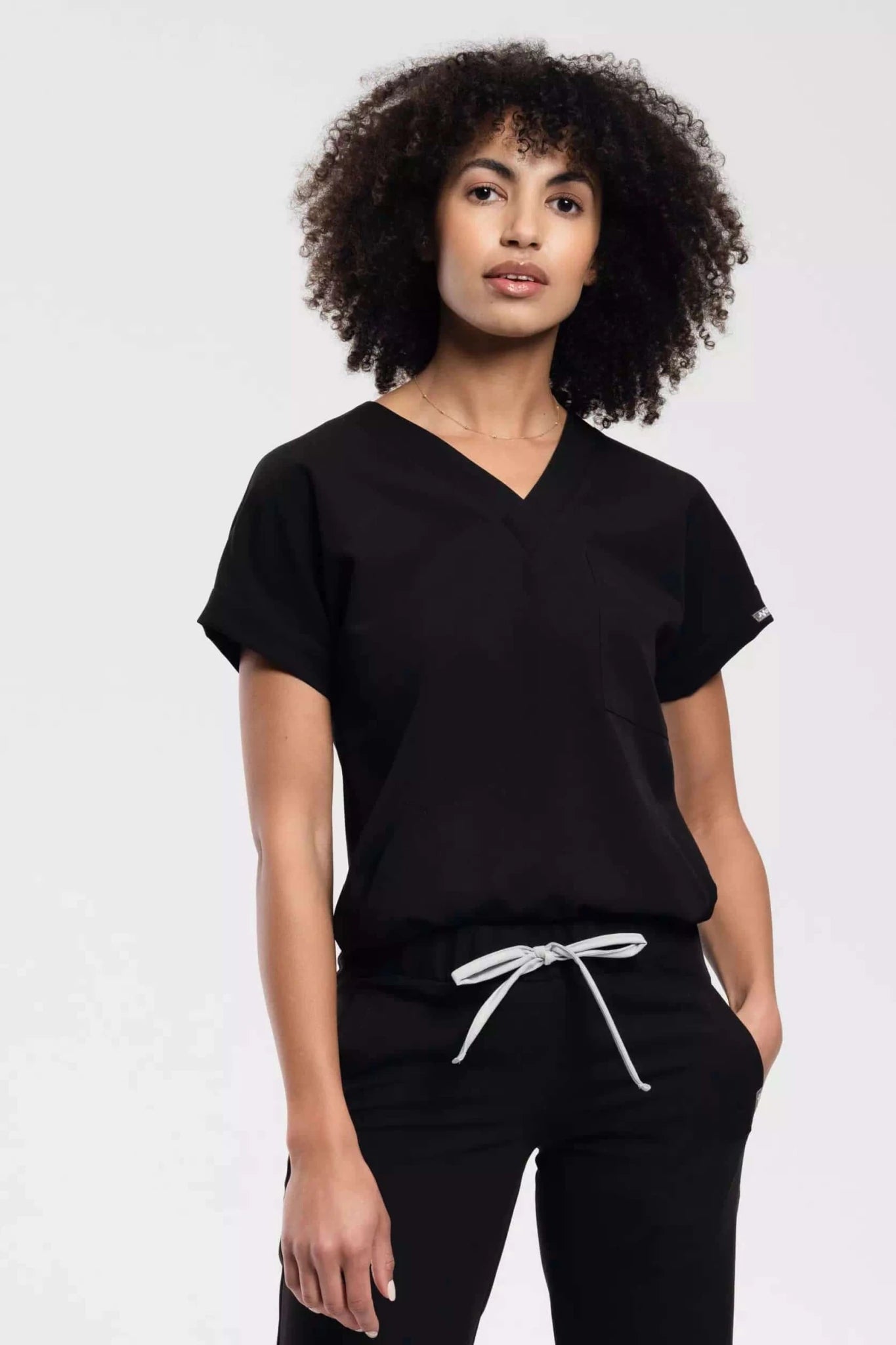
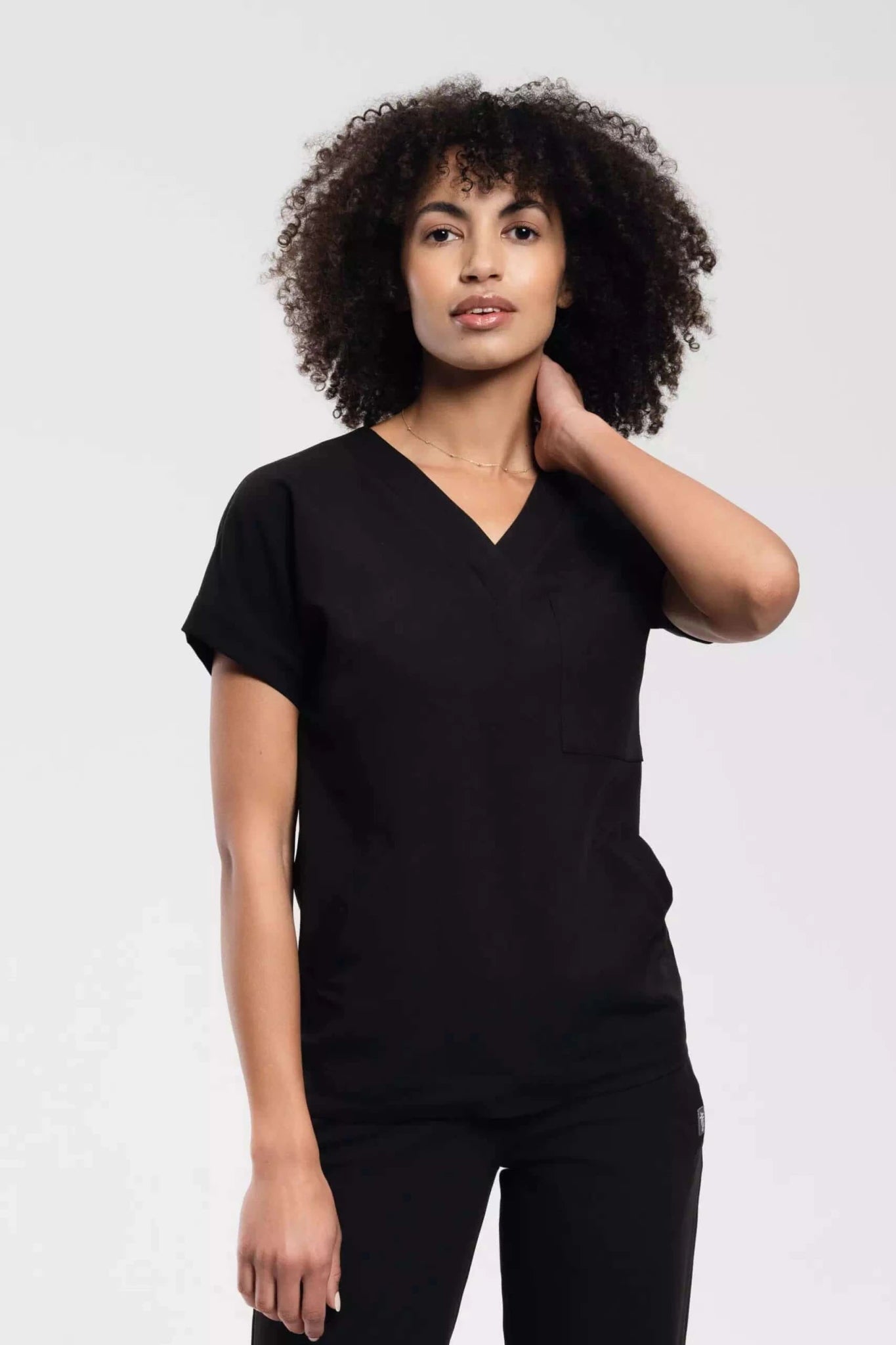
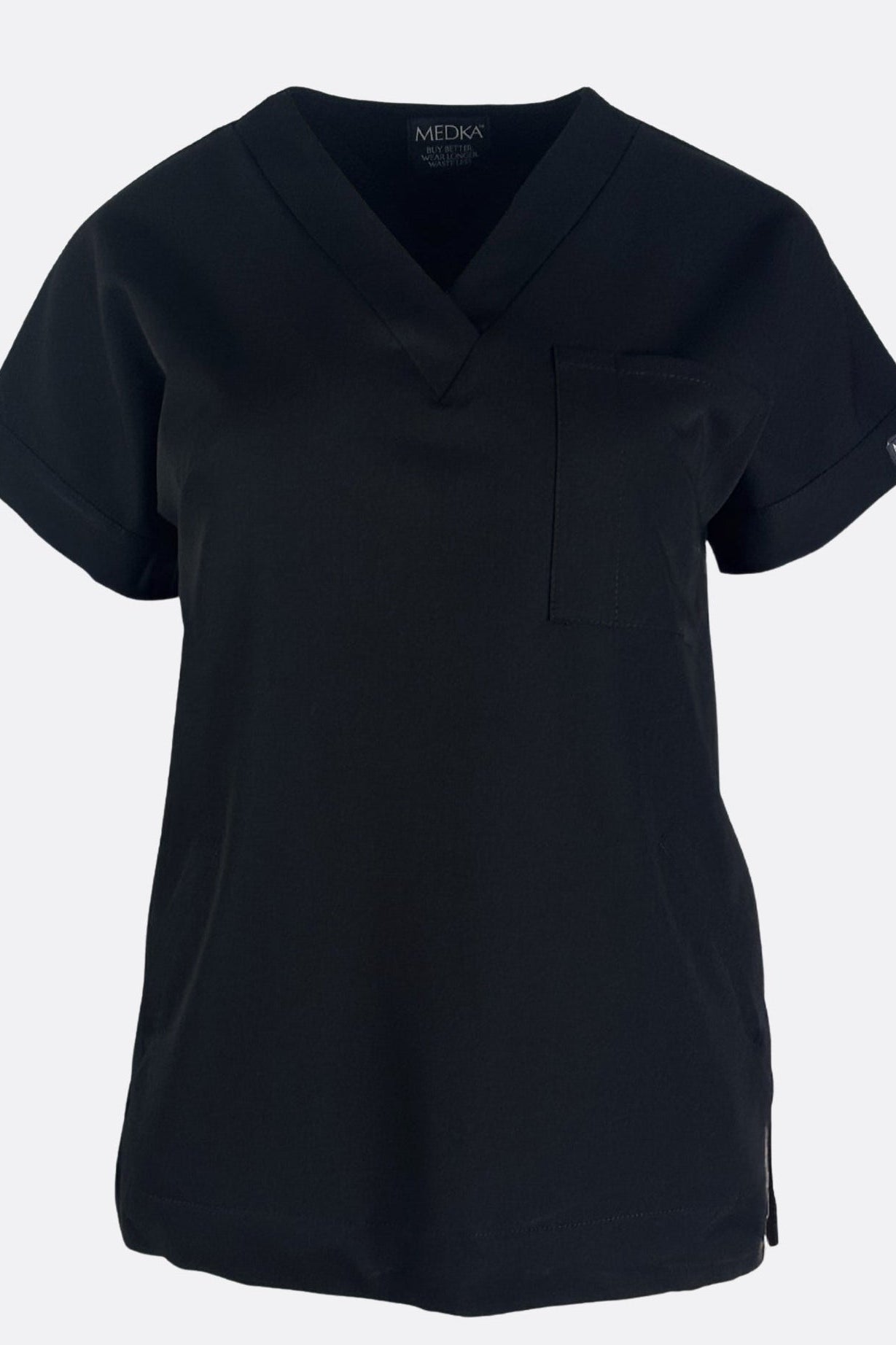
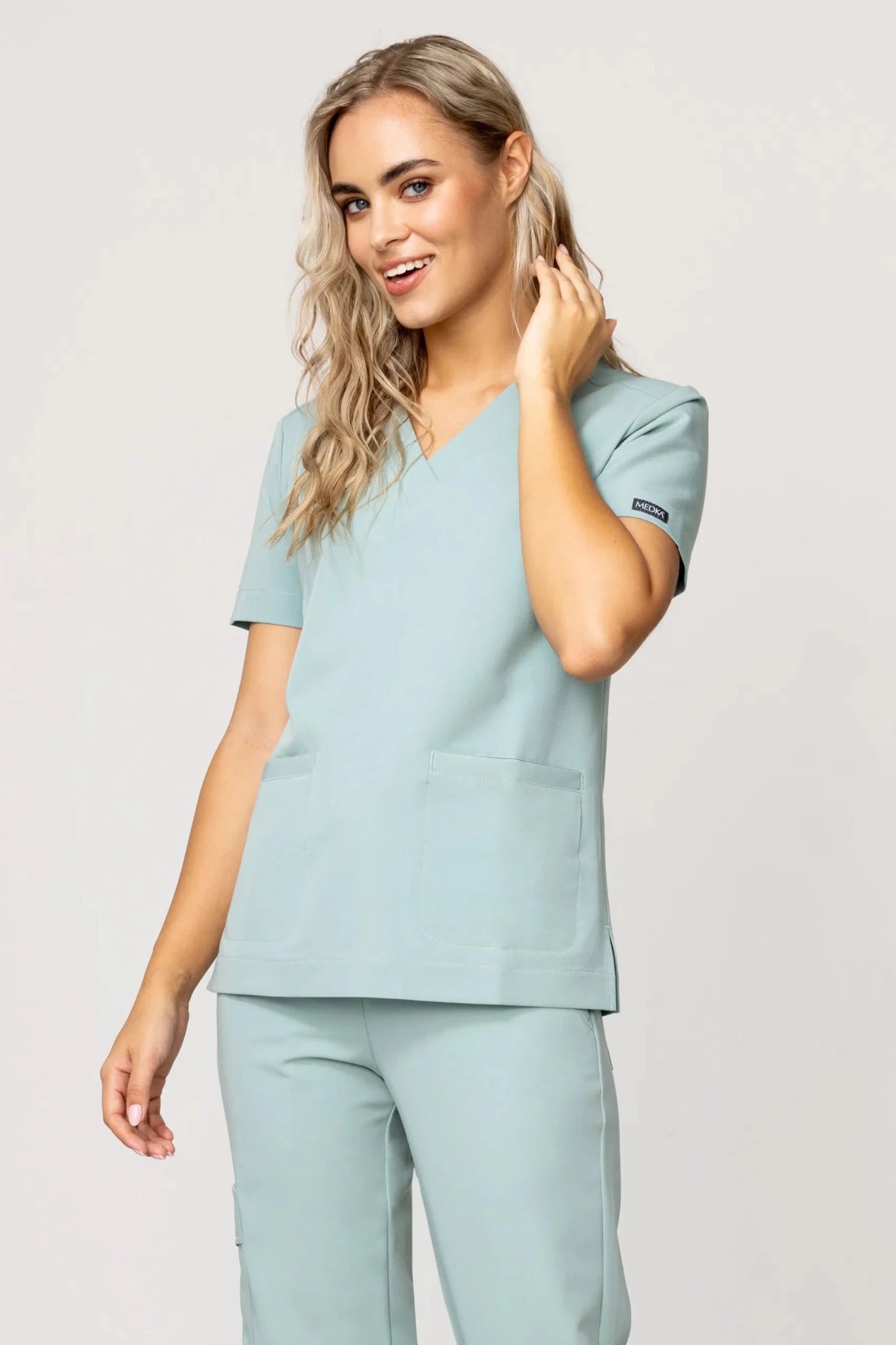
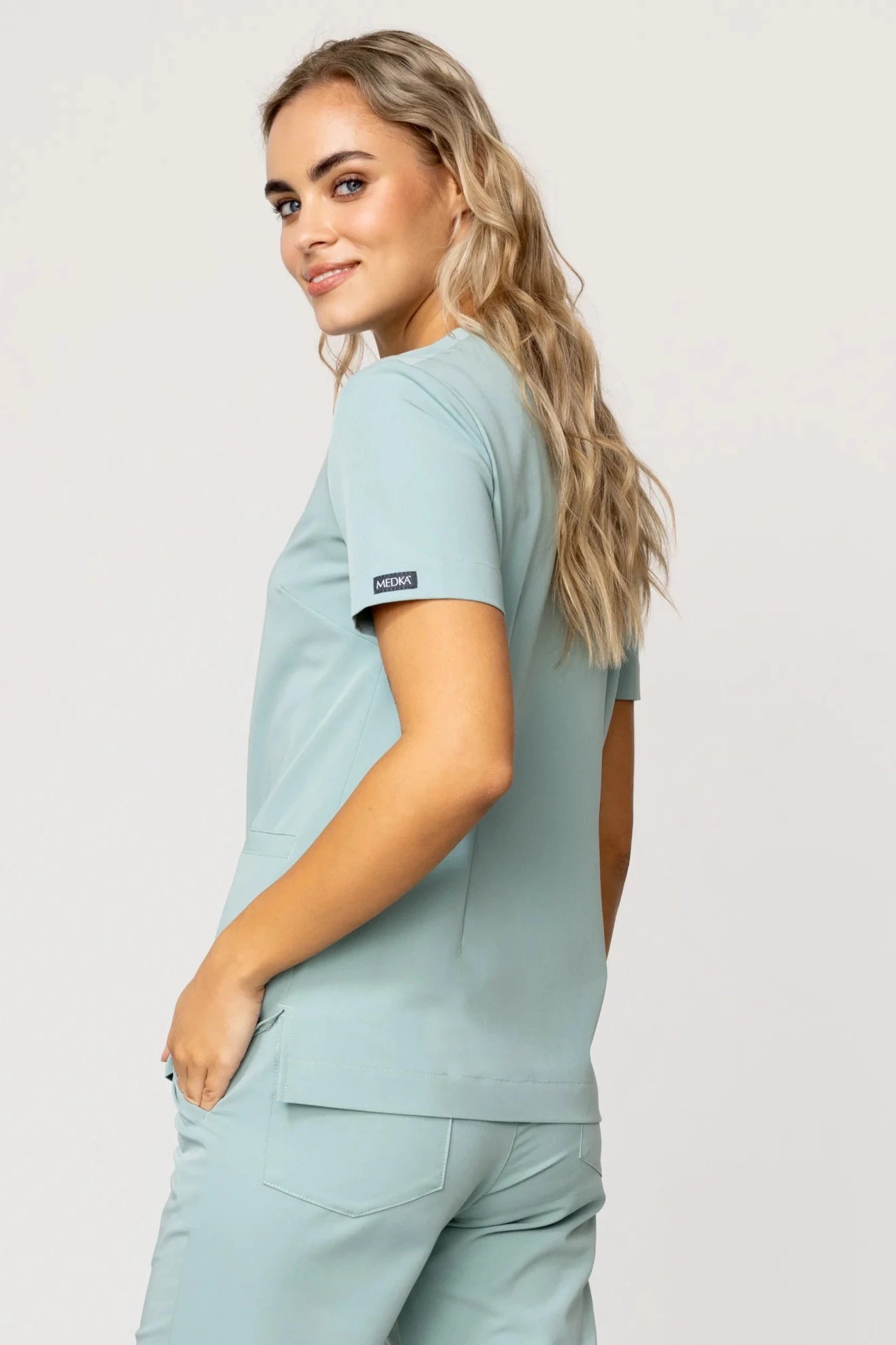
Everyone who enters the block starts with this layer, so let's pay attention to it first. Scrubs is a sweatshirt and trousers with a simple, loose cut, intended to be worn in the operational zone. The sweatshirt usually has a V-neck, which makes it easy to put on and take off quickly, and one or two pockets. The trousers have an elastic waistband or drawstrings and a straight leg that does not restrict movement.
The cut is a function here, not an aesthetic one. Clothes that are too big get tangled and get in the way at the table, while clothes that are too small cause discomfort during long procedures performed while standing. Therefore, a good fit is practical, not just visual. The material is cotton or cotton-polyester blends, valued for breathability and comfort during long hours of work, while also being resistant to frequent washing at high temperatures, which is a hygiene condition here, not an option.
An important tidying note: scrubs themselves are not sterile clothing. These are reusable work clothes for the operating area, washed and disinfected in a facility where the surgeon moves freely around the block but does not approach the sterile field. Equating scrubs with full surgical attire is the mental shortcut that leads astray. Another layer is needed for the operation itself.
Sterile apron and gloves: operational layer
Here we get to the heart of sterility, i.e. what distinguishes surgical attire from an ordinary work uniform. Immediately before the procedure, after surgically washing and disinfecting the hands, the surgeon puts on a sterile surgical gown tied at the back and sterile gloves pulled over the gown's cuffs. The method of donning is strictly defined so that the outer, sterile side of the gown does not come into contact with anything non-sterile, including the surgeon himself. This is the moment when sterility is easiest to violate, which is why it is practiced separately.
A surgical gown is not an ordinary material. In the high-risk zone, aprons made of barrier non-woven fabrics are used, most often of the SMS or SMMS type, i.e. multi-layer polypropylene materials in which the outer layers provide strength and the middle layer is a filter for microorganisms. The type of apron depends on the procedure: for operations that generate a lot of fluids, materials with increased barrier properties and reinforcements in the front part and on the sleeves are used, while for minor procedures, a lighter version is sufficient. The vast majority of this clothing is now disposable, because it is simpler and cheaper than washing and re-sterilizing the reusable gowns that used to dominate.
It is worth knowing that this layer is subject to specific standards and not the manufacturer's discretion. Aprons and clothing for operating theaters are described by the EN 13795 standard (in the newer version from 2019 and the update from 2025), which determines, among others, the material's resistance to the penetration of microorganisms dry and wet, microbiological cleanliness and dusting, i.e. the release of particles that may contaminate the surgical field. When there is a risk of contact with infectious agents, the EN 14126 standard also comes into play. A sterile surgical gown is a medical device subject to EU regulations, which shows how far this layer is from ordinary clothing.
Mask, cap and footwear: elements that are always in the background
These three items are worn almost all the time in the operational area, and although they seem small, each has a clearly defined purpose. They are not an addition to the outfit, but an integral part of it.
A surgical mask covers the nose and mouth, limiting the escape of droplets and microorganisms from the staff's respiratory tract towards the surgical field. A good quality mask filters very fine particles, and its bacterial filtration efficiency in barrier materials reaches almost one hundred percent. The surgical cap covers the hair, which carries exfoliated epidermis and bacteria, and prevents it from falling near the wound. Both elements work on the same principle as the apron: they create a barrier limiting the transfer of pollutants.
Footwear is sometimes downplayed, but it shouldn't be. Block shoes are dedicated footwear worn only in the operational area, usually washable and resistant to disinfection and contact with chemicals and liquids. They have two purposes at once: hygienic, because they do not introduce pollution from the outside, and ergonomic, because the surgeon spends many hours on his feet, and uncomfortable footwear actually affects concentration during the procedure. Good block shoes do not fray, do not tear and do not lose their properties after frequent washing. This is an element where comfort and hygiene meet in one.
Why is a surgeon's uniform green or blue?
Almost everyone asks this question, and here the short answer about "less eye fatigue" does not do justice, because the mechanism is more interesting and has a specific mounting. It's about the physiology of vision, not about taste or tradition.
During surgery, the surgeon looks at red and pink tissue and blood for many hours. The eye's photoreceptors responsible for the perception of red gradually adapt to it and lose sensitivity. When at such a moment the gaze shifts to white, which contains all the colors, the brain compensates for the weakened red signal by strengthening the green, which causes greenish afterimages to appear on the white material, i.e. an optical illusion that distracts attention. In addition, there is glare: bright white material in the strong light of operating lamps strains the eyes, just like snow on a sunny day. Both effects hinder precision.
The solution was a color on the opposite side of the color wheel from red. Green and blue are complementary colors to red, so shifting your gaze to them does not cause afterimages and allows the eye to rest, and when returning to the operating field it improves sensitivity to subtle shades of red and pink, which can be diagnostically important. The idea is not new. It is attributed to the surgeon Harry Sherman, who moved away from white in favor of green around 1914, and green and blue surgical uniforms became popular in hospitals in the 1950s and 1960s.
Color also carries a social message, which is confirmed by research. In an analysis published in JAMA Surgery in 2023, patients were shown doctors wearing different colored clothing: green clothing was most often accurately associated with the role of a surgeon, blue with professionalism and a positive attitude, and black was the lowest in terms of perceived competence. The color of the outfit works on two levels at once: physiological at the table and image-related in the relationship with the patient.
What is a hard requirement and what is a matter of choice?
Since the elements of the outfit are already laid out, it is worth separating what is imposed by sterility rules from what the surgeon has real influence on. This distinction prevents everything from being treated as a rigid rule and some customs as law.
A strict requirement is the set and parameters of the sterile layer and barriers: a sterile apron meeting the standards, sterile gloves, mask, cap, block shoes, surgical hand washing and the entire donning procedure without compromising sterility. There is no freedom here, because the patient's safety depends on it, and sterile clothing is regulated by medical devices. It is also a requirement that basic clothing be washed and disinfected frequently, and that footwear and scrubs remain in the operating area and do not wander around the entire hospital.
A matter of choice or local practice, there are many things that are sometimes considered rigid rules. The exact shade and whether the scrubs are green or blue depends on the facility, as does the color distinction of team roles, which facilitates communication but is not a universal law. The cut of the sweatshirt, the length of the sleeve in the base layer, the material of the scrubs within the limits allowed by the facility, and the specific model of footwear are areas where comfort and preference count, as long as hygiene requirements are met. In other words, sterility and barrier are non-negotiable, and aesthetics and comfort have as much freedom as the block's regulations allow. Distinguishing between these two levels is the best protection against repeating the myths that a surgeon's outfit "must" look exactly the same in every detail.
Where can a surgeon buy the best uniform for work?
Once you know what layers an outfit consists of and what really counts in it, the practical question arises of where to put together the basic clothes in which you spend most of the day. Although the sterile layer is provided by the facility, the surgeon often selects the scrubs and daily uniform himself, and the comfort of many hours of work depends on their quality.
A good medical uniform should be airy, well-tailored and made of fabric that can withstand frequent washing at high temperatures without losing its color and shape. What matters is freedom of movement at the table, the arrangement of pockets, the durability of the seams and the fact that the set still fits well after many washing cycles. At work, where the focus is on the importance of patient safety, comfortable and neat attire is not a trifle, but an element of everyday comfort and professional image.
If you are looking for medical clothing that combines these features, check out the store's offer medka.eu. There you will find sweatshirts, pants and medical kits in many colors and styles, including classic shades of green and blue for the block, designed for everyday work in the office, in the ward and in the operating zone. This is a convenient place to put together a professional one medical uniform tailored to the needs of the surgeon, both for the start and for replacing a worn set. Visit medka.eu and choose an outfit that will make you feel comfortable working for long hours at the operating table.
Frequently asked questions
Below are short and specific answers to the most frequently asked questions about surgeon's attire. They are intended to complement the main part with practical details about elements, rules and clothing selection.
What is the difference between scrubs and a surgical gown? Scrubs are sweatshirts and trousers that constitute non-sterile basic clothing worn by staff when moving around the operating theater. A surgical gown is a sterile layer worn immediately before surgery, after surgical hand washing, made of a barrier material and subject to standards for medical devices. These are two different elements with different purposes, not synonyms.
Is the surgeon's uniform disposable? It depends on the layer. Basic clothing, i.e. scrubs, is usually reusable and washed and disinfected at the facility. Today, sterile surgical gowns, masks and some protectors are most often disposable because it is simpler and cheaper than re-sterilization. Reusable aprons are rarely used nowadays.
Why don't surgeons wear white coats in the operating room? White material in strong lamp light causes glare and promotes the formation of greenish afterimages when the surgeon shifts his gaze from red tissue to white. Both phenomena strain the eyes and distract. Green and blue, as complementary colors to red, eliminate this effect and improve sensitivity to red shades.
What standards should a surgical gown meet? Clothing for operating theaters and surgical gowns is described in the EN 13795 standard, which specifies resistance to the penetration of microorganisms, microbiological cleanliness and dusting of the material. When there is a risk of contact with infectious agents, the EN 14126 standard is also important. A sterile apron is a medical device and requires appropriate marking and certification.
Why does a surgeon need special shoes in the block? Block shoes serve two functions. Hygienic because they remain in the operating zone and do not introduce contamination from the outside, and are washable and resistant to disinfection. Ergonomic, because the surgeon works on his feet for many hours, and comfortable footwear reduces fatigue and helps maintain concentration during the procedure.
Does the color of scrubs in the hospital mean anything? Often yes, although it is not a universal law. Many facilities assign different colors to individual roles or departments, which makes it easier to quickly identify team members and organize work. However, specific assignments depend on the individual facility and not on a single nationwide standard.
See alsoż:
- What does that mean? scrubs and what is this type of clothing?
- Colors of clothes in the hospital and their meaning
- How to wash medical clothing?
- How to recognize high-quality medical clothing and what to look for?ociattention?
- Medical clothing without ironing - how to recognize it?
- What medical clothing is appropriate for a pediatrician?
-
How should a beautician be dressed?
- Medical clothing for a masseur - which one to choose?