




A gift after six years of medicine has an unusual problem: you are giving it to someone who, in a few weeks, will enter a completely different lifestyle than the one he knew as a student. Instead of sessions, there are shifts, rotations between departments and the first own schedule. Classic occasional gifts usually do not take this into account and therefore end up in a drawer together with a commemorative photo from the graduation ceremony. The suggestions below depend on what happens after receiving the diploma, not on the ceremony itself. Here you will find price ranges, information on when a given idea may be a failure, and a way to avoid the two most common mistakes: wrong size and personalization, which cannot be undone.
What happens to a medical graduate in the first months after graduation?
Before you choose anything, take a look at the recipient's calendar. A medical diploma does not mean full professional independence. The graduate submits an application to the district medical chamber for the right to practice the profession in order to complete a postgraduate internship, and the internship starts twice a year: on October 1 and March 1. Applications must be submitted by the end of July or the end of January, so the period between defense and the first day of work usually ranges from several weeks to several months.
The internship itself lasts 13 months for a doctor and 12 months for a dentist. It is carried out under an employment contract, under the supervision of a guardian, according to the framework program specified by the regulation of the Minister of Health. In practice, this means rotation: a few weeks in internal medicine, then surgery, pediatrics, gynecology, emergency medicine, primary care. Each of these places has its own dress code, its own work culture and its own expectations of what an intern should look like.
This rotation is the key to a successful gift. A person who changes departments every month needs things that are universal, easy to wash and resistant to being in the office and in the treatment room. He also needs more than one set of work clothes, because the shift ends at eight in the morning and the washing machine does not work on request.
The financial context also matters when setting a budget. From July 1, 2026, the basic salary of an intern doctor is PLN 8,458.38 gross, after indexation by PLN 685. This is the first regular salary in the lives of many of these people, but it is still a stage at which the expenditure of several hundred zlotys on decent shoes or a second set of clothes is sometimes postponed "for later". A gift that takes this expense off the list has clearly greater practical value than a souvenir.
One thing is uncertain at the moment and it is better to know about it if you are planning a gift over time, for example a course or a subscription. In June 2026, the Ministry of Health submitted for public consultation a project shortening the postgraduate internship to 6 months, while making exams more stringent. The Supreme Medical Chamber raised an objection. The change would apply to people starting their internship in October 2027, so the status as of August 2026 remains unchanged: 13 months for a doctor.
1. A set of scrubs that will withstand rotation between departments
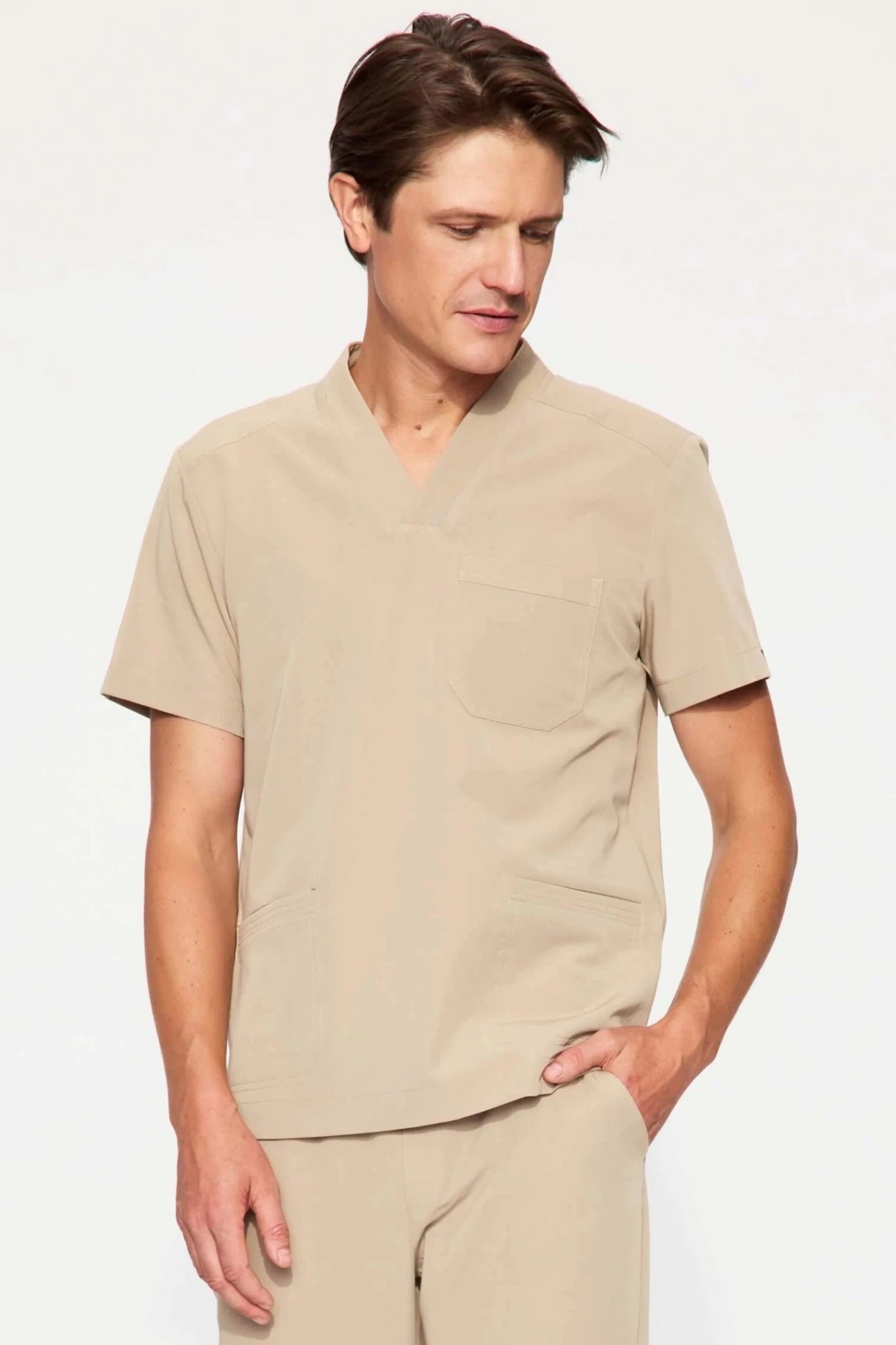
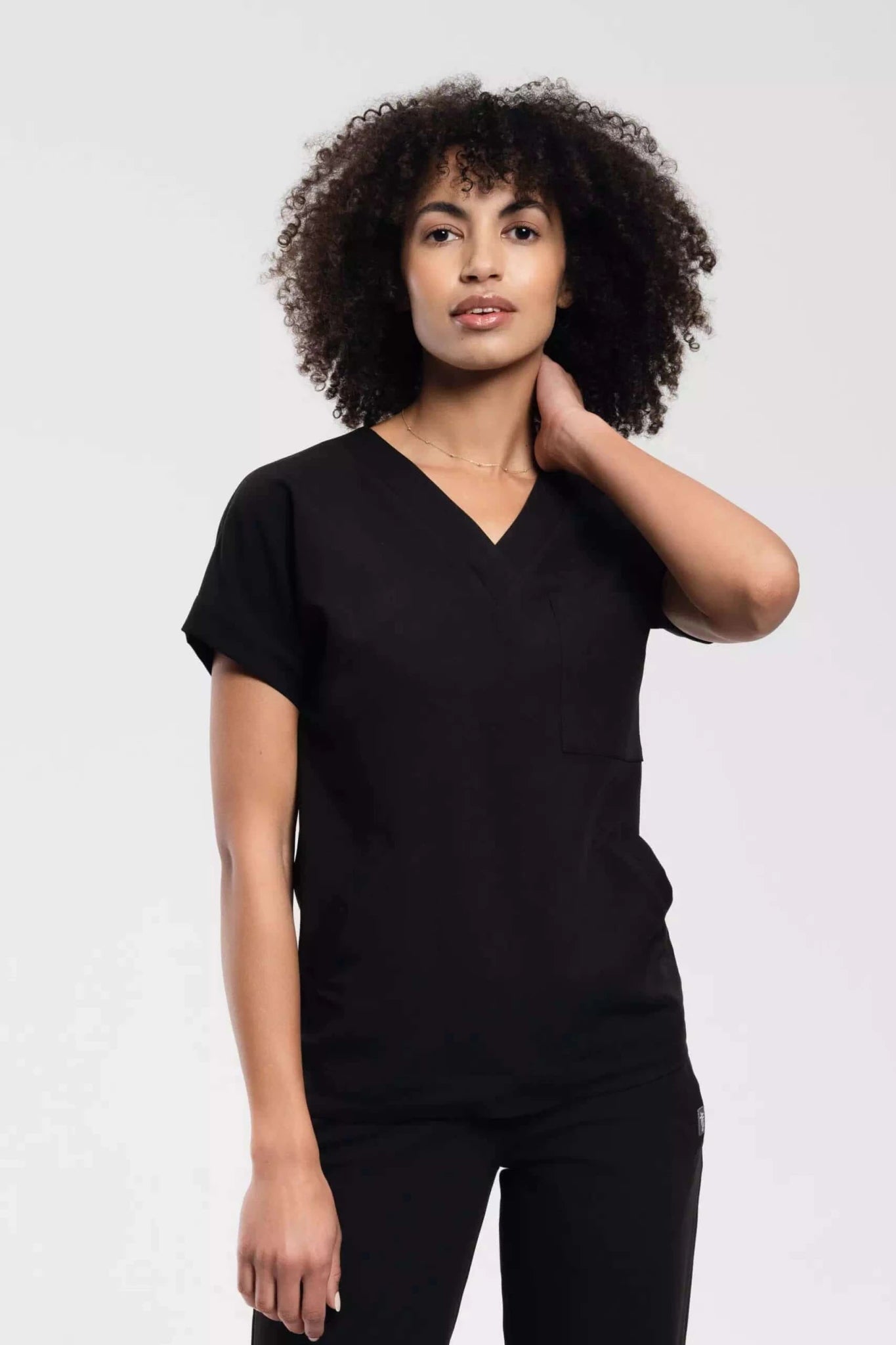
This is the number one proposition not because it is the most effective, but because it is the most frequently used. A new doctor usually has one set from his studies, bought in his third year, washed until transparent and matched to the figure from several years ago. The second and third sets are usually bought only when the first meeting with the duty schedule shows that one is not enough.
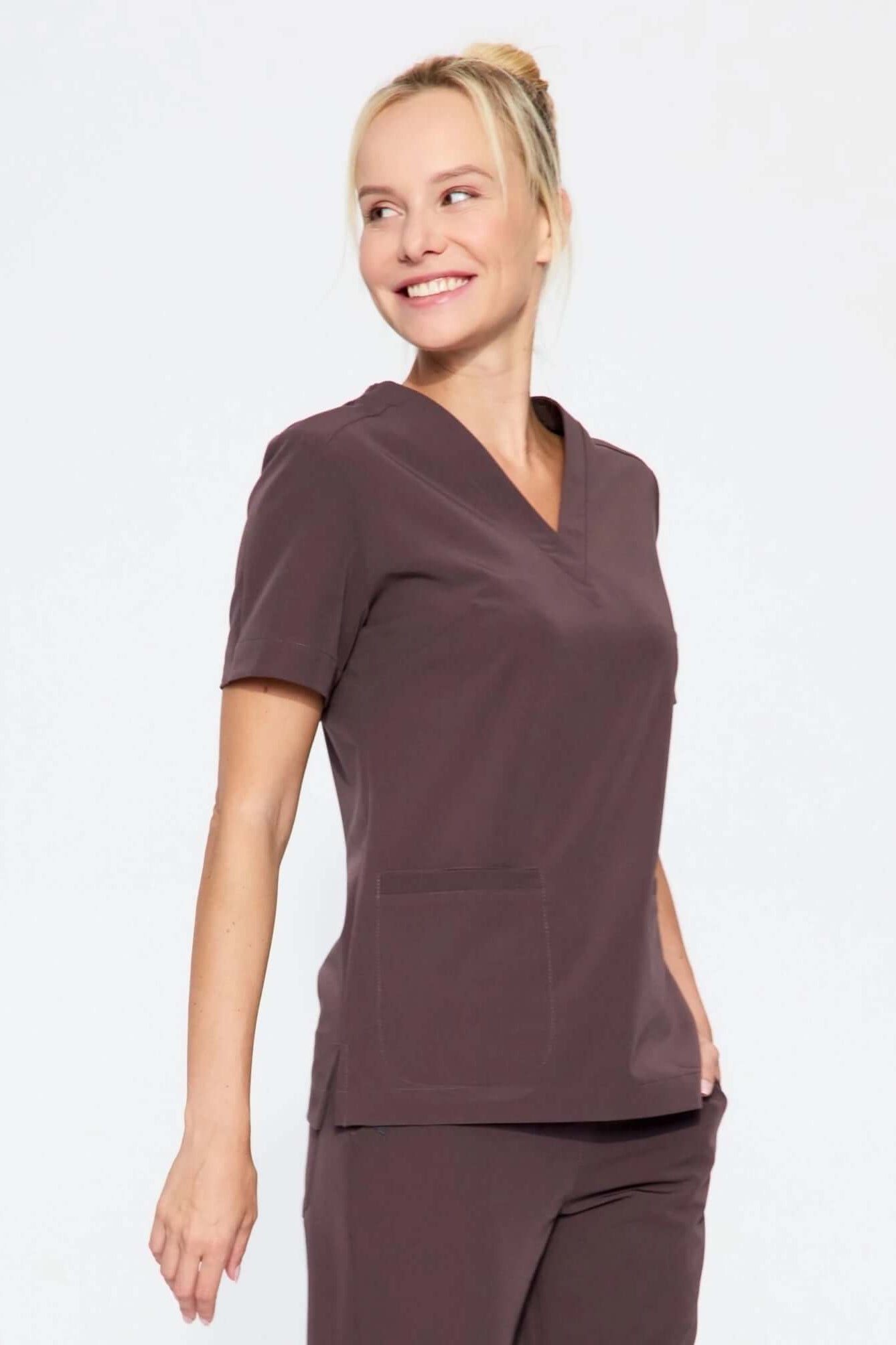
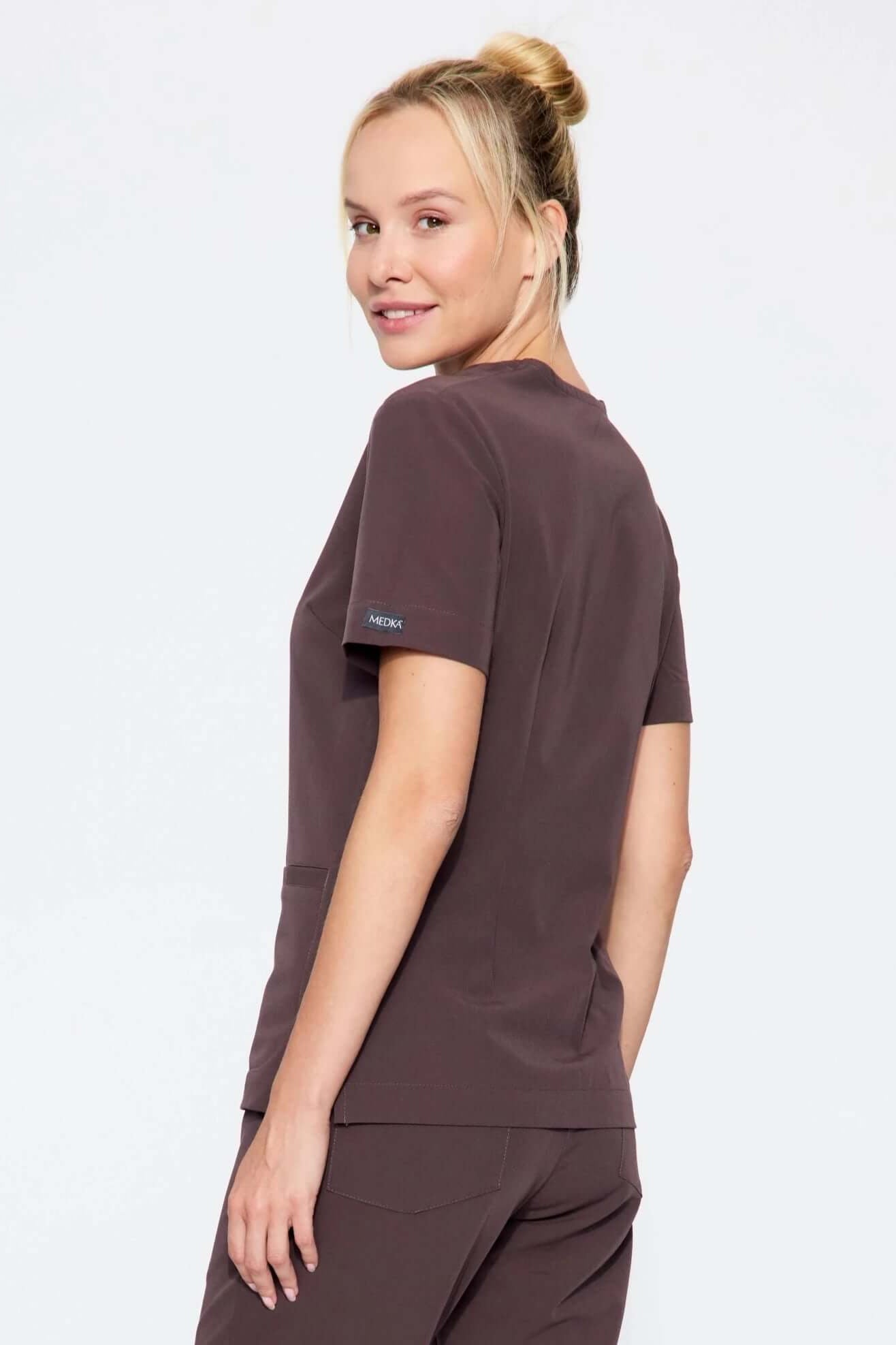
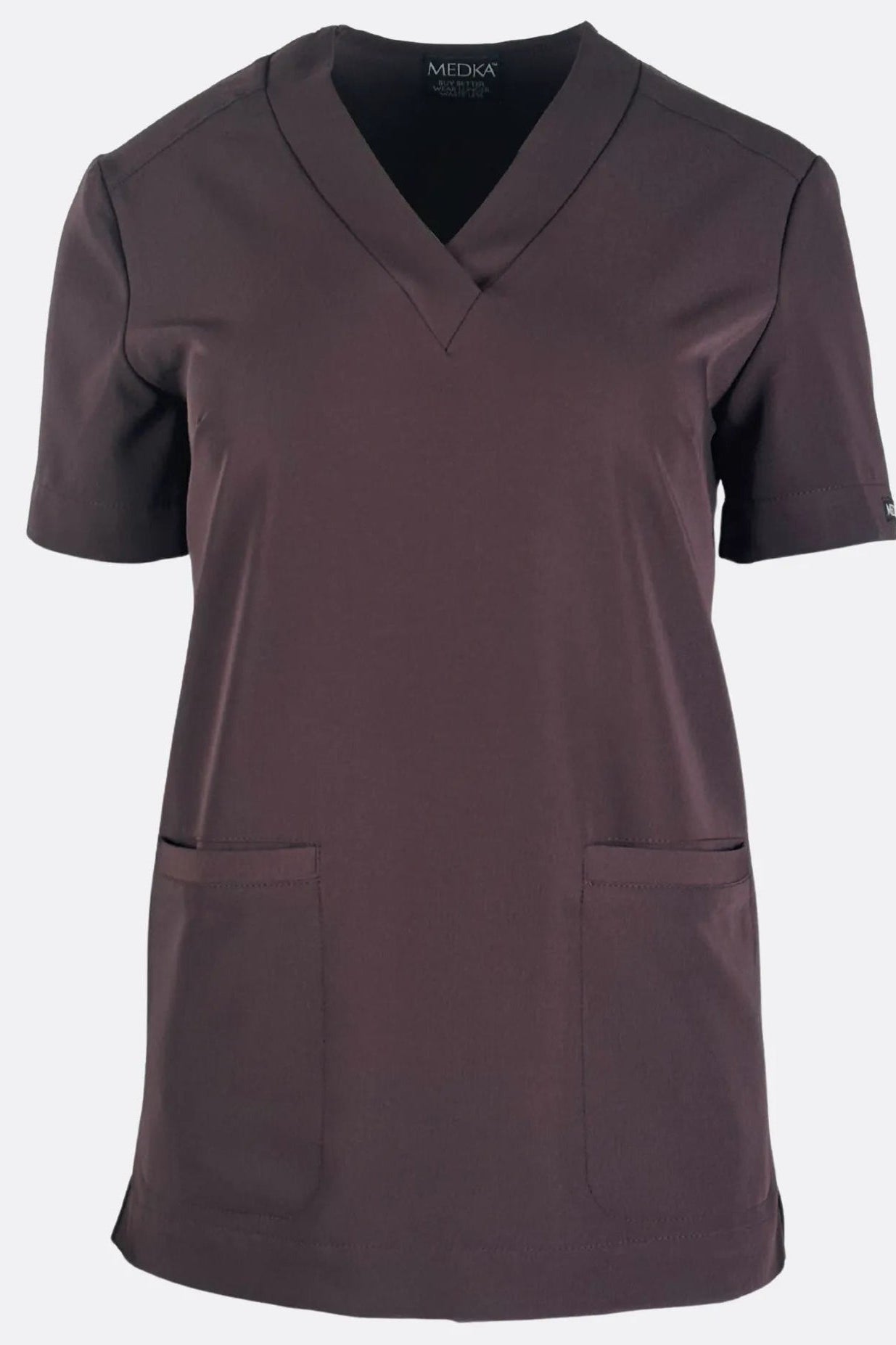
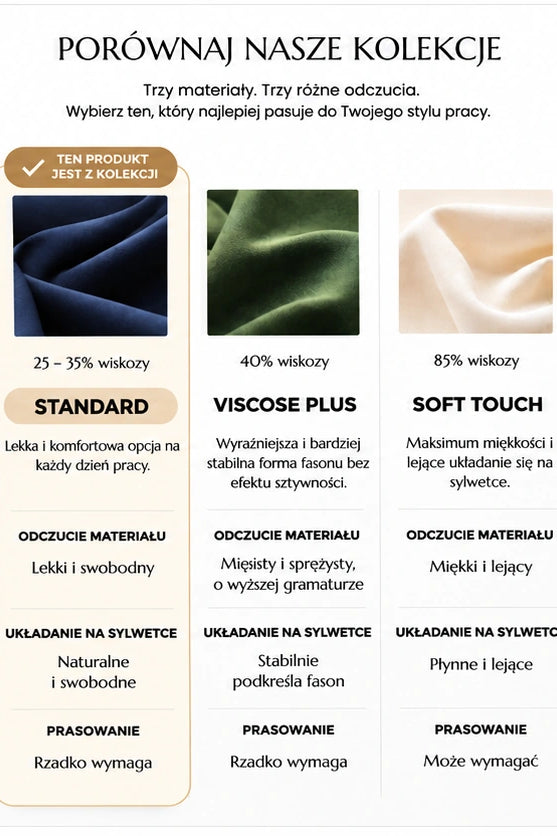
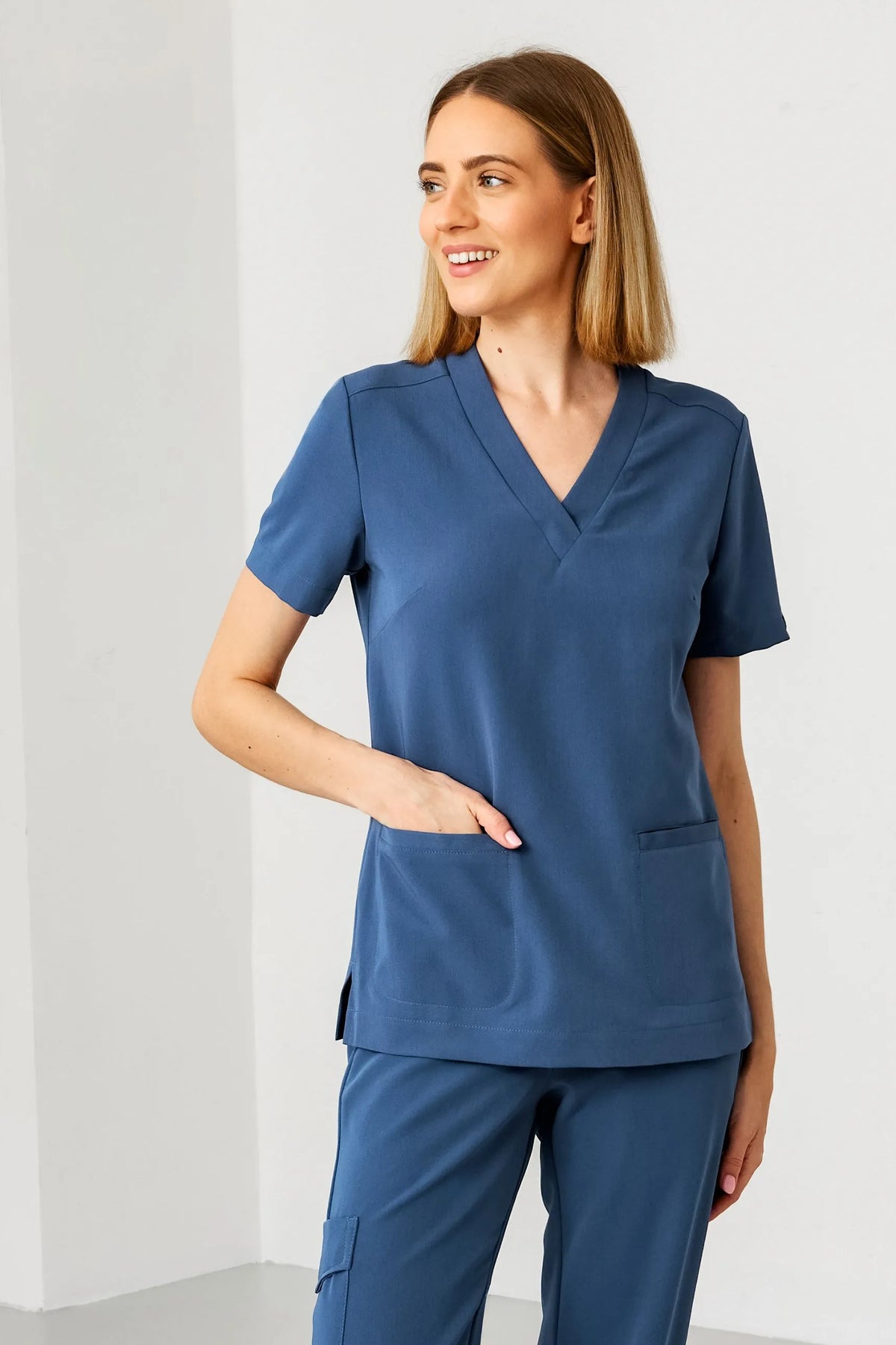
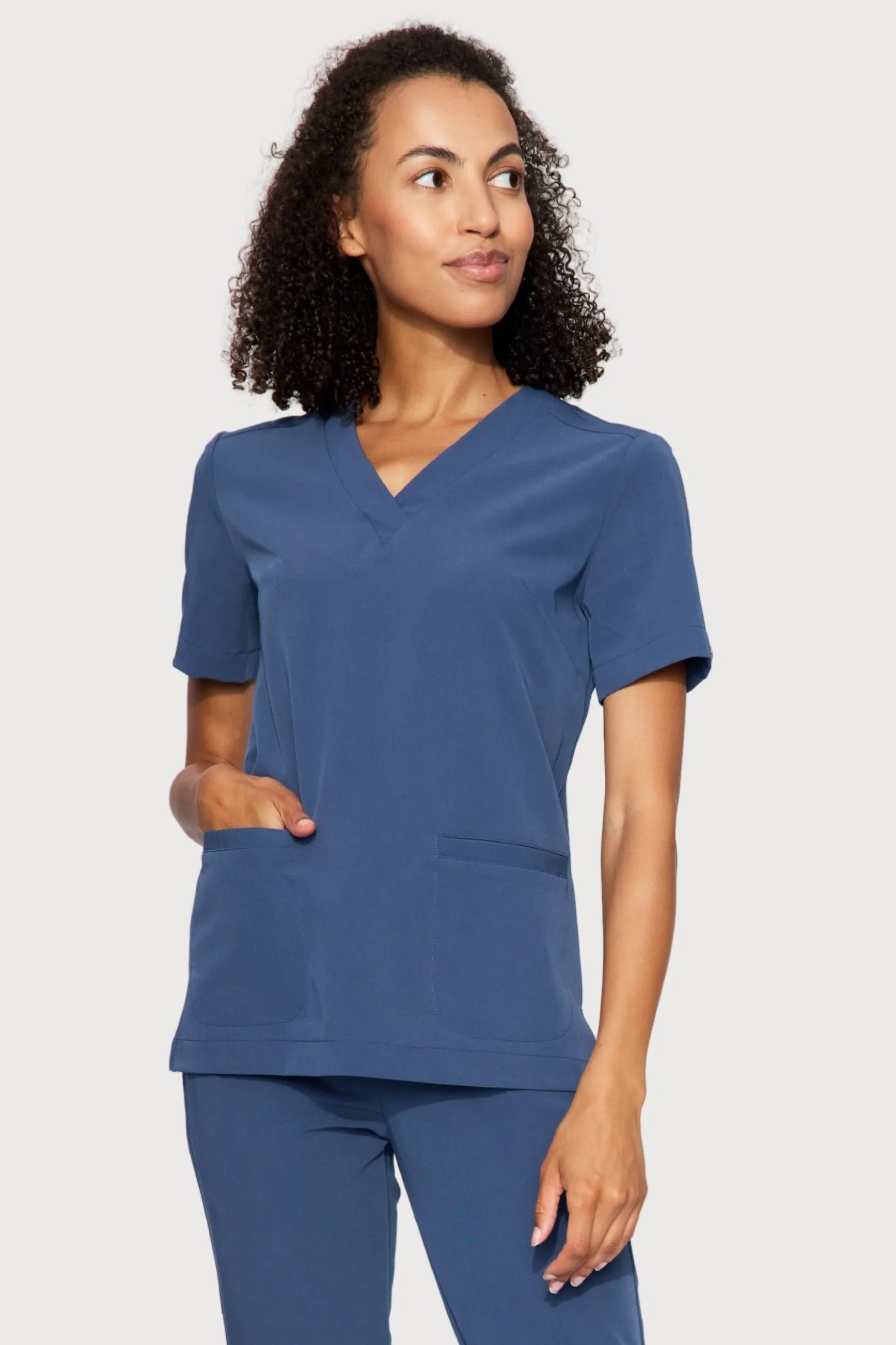
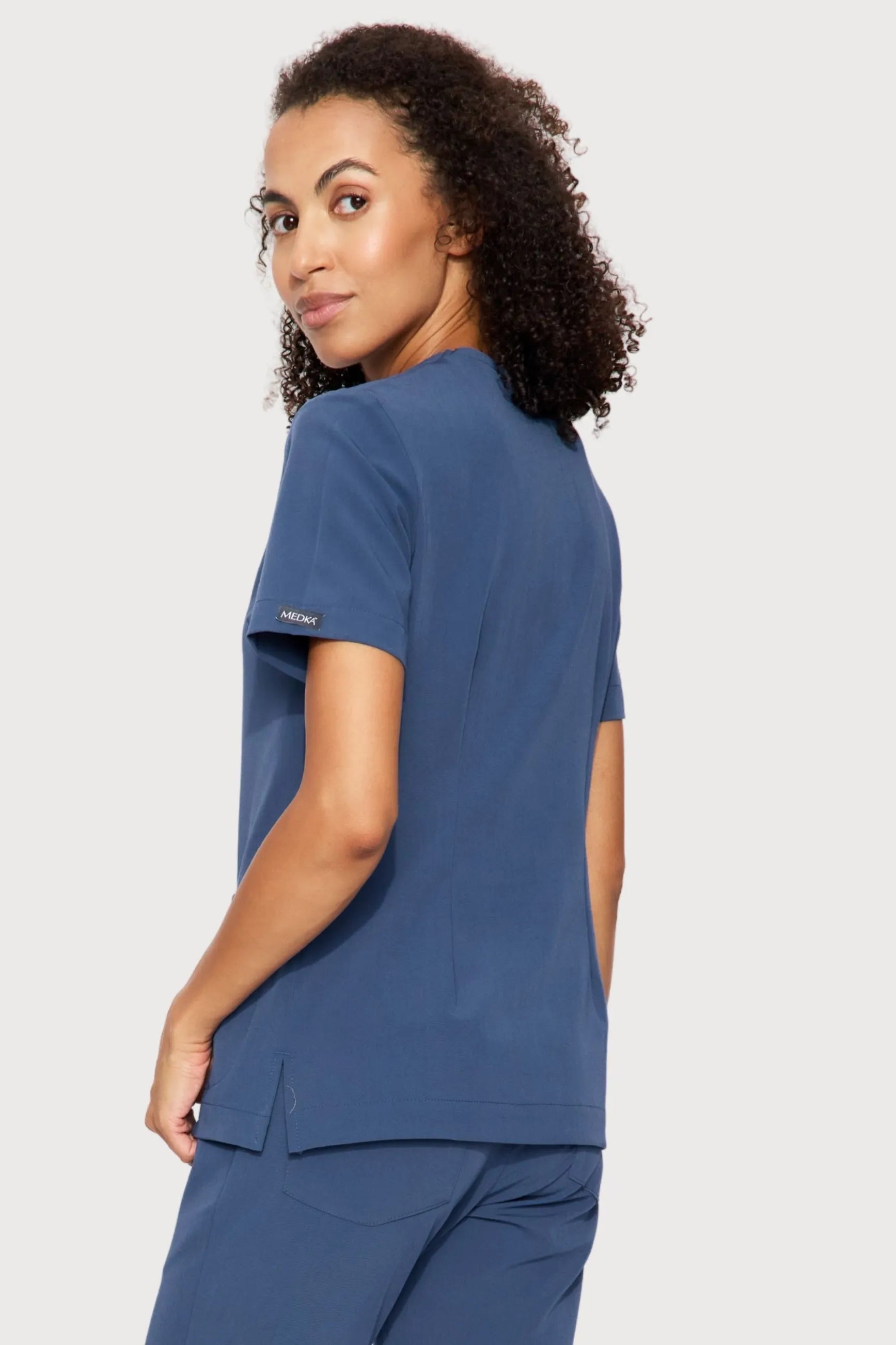
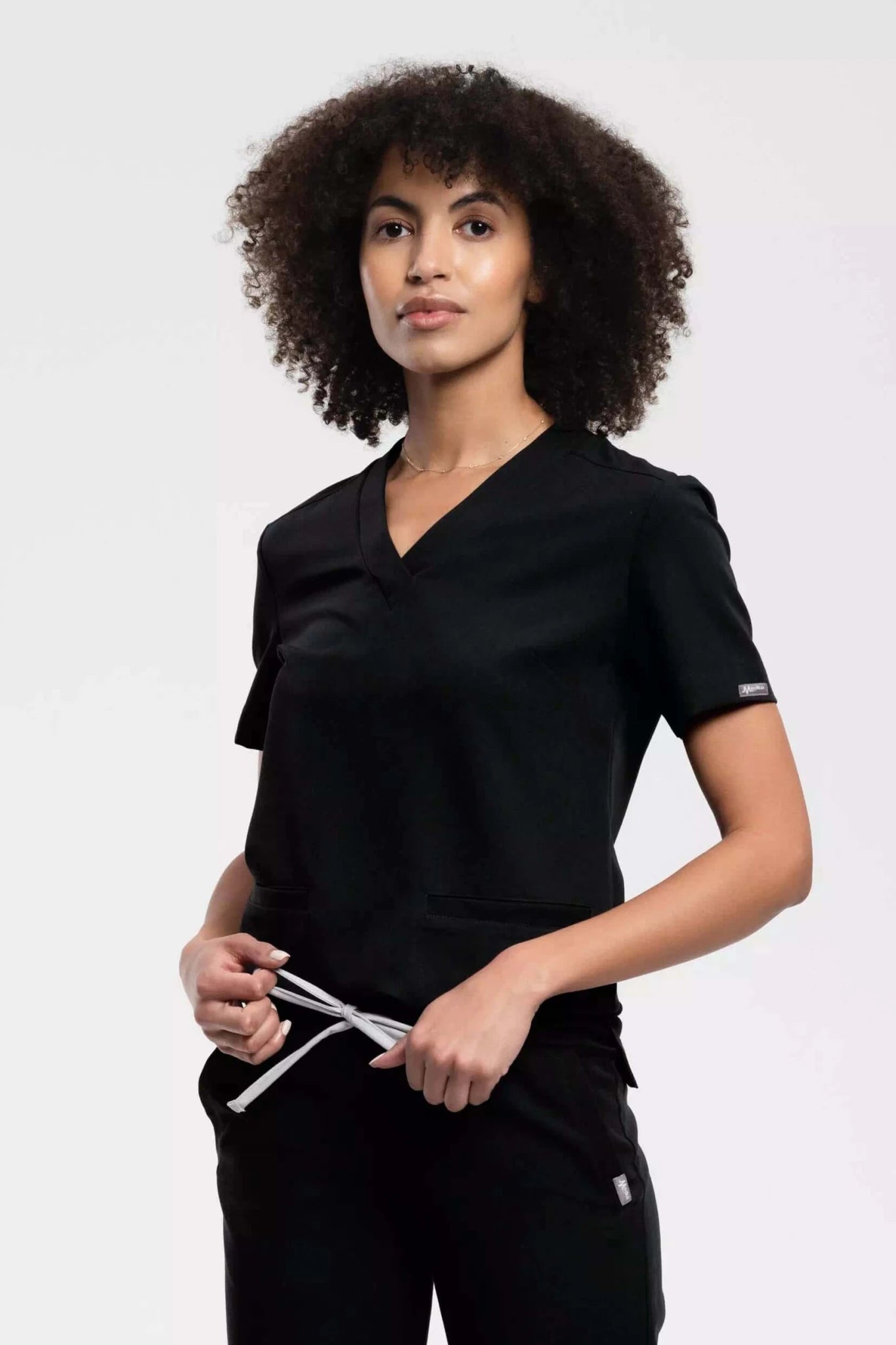
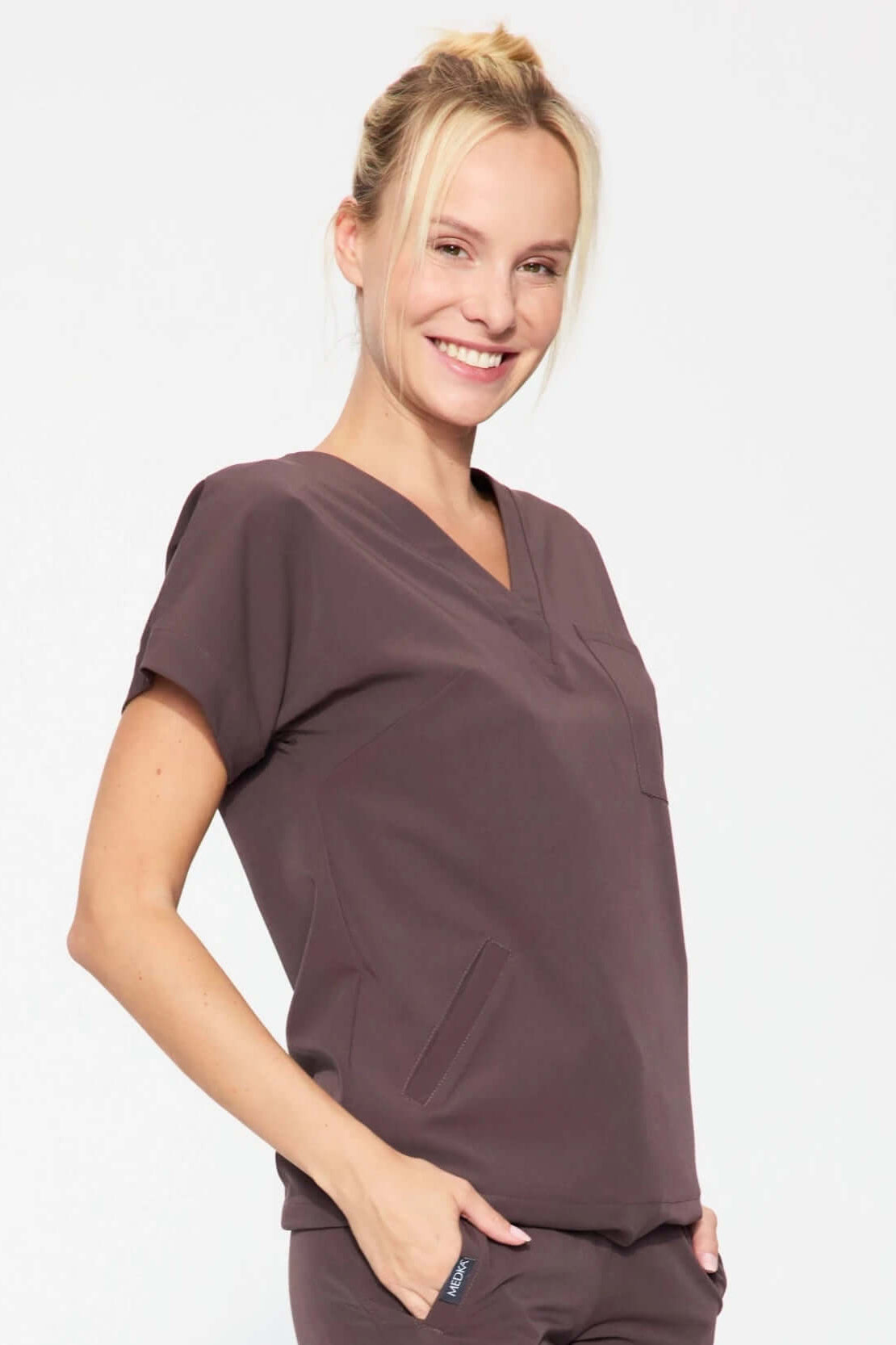
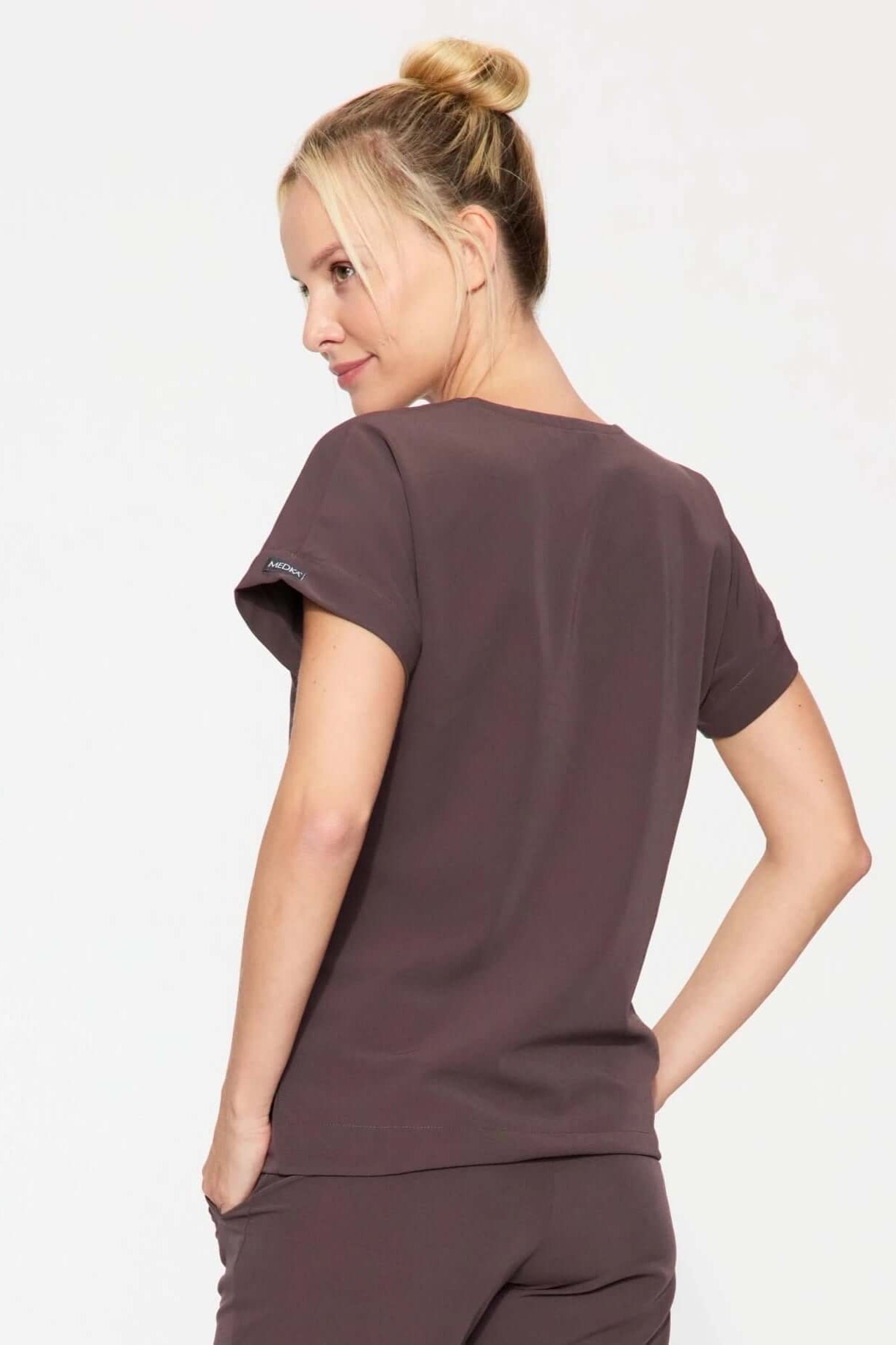
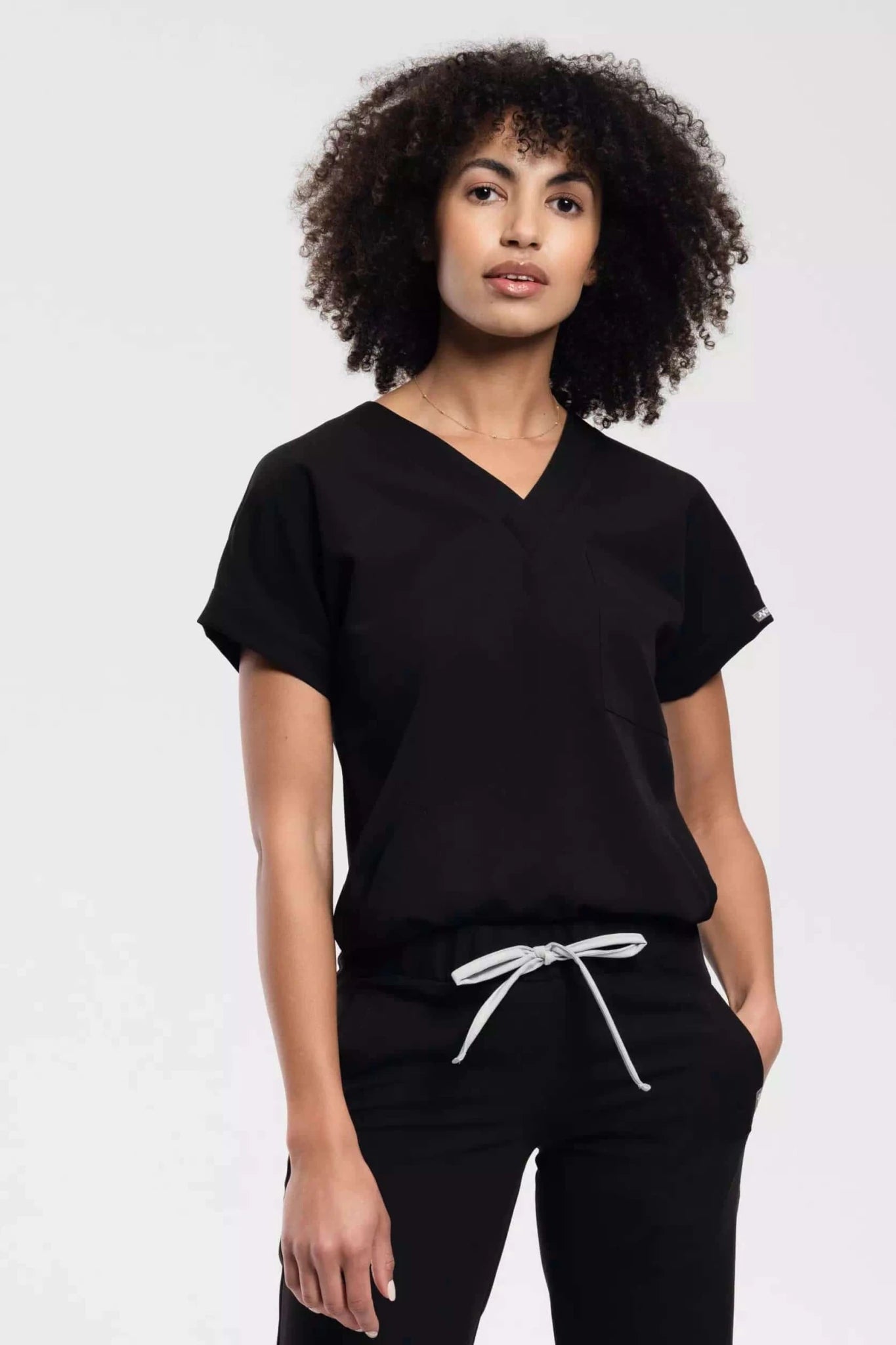
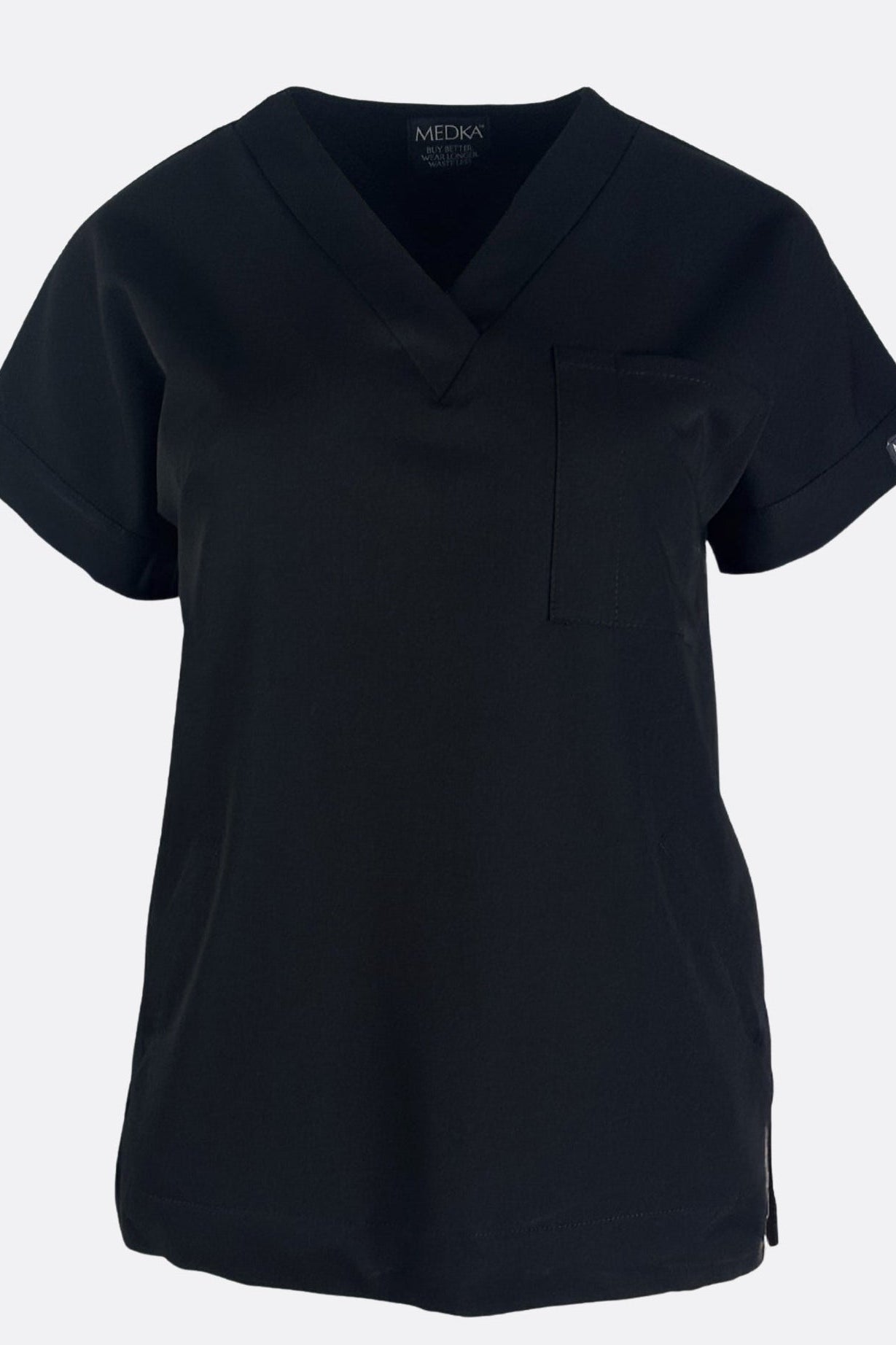
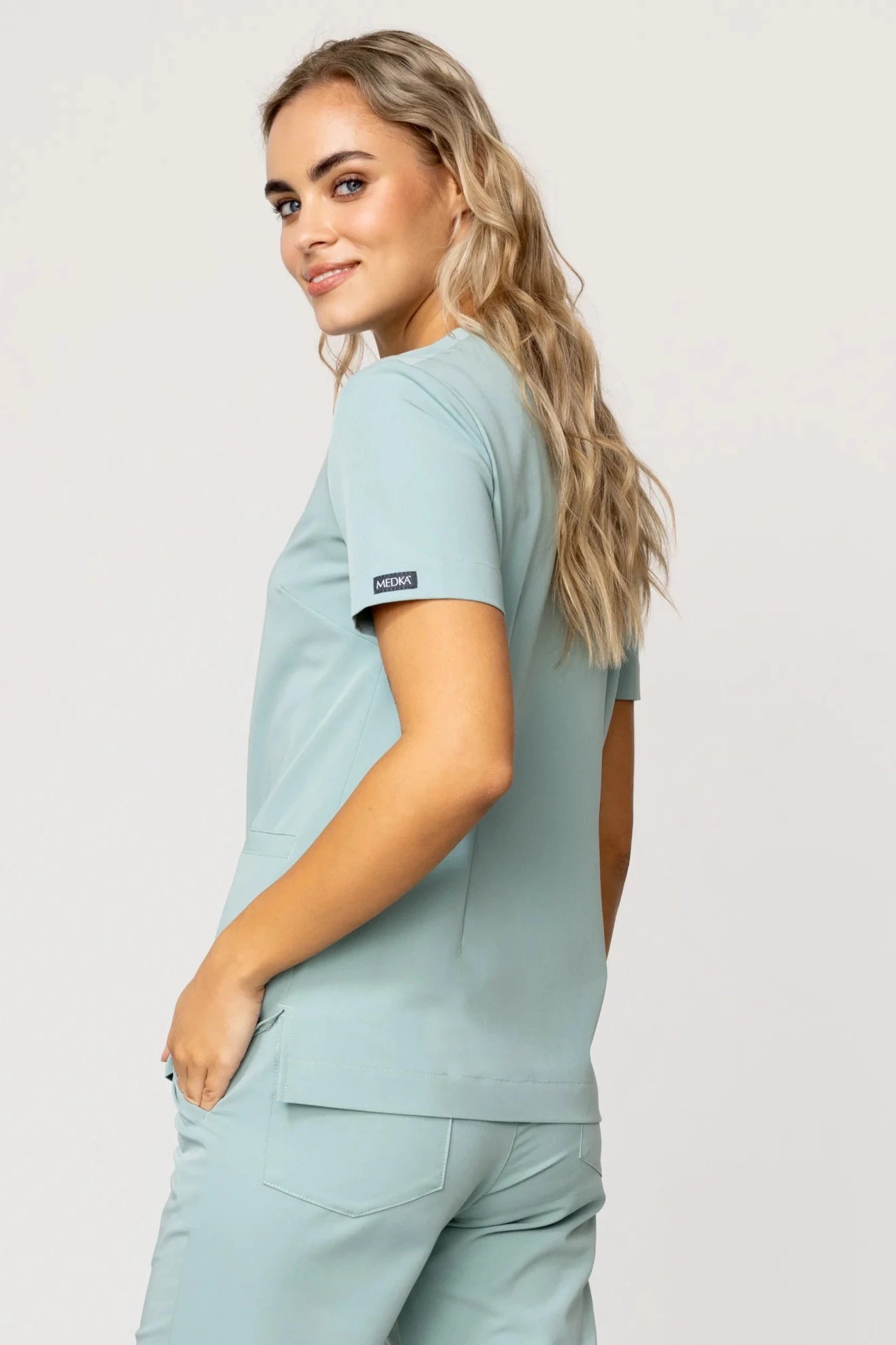
At scrubsoh, what counts are the things that are not visible in the product photo. The composition of the fabric determines whether the clothes still retain their color and shape after the tenth wash at 60 degrees. An admixture of elastane allows for freedom when bending over the bed and inserting the IV line, but too much elastane causes the material to stretch over time at the knees. The arrangement of the pockets sounds like a detail until you have to fit a phone, a notebook, two pens and a tourniquet in them, and at the same time sit down without spilling everything on the floor.
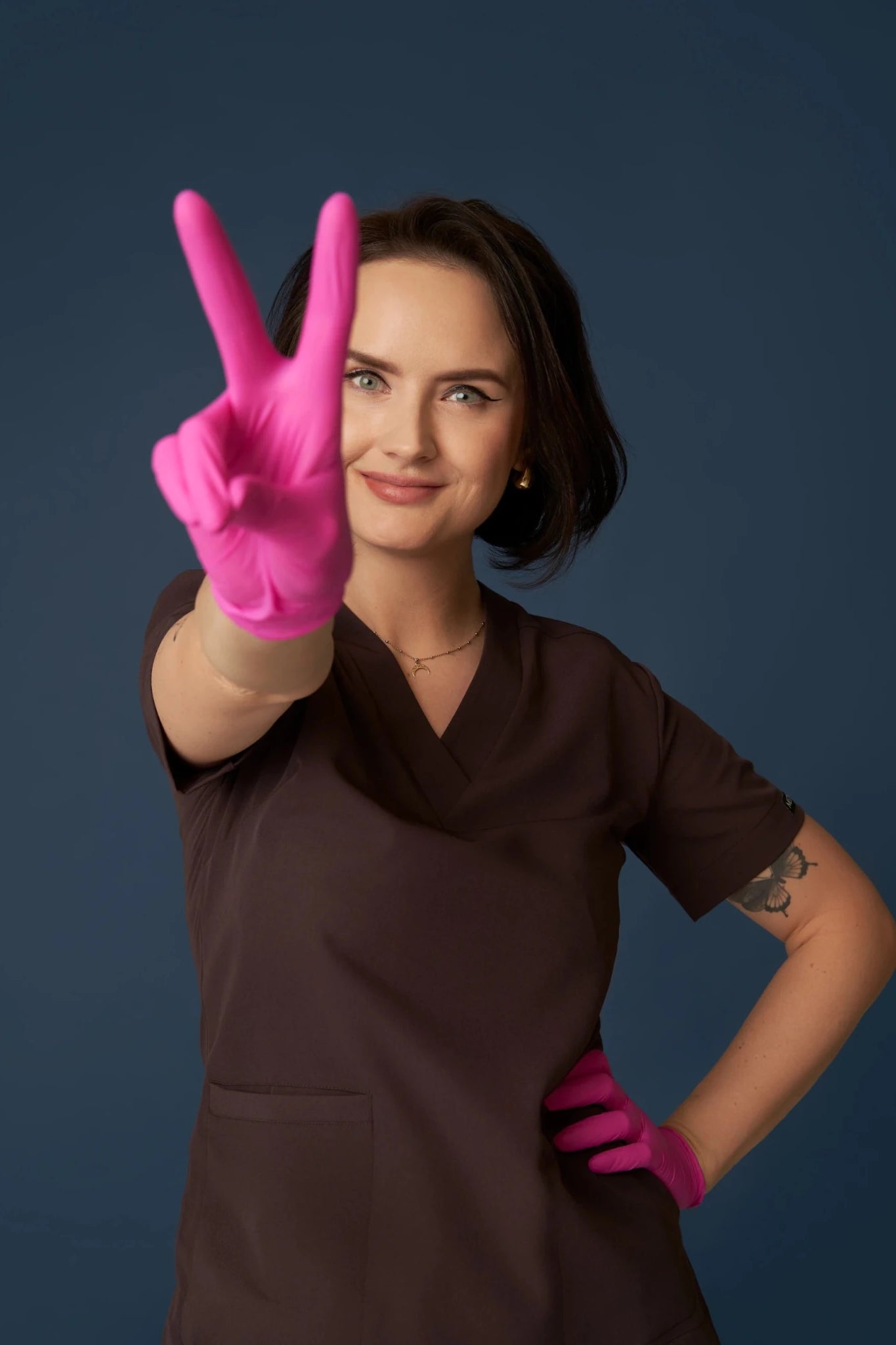
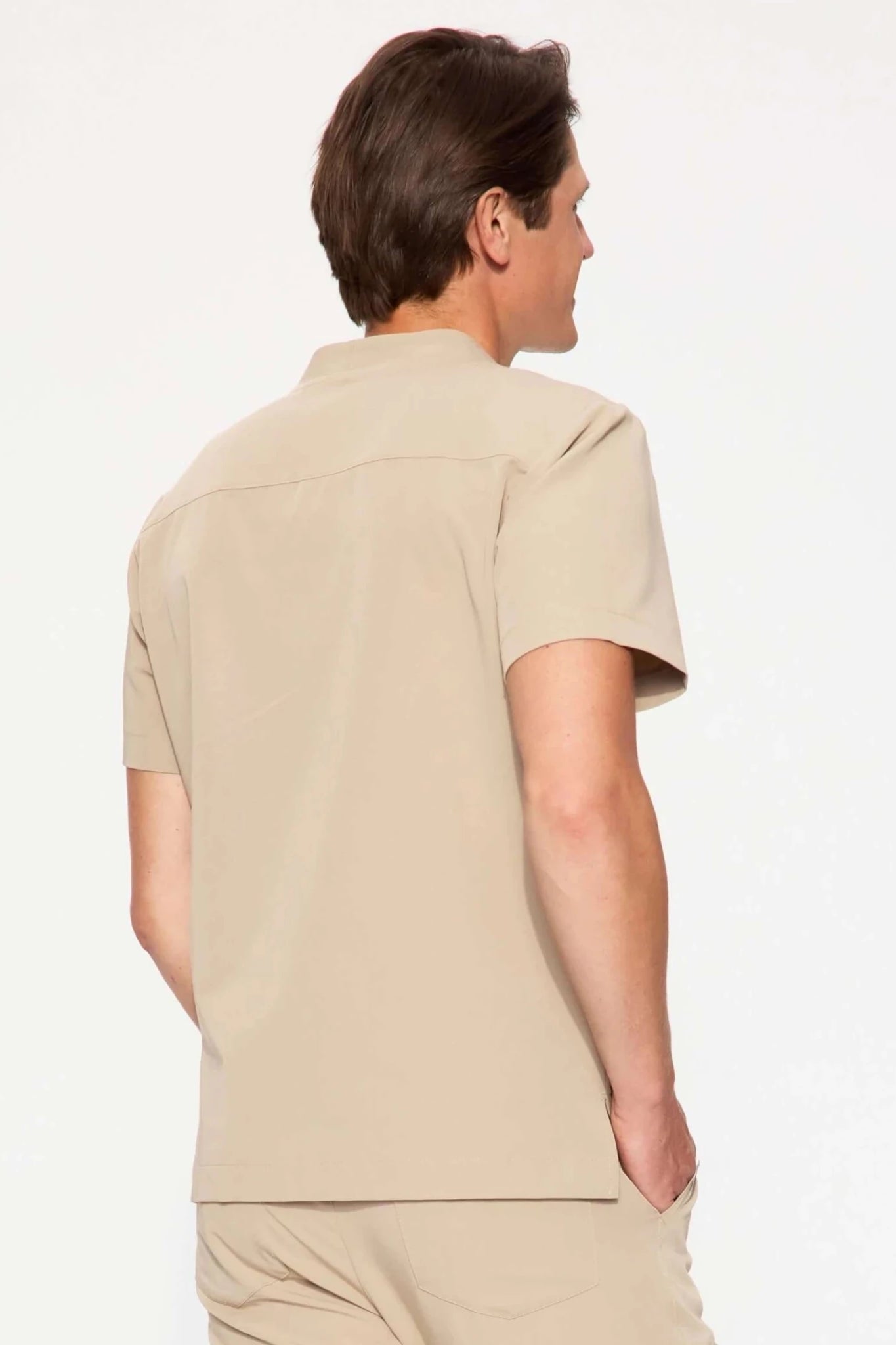
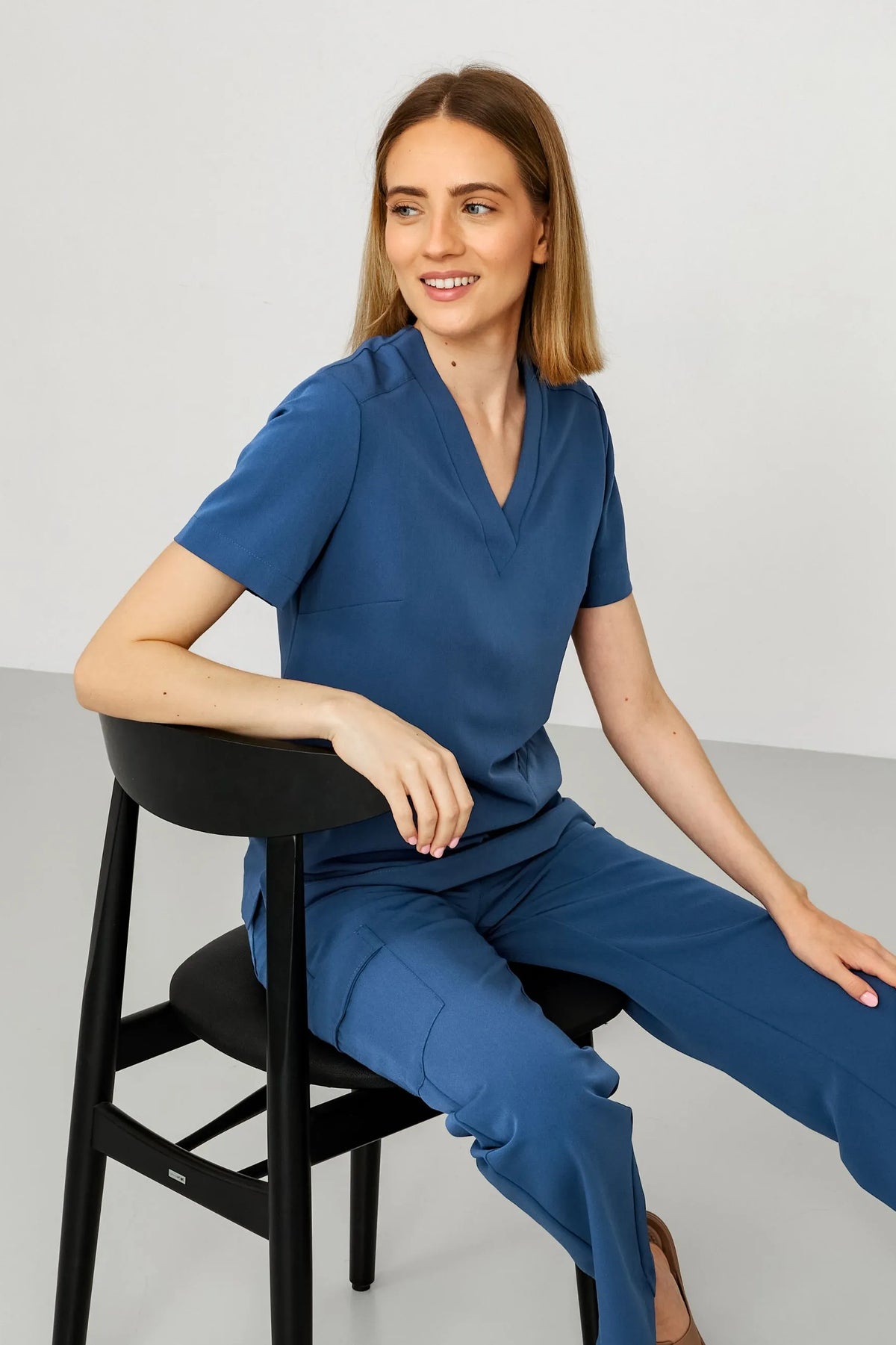
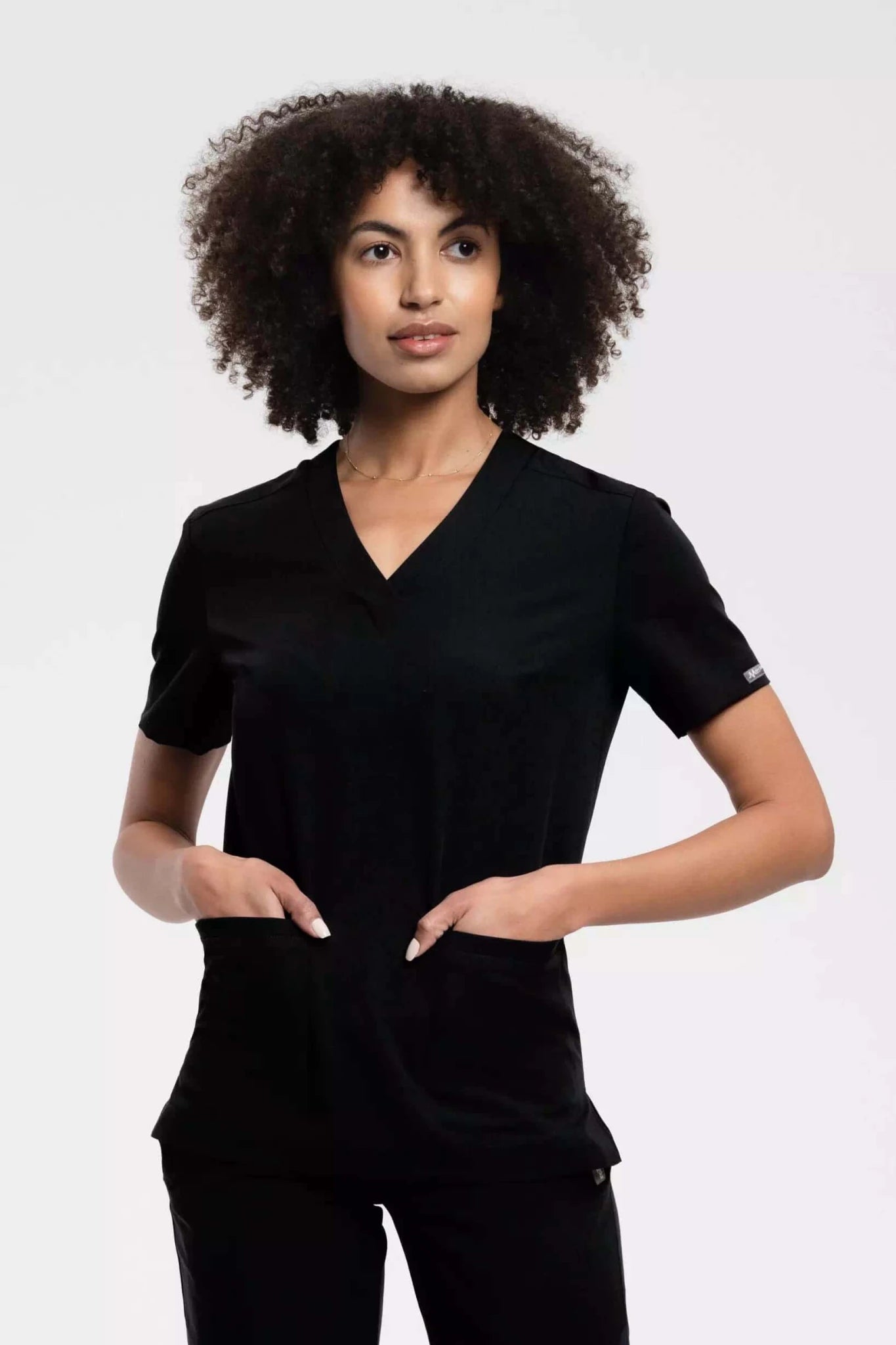
The medka.eu offer includes women's and men's sets in many styles and in a very wide range of colors, from classic white and navy blue to shades such as sage, indigo and espresso. Prices of sweatshirts start around PLN 190, a set with a pair of trousers usually costs PLN 350-450. This is the level at which a gift from several people coming together becomes a natural solution.
Before you choose a color, check one thing. Some clinical and provincial hospitals still have internal regulations assigning colors to individual groups of staff, and in emergency medical services, intense red serves an identification function. In the private sector, the rules are looser and more often subordinated to the visual consistency of the facility. If you don't know where the recipient will go, it's safer to choose a neutral shade or leave the decision to them.
2. Doctor's coat with name and title embroidery
White medical apron it has a status in this profession that no other item of clothing has. For many people, the moment of starting their own company, and not one borrowed from the university's warehouse, is a symbolic entry into the profession. Embroidery with your name and surname moves this gift from the "useful thing" category to the "thing you don't throw away" category.
Personalization at medka.eu works in two variants: the inscription itself, i.e. name, surname and professional title, costs PLN 89, and the logo or logo with the inscription costs PLN 129. In both cases, the price includes preparation of a program for the embroidery machine, and subsequent pieces of the same pattern are priced individually and cheaper. The option to add embroidery is visible next to the product, with a preview of the location and choice of thread color, and before embroidering the target item, the store sends a sample by e-mail for approval. This last step is more important than it seems because it allows you to catch a typo before it becomes permanent.
There is a trap here that is easy to forget. After graduation, the proper title is "lek.", i.e. doctor, and in the case of dentistry, "dentist". Abbreviation "dr n. med." it is granted to a person with a doctorate, not to a medical graduate, and embroidering it on an apron would be a substantive error that everyone in the ward would notice. If the recipient is undergoing an internship, in everyday communication he or she functions as an intern doctor, but this term is not suitable for embroidery because it will cease to be valid after a year.
The second thing concerns returns and is purely legal. Pursuant to Art. 38 section 1 point 3 of the Act on Consumer Rights, the right to withdraw from a distance contract does not apply in the case of non-prefabricated goods manufactured according to the consumer's specifications. An embroidered name fits this definition without a doubt. In other words: an apron without embroidery can be sent back, an apron with embroidery cannot. This is an argument for checking the size first and ordering the embroidery only with certain information.
3. Footwear that is designed to survive a twelve-hour shift
Shoes are a gift that no one gives until they have worked a day in the hospital themselves. A person entering the profession usually underestimates how much walking actually takes place. Rounds, consultation on another floor, going to the emergency room, coming back, and so on for several hours, on a hard floor, at a pace dictated by other people's needs.
The mechanism of fatigue here is quite simple. The cushioning of the sole absorbs part of the impact force with each step, and if it is missing, the load is transferred to the ankle joints, knees and lumbar spine. In addition, there is the issue of heel stabilization: a shoe that does not support the foot forces constant work of small muscles and after a few hours it gives a feeling of heaviness in the legs. The third factor is the removal of moisture, because sweaty feet in non-breathable materials will chafe faster.
The practical criteria are specific: a washable, smooth outer surface, a non-slip sole, a clasp that allows you to take off the shoe without bending, and a structure that can be washed with a disinfectant after contact with body fluids. Classic textile sneakers fail on this last point. In the offer of medical clothing stores, including medka.eu, professional footwear is a separate category, selected to meet these requirements, not fashion.
For whom does this gift make no sense? For someone who has a very specific foot, orthopedic insoles or is simply picky about shoes. Then it is better to finance the purchase rather than choose for it.
4. Stethoscope: when is it a good choice and when is it a costly mistake
A stethoscope appears on every list of gifts for a doctor and can be both the most impressive and the riskiest. It is impressive because it is a clear symbol of the profession. Risky, because a medical graduate almost always already has one, bought at the beginning of clinical classes.
If you decide on this direction, the point of the gift is to exchange student equipment for target equipment. Littmann Classic III, the model most often chosen for everyday internal medicine work, costs approximately PLN 430-500 in Polish stores, has a double-sided head with a two-tone membrane, weighs about 150 grams and is covered by a five-year warranty. Cardiology IV is on a different level: the head is 40 percent larger, the funnel is 60 percent deeper, and the warranty covers seven years. The difference is mainly audible during quiet auscultation, in the emergency department or in intensive care, where the acoustic background is loud. For someone planning psychiatry, radiology or pathology, the additional payment for the cardiology version is not justified.
The engraving, usually valued at several dozen zlotys, has a double function: a commemorative and quite prosaic one, because stethoscopes are lost in hospitals and the signed equipment more often returns to its owner. The same rule applies as with embroidery: a personalized product is not returnable. Before you order an engraving, make sure that the recipient has not bought the same model. This is the most common mistake with this gift and the hardest to fix.
5. A gift card that doesn't look like a lack of ideas
Gift cards get a bad press because they are associated with a last-minute purchase. In this particular case, however, it may be the most thoughtful decision possible, and for a reason that has nothing to do with the buyer's convenience.
Workwear is something in which a person spends several hours a day. Preferences are extremely individual: some people want straight-leg trousers, others want them with an elastic waist, and still others hate a V-neck. In addition, there is the color, which may be imposed by the institution's regulations, which is often unknown to anyone at the time of giving the gift. The medka.eu gift card, available from PLN 100, transfers all these decisions to the person who will use the clothes.
To make the gift not look like a transfer with a note, it is a good idea to combine the card with something small and personal. A card with a handwritten dedication, an added single item from the same offer, for example socks or a T-shirt, or simply a conversation about why this form was chosen. A card plus a trinket works noticeably better than just a card in an envelope.
6. Socks, T-shirts and accessories - the least frequently purchased items
People buy things that cost little and wear out the fastest, the least often. Socks for standing work, a T-shirt under a medical blouse, an extra pair of pants for a change: none of these are impressive as a stand-alone gift, but they work very well as a complement to a larger gift.
There is also one physiological argument that is rarely talked about. Working for many hours in a standing position promotes venous stasis in the lower limbs, and graduated compression socks improve venous return and actually reduce the feeling of heaviness in the legs at the end of the shift. It's a gift worth several dozen zlotys, which can be used every day for years. People with peripheral artery diseases or neuropathy should consult this choice with a doctor beforehand, because compression is not advisable in every case.
An additional advantage of trinkets: they do not require precision in size and do not generate the risk that the gift will have to be replaced.
7. First duty kit
Instead of one big thing, you can put together a set of several small things, selected for a specific situation: the first night shift. A thermos that will keep the temperature for eight hours, because coffee drunk on the run at 3 a.m. is rarely warm. Powerbank, because the work phone discharges faster than anyone expects. Robust diagnostic flashlight. A decent pen, preferably two, because they disappear.
This gift works because it's a story, not a shopping list. The person who receives it sees that someone thought about a specific day of their life, and not about the abstract category of "something for the doctor". The total cost is usually PLN 200-400, so this is an option for friends, not immediate family.
There is one condition: the set must be consistent. A thermos, a power bank and a flashlight create a sensible whole. A thermos, a scented candle and a mug with a humorous inscription are a random collection of objects.
8. Small diagnostic equipment in your own bag
Apart from the stethoscope, there is a category of tools that the doctor buys himself, usually after several months of work and usually after he was unable to find something in the ward again. A flashlight for assessing pupils, a neurological hammer, a tourniquet, rescue scissors, and a monofilament for testing sensation in diabetic patients.
Each of these things costs from several dozen to two hundred zlotys and each is specific enough to meet a real gap. However, you need to match the choice to the direction in which the recipient is going. A neurological hammer will please someone interested in neurology or internal medicine, but will be completely unnecessary in the perspective of radiology or laboratory medicine. If you don't know anything about your career plans, this category is risky and best to skip.
9. Access to the clinical knowledge base or subscription
This is a gift that almost no one considers, but it can be most useful in the first year of work. Paid clinical decision support databases, access to websites with current guidelines or a subscription to a trade magazine cost from several hundred to several thousand zlotys a year and are an expense that a young doctor puts off until he starts earning more.
The advantage is specific: such a gift works every day, when the intern is standing over the patient and is not sure of the dose. There is also a disadvantage: you need to know what the recipient actually uses, and some universities and hospitals provide such access institutionally, so the gift may be duplicated with something that is free anyway. One question asked earlier solves this problem.
10. Practical course or certificate
Training that is not included in the study program but is useful from the first weeks of work is a separate and quite underestimated category. Bedside ultrasound courses, advanced life support training, workshops on sewing and surgical techniques, courses in communicating with patients and conveying unfavorable information.
Costs start from several hundred zlotys for one-day workshops and reach several thousand for certified ultrasound courses. This is a gift that is naturally shared among a larger group of people, such as a family of one item rather than purchasing five separate items.
Before you book a specific date, check one thing: the schedule. An intern does not decide about his or her work schedule as freely as a student, and an irrevocable training ticket on the day of duty is a gift that generates stress instead of relieving it. An open voucher, valid for a year, is more reasonable in this category than signing someone up for a specific date.
11. A watch, but not necessarily for the wrist
A watch is a classic gift for life's breakthroughs and in the medical context it requires one important caveat. Hand hygiene recommendations clearly state that it is better to avoid watches and bracelets when working with patients, as they make it difficult to wash and disinfect wrists and forearms. The State Sanitary Inspection formulates this clearly, and in the literature there is the "nothing below the elbow" rule, described, among others, in Polish publications on hand hygiene of medical staff.
The consequence is prosaic: in many workplaces, an expensive wristwatch ends up in a pocket or a cabinet, not on the hand. A solution that is only now being adopted in Poland is a watch attached to an apron or sweatshirt pocket, with a large dial and a clear second hand. It costs a fraction of the price of a wristwatch, serves a practical function in counting heart rate and respirations, and does not interfere with procedures.
If you want a classic version, treat it as an after-hours gift, not a work tool, and choose a model with an easy-to-wipe strap and an envelope that does not catch on the sleeve. A smartwatch may be more convenient due to reminders and a calendar, but it has the same regulatory problem at the patient's bedside.
12. A gift that gives you rest
The last category intentionally has nothing to do with work. Six years of medicine is a burden, the effects of which do not disappear on the day of defense, and the first year of work adds on-call duties and responsibility for other people's decisions. A SPA voucher, a series of massages, a visit to a physiotherapist or a weekend trip can be a perfect gift precisely because they do not remind you of your profession.
Physiotherapy deserves separate mention here, because it is sometimes treated as a luxury, and in this profession it has a quite practical dimension. Working for many hours in a standing position, bending over beds of non-adjustable height and carrying loads while moving patients places strain on the lumbar spine and shoulder girdle. A few sessions at the beginning of your career, before ailments appear, is an investment that no one finances on their own.
This direction will not work for a person who does not tolerate planned rest or treats office visits as an obligation. Then it's better to choose something factual.
How much should you spend on a gift for a doctor after graduation?
There is no one right amount, but there is a clear relationship between the budget and what you can actually buy. The table below organizes the ranges along with the typical risk of missing.
| Budget | What will you realistically buy? | Who usually gives | The main risk |
|---|---|---|---|
| up to PLN 150 | socks, a T-shirt under a sweatshirt, a good pen, a diagnostic flashlight, a gift card with a lower denomination | friends, extended family | the gift will blend in with the crowd of little things |
| PLN 150–400 | medical shirt, apron without personalization, first duty kit, one-day workshops | classmates, aunts and uncles | size and style of clothing |
| PLN 400–900 | a set of scrubs, an embroidered apron, professional footwear, and an internal medicine stethoscope | parents, siblings, partner | duplicate equipment, wrong color |
| PLN 900–2,000 | cardiology stethoscope, certificate course, one-year access to the knowledge base | parents, group fee | the gift will double institutional access |
| over PLN 2,000 | trip, advanced ultrasound course, electronic equipment | the immediate family, the contribution of the entire group | obligation on the part of the recipient |
One note on the last line. A very expensive gift from a person outside the immediate family can put the recipient in an awkward situation, especially if the relationship is professional. For larger amounts, a group contribution works much better than a single gesture.
What is better not to buy?
Several categories are repeated in gifts for new doctors and regularly disappoint. Not because they are bad, but because they do not meet any real need.
Jewelry with medical motifs, mugs with funny inscriptions about duty and plush internal organs are gifts that entertain for the evening and do not come back to use later. Heavy academic textbooks have a similar fate: after the diploma, electronic sources and quick compendia dominate, and multi-volume editions remain on the shelf. A fountain pen will work well for someone who likes to write by hand, but not as a work tool, because hospital documentation is mostly on a screen, and pens simply disappear in this profession.
A separate category includes personalized gifts made without checking the facts. An engraving with an incorrect title, an embroidery with a typo in the name, an office plaque for someone who will not have his own office in the next two years. They all have one thing in common: they cannot be returned or corrected.
Flowers and alcohol are not a mistake, but they are not a gift either. Treat them as an addition to something proper.
How not to go wrong with size, color and personalization?
Medical clothing is the most frequently chosen gift category on this occasion and at the same time the most vulnerable to error. Three safeguards take most of the risk out of this.
The first is to check the size instead of guessing. The simplest method is to look at the label of the clothes that the recipient already wears to work and compare it with the size chart of a specific manufacturer, because there can be significant differences between brands. If this is not possible, medka.eu provides a virtual fitting room with an AI assistant: after uploading a photo, you can see what a given model and color looks like and test several variants before purchasing. This tool is intended for the buyer, but when given as a gift it works equally well as a style filter.
The second is the returns policy. At medka.eu, returns are free and delivery is free from PLN 450, with 98 percent of orders leaving the warehouse within 24 hours. This is important if you are buying shortly before the celebration and you need to have time to exchange the size.
Third is the order of decisions when personalizing. Order embroidery only when you are sure of the size, because a personalized product cannot be sent back. If the gift is to be a surprise and the size cannot be determined, a more sensible solution is a gift card with a note that the embroidery is already paid for.
It is also worth knowing about two things related to shopping. The store carries out group orders with individual embroidery pricing for larger quantities, which can be useful when the entire group of deans wants to order medical kits in one style for the ceremony. There is a separate 15 percent discount for students after verification of status, so if the recipient is still a student and the gift card is to be purchased on their own, the order of these two steps may have a significant impact on the budget.
| Gift | Does size decide | Is it possible to return it? | When it hits best |
|---|---|---|---|
| A set of scrubs | yes, critically | yes, if without personalization | when you know the size and regulations of the facility |
| Apron with embroidery | yes, critically | no, personalization excludes returns | when size and spelling are certain |
| Professional footwear | yes | yes | when the recipient does not have an unusual foot |
| Socks, T-shirts, accessories | to a small extent | yes | as a complement to a larger gift |
| Gift card | no | not applicable | when certain information is missing |
| Stethoscope with engraving | no | no, the engraving excludes returns | when you know that the recipient does not have this model |
Summary
One regularity emerges from this entire list. Gifts that last longer are those tailored not to the celebration, but to the thirteen months that will come after it. A set of scrubs, an embroidered apron, on-call shoes and a gift card have an advantage over souvenirs because they can be used every day and, at the same time, they save the young doctor an expense that he would have to pay anyway.
If you know the size and where the recipient is going, choose a specific item and personalize it, remembering the correct title and the fact that embroidery prevents the item from being returned. If you don't have this knowledge, a gift card with a little detail and a handwritten dedication will be a better decision than guessing the style. And if you want to go beyond the category of things, a course, access to a knowledge base or a few physiotherapy sessions are gifts that work exactly where the first year of work hurts the most.
One last thing, less obvious than choosing a product: the moment. A gift given a few weeks before the start of the internship has greater practical value than the same gift given on the day of the graduation ceremony, because it is delivered exactly when the equipment for the new stage is being gathered.
Frequently asked questions
Below are short answers to questions that arise when choosing a gift to celebrate the completion of medical studies. Each of them concerns a detail that can determine whether the gift will be a hit.
Should a gift for a dentist look different?
To a large extent yes. The dentist works primarily in a sitting position, in the office, and uses a stethoscope or a doctor's bag less often. Tunics and sweatshirts with a cut that is comfortable when working with raised arms, footwear with good cushioning, and accessories related to the ergonomics of a sitting position will work better. A postgraduate internship for a dentist lasts 12 months, which is one month shorter than a medical internship.
When should you give a gift if your defense and graduation ceremony are several weeks away?
It is best to give practical items after the defense and before the internship begins, i.e. before October 1 or March 1. This is the moment when you gather your work equipment, so the gift can be used immediately. Symbolic gifts naturally fit into the celebration itself.
Are flowers and alcohol still appropriate for the occasion?
They are available, but as an addition, not as the main gift. The bottle and the bouquet do not meet any need related to the new stage, so it is good to combine them with something that will last longer. When it comes to alcohol, you also need to be sure about the recipient's preferences.
How many people should contribute to one larger gift?
With a budget above PLN 800, a contribution from three to six people is a natural solution and allows you to buy a top-shelf item instead of a few random items. For the entire dean's group, it may make more sense to make one collective gift of a clearly commemorative nature or to order a group of sets in one style.
What to choose for someone who starts working in a private practice rather than in a hospital?
In private establishments, the dress code is usually looser and more often subordinated to the aesthetics of the place, so clothing in less classic colors is more likely to be useful. However, the importance of presentation increases: an apron with name and surname embroidery builds a professional image in direct contact with the patient, and a visually coherent set is more important here than in a hospital ward.
Is it appropriate to add a card with a dedication to a practical gift?
Not only is it appropriate, but it is usually the card that turns a useful item into a souvenir. A handwritten dedication with the date of defense costs nothing and makes a set of clothes or work shoes no longer an ordinary purchase. When it comes to personalized gifts, this is often the only element that is personal.