




The profession of a dental technician is not acquired either during medical studies or after years of apprenticeship with a prosthodontist. All you need is a high school diploma, a certificate, two and a half years of post-secondary education and passing the MED.06 state qualification exam. Sounds simple until you dig deeper. It is a profession in which success is determined not by a diploma, but by hand, patience and the ability to work with plaster, wax, ceramics and, increasingly often, with a 3D scanner and CAD/CAM software. Most people who ask how to become one have two false assumptions in their minds: that you need to have a high school diploma and that it means working in a dentist's chair. Neither one nor the other is true, and the difference between imagination and reality is sometimes the reason why someone gives up after the first semester.
What does the job of a dental technician actually involve?
Before you even start considering a school, it's worth clearing up the most common misconception. A dental technician does not work in the office and usually does not see the patient at all. Its place is a prosthetic laboratory, i.e. a separate room or a completely different building, where, based on an impression or scan received from the dentist, a finished product is created: a crown, a bridge, a removable denture, a splint, an orthodontic appliance or a facial epithesis. The doctor takes an impression, fits the finished work in the patient's mouth and is responsible for the treatment. A technician makes a physical object that is intended to go into that mouth and survive there for years.
This distinction has practical implications for anyone considering this profession with an eye to interacting with people. If someone is looking for a job in motion, in conversation, in a reception atmosphere, dental technology will disappoint them. It is focused, often lonely work, working for hours on one detail the size of a fingernail. It requires dexterous hands, good eyesight and, what is often overlooked, correct color discrimination, because matching the color of ceramics to the patient's natural teeth is one of the most difficult activities in the entire process. A person with color vision disorders will have a real professional problem here, not formal, but practical.
It is also worth knowing that the profession is divided internally. One technician specializes in fixed prosthetics, i.e. crowns and bridges, another in removable dentures, another in orthodontic work or implant prosthetics. The narrower and more difficult the specialization, the higher the hourly rate and the less competition. This is information that is useful only years later, but it is good to have it in the back of your mind from the very beginning, because it affects the choice of school and first training.
What education is needed to become a dental technician?
This is where most of the wrong answers circulating on the Internet come in, so let's make it clear. To start vocational training, you must have completed secondary school, i.e. a certificate of completion of a high school, technical school or second-cycle vocational school. And that's it for the prerequisite. A high school diploma is not required. The repeated belief that you cannot enter this profession without passing the high school leaving examination is simply untrue. Post-secondary schools, both public and private, admit high school graduates without a high school leaving exam to study dental technology, based only on a completion certificate. Some public institutions do not charge tuition fees or organize entrance examinations, and admission is based on the order of applications.
There is no need for prior "medical education" as mentioned in older guides. You do not have to graduate from a medical high school or a prosthetic technical school to enroll in a post-secondary school in this field. Any high school will do. The only additional document when registering is usually a certificate from an occupational medicine doctor confirming there are no contraindications to vocational training, and a referral for such an examination is issued by the school secretariat.
Education takes place at the post-secondary school level and, in accordance with the core curriculum, is conducted only on a daily basis. This is important because there are still offers of part-time or weekend work on the Internet. In practice, schools organize classes so that they are accessible to working people (some meetings fall on Saturdays and Sundays), but formally the course remains daily due to the number of practical hours that cannot be completed by correspondence. Wax modeling, plaster casting or operating a ceramic kiln require the presence in the studio and supervision of a lecturer.
Higher education is a separate, optional path. Medical universities and some universities offer the field of "dental techniques" leading to a bachelor's degree. There is a subtlety here that is worth understanding: a graduate does not become a "dental technician" in the sense of a professional diploma, but obtains a professional title entitling him to perform technical and dental work. From a labor market perspective, both paths lead to the same studio, and employers most often look at skills and work portfolio, not whether someone has a post-secondary diploma or a bachelor's degree.
How long does it take to study and what does the MED.06 exam look like?
Studying at a post-secondary school lasts two and a half years, or five semesters. During this time, the program covers anatomy, dental materials science, modeling, casting techniques, basics of orthodontics and proper dental technique, and in better facilities also digital design using CAD/CAM technology. It ends with a state professional examination confirming one qualification separate in this profession: MED.06, i.e. "Making and repairing medical devices in the field of dental prosthetics, orthodontics and facial epitheses". The digital symbol of the profession is 321402, and its level in the Polish Qualifications Framework is V.
The exam is organized by the Central Examination Commission through district commissions, and the dates are published in the announcement of the CKE director each year in August. It consists of two parts. The written part is a single-choice test taken on a computer, checking theoretical knowledge of the entire scope of qualifications. The practical part involves the actual execution or design of prosthetic work within a specified time, in accordance with the documentation provided. This can be a sieve, because while theory can be learned, practice, i.e. precise, repeatable performance under stress and time pressure, cannot be made up in a week.
After passing the exam, the graduate receives a professional diploma along with the Europass supplement in Polish and English. This supplement is of real importance because it confirms qualifications recognized throughout the European Union. This is one of the reasons why Polish technicians easily find work abroad or accept orders from foreign laboratories, more about which later.
The table below organizes the most common mistakes when planning this path.
| Element | Facts |
|---|---|
| Prerequisite | Completed high school (certificate), no high school leaving exam |
| Previous medical profile | Not required |
| Form of education | Post-secondary school, formally full-time |
| Learning time | 2.5 years (5 semesters) |
| Qualification | MED.06 |
| Occupation symbol/PRK level | 321402 / level V |
| Exam | State: written + practical part |
| Final document | Professional diploma + Europass supplement (recognized in the EU) |
| Higher studies | Optional, optional |
Why is CAD/CAM technology changing this profession and can it be omitted?
Just a dozen or so years ago, all a technician's work was based on his hands: wax, plaster, metal, ceramics applied in layers under a microscope. This part of the profession still exists and is still the basis, but alongside it has emerged digital technology that is slowly taking over much of the market. CAD is an abbreviation for Computer Aided Design. In practice, it looks like this: a traditional impression is replaced by an impression material with a scan of the oral cavity made with a 3D camera, the technician receives a virtual model on the screen, designs a crown or bridge on it using specialized software, and the finished design goes to a milling machine or a 3D printer, which produces a physical element with a given precision.
This is not a gadget or fashion. A digital model is more accurate than a plaster model, it does not shrink or crack, it can be archived and recreated if necessary, and the milling machine will repeat the same shape hundreds of times without hand fatigue. For a young person entering the profession, it is a real advantage on the labor market. Workshops investing in scanners and milling machines are looking for people who can handle the entire digital chain, and there is still a shortage of such people, because the older generation of technicians learned in a completely different way and some of them had to acquire these skills through separate courses.
Can CAD/CAM be omitted? Theoretically, yes, because the MED.06 exam can be passed even without proficiency in digital design, and manual, classic studios still operate. But it's a decision to limit your prospects at the start. When choosing a school, it is worth checking whether the program actually includes working with a scanner and CAD software, and not just mentioning it in the course description. Some institutions provide an additional certificate in CAD/CAM design with the diploma, which can be an overwhelming argument during the first job interview.
Where does a dental technician work and can he open his own studio?
The most common place of employment is a private prosthetic laboratory that accepts orders from many dental offices at the same time. Some technicians work directly at clinics or large dental centers that have their own on-site laboratory, which shortens the workflow between the doctor and the technician. There will also be employment in public facilities, in companies distributing dental materials and equipment, as well as in the production of medical products.
The form of employment varies. You can work under an employment contract, a civil law contract or run your own business. The latter option is extremely realistic in this profession, because a technician with experience and his own equipment can open an independent prosthetic workshop and accept orders from several offices at the same time. This is the moment when earnings cease to be a salary and become a function of the number of orders, work pace and specialization. Many technicians aim for this model, treating the first years as a full-time employee as a time to build their skills, contacts and capital for their own equipment.
A separate, increasingly popular channel is international cooperation. German and Austrian laboratories commission work to Polish technicians, valuing high qualifications at competitive rates. With constant cooperation, this can significantly increase your monthly income, and a diploma with the Europass supplement removes formal barriers. This is one of those aspects of the profession that is rarely discussed at the stage of choosing a school, and which after a few years becomes a real financial leverage.
How much does a dental technician earn?
Earnings in this profession vary widely and any single number given without context is misleading. According to the National Salary Survey, the median gross monthly salary of a dental technician is approximately PLN 6,260 (as of 2026). The median means that half of the people earn less and the other half more, and it is a fairer measure than the average because it is not inflated by individual, very high salaries of studio owners. The middle half of technicians range approximately from PLN 5,170 to PLN 7,880 gross. The bottom 25 percent earn less than PLN 5,170, and the top 25 percent earn more than PLN 7,880.
Different industry sources provide slightly different values because of different methodologies and samples. Some reports indicate the median total salary is around PLN 6,860 gross, while other reports put the average at around PLN 5,500. The discrepancies come from who is included in the study: a technician with his first employment contract in a small town and an experienced studio owner in Warsaw are two different financial worlds.
But the most important thing is what raises the stakes. Experienced technicians with sought-after specializations, such as implant prosthetics or advanced orthodontics, and self-employed people earn incomes of PLN 8,000-10,000 gross per month or more. The form of employment also makes a difference: working on your own business or on a contract usually pays a higher rate than a full-time position in a public institution. There are additional sources, such as training for younger technicians or permanent cooperation with a foreign laboratory.
| Career stage/situation | Approximate gross monthly level |
|---|---|
| Start, first job | below PLN 5,170 |
| The middle half of the market | PLN 5,170–7,880 (median approx. PLN 6,260) |
| Experience + specialization | PLN 8,000–10,000 and more |
| Own studio / foreign cooperation | depending on the number of orders, often above full-time employment |
Salary data comes from market research and changes from year to year, so it is worth treating it as an orientation, not a guarantee. The real starting salary in a specific city is sometimes lower than the median, because the median includes people with many years of experience.
Who doesn't benefit from this profession?
This is a question that is almost never asked, but it should be. Dental technician is not a path for everyone and it is better to find out before enrolling in school than after a year of study. A person who cannot stand monotony and repetition will suffer because a large part of the work involves dozens of similar activities performed with the same precision. Anyone who has poor eyesight or difficulty distinguishing colors will encounter an insurmountable barrier when choosing the shade of ceramics. Anyone who expects quick, high earnings right after school will also be disappointed, because the first salaries are sometimes modest, and the real money comes with years and specialization.
There is also the issue of the pace of change. Dentistry and prosthetics are developing rapidly, digital technology is getting deeper and deeper, and this means that learning does not end with a diploma. Anyone who is not willing to continue their education throughout their career, through courses, training, and new software, will fall behind over time. For a person who is curious, patient and likes manual work, this is an advantage because the job is not boring. For someone who wanted to learn once and have peace of mind, it's a constant burden.
Case study: two paths to the same diploma
Anna and Marek graduated from the same post-secondary school, the same field of study, and passed the same MED.06 exam on the same date. This is where the similarities end. From the first semester, Anna gravitated towards digital technology, asked for extra hours at the scanner, and learned crown design software in her free time. Marek preferred classic modeling, wax and ceramics applied by hand, and treated CAD/CAM as a chore to pass the exam.
After graduating, Anna found herself in a modern laboratory equipped with milling machines and 3D printers, where they were looking for someone who would lead the entire digital chain from the scan to the finished element. She started above the starting rate because she knew something that was missing on the market. Marek found a job in a smaller, traditional studio and for the first year he earned significantly less, although his handmade works were great, locally even better than digital ones. The problem was that his skill was more common and therefore cheaper.
Two years later, the gap had widened. Anna runs the digital part in her laboratory and earns extra money by designing work for a foreign client remotely, after hours. Marek caught up with the market because he completed a CAD/CAM course, which he did not want to do at school, but he lost two years and money for training that he could have included in the price of education. The conclusion is not that classic craftsmanship is inferior, because it is not, the hand still determines the quality. The conclusion is that at the beginning it is worth choosing a school that teaches both worlds at the same time and not giving up on what seems more difficult, because it is the more difficult that most often translates into higher stakes.
What do you need to start apart from a diploma?
The diploma itself is just the ticket. Real work begins with the equipment and habits that build professionalism. A prosthetic workshop is an environment where you deal with grinding dust, metal particles, plaster, resins and chemical materials, so hygiene, order and appropriate work attire are important from the first day. This is not the place for everyday clothes that absorb odors, become irreversibly dirty and do not protect against anything.
The technician's outfit should be comfortable for many hours of working in one position, made of material resistant to frequent washing at high temperatures, breathable and comfortable in the arms, because working with a microscope or a milling machine requires keeping the hands in a specific position for a long time. It's good if it has functional pockets for small tools and does not restrict movement. It's prosaic, but it really affects the comfort of your duty and the way you look before customers visiting the studio.
Summary
The path to the profession is shorter and more accessible than most people think. All you need is a completed high school education, without a high school leaving exam and without a previous medical profile, two and a half years of post-secondary education and passing the MED.06 state qualification exam. The formalities are simple, the real threshold lies elsewhere: in patience, hand precision, good eyesight and readiness to constantly learn, especially digital technology, which today determines the position on the market.
If you're considering this profession, the best decision to start with is to choose a school that teaches both classical craftsmanship and CAD/CAM design, and consciously aim for a specialization that will raise the stakes over time. Earnings increase with experience and independence, and the prospect of your own studio or cooperation abroad means that the income ceiling is not rigid. This is a profession for a person who likes to see the results of their work in their hands and is not afraid that learning never ends.
Work clothes for dental technicians - what they don't teach at school
There is a lot of talk about education, exams and equipment, but almost nothing about clothing, which is what accompanies us in the studio every day. A dental technician works surrounded by dust, plaster, resins and metal particles, often in one position for hours, so medical clothing is not an addition, but part of the workshop. It should be breathable, comfortable in the shoulders and resistant to frequent washing at high temperatures, because stains and odors from the studio are not compatible with ordinary clothes.
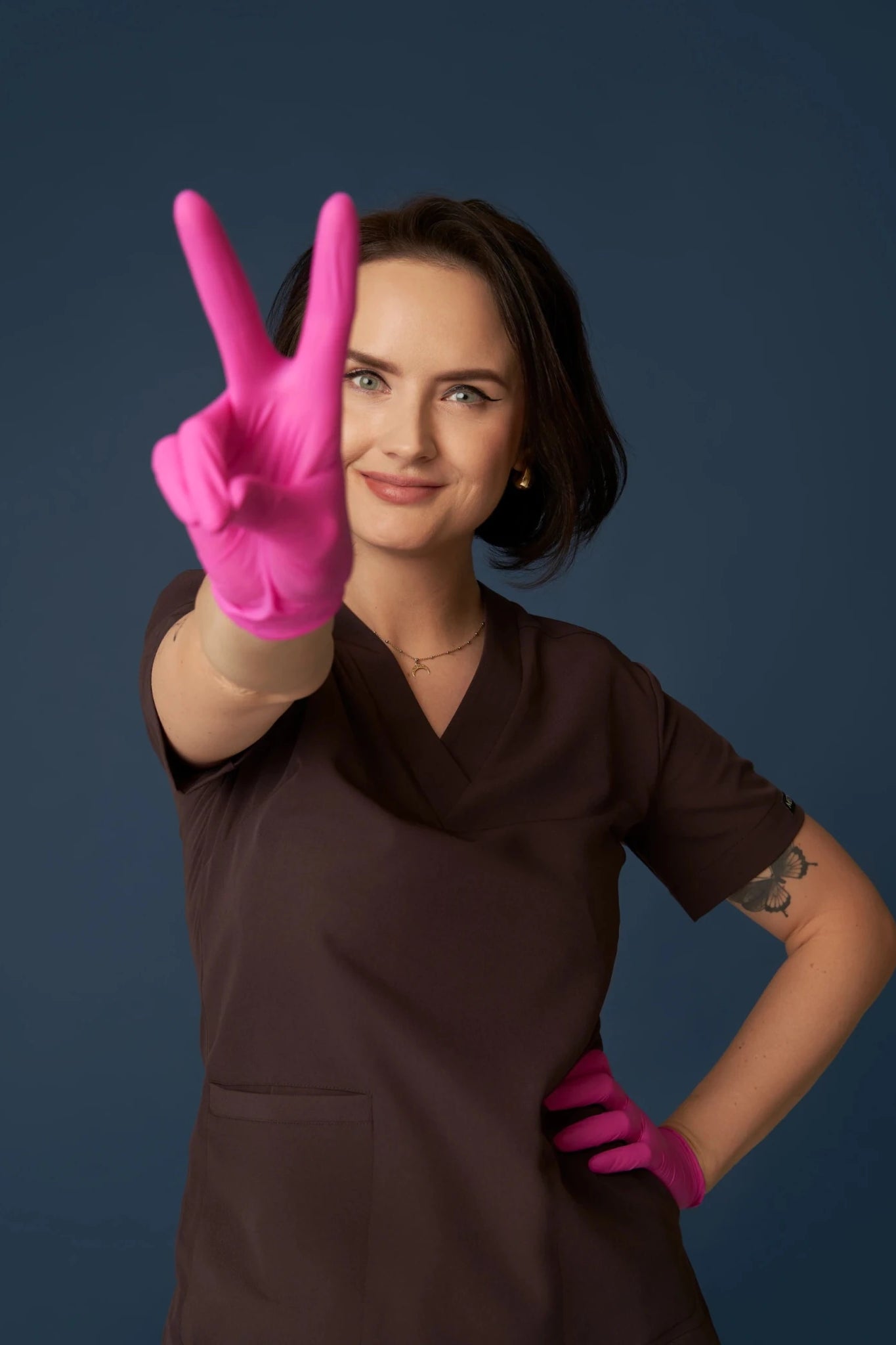
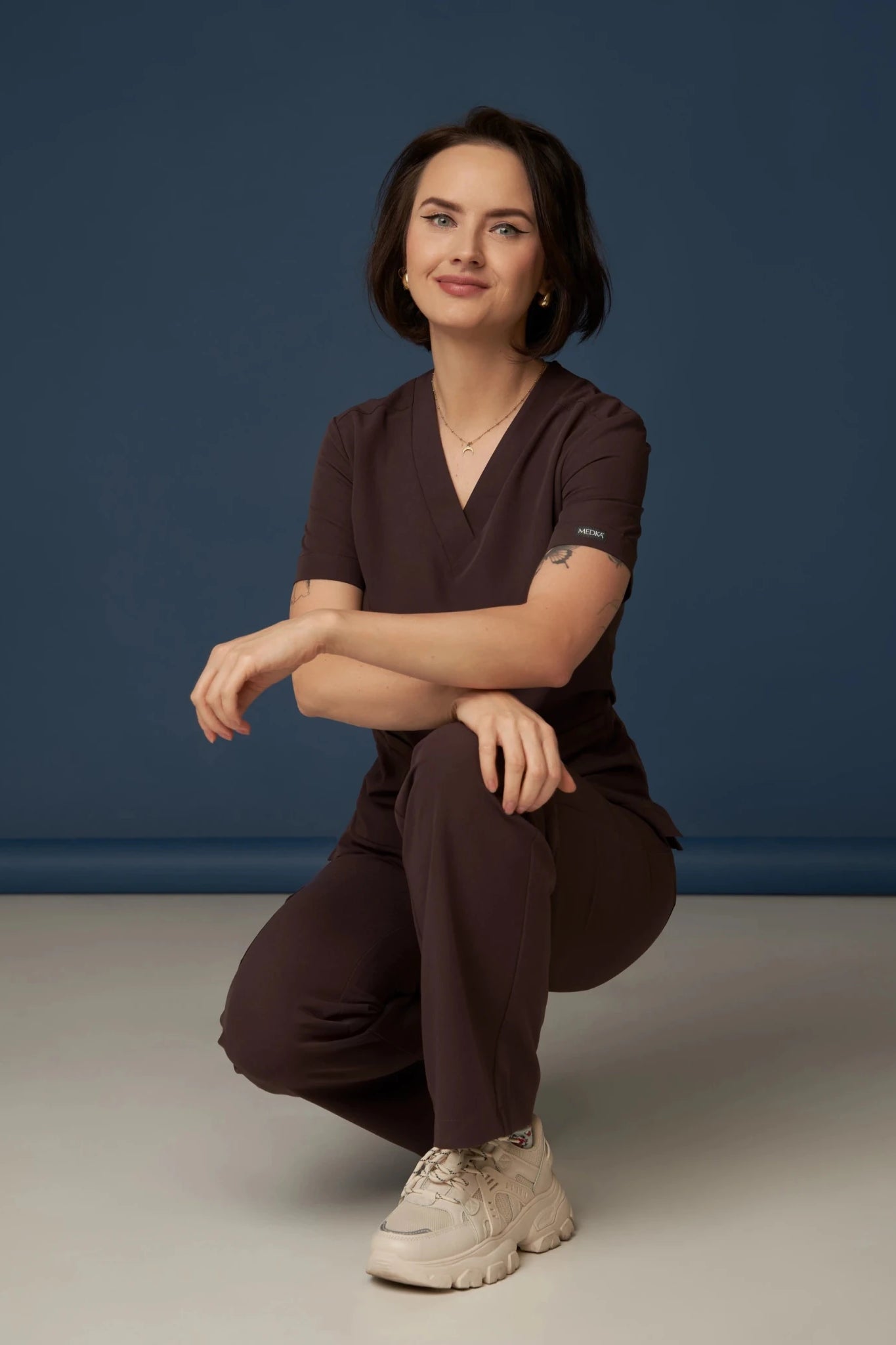
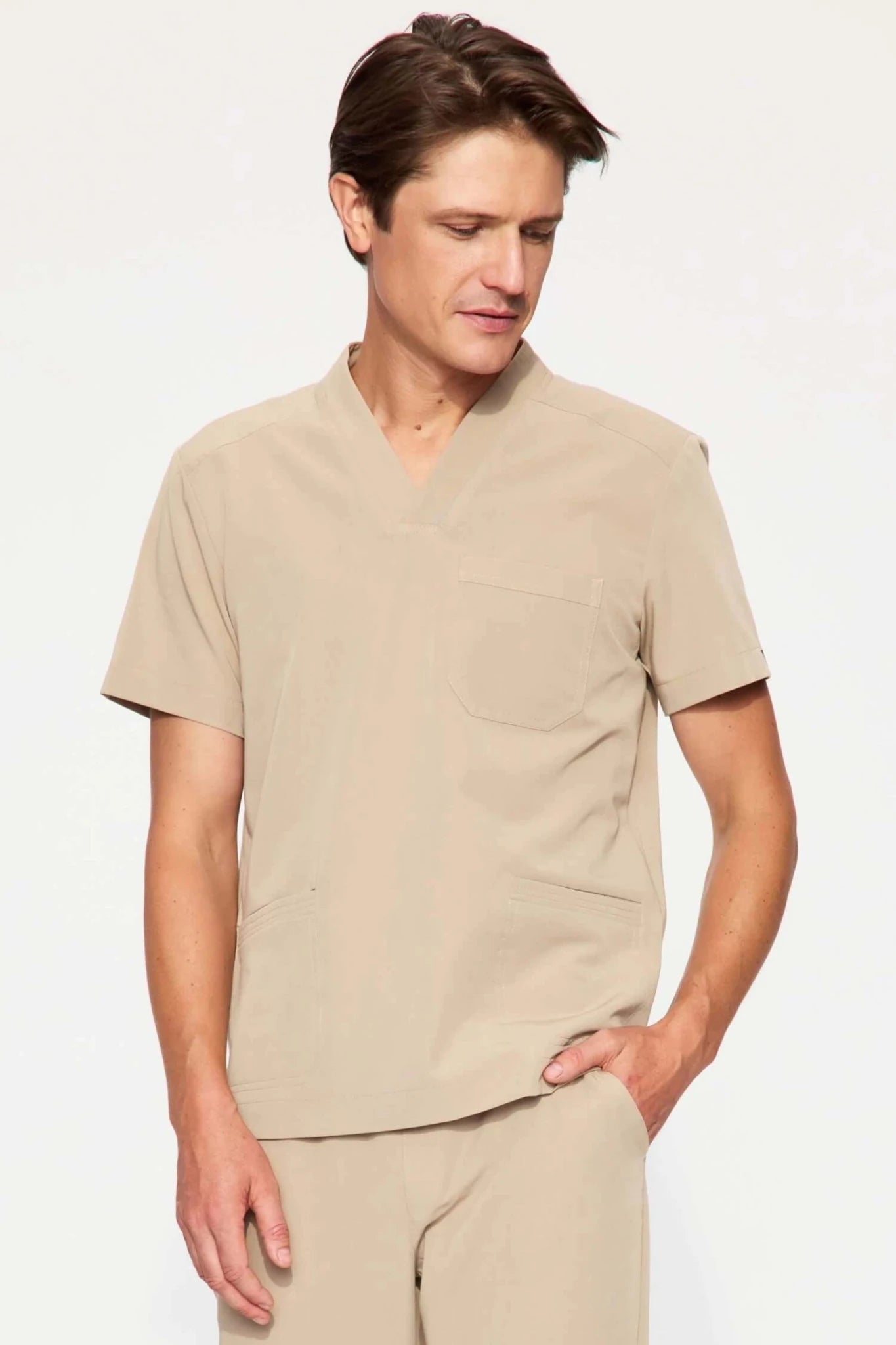
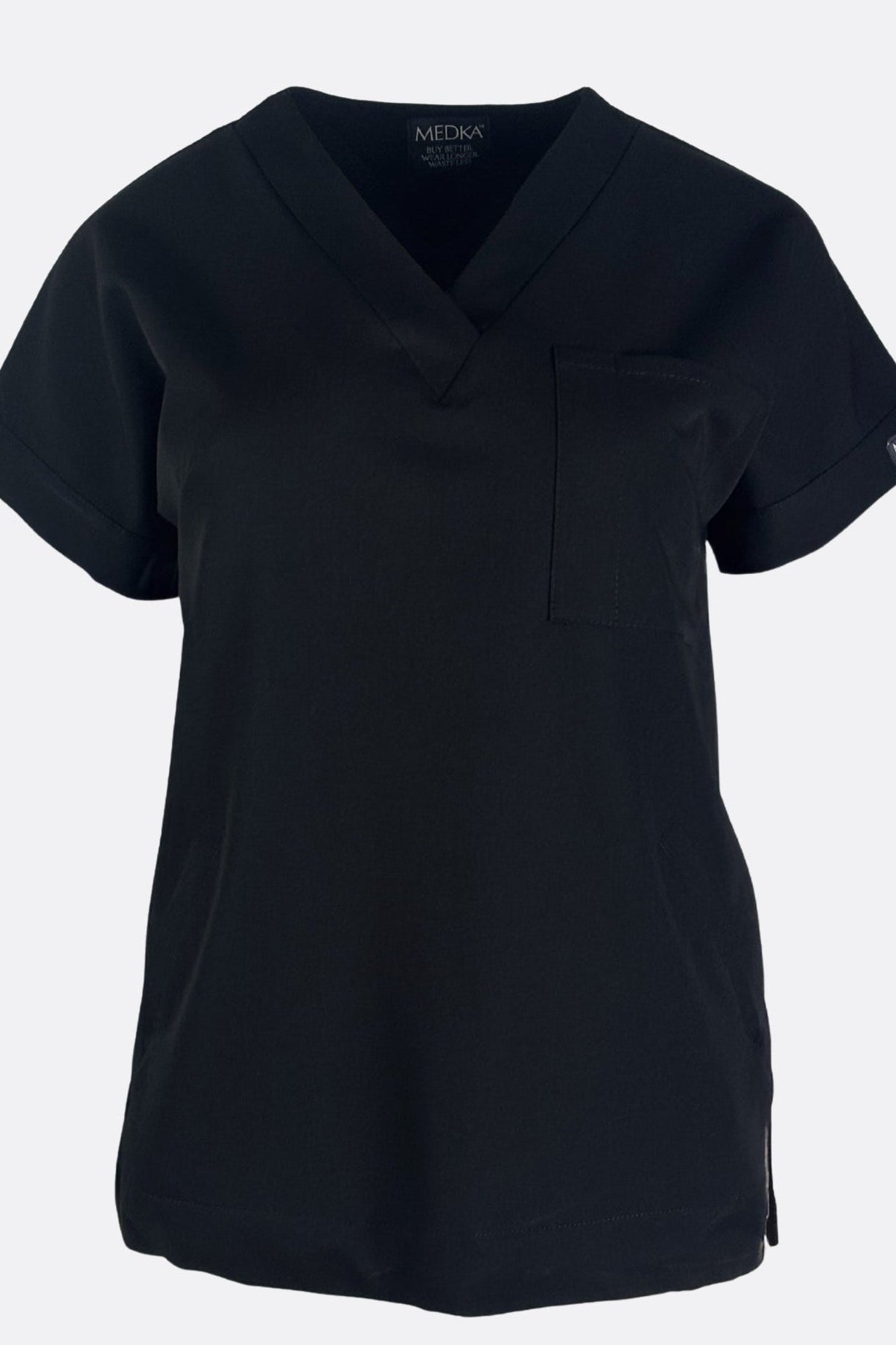
If you are preparing an outfit for an internship, your first job or to open your own studio, it is worth using proven medical and dental clothing instead of improvising. In the Medka.eu store you will find Polish medical clothing made for long hours of work: sweatshirts and scrubs made of flexible, breathable fabrics, medical pants with adjustment at the waist and two leg lengths, as well as a dedicated one dental clothing available in many styles and colors. The materials are selected for resistance to frequent washing and moisture removal, and many models have spacious pockets for small tools and accessories, which is of real importance in a prosthetic laboratory.
For people just starting their studies, it's the little things that are important: the brand offers a permanent discount for students after status verification, free returns and high order processing speed, as well as the possibility of personalization with embroidery if you want to mark the clothing with the studio's name. This is a convenient solution when you build a professional image from day one. Check out the full offer on Medka.eu and put together a work outfit that will withstand the realities of working as a dental technician.
Frequently asked questions
Below we have collected short, specific answers to the questions that most often arise when planning a career as a dental technician.
Can a dental technician work in the office together with a dentist?
As a rule, the technician works in the prosthetic laboratory, not at the chair. Some clinics, however, have their own workshop on site, so the technician is sometimes employed in the same building as the office, although still in a separate room and without direct contact with the patient.
Is it possible to become a dental technician by studying part-time?
Formally, the course at post-secondary schools is conducted on a full-time basis due to the number of practical hours. Some schools arrange classes on Saturdays and Sundays to enable working people to learn, but acquiring this profession purely by correspondence is not possible because internships require presence in the studio.
Is a Polish school diploma recognized abroad?
Yes. The professional diploma is accompanied by the Europass supplement in Polish and English, which confirms qualifications recognized throughout the European Union. This makes it easier to work abroad or cooperate with foreign laboratories.
What is the difference between a dental technician and a prosthodontist?
In everyday speech these words are sometimes confused, but they are not the same. Dental prosthetics as a specialization concerns the dentist. A post-secondary school graduate obtains the title of dental technician and performs technical and dental work, but is not a prosthodontist in the medical sense.
What features are most important in this profession?
What matters most is manual skills, patience, good eyesight and correct color discrimination, as well as the ability to work for a long time, focused on details. Readiness to learn digital technology is also becoming more and more important, because CAD/CAM is becoming a standard.
Is it worth going to college instead of post-secondary school?
Both paths lead to work in the studio. Post-secondary school is shorter and cheaper, studies provide a bachelor's degree and a broader theoretical foundation. However, employers most often look at real skills and the quality of work performed, not the type of diploma, so the choice depends on individual plans.