




The path to dermatology is one of the longest and most difficult to access in Polish medicine, and the latter surprises candidates more than the former. Six years of studies and five years of specialization sounds like a plan to check off until you compare it with the fact that for a residency position in dermatology and venereology you have to compete for a score exceeding 92 percent on the Medical Final Examination. This is not a specialization that you enter with an average result, nor is it the same as cosmetology, with which it is sometimes confused. So before someone decides that they want to treat their skin, it is worth breaking down this path into specific stages, deadlines and requirements, including what happens after obtaining the specialist title.
Who exactly is a dermatologist and what does he do?
Let's start with precision, because there are a lot of misunderstandings around this profession. A dermatologist is a medical doctor who, after graduation, obtained the title of specialist in dermatology and venereology. These two fields go hand in hand in Poland, which means that a specialist deals with skin, hair and nail diseases, as well as sexually transmitted diseases. This is a full-fledged medical profession, not a cosmetic one, and this distinction is fundamental to understanding the entire path.
In everyday practice, the dermatologist conducts an interview and examines the skin, performs diagnostics: epidermal tests, intradermal and prick tests, mycological tests, dermoscopy of skin lesions, and takes samples for histopathological examination. In addition, there are treatments ranging from electrocoagulation and cryodestruction of lesions, through curettage, to laser therapy and procedures bordering on dermatosurgery. Some specialists later develop into aesthetic, pediatric, oncological dermatology or dermatological allergology, but the common core remains medical.
It is worth dispelling the most common illusion right away. A cosmetologist and a dermatologist are two different professions with completely different paths. A cosmetologist completes studies in cosmetology and is not a doctor, does not diagnose diseases or prescribe medications. A dermatologist undergoes full medical training and only at the top does he specialize. If your dream is to perform aesthetic treatments, the path leads first to a medical diploma, and this changes the time commitment by an order of magnitude.
Where to start: high school leaving exams and medical studies
The real start of this path is earlier than many people think, because already at the high school and final exams stage. There is no formal requirement for a specific profile, but recruitment to medicine is based on results in science subjects, primarily biology and chemistry, and often also physics or mathematics at an advanced level. The entry thresholds for medicine are among the highest among all fields, so a good high school leaving examination is not an advantage, but a condition for entry.
The studies themselves are uniform master's studies in medicine lasting six years. The first years are devoted to basic sciences: anatomy, physiology, biochemistry, histology. Subsequently, clinical subjects and patient-related activities are added, and dermatology appears as one of many subjects, usually in the form of a relatively short block. This is important information for people who are confident in their choice: during college, you don't become a dermatologist or even spend a lot of time in this field. The studies provide a medical diploma and a common foundation for all future specializations.
Completion of studies culminates in a diploma examination and obtaining a medical title. However, this is only a pass to the next stage, because the fresh graduate does not yet have the full right to practice his profession or, of course, any specialization. He has an internship and an exam ahead of him, which actually opens the door to dermatology.
Postgraduate internship and Medical Final Examination
After the diploma comes the stage that combines theory with real work with patients. The postgraduate internship lasts thirteen months and involves rotation through various departments: internal medicine, surgery, pediatrics, emergency medicine and others. This is the time of the first shifts, independent decisions under supervision and the clash of knowledge with practice. During this period, the intern does not have to cover dermatology in any major way, because the purpose of the internship is general preparation of a doctor, not a narrow specialization.
In parallel or right after the internship, there comes a key moment for the entire further path: the Medical Final Examination, i.e. LEK. This is a state test exam, the percentage result of which is much more important than passing or failing. The LEK result is the main currency in recruitment to a specialization and in practice it determines whether the path to dermatology is open at all.
And here we come to the point that is easy to miss when planning a career. Dermatology is one of the fields with one of the highest recruitment thresholds in the country. In the last recruitments, the point thresholds for residency places reached around 92 to 94 percent from LEK (data from recruitments from 2025 and 2026). This means that an average, even good, result is not enough. You need to aim for the very top candidates, and this determines how you prepare for the exam long in advance.
Residency, i.e. specialization in dermatology and venereology
Passing LEK with a sufficiently high result opens the stage that turns a doctor into a specialist. Specialization in dermatology and venereology in Poland lasts five years and is carried out according to the so-called unified module, which means that there is no previous basic module in another field, the entire five years are devoted to dermatology and venereology. This is a significant difference from some other specializations, where you first take a module, for example in internal medicine.
The most common and most desirable form is residency, i.e. training financed from public funds, under which a doctor is employed and receives remuneration. The number of residency places in dermatology is limited and distributed among voivodeships, and dermatology is not among the priority specializations, which translates into lower resident remuneration than in shortage fields. As an estimate, the basic salary of a dermatology resident is approximately PLN 10.6 thousand gross in the first two years and approximately PLN 10.9 thousand after two years (as of 2026, basic gross values, excluding on-call duties). There are also non-residential paths, for example under an employment contract or freelance position, but these are less common solutions and have a different financial structure.
The specialization program itself is dense. It consists of a basic internship at the dermatology department, numerous specialized internships and a set of specialization courses including, among others, venereology, pediatric dermatology, mycology, phototherapy, dermoscopy, aesthetic dermatology and skin cancer. The table below shows the main components of this route at a glance.
| Stage | Duration | The culmination of the stage |
|---|---|---|
| Medical studies | 6 years | Medical diploma |
| Postgraduate internship | 13 months | Full right to practice the profession |
| Medical Final Examination (LEK) | exam after internship | The result determines recruitment |
| Specialization (dermatology and venereology) | 5 years | Admission to PES |
| State Specialization Examination (PES) | final exam | Specialist title |
What exactly is done during five years of specialization?
Residency is not about passively serving five years, but a program planned down to the day with strict requirements. It is worth knowing what exactly you are doing there, because it strips this path of romantic notions and shows its real intensity.
The core of the training is a basic internship at the dermatology department, which takes up more than half of the entire specialization time; in the program valid from 2023, it is one hundred and thirteen weeks. In addition, there are specialist internships scattered in related areas: general dermatology clinic, pediatric dermatology, HIV-related immune disorders clinic, rheumatology, infectious diseases, allergology, oncological and general surgery, and even psychiatry. This dispersion is not accidental, because the skin is a mirror of systemic diseases and a good dermatologist must recognize their symptoms.
The program also imposes specific, quantifiable treatment requirements. The resident must independently perform a certain number of procedures, for example dozens of electrocoagulation and cryodestruction procedures, taking skin samples, mycological tests, epidermal tests and dermoscopic examinations, and some of the activities are performed as an assistant. In addition, there are medical duties of on average over ten hours a week, the obligation to publish at least one scientific or review paper and participation in the events of the scientific society. In other words, five years combine intensive clinical work, study, passing tests for individual internships and scientific activity.
State Specialization Examination and specialist title
The final gate is an exam that formally makes a doctor a dermatologist. After completing all internships, courses and procedures and after fulfilling the scientific requirements, the resident takes the State Specialization Examination, PES for short. It consists of a test and an oral part, and passing it means obtaining the title of specialist in dermatology and venereology.
Only at this point, after a total of eleven years from the beginning of studies, is a full-fledged dermatologist considered. This is a perspective that is worth being aware of at the beginning, especially if your motivation is to quickly enter aesthetic medicine. The specialist title opens the possibility of independent practice, working in clinics and hospitals under a contract with a public payer or privately, as well as further development in narrower areas of dermatology.
The job market for dermatologists is specific. There are relatively few active specialists in this field in Poland, around several thousand, and the vast majority are women. Patient demand is high, queues for public financing are long, and the private sector is receptive, which translates into good earnings prospects after specialization. This partly explains why recruiting can be so fierce.
For whom does this path make sense and for whom does it not necessarily make sense?
Now that the picture is complete, it is worth saying directly who this path will actually serve, because not everyone interested in skin is worth going this route. Addressing the matter honestly saves you years of time spent on a path that does not lead to where you wanted.
Dermatology in the medical version makes sense for someone who accepts a very long educational horizon, is able to maintain a high discipline of study for years and realistically aims for top results in every exam, from the Matura exam through LEK to PES. It will work well for people who are interested in the diagnosis and treatment of diseases, and not only aesthetics, because the specialist's everyday life includes, to a large extent, psoriasis, mycosis, sexually transmitted diseases, skin cancer and children's diseases, and not only beauty treatments.
However, this path is not suitable for someone who is only interested in performing aesthetic treatments and who hopes to quickly enter the profession. Some of these treatments are available through shorter paths for doctors of other specialties or for cosmetologists, although to a narrower extent and with different qualifications. It may also be a bad choice for a person who does not want or cannot maintain examination discipline for a decade, because considering the recruitment thresholds for dermatology, mediocre results simply close the door. It's better to know this at the beginning than to discover after six years of study that your dream specialization is out of reach.
Where can a dermatologist buy the best uniform for work?
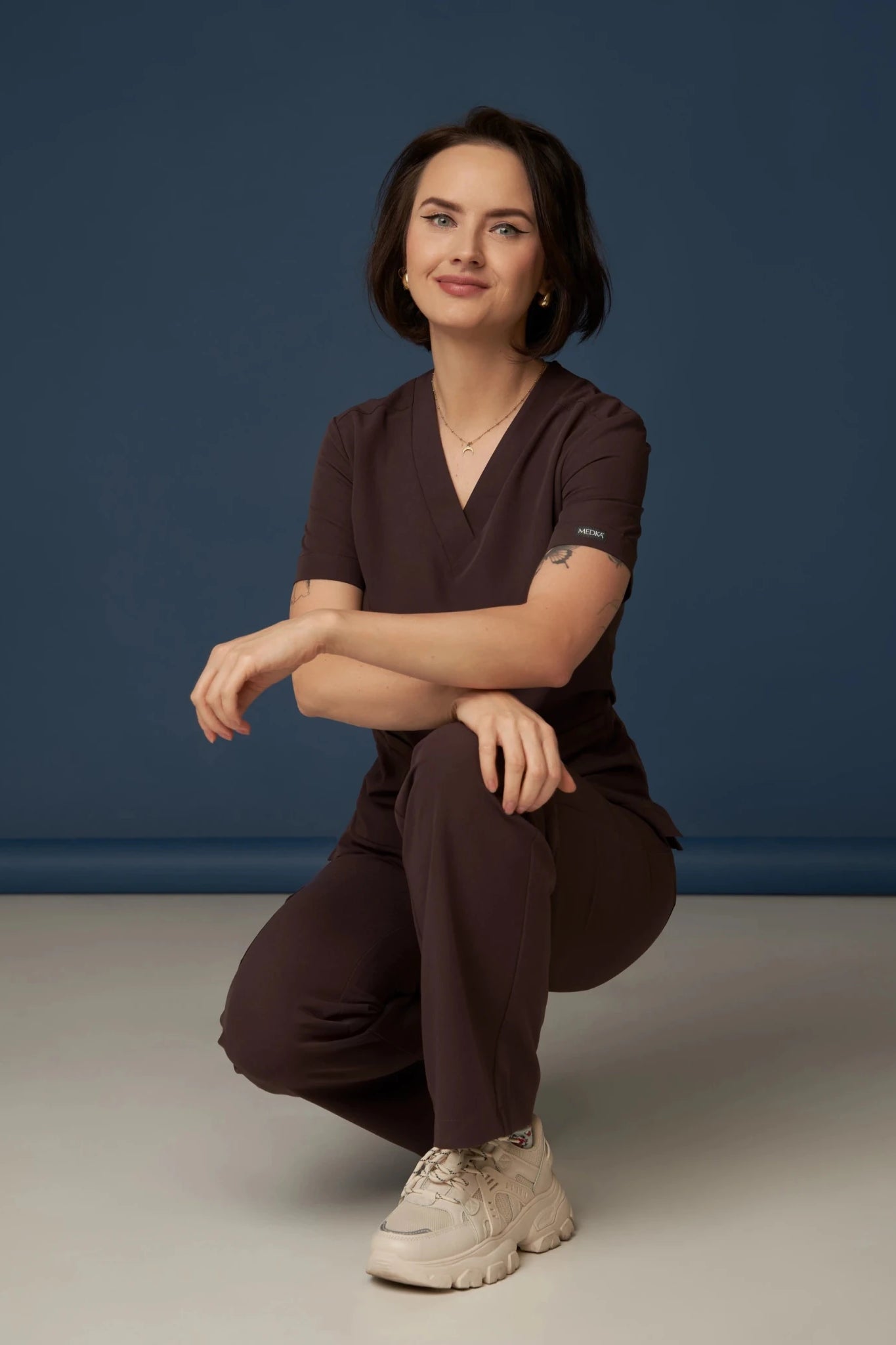
When you are already on the way to the office, your everyday life is spent working with patients, and what you do with your work is also important. Medical clothing a dermatologist is not a small thing, because it accompanies many hours of skin examinations, treatments and consultations, so its comfort, quality of material and aesthetics translate directly into the comfort of the entire day.
A good medical uniform should be airy, well-tailored and made of fabric that can withstand frequent washing at high temperatures without losing color and shape. The cut, number and location of pockets, freedom of movement during treatments, as well as appearance are important, because neat, well-fitting clothes build a professional image in the eyes of the patient. In a dermatology office, where aesthetics and hygiene go hand in hand, a well-selected set simply makes a difference.
If you are looking for medical clothing that combines these features, check out the store's offer medka.eu. There you will find sweatshirts, trousers and medical sets in many colors and styles, designed for everyday work in the office and in the ward. This is a convenient place to assemble a professional uniform tailored to the needs of a dermatologist, both for starting your career or to replace a worn-out uniform. Visit medka.eu and choose an outfit that will make you feel comfortable working with a patient for long hours.
Frequently asked questions
Below are short and specific answers to the questions that most often arise when planning a career as a dermatologist.
How many years does it take in total to become a dermatologist? It usually takes about eleven years from the beginning of studies to obtain the specialist title: six years of medical studies, thirteen months of postgraduate internship and five years of specialization. In addition, there is the time needed to pass the LEK and PES. Therefore, realistically, you should plan for more than a decade of education.
Is it difficult to get into dermatology specialization? Yes, dermatology is one of the most difficult specializations to access in Poland. Recruitment thresholds for residency positions in recent recruitments reached approximately 92 to 94 percent in the Medical Final Examination. This means that doctors with very high scores compete for places, and an average result is usually not enough.
Is a dermatologist the same as a cosmetologist? No, these are two different professions with different educational paths. A dermatologist is a doctor who, after six years of study, obtains a five-year specialization and can diagnose and treat skin diseases. A cosmetologist graduates in cosmetology, is not a doctor and does not diagnose diseases or prescribe medications.
How much does a dermatology resident earn? The basic salary of a dermatology resident is approximately PLN 10.6 thousand gross in the first two years and approximately PLN 10.9 thousand after two years of training (as of 2026). These are basic amounts without on-call duties, and dermatology is not a priority specialization, so it is not covered by the higher rate planned for shortage fields.
Can you become a dermatologist without a residency? Theoretically, specialization can also be pursued in a non-residency mode, for example under an employment contract or a free specialization position. However, residency remains the most common and financially advantageous form because it involves employment and remuneration from public funds. There are fewer non-residential places and their structure is different.
What subjects are worth taking at the high school leaving exam when considering dermatology? Biology and chemistry at the advanced level are crucial, because they are the basis on which most medical universities recruit. You may also want to consider physics or mathematics, depending on your university's policies. Since the entry thresholds for medical studies are very high, the goal should be top results, not just passing exams.