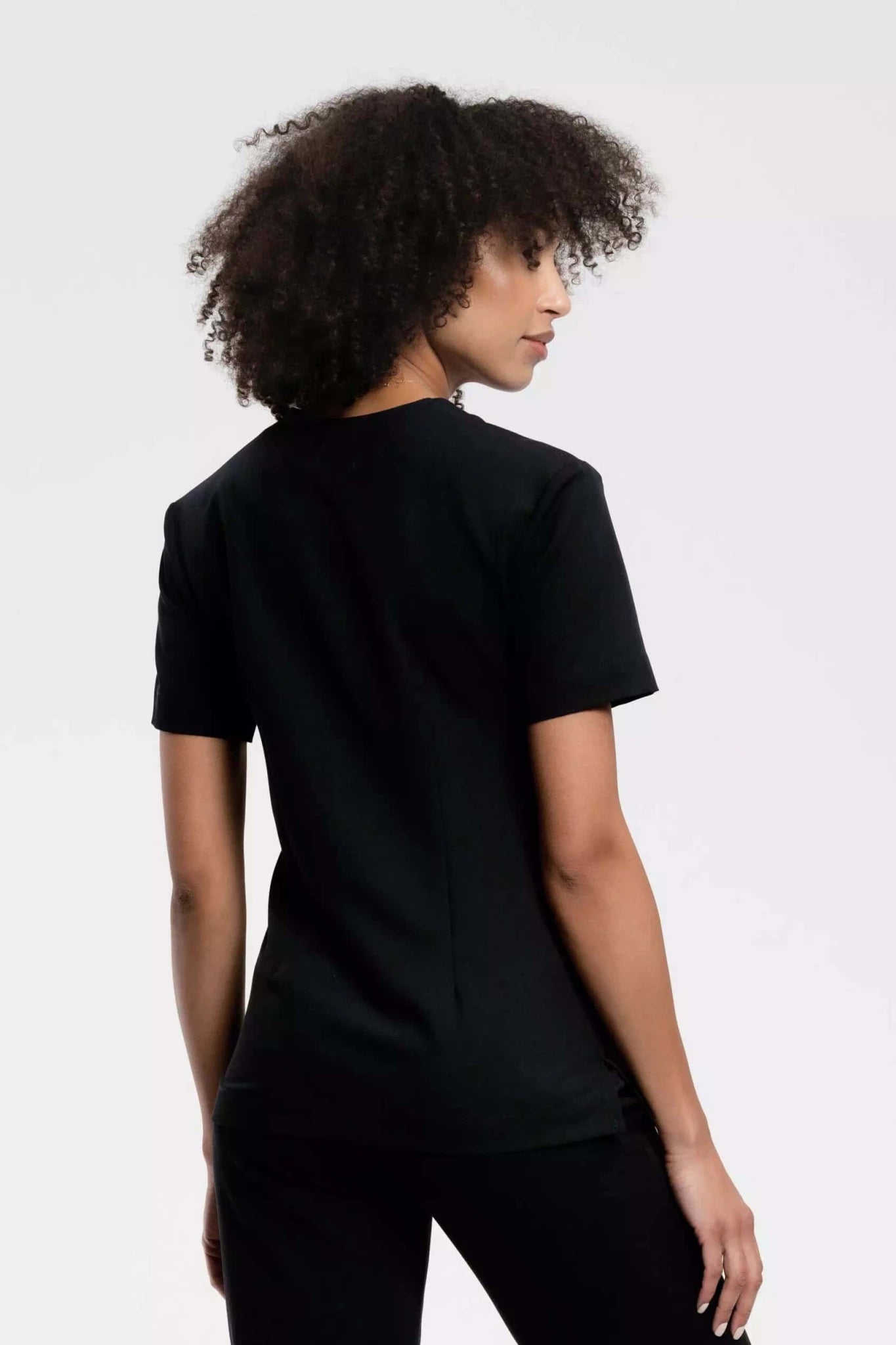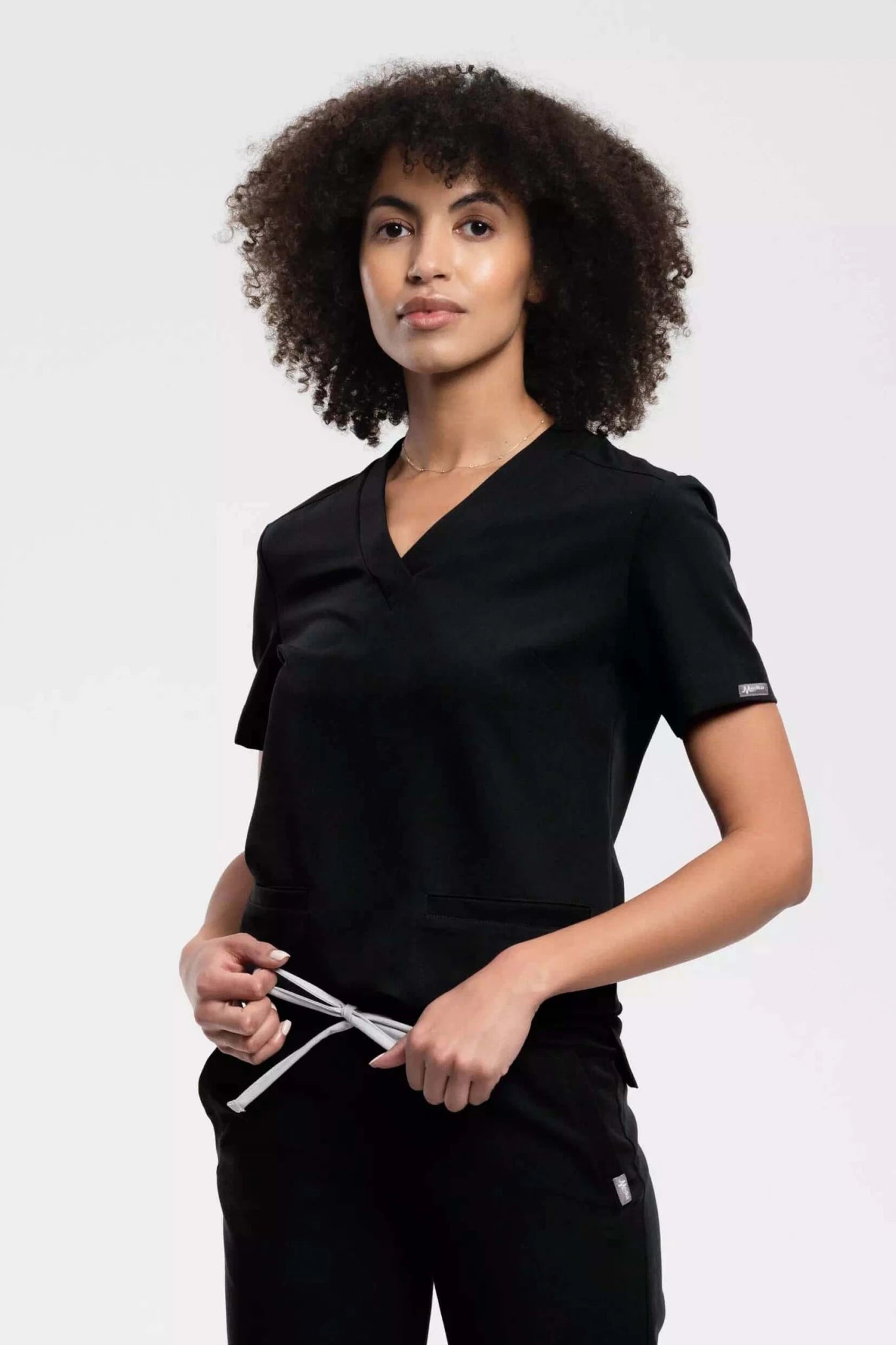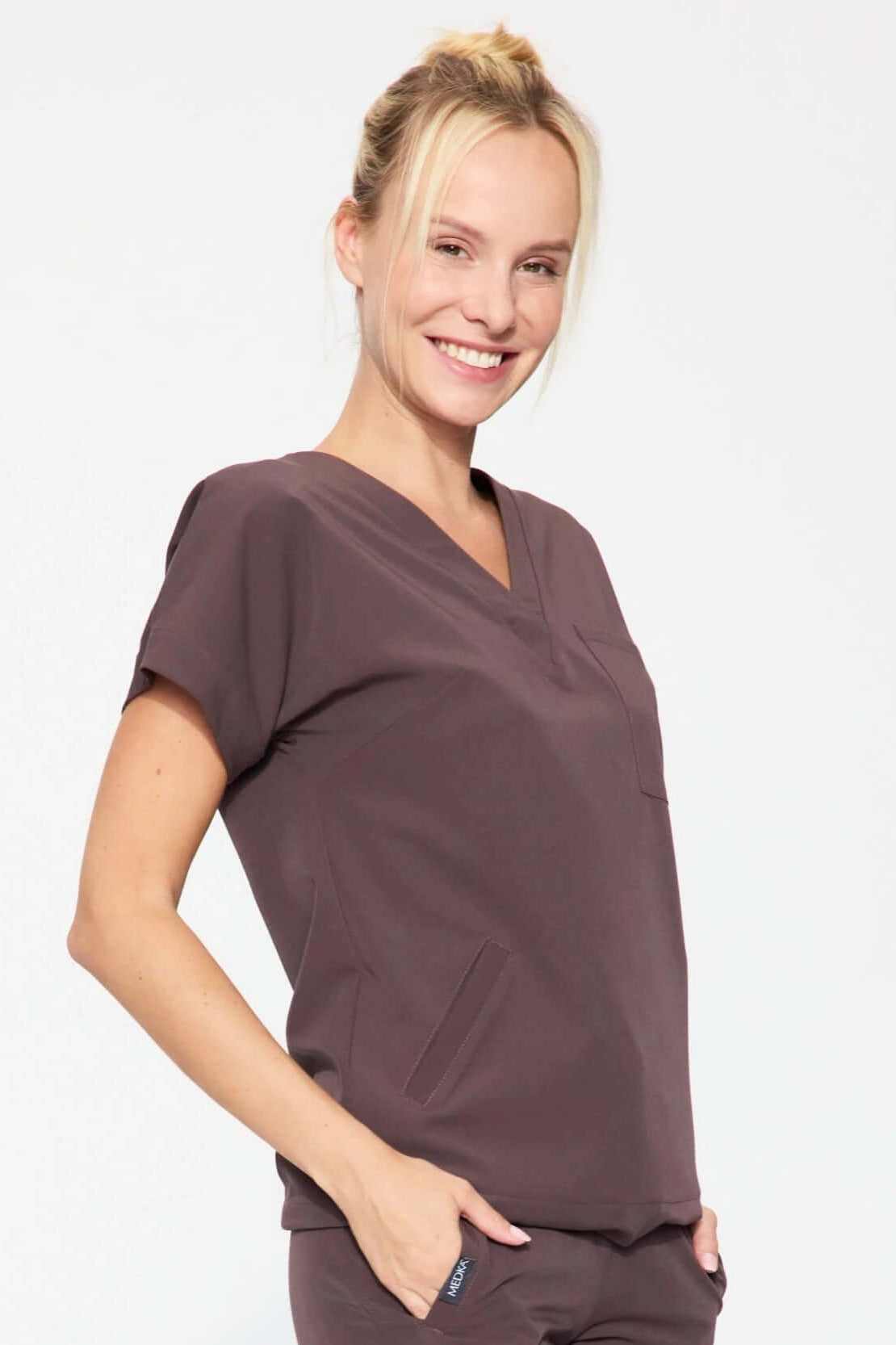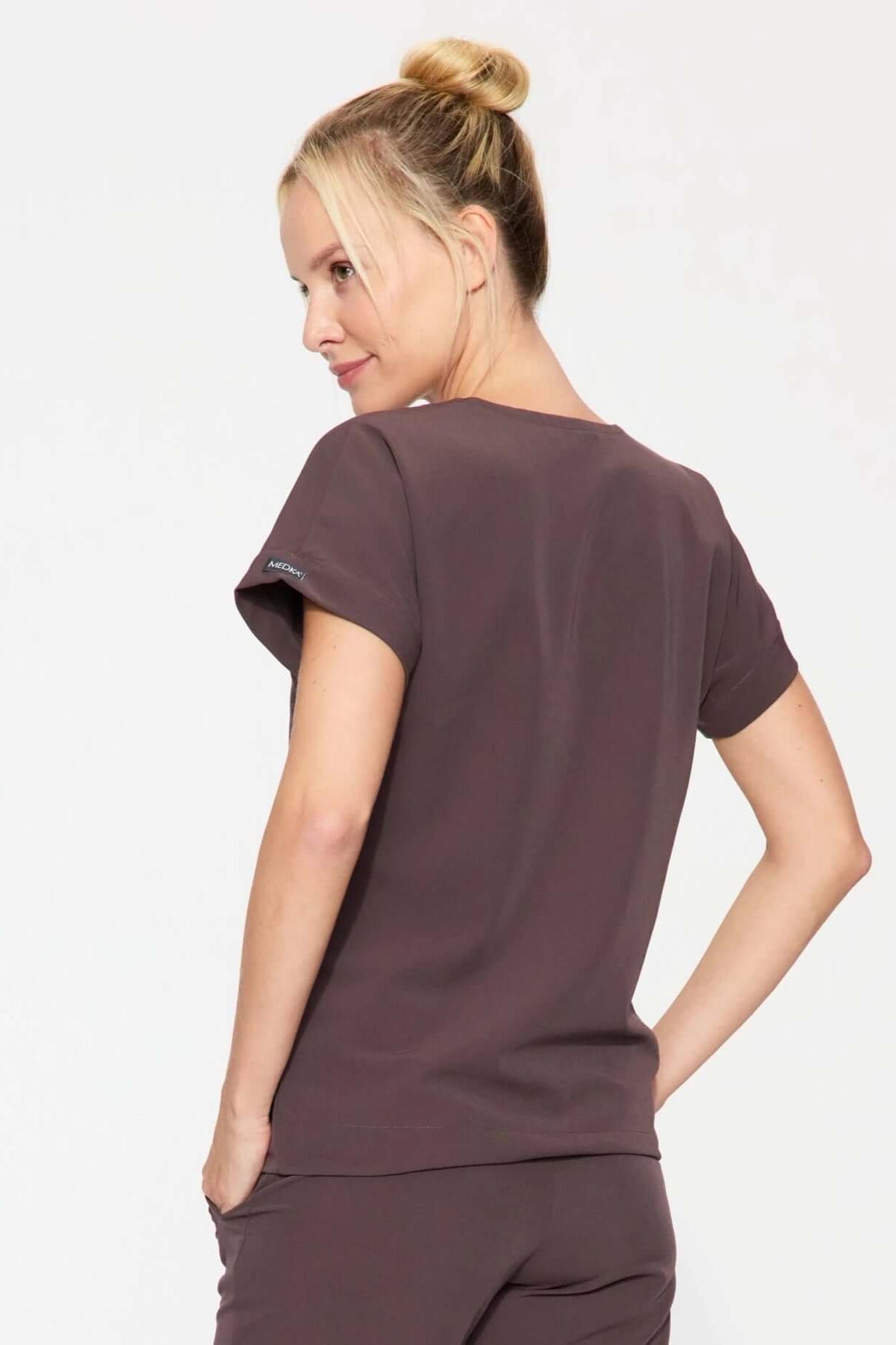





Medical pants are the part of the uniform that a man wears the longest and which he only notices when something becomes disturbing. A tight waistband after seven o'clock, a pant leg that reveals a sock every time you crouch, a pocket stuffed with a phone, too thick material in a room where it's 26 degrees. The problem is that these things cannot be checked in a fitting room for three minutes. They are only visible when on duty. Therefore, choosing medical trousers is not a matter of taste, but of predicting how a specific cut and a specific fabric will behave in your work mode, after the twentieth wash and after the tenth hour on your feet.
What really determines the choice of medical trousers?
The key thing to start with: there is no one good style of medical trousers. There's a style to suit what you do most of your shift. A paramedic who kneels next to a patient several times during his shift and a radiologist who spends seven hours at the imaging station need two different things, even though they both buy "men's medical pants".
It's worth breaking down your working day into a few questions. How many hours do you spend sitting? How many times do you crouch, kneel or step on something? Do you carry equipment with you (work phone, diagnostic flashlight, scissors, ID badge) or do you have everything in a cart? What is the temperature at your workplace in winter and summer? Do you change at the facility or go to work in uniform?
The answers to these questions determine the choice more than all the parameters from the price tag combined. A person who works mainly while sitting will feel the belt first: a stiff, narrow belt that cuts into the stomach when leaning forward can ruin the whole day. Someone who kneels a lot will feel pain in the crotch and knee: too narrow crotch in slim pants restricts movement and rips faster. A person working in a warm room will notice the weight and composition.
Only after breaking down the work into factors does it make sense to talk about joggers, combat trousers or straight leg trousers.
Which style of medical pants will work for your work?
There are four basic men's cuts on the market and each of them solves a different problem and at the same time creates its own.
A straight leg is the most neutral choice. It looks formal, matches the apron, and does not attract attention. It works well where image matters: private offices, consultations, contact with patients in outpatient settings. It has one drawback that few people talk about directly: the loose leg near the floor collects dirt and moisture. In a ward where the floor is washed three times a day, the lower edge of the trouser leg may be the most worn-out part of the trousers.
A jogger, i.e. a tapered leg with a drawstring at the ankle, solves exactly this problem. Nothing rolls up when you squat, nothing catches on the wheel of the stroller, nothing drags on the floor. That's why joggers dominate surgical and emergency departments. Compromise? The cuff is an element that stretches. After thirty washes, it loses its elasticity and starts to sag on the shoe, and then the pants look worse than regular straight-leg trousers. It is worth checking whether the cuff is made of cotton (softer, but stretches faster) or with an admixture of elastane (harder, more durable). Some manufacturers offer the same model in two drawer variants, which makes the decision easier.
Combat trousers, i.e. the cargo model, are the answer to the need to carry equipment. The thigh pocket holds things that you don't want to have in the front pocket because they hurt when you sit down. The problem comes when the pocket is full: the weight on the thigh pulls the pants down with each step, and the waistband has to compensate. Combat pants make sense for someone who realistically carries three or four items. For someone who carries a phone and a pen, this is an unnecessary mass of material and an additional place where dust collects.
Slim, i.e. a fitted cut, looks the best and wears out the fastest. The place that lets go first is the crotch and inner thigh. In fitted trousers, the friction in this place is the greatest and the material is tight. If you have muscular thighs or you work a lot in movement, slim without a decent amount of elastane is a choice for one season.
| Fashion | It works well for: | The main risk | Who would rather be disappointed |
|---|---|---|---|
| Straight leg | Office work, contact with patients, formal dress code | The lower edge of the pant leg gets dirty and rough | People who often squat and kneel |
| Jogger | Dynamic work, ward, rescue, physiotherapy | The welt loses its elasticity over time | Institutions with a conservative dress code |
| Cargo pants | Carrying equipment with you, field work | A weighted thigh pocket tightens the pants | People carrying only a phone and a pen |
| Slim | Image, static work, slim figure | Abrasions in the crotch and on the inner thigh | People with muscular thighs, work in motion |
If your work is mixed, and most men are, it may make sense to have two pairs in two styles and rotate them depending on the day. This also extends the life of both pairs because the fabric rests between washes.
What material composition should you choose and why is pure cotton a bad idea?
Here we need to refute the most common simplification: "cotton breathes, so cotton is the best." This is not true in medical clothing and it is worth understanding the mechanism.
Cotton actually absorbs moisture, and that's the problem. Cotton fiber absorbs sweat and retains it because there is no way to remove it outside. After three hours in the ward, the pure cotton trousers are wet from the inside and remain wet. In addition, they take several hours to dry, crease every time you sit and shrink when washed at 60 degrees. This is a great material for a T-shirt that you take off after two hours, not for pants that you wear for twelve hours.
Polyester has the opposite effect: it does not absorb, but transports moisture outside, where it evaporates. Good quality polyester is light, breathable and retains its color after many washes. Bad polyester becomes electrified and retains odor. The difference between one and the other is mainly a matter of fiber thickness and finish, which you won't read from the label. An indirect signal is the price and whether the manufacturer provides the full composition at all.
Viscose is the ingredient that does the most good with the least publicity in medical trousers. It is responsible for the softness to the touch and for the fact that the material drapes instead of sticking out. Pants with a high polyester content without viscose can look like plastic. Viscose fixes this. Its disadvantage is lower abrasion resistance, which is why it is used in mixtures, not alone.
Elastane is an ingredient whose lack you will feel immediately. Three to six percent is enough for the material to work with the body and get back into shape. Without it, crouching strains the crotch seam. More important than the percentage itself is whether elastane survives washing: it is responsible for the "stretched knees" effect after a few months, if the fabric is cheap or the trousers are dried in a tumble dryer.
In practice, typical compositions on the Polish market, as of July 2026, include several variants: cotton with polyester and elastane (usually in proportions close to 55/42/3), polyester with viscose and elastane (e.g. 69/25/6, as in the men's collection of the Medka store), or polyester with cotton in a 65/35 arrangement. Weights most often range from 160 to 180 g/m². This is the range you should aim for: below 150 g/m² the material becomes transparent, above 200 g/m² it gets hot.
| Composition | Feeling on the skin | Behavior after duty | After 30 washes | For whom |
|---|---|---|---|---|
| 100% cotton | Soft, pleasant to start with | Wet, heavy, crumpled | Shrunken, faded | Allergy sufferers working short hours, office work |
| Cotton with polyester and elastane | Natural, slightly rough | Moderately humid | Keeps in shape well | Mixed operation, warmer rooms |
| Polyester with viscose and elastane | Smooth, cool, liquid | Dry, crease-free | Color and elasticity preserved | Long shifts, work on the move |
| Polyester with cotton 65/35 | Slightly stiffer | Dry but less airy | Very durable | Intensive use, washing at high temperature |
Separately, it is worth saying for whom synthetic mixtures do not make sense. If you have atopic dermatitis or a severe reaction to synthetic fabrics, the predominance of polyester will be a problem regardless of fiber quality. Then look for fabrics with a predominance of cotton and accept that they will crease. This is a real compromise, not a product defect.
Why is inseam length more important than size?
This is a question that most stores don't ask at all, but it is responsible for the most returns. Size S, M or L describes the circumference. It doesn't say anything about where the leg will end.
A man who is 172 cm tall and a man who is 194 cm tall can wear the same size L because they have similar waist circumference. If a manufacturer offers one universal length, at least one of them will get pants that do not fit. The shorter one will roll up his pant leg and rub it against the floor. The taller one will wear pants that end above the ankle and expose the calf with each crouch.
This cannot be fixed with a belt or cinch. This can only be fixed by a seamstress or by purchasing trousers of the appropriate length straight away. Therefore, one of the first filters you should use when purchasing is to check whether the store separates circumference from length at all. Some Polish brands do this. For example, in the Medka store, men's trousers are available in three leg lengths assigned to height ranges (170-179 cm, 180-192 cm and 192-200 cm), regardless of the selected size. This sounds like a detail until you're the one who measures 194 cm.
How to measure yourself meaningfully? Measure your waist circumference at the place where you actually wear the pants, not at the narrowest point of your waist. Most men wear medical trousers around the hips, not the waist, so a waist measurement will result in a measurement that is a few centimeters too small. Measure the leg length from the crotch to the place where you want the pants to end: for a straight leg it is the point slightly overlapping the shoe, for a jogger it is the ankle. Take measurements in the shoes you wear at work, because the sole of a medical clog and the sole of a sneaker differ by two or three centimeters.
One last thing: if you're hesitating between two sizes, take the larger one, provided the waistband has an elastic band with a drawstring. An adjustable elastic band will close the excess. In trousers with a hard belt and fastening, this rule does not work and it is better to choose a smaller size.
What determines whether pants will survive a hundred washes?
The durability of medical trousers is determined in three places that are not visible in the product photo.
The first is the seams in the crotch. This is the point of greatest stress and is where the pants will tear. A good manufacturer uses a double or overlock seam with reinforcement in this place. You can check this after purchase by turning the pants inside out: a single, thin seam in the crotch is a sign of a problem.
The second is the bolts on the pockets. A bartack is a dense stitch that protects the corner of the pocket against unraveling. A pocket that you reach forty times a day will start to tear after a few months without bolts. This is a detail that some manufacturers mention directly in the description, and it is worth looking for it.
Third is the belt itself. An elastic band sewn into a fabric tunnel lasts longer than an elastic band sewn directly to the edge. The latter twists in the wash and after half a year the belt looks wavy.
Apart from the construction, the method of washing is also decisive, and this is where most mistakes are made. Fabric softener, which seems like a good idea, settles on the elastane fibers and deprives them of their elasticity. A tumble dryer does the same thing, only faster: high temperature degrades elastane permanently. Washing at 60 degrees is justified only when you really need disinfection; during regular duty without contact with infectious material, 40 degrees is completely sufficient and extends the life of the trousers by a year or two. Turning it inside out before washing reduces color fading.
How does color translate into practice rather than symbolism?
The story that surgeons wear green because it is the opposite color to red and relieves the eyesight is true and repeated everywhere. Practically, however, different things matter when choosing trousers.
First, the regulations. In Poland, there is no regulation specifying the color of a medical uniform, but individual facilities have their own internal regulations and can be very specific in this matter. It takes five minutes to check the terms and conditions before purchasing and saves you money back.
Secondly, what the color shows. White is merciless: it shows everything from coffee to iodine, and at low grammages it can be transparent. Navy blue, black and bottle green hide organic stains, but show dust, hair and everything that is bright. This is important, for example, in veterinary medicine, where hair on black pants is visible from the other end of the office. Medium shades, gray, olive, beige, are the most forgiving.
Third, fading. Intense colors, especially navy blue and black, in cheap cotton fabrics lose their depth after a dozen or so washes and start to look washed out. The dye holds better in synthetic fiber, so if you want black that is still black after a year, the composition is more important than the shade in the photo.
How much do good medical pants actually cost and is it worth paying extra?
Instead of using abstract ranges, it is worth breaking down a specific, current offer into factors. Collection Medka men's medical trousers has 31 items and is divided into three price levels (as of July 2026).
The regular price is PLN 209.90 for most colors in both styles, MARGO and GENUS joggers. The colors from the Viscose Plus line are priced at PLN 219.90, i.e. espresso, latte, emerald green and lagoon blue. The lower level is the color rotation: snuff and forest go down to PLN 169.92, cornflower blue, gray and olive in the variant with a fabric cuff go down to PLN 159.20, and chocolate in both styles goes down to PLN 99.90. The same design, the same composition, the same sizes and the same three leg lengths. The only difference is that a given shade is removed from the current offer.
This is the most important conclusion for the wallet and hardly anyone draws it. If your facility does not impose colors and you wear medical uniform pod men's doctor's coat, the shade is a purely aesthetic matter. Choosing chocolate instead of pomegranate for an identical product means PLN 99.90 instead of PLN 209.90, i.e. less than half. Three pairs from the color rotation are about PLN 300 instead of PLN 630. For this difference, you buy a fourth and fifth pair or shoes.
When does this strategy not make sense? When you plan to complete the uniform gradually over a year. The color on sale will disappear and you won't be able to buy a matching sweatshirt or a second pair of the same shade in six months. If you want a coherent set built over time, stick to the colors from the current offer and pay PLN 209.90, because they will be available. The sale is only profitable if you buy the set at once.
| Variant | Price per pair | How much do 3 pairs cost | When it's a good choice |
|---|---|---|---|
| Viscose Plus (espresso, latte, emerald green, lagoon blue) | PLN 219.90 | PLN 659.70 | Long shifts, priority on fabric comfort |
| Colors from the current offer (navy blue, black, beige, indigo, steel) | PLN 209.90 | PLN 629.70 | Building the uniform gradually, purchasing additional items over time |
| Color rotation (snuff, forest) | PLN 169.92 | PLN 509.76 | Purchase all at once, no color required |
| Deep Sale (Chocolate, Cornflower Blue, Gray) | PLN 99.90 to PLN 159.20 | PLN 299.70 to PLN 477.60 | Buy everything at once and work under an apron |
It is worth calculating not the price of a single pair, but the number of pairs. For a full-time job, you need at least three for the washing cycle to run smoothly; four is more convenient. With three pairs, the difference between the cheapest and the most expensive option in the same collection is about PLN 360, spread over two years of use, about fifteen zlotys per month. This is the price for the ability to choose any color and buy it later, not for a better product.
Separately about costs that are easy to overlook. Free delivery starts from PLN 450, so if you order two regular pairs, you'll get it anyway, but for one test pair, add shipping. Students have a 15% permanent discount after status verification, which for three pairs of PLN 209.90 each means approximately PLN 95 less. The return is free of charge and you have 60 days to return it, which means two months to check how the pants behave after a dozen or so washes, not just in the fitting room.
The flip side of the whole equation: if you're just starting out and don't know whether you'll wear joggers or straight leg pants, buying four pairs of one style at once is risky. Buy one pair of MARGO and GENUS, preferably on sale, work in them for a month and only then buy three pairs of what has worked well for you. The sixty-day turnaround is enough for such a test to cost nothing except time.
Two pairs, two decisions, two different finals
A paramedic from an emergency department in a large city, height 191 cm, bought two pairs of trousers in the same month. The first: straight leg, 100% cotton, one universal length, price PLN 119. Second: jogger, polyester with viscose and elastane, leg length 180-192 cm, price PLN 209.
After the first shift, the difference was already visible, but not where he expected it. The cotton pair proved comfortable for the first three hours, then became damp around the waist and behind the knees and remained so for the rest of the shift. The leg, two centimeters too short for his height, exposed his calf every time he knelt next to the stretcher. The jogger stayed dry at 10 p.m. and 6 a.m., and the ankle cuff meant he didn't have to adjust the leg once.
After three months, the split was irreversible. After washing at 60 degrees, the cotton trousers shrank by another two centimeters, making them unwearable altogether, and the navy blue color faded to a greyish shade. After the same period, the jogger had a stretched cuff at the right ankle, i.e. the one on which the rescuer kneeled more often, but the color and cut held well.
The conclusion is not "more expensive is better", because it is too simple. The conclusion is that it was cheaper to purchase something in which two things were matched to a specific job, i.e. the length of the trouser leg to the height and the composition to the number of hours in motion. The cotton pair wasn't bad in itself; would be decent for someone who works six hours in an air-conditioned office. She didn't stand a chance in the emergency room. And the rescuer paid PLN 119 for something that he could no longer wear after a quarter, which is more expensive per month than for a jogger that stayed with him for another year.
What can you find in Medka's offer of men's medical trousers?
Medka is a Polish brand that sews medical clothing locally, and in the context of men's trousers, this has a specific impact on the product, not only on the label. A shorter production chain means that the sizes are designed for the Polish population, and not calculated from the American grid. This is best seen where imports usually fail, i.e. at heights below 175 and above 190 cm.
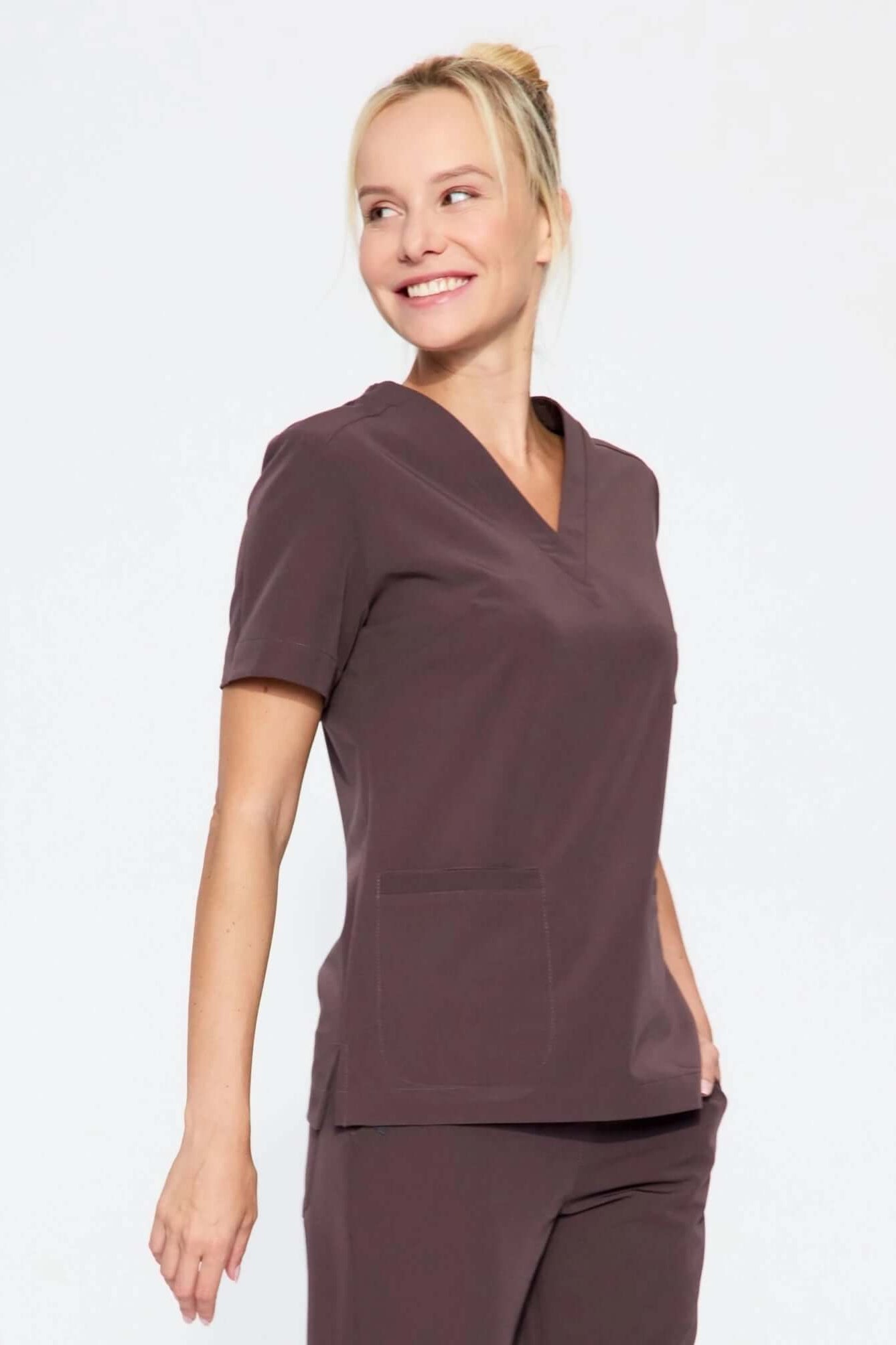
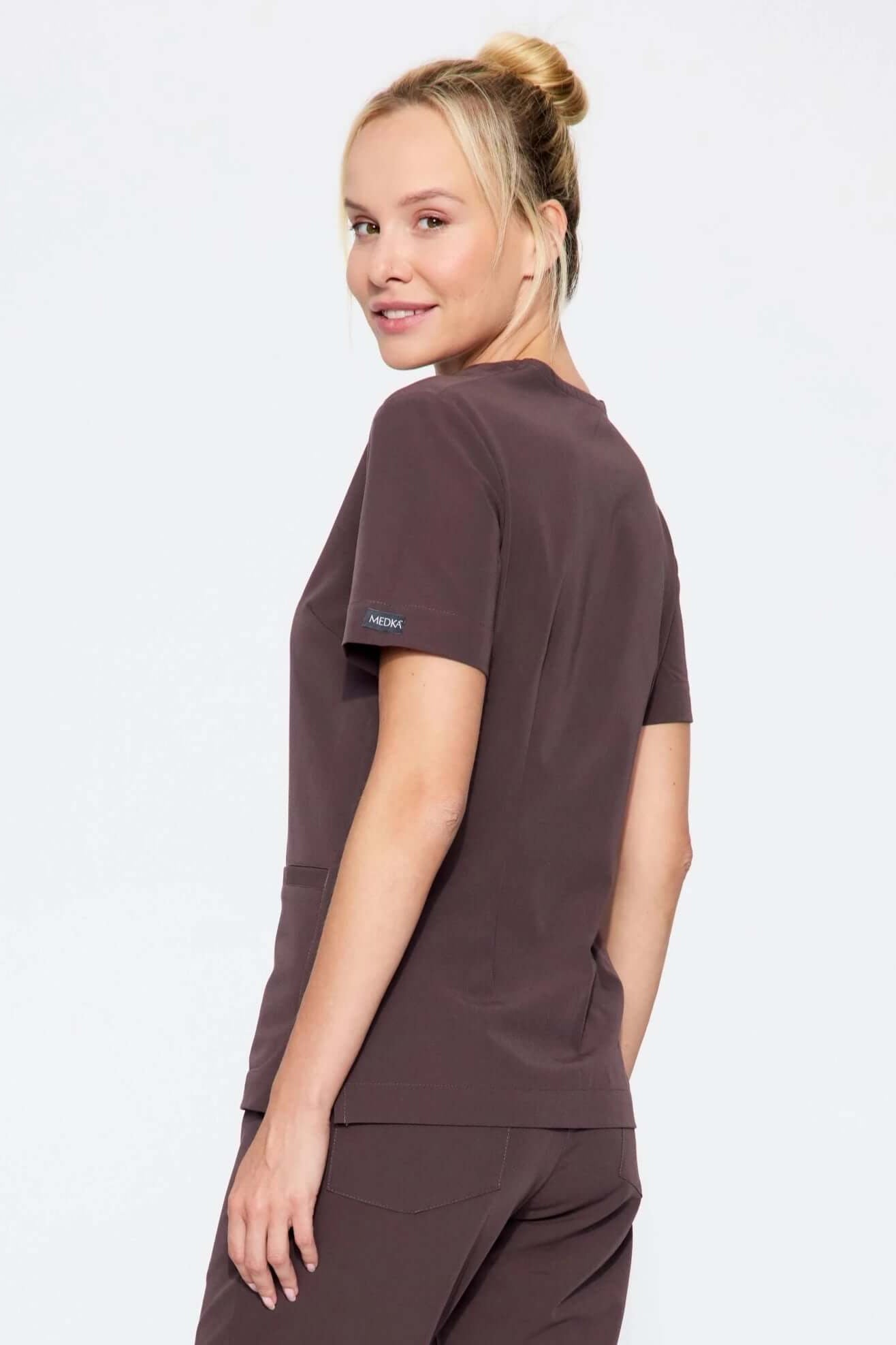
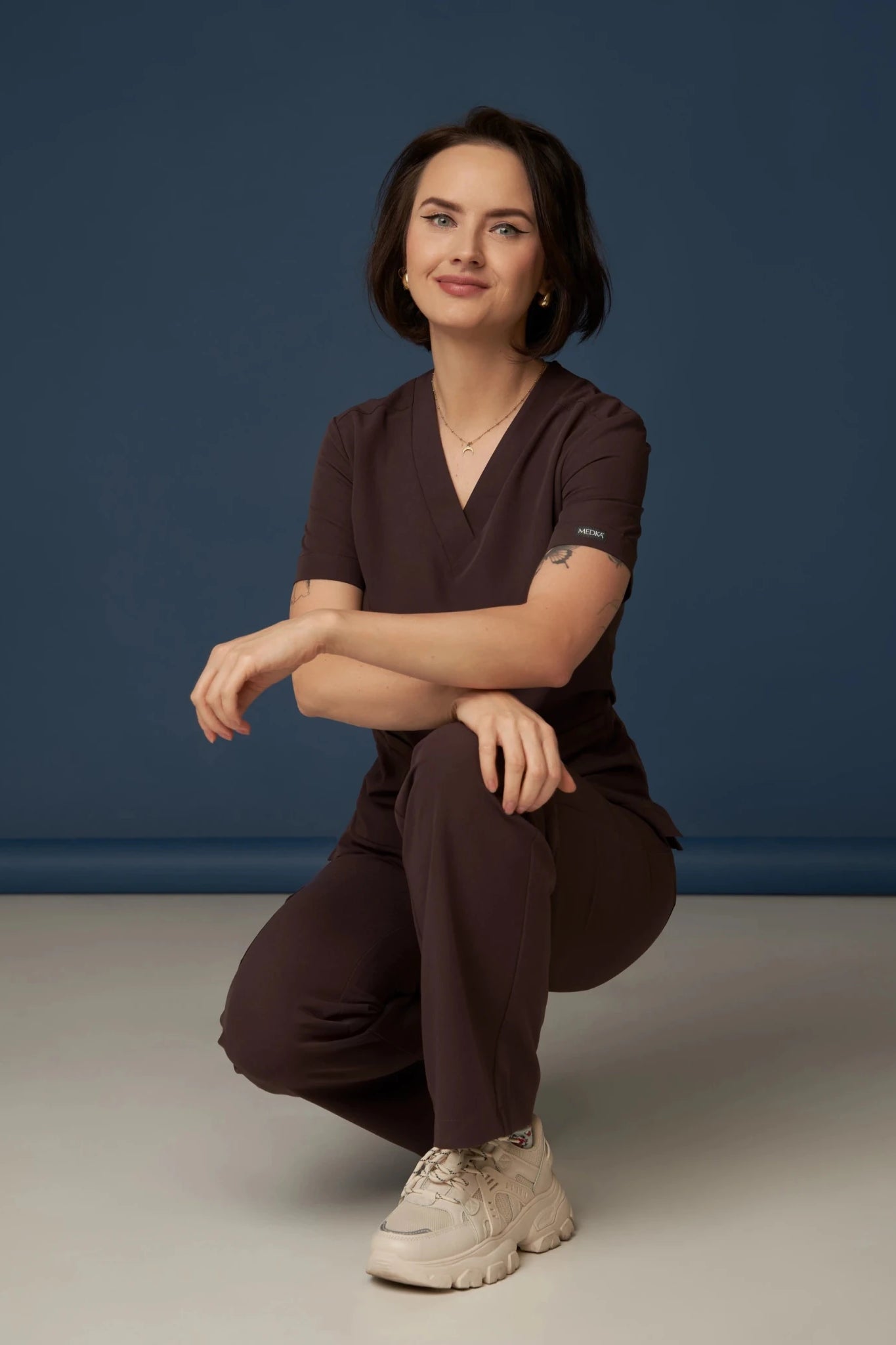
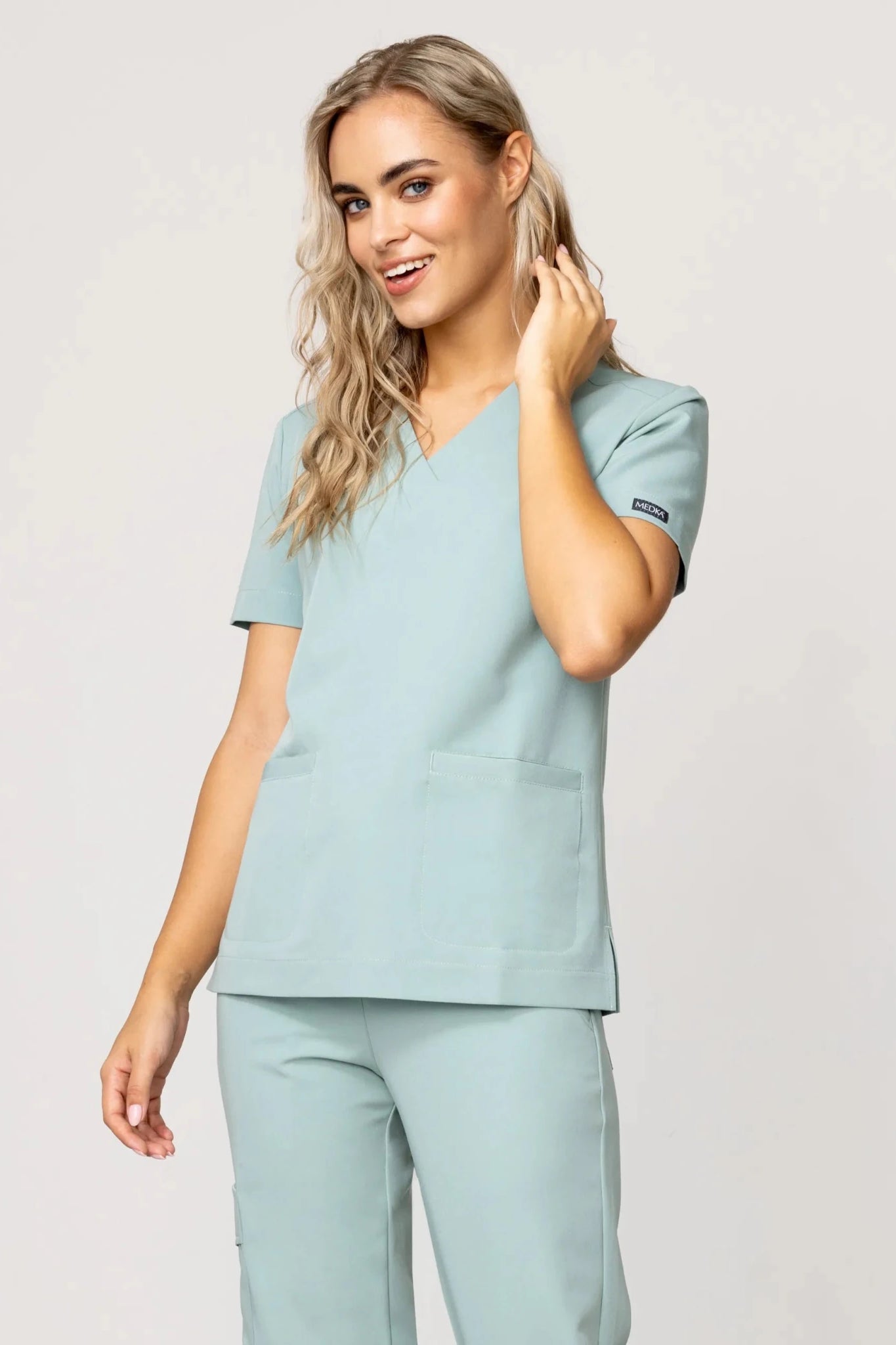
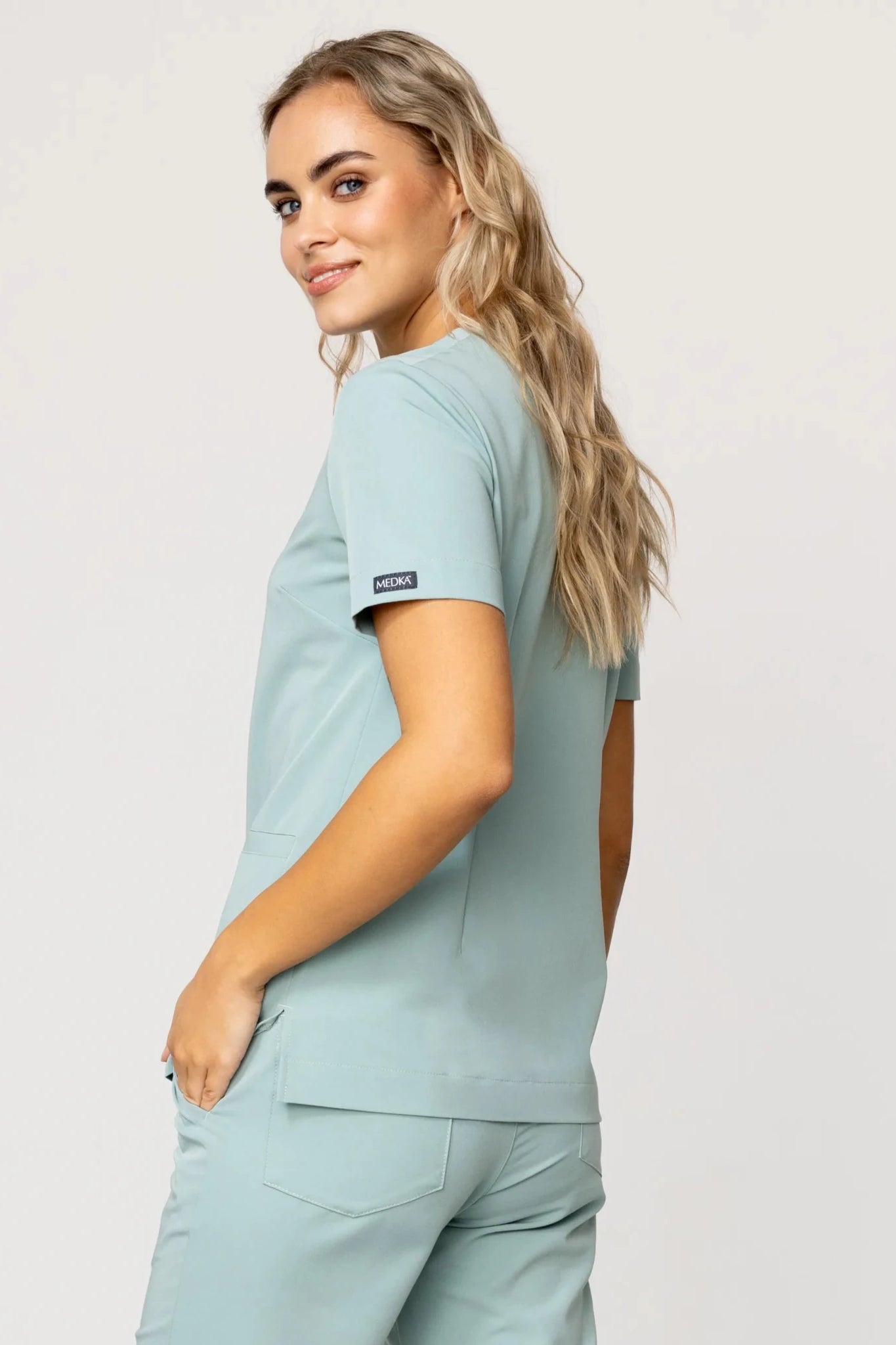
Men's medical trousers they come in two styles. MARGO is a slightly tapered leg, closer in appearance to chinos than to tracksuits, with an elastic waistband adjustable with a drawstring. GENUS is a jogger with an ankle cuff, available in two finishing variants: with a cotton and fabric cuff. This distinction is of practical importance because cotton fabric is softer but loses elasticity faster, while fabric fabric lasts longer but is less soft. A store that breaks this detail into two separate items makes the decision easier, rather than leaving you with a generic "rib".
Both lines have four pockets reinforced with bolts, which is exactly the element that determines whether the pocket will survive forty accesses a day for two years. The composition of the Viscose Plus line is 69% polyester, 25% viscose and 6% elastane, recommended to be washed at 40 degrees and not tumble dried. Six percent elastane is the upper limit of what can be found in medical clothing, and translates into real freedom when squatting.
The most important thing from a fit perspective: sizes from S to XXL come with three leg length options assigned to height ranges (170-179 cm, 180-192 cm and 192-200 cm). Size and length are independent dimensions of choice here, not one parameter, which solves the problem described earlier: two men with the same waist circumference and a difference of twenty centimeters in height get two different products, not one compromise.
| Offer item | Specifically | What does this mean in practice? |
|---|---|---|
| Styles | MARGO (tapered leg), GENUS (jogger) | Two cuts for two working modes, it's worth having one |
| Puller variants | Cotton or fabric (GENUS) | The choice between softness and durability of elasticity |
| Sizing guide | S to XXL × three leg lengths | Height and circumference selected independently |
| Composition (Viscose Plus) | 69% polyester / 25% viscose / 6% elastane | Dry after duty, no creases, full range of motion |
| Pockets | 4, reinforced with transoms | The corners of the pockets do not tear when reached frequently |
| Belt | Elastic band with a drawstring | It allows you to choose a larger size when you hesitate |
Apart from the pants themselves, it is worth knowing three things that affect the cost and convenience of purchase. Orders are processed within 1-2 business days, free delivery starts from PLN 450, and you have 60 days to return it and it is free of charge. This last point is the most useful here, because two months is a window in which you will have time to check your pants during several shifts and after a dozen or so washes, and not just in front of the mirror. Embroidery with a name, professional title or facility logo is also available, which makes sense for uniforms sent to a shared laundry, but personalized clothing is usually not returnable, so order embroidery only after testing the style.
If you are completing the entire medical uniform, pants and men's medical sweatshirt take from the same color line. Not for aesthetic reasons, but because the same shade from two different sources visibly separates after a dozen or so washes, and two similar but not identical navy blues look worse than a deliberate combination of two different colors. The men's palette includes fifteen shades, from classic navy blue and black to tobacco, forest and espresso, so choosing a set to suit the facility's regulations or your own taste does not require any compromise.
Finally: how to translate this into your own decision
This entire analysis boils down to three questions asked in the right order.
First: how many hours and in what traffic. This determines the composition and style. Lots of movement and long shifts mean a synthetic/elastane blend and a jogger. Static work in the office allows for more cotton and straight legs.
Then: how tall are you? This decides where it's worth buying, because stores with one universal length are out of the question if you measure below 175 or above 188 cm.
Finally: what the facility's regulations say. This determines the color, and it is better to find out before purchasing than after.
The rest, i.e. the number of pockets, shade, brand, is a matter of preference and there is no point in delaying this decision. Worst case scenario is not a bad color. The worst-case scenario is three pairs of pants that you can't work in for twelve hours, bought because they were on sale.
Frequently asked questions:
Below are short answers to the questions that most often arise when assembling medical trousers. Each of them comes down to one specific piece of information.
How many pairs of medical pants does a full-time working man need?
Minimum three, optimally four. Three of them allow you to maintain the washing cycle without rushing with five shifts a week, the fourth is a reserve for the situation when one pair goes out of circulation after contact with material that requires washing at high temperature. Rotating in pairs extends the life of each one because the fabric rests between uses.
Can medical pants be worn outside of work?
Technically yes, practically it's not worth it. Trousers worn in the ward carry the facility's bacterial flora, and the hygienic standard is to change on the spot, rather than going home in a uniform. When it comes to appearance, joggers and models similar to chinos actually do not differ from everyday clothing, but this is an argument for buying a second, private pair, not for wearing a business one for shopping.
Do medical pants shrink after the first wash?
Depends on the composition. Blends with a predominance of polyester practically do not, shrinkage usually does not exceed one percent. Fabrics with a high proportion of cotton or viscose may shrink by up to several percent, i.e. by two or three centimeters along the leg length. If the manufacturer provides shrinkage on the label, treat it as practical information and do not shorten the pants before the first wash.
Are there any differences between men's and women's medical trousers other than size?
Yes, and basically. Men's cuts have a different crotch, a straighter hip line and differently placed pockets. A women's model in a size that corresponds to its circumference will hurt the crotch and sit poorly. This is not a matter of marketing, but of construction.
How to wash a blood stain from medical pants?
Cold water and as quickly as possible. Hot water cuts off the protein and sets the stain permanently, so throwing your pants into the wash at 60 degrees is the worst possible move. Soak in cold water, possibly adding salt, and then wash normally.
Is it worth ordering medical pants with name or logo embroidery?
It makes sense if you work in a team where uniforms are identical and go to a shared laundry room, because embroidery solves the problem of confusion. It also makes sense for image in a private practice. There is no point if you are just testing the style, because personalized clothing is usually not returnable.
How many centimeters should the leg of a medical jogger be?
The cuff should end at the ankle or a maximum of a centimeter above it, measured in work shoes. Above it exposes the calf when squatting, below it the cuff slips over the shoe and makes no sense. If the manufacturer provides height ranges instead of centimeters, take the variant corresponding to your height and do not round down.