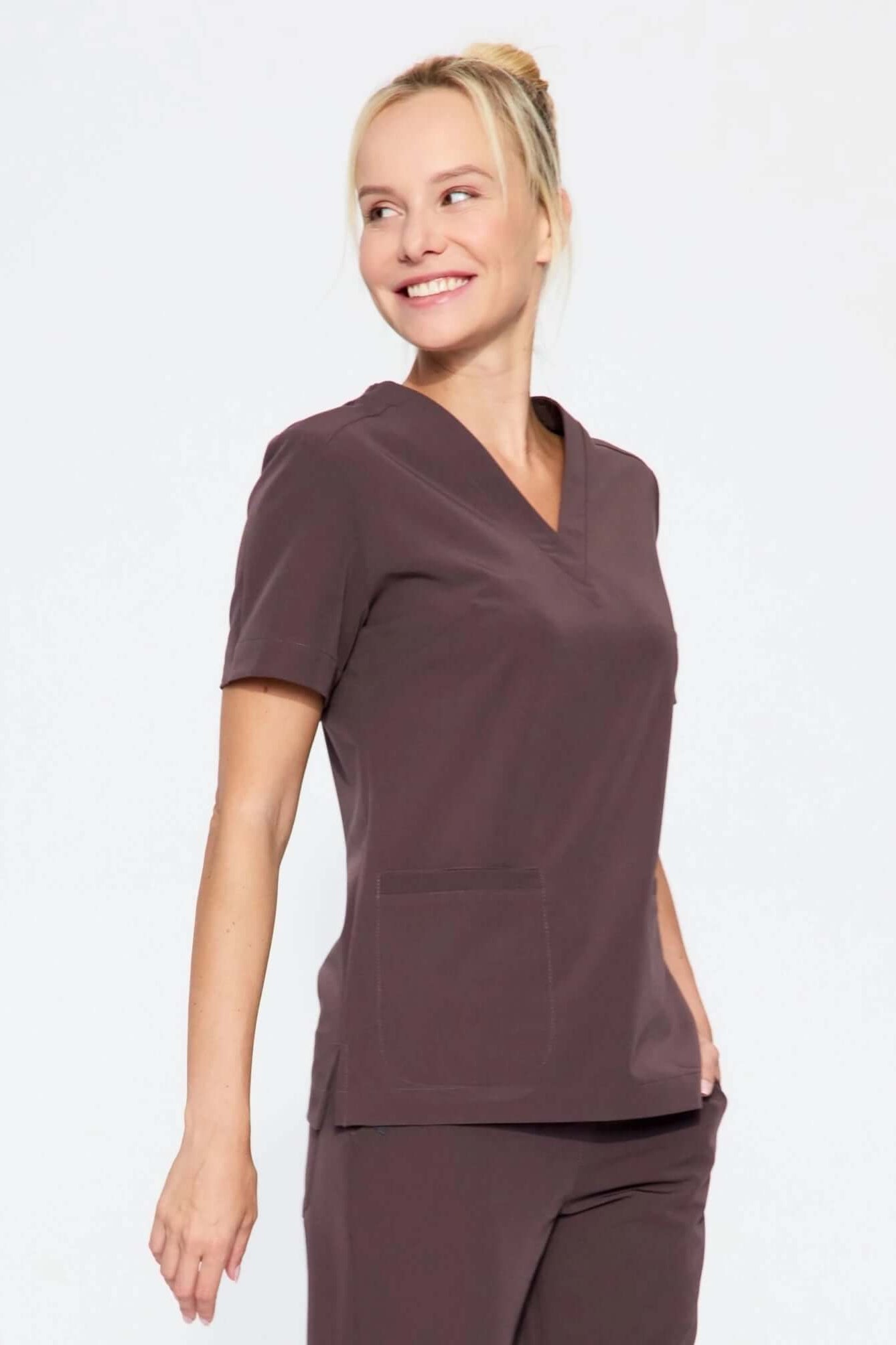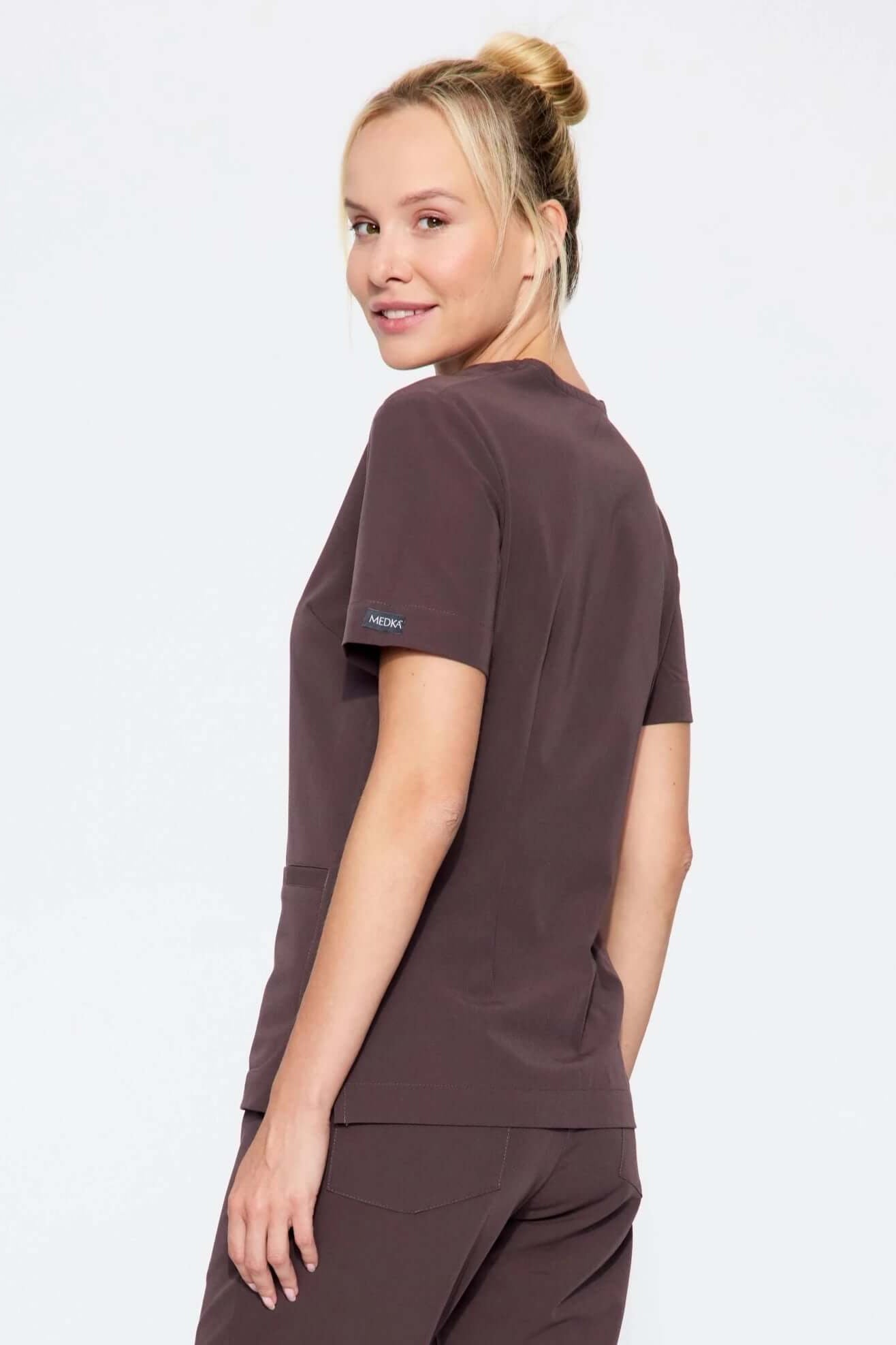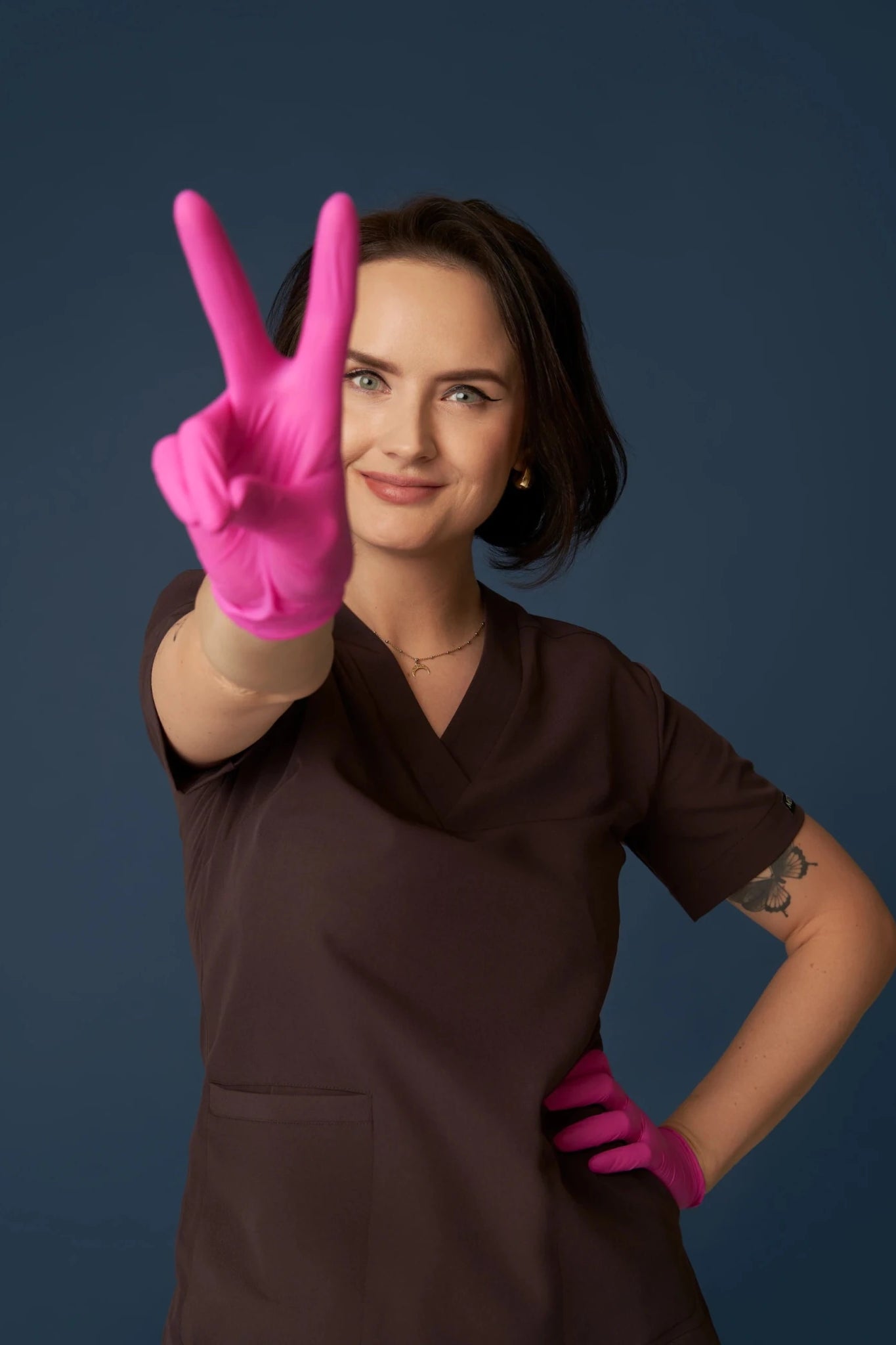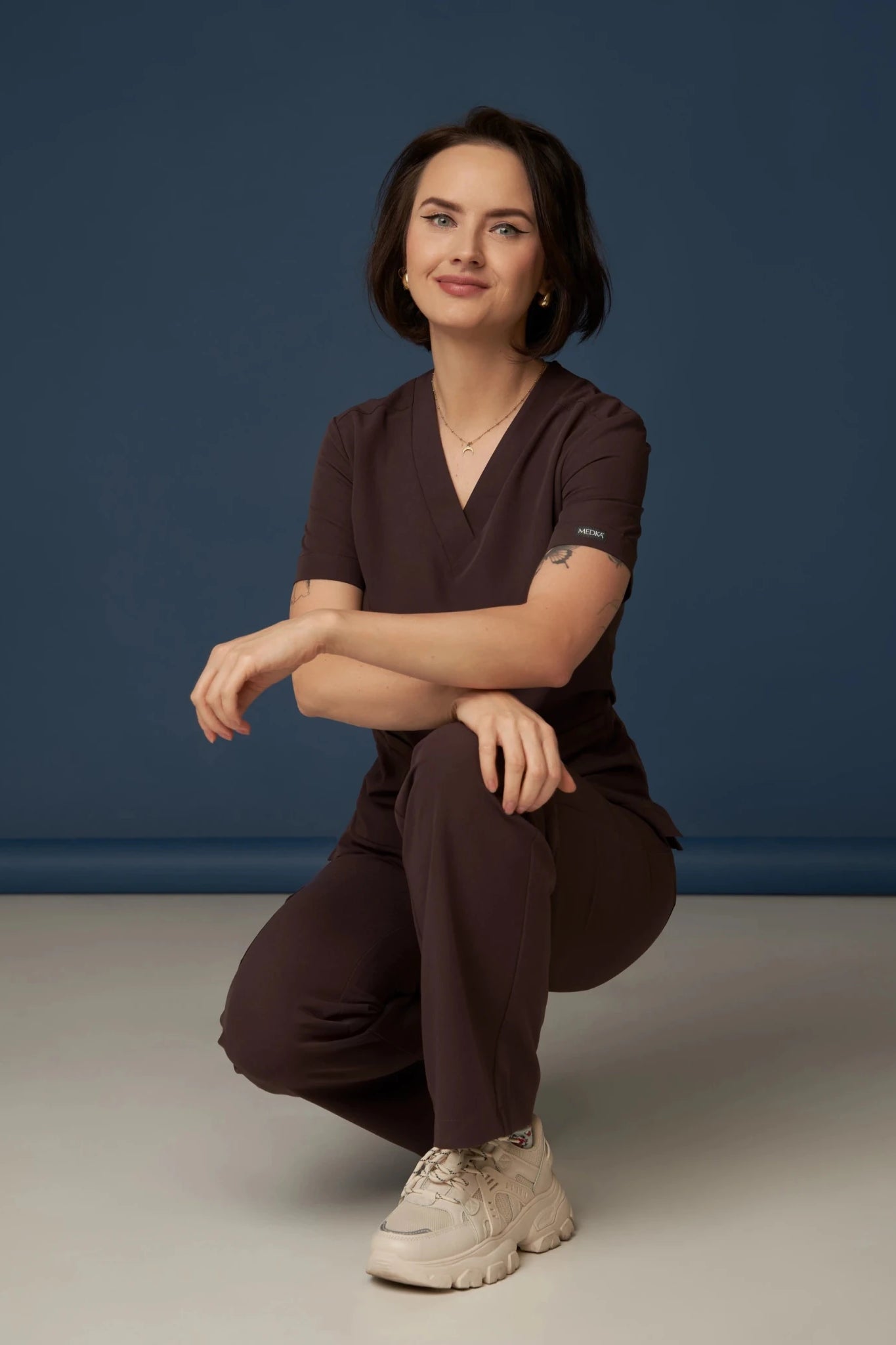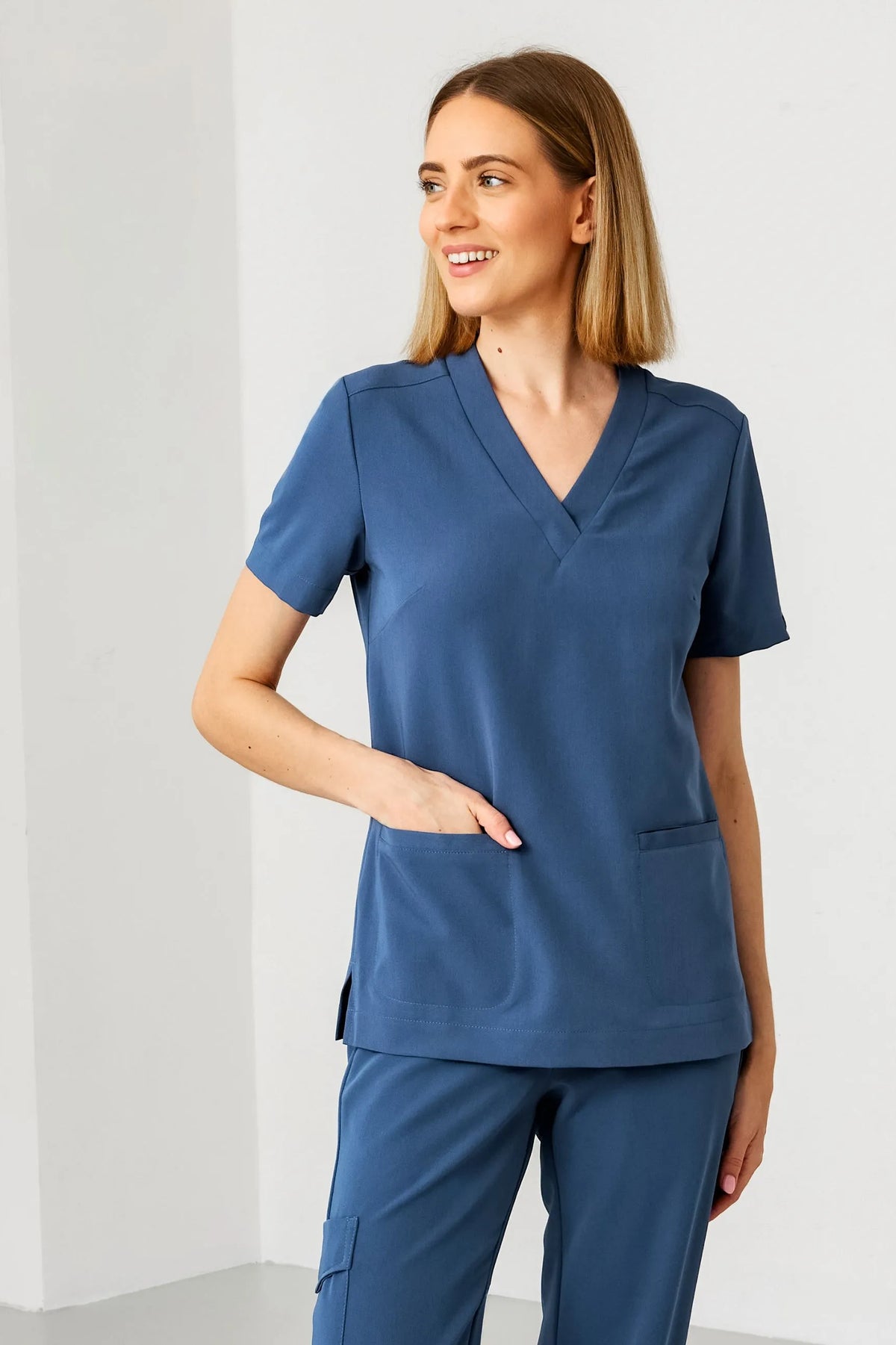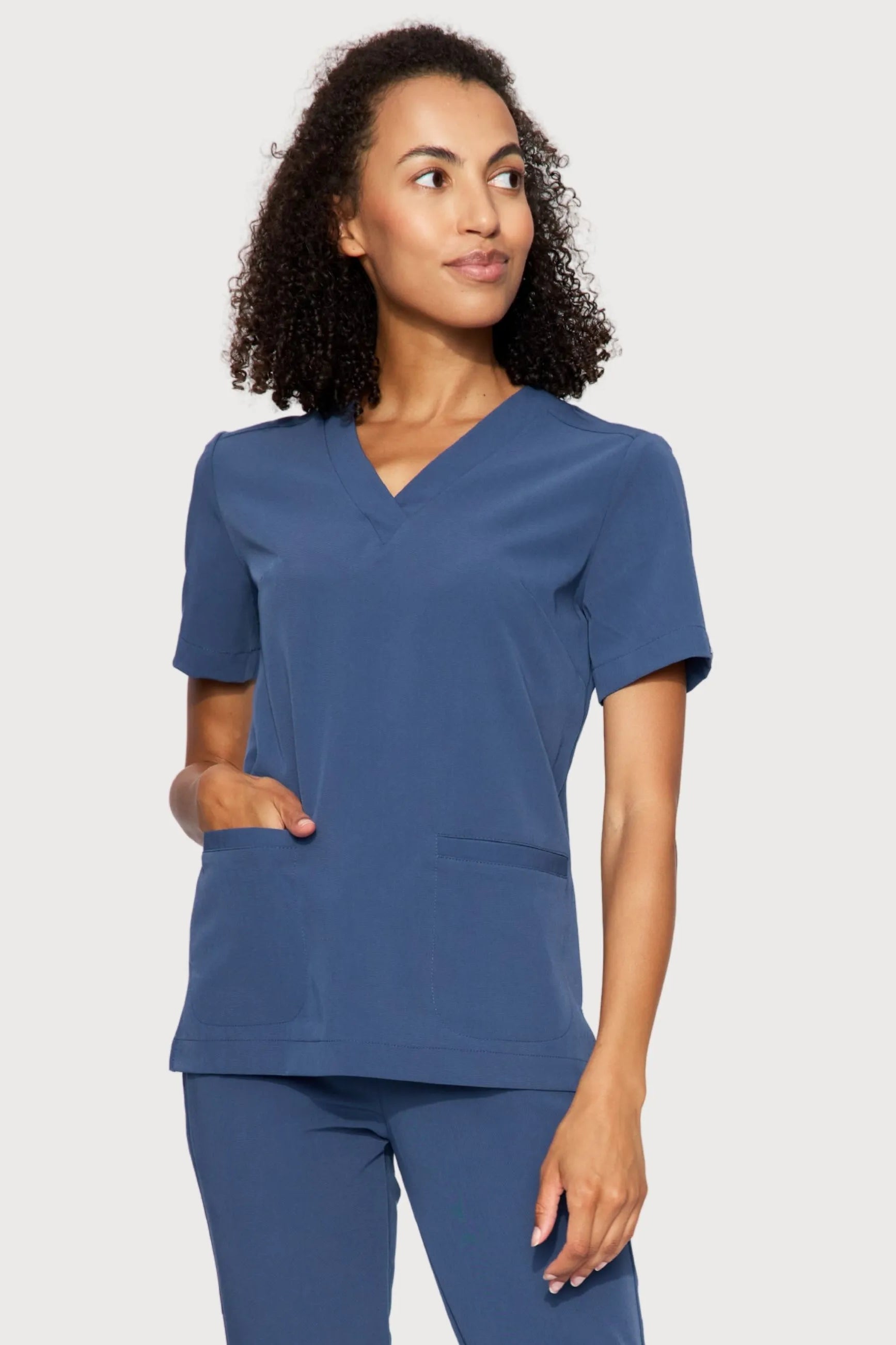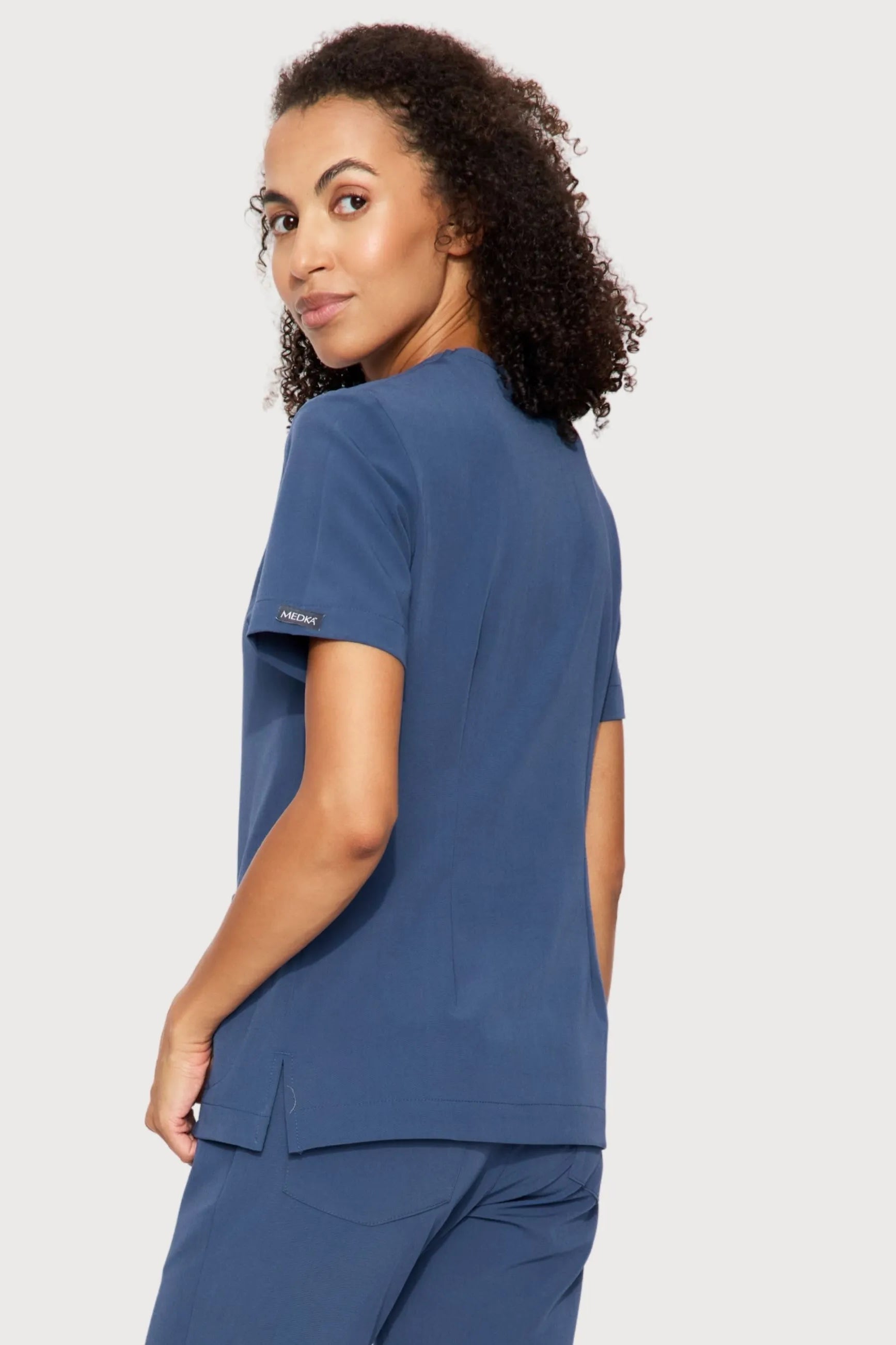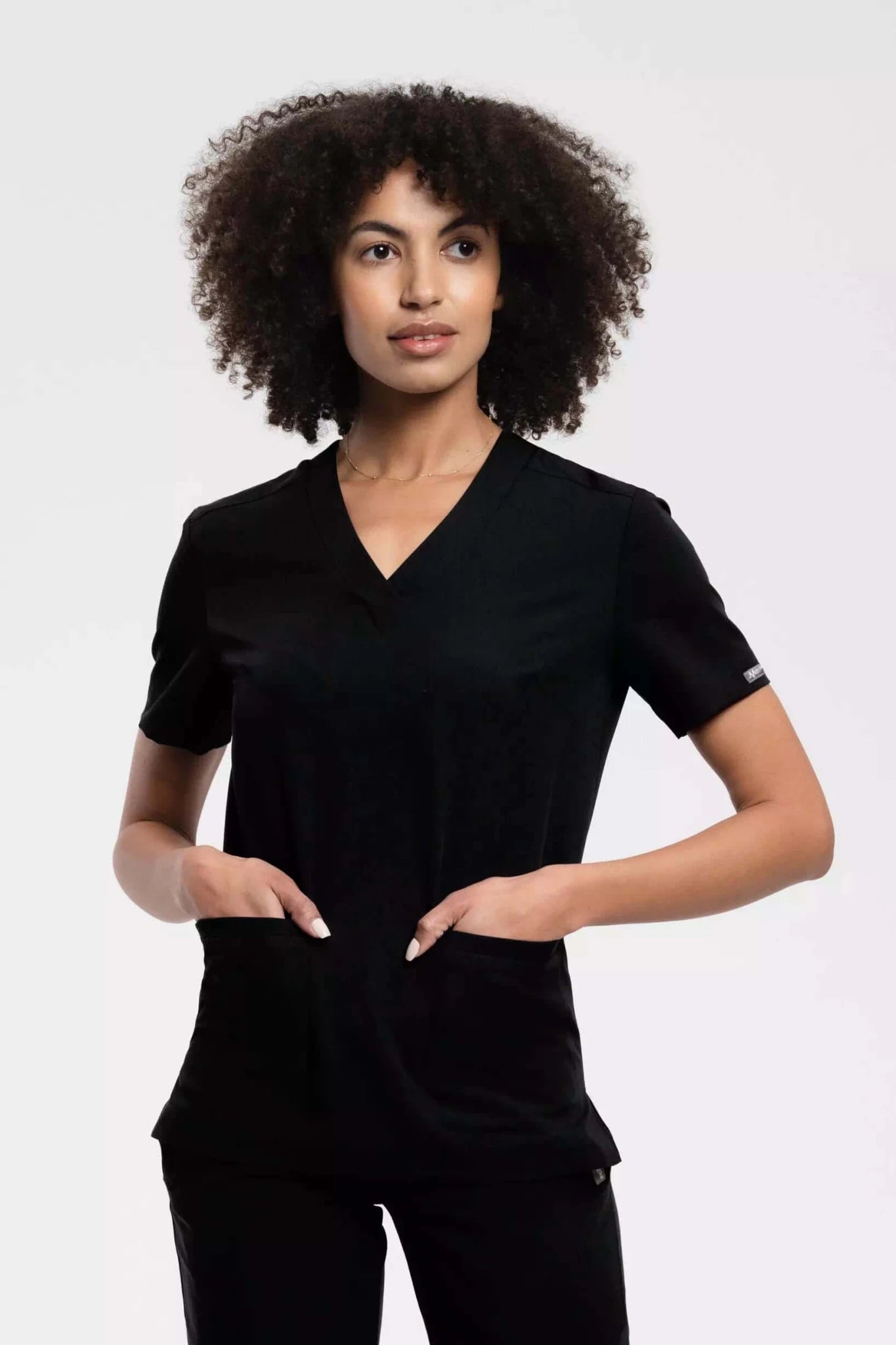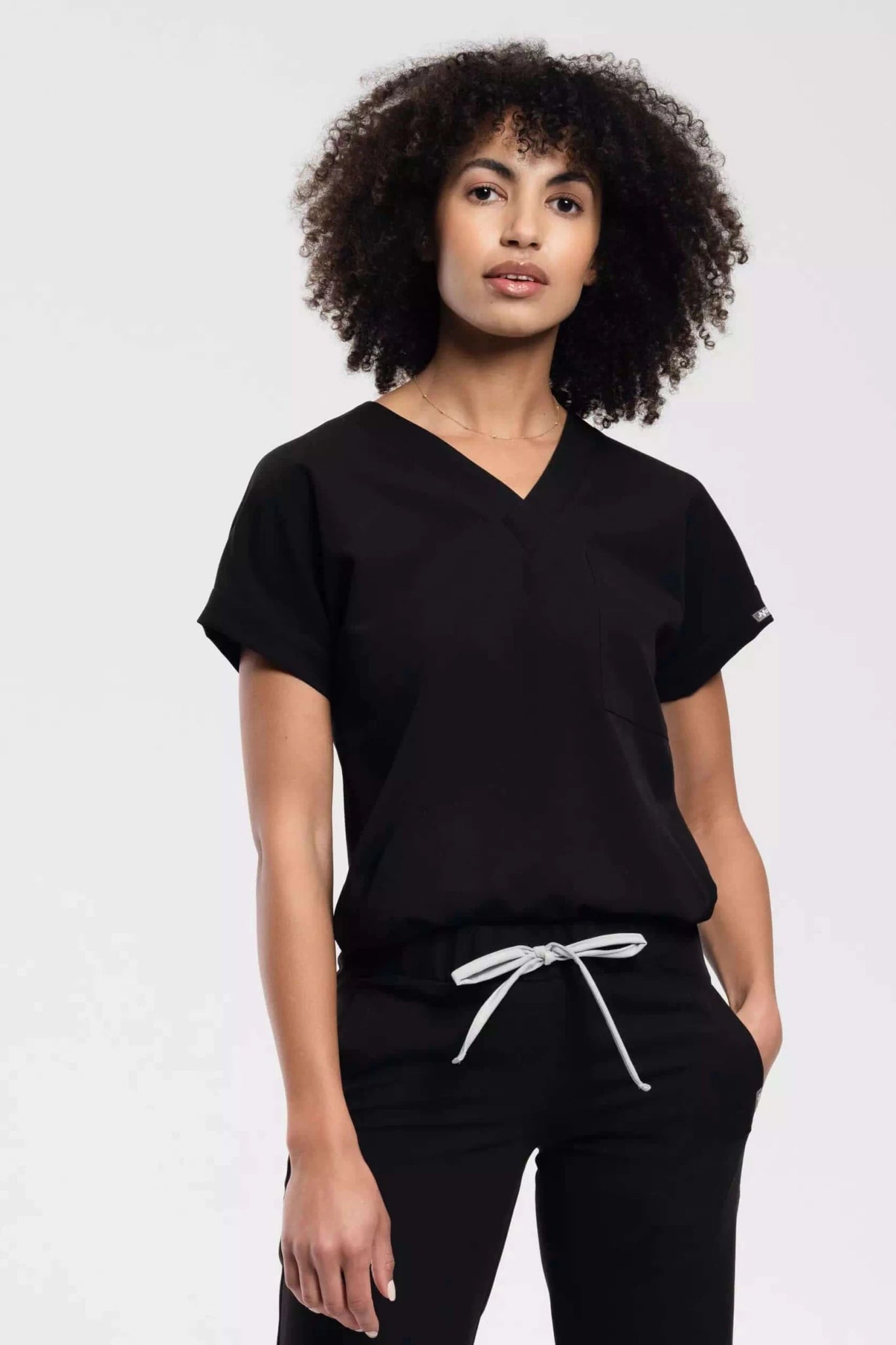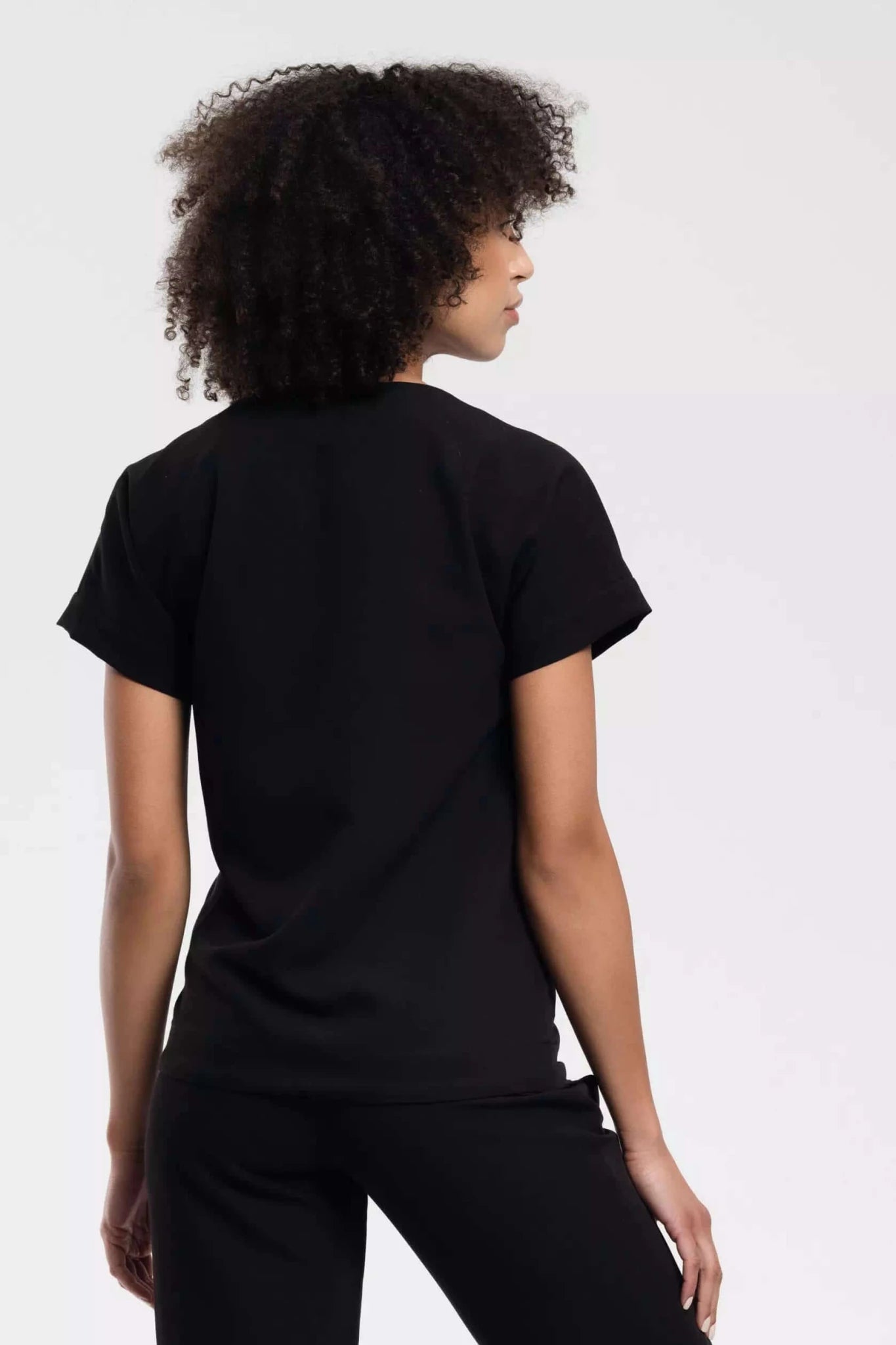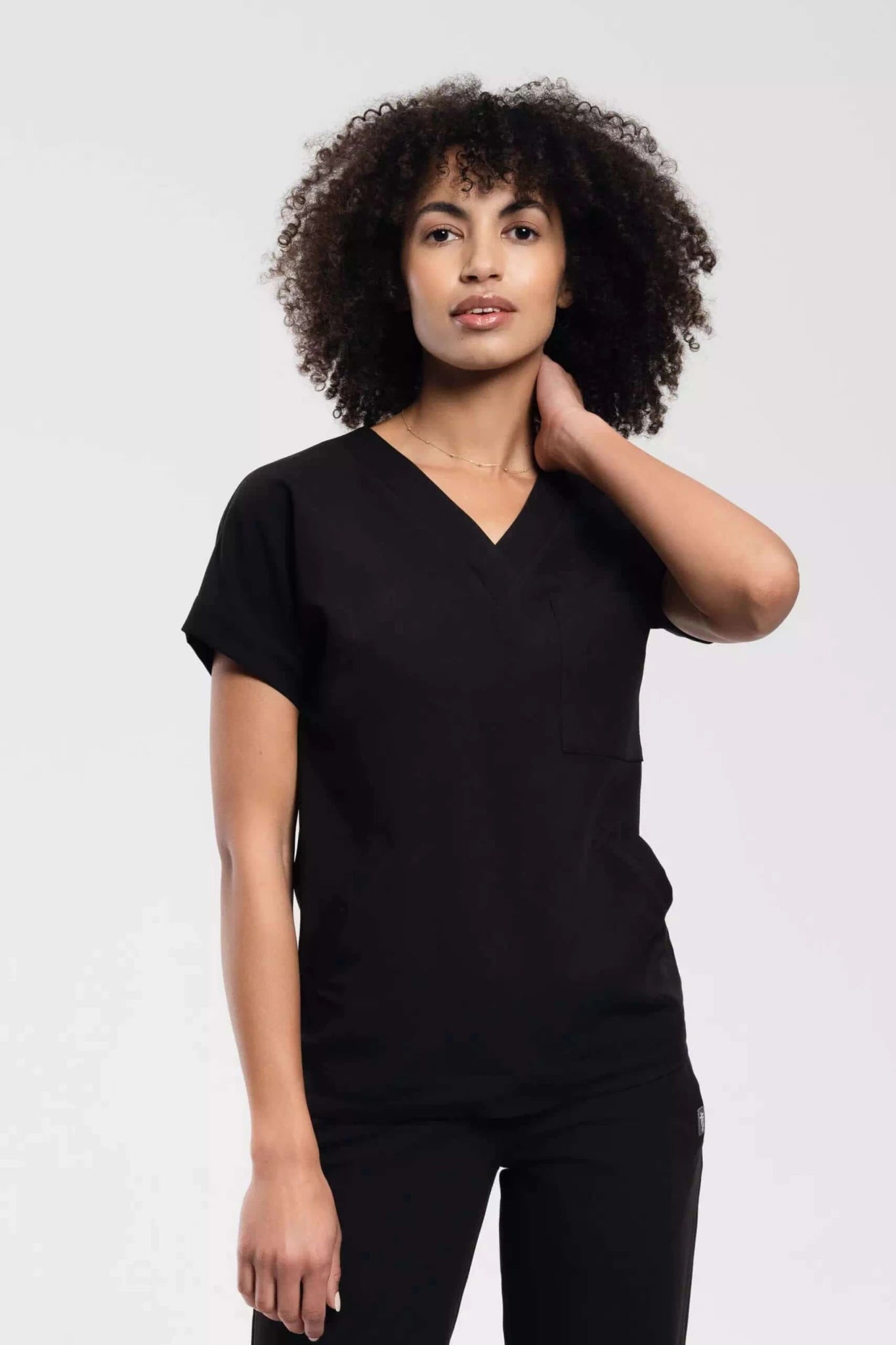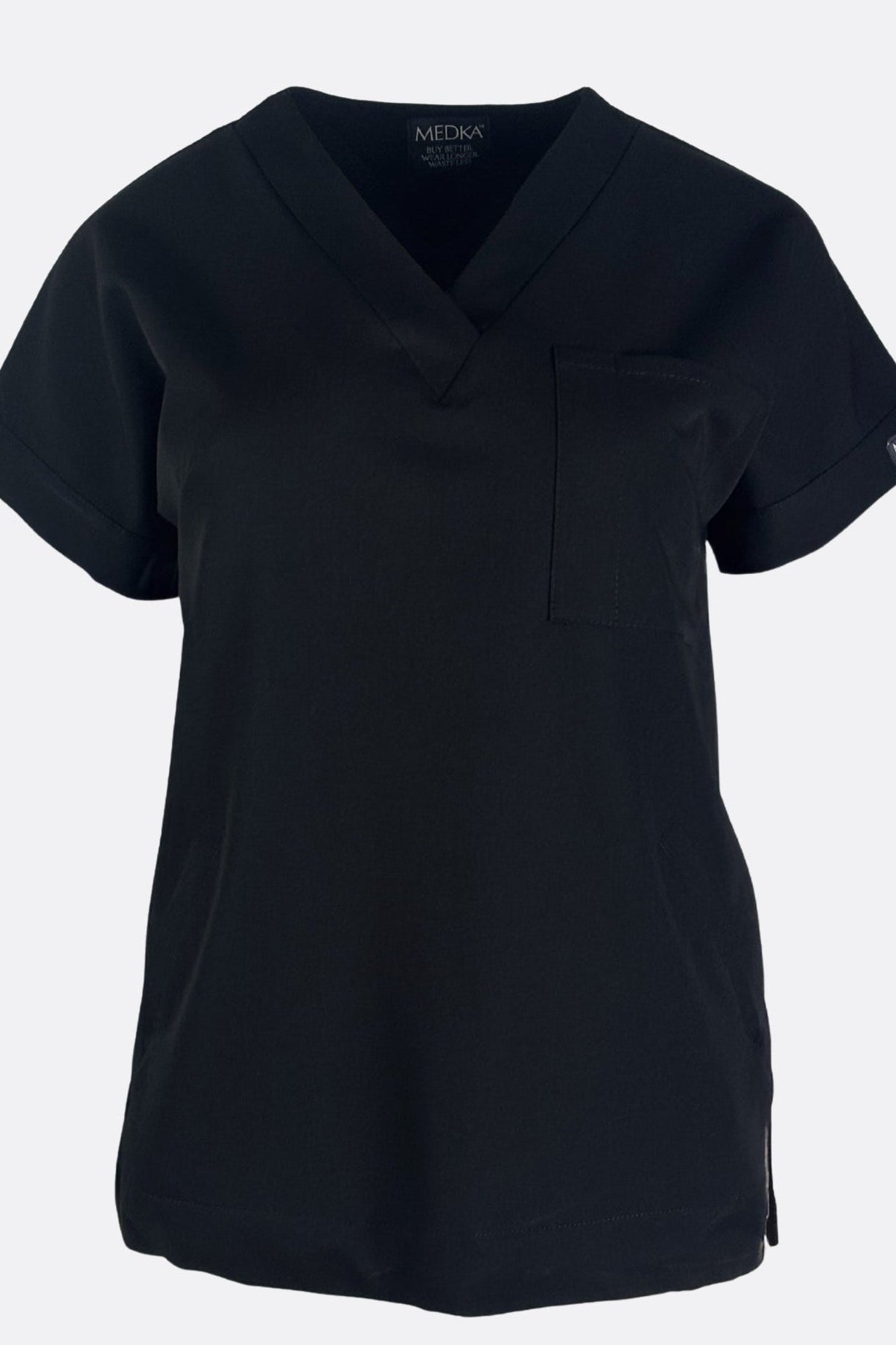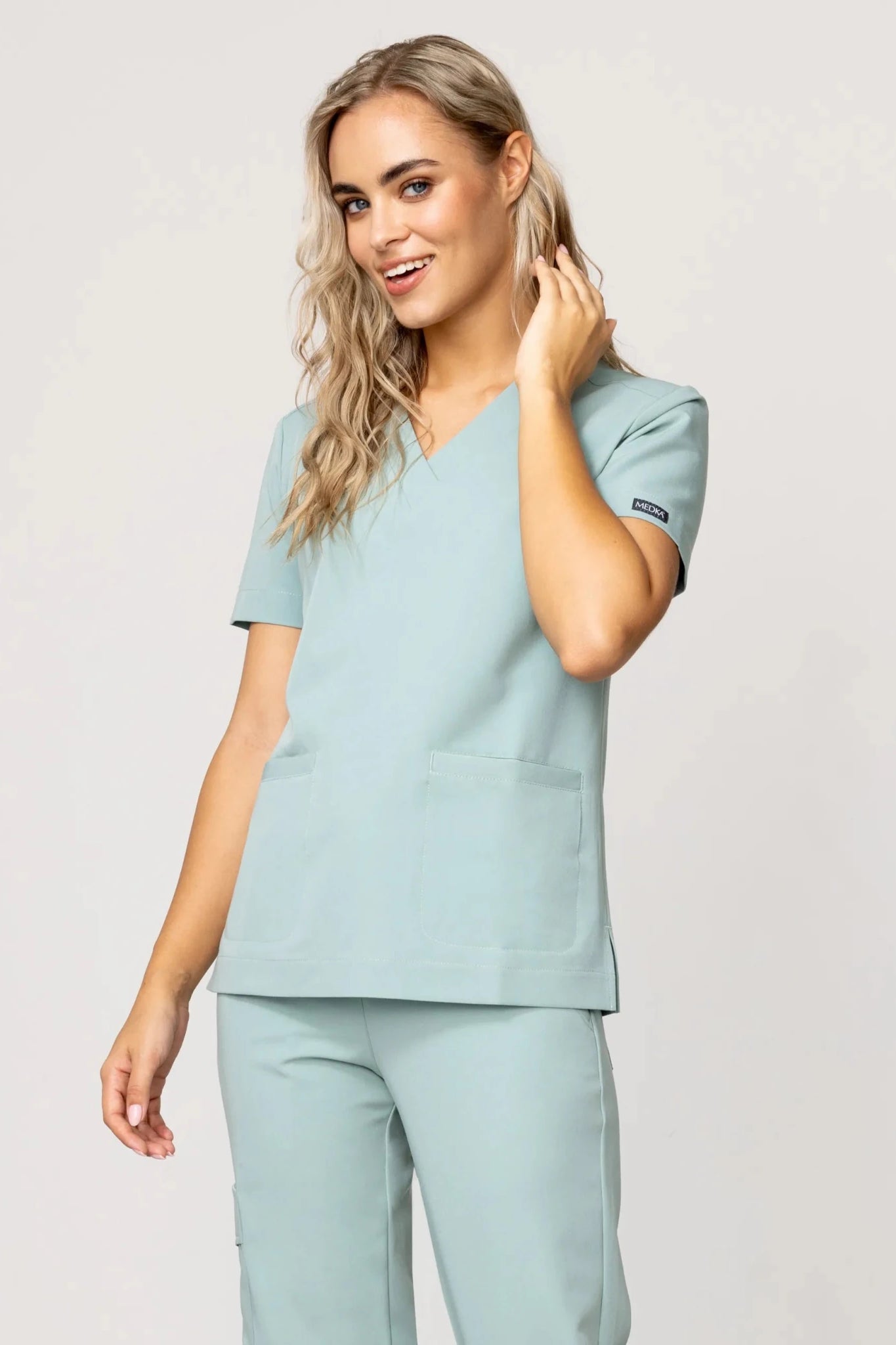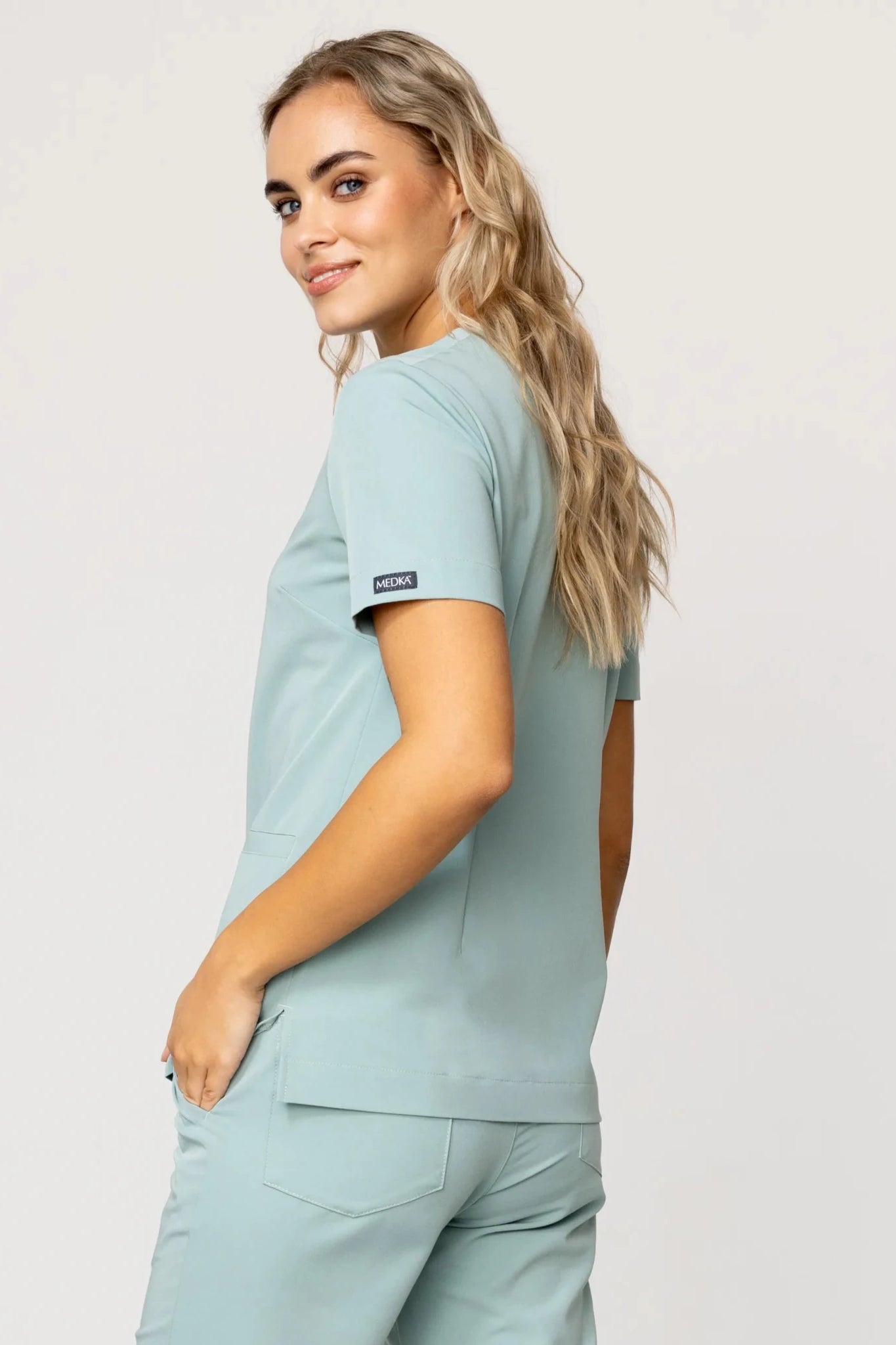





A midwife's outfit is not just a "medical suit in some color". This is a work wardrobe that is supposed to withstand a shift during which you sometimes crouch by the delivery bed, sometimes run down the corridor, and sometimes stand still for twenty minutes, assisting in a procedure. Most midwives do not choose this outfit once, but gradually come to the conclusion what works and what after three washes loses its shape or starts to hurt under the arm. This guide is intended to shorten this path: it shows what a good set actually consists of, how to choose the cut and fabric to suit the specificity of the maternity ward, and what is easy to forget about until it turns out to be a problem in the middle of the night shift.
What does a midwife's set actually consist of?
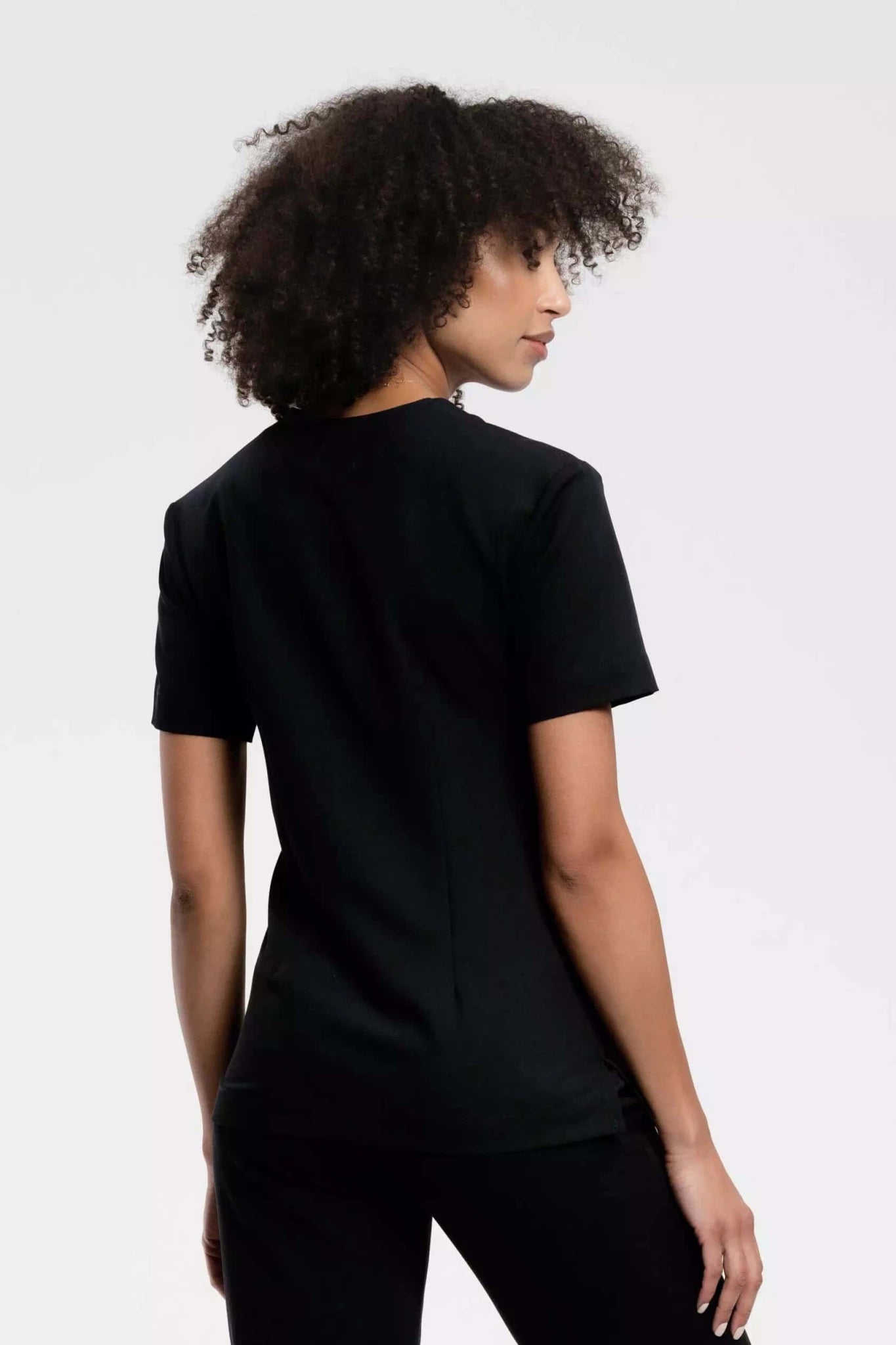
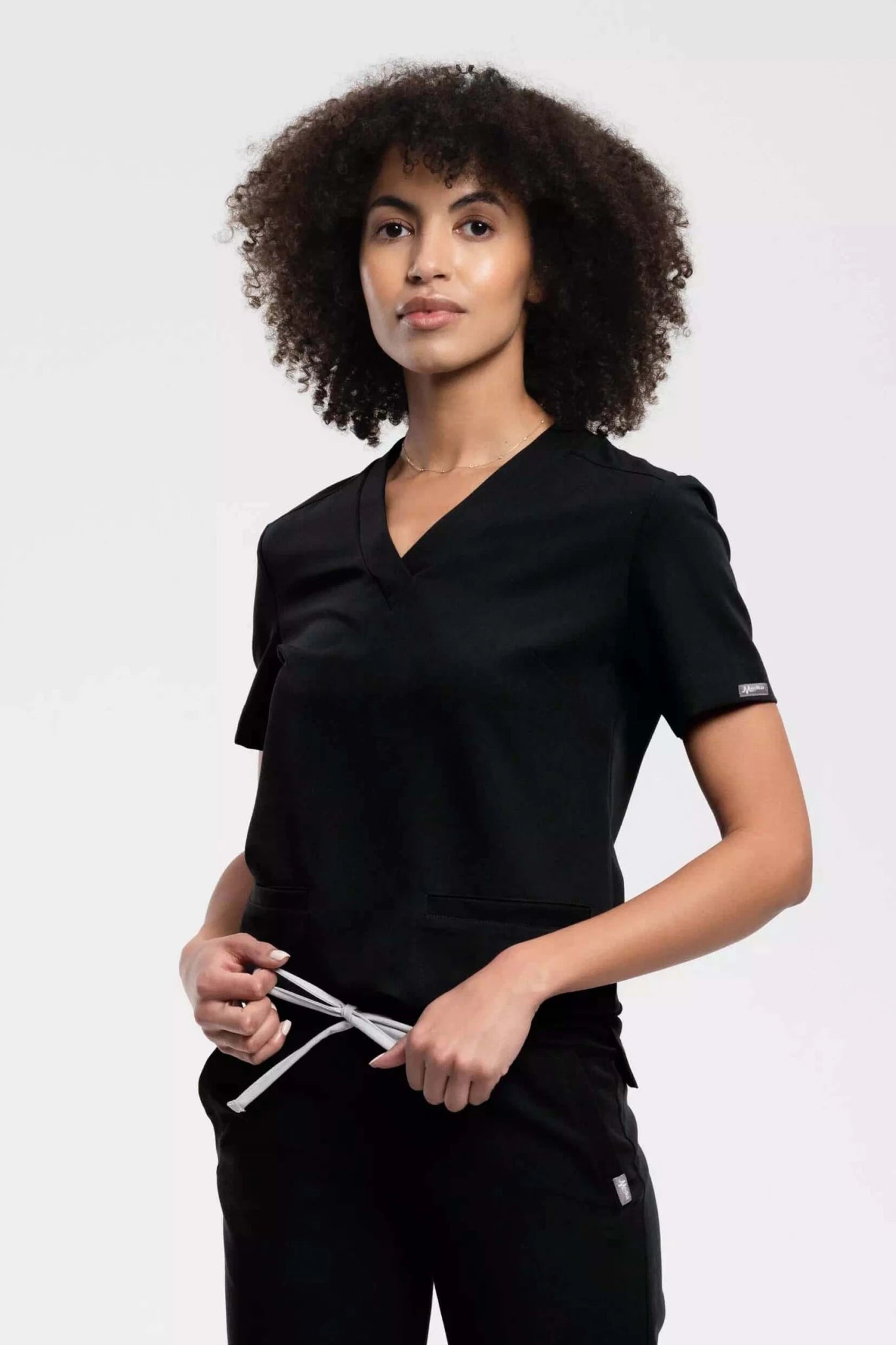
The basis is a set: a medical shirt and trousers. It sounds trivial, but the difference between a well-matched and a poorly selected set becomes visible only in movement, and the work of a midwife is unusual. Bending down to the level of the bed, kneeling, lifting the patient, standing for long periods of time. The sweatshirt must keep up with all this, not ride up when you reach and not expose your back when you bend over.
In addition, there are elements that few people think about when making their first purchases. An overshirt or a light sweater for colder shifts, because delivery rooms can be overheated for the patient and cold for the staff standing for hours. A spare set in the locker, because in maternity care, getting your clothes dirty during a shift is not the exception, but the rule. Comfortable, full footwear. Socks that don't come off after a few hours. This all makes up the "outfit", although in our minds we usually only see a sweatshirt and trousers.
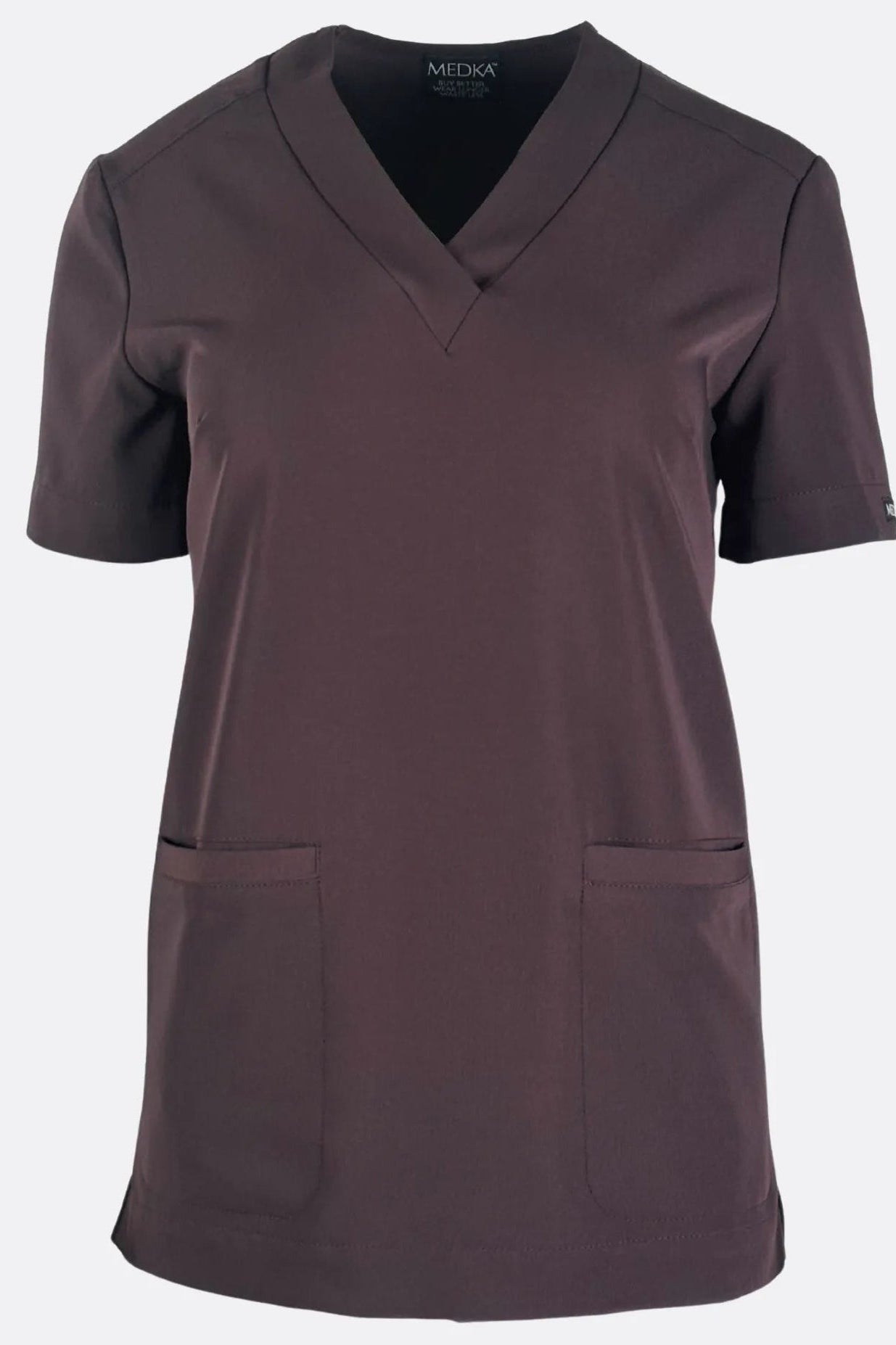
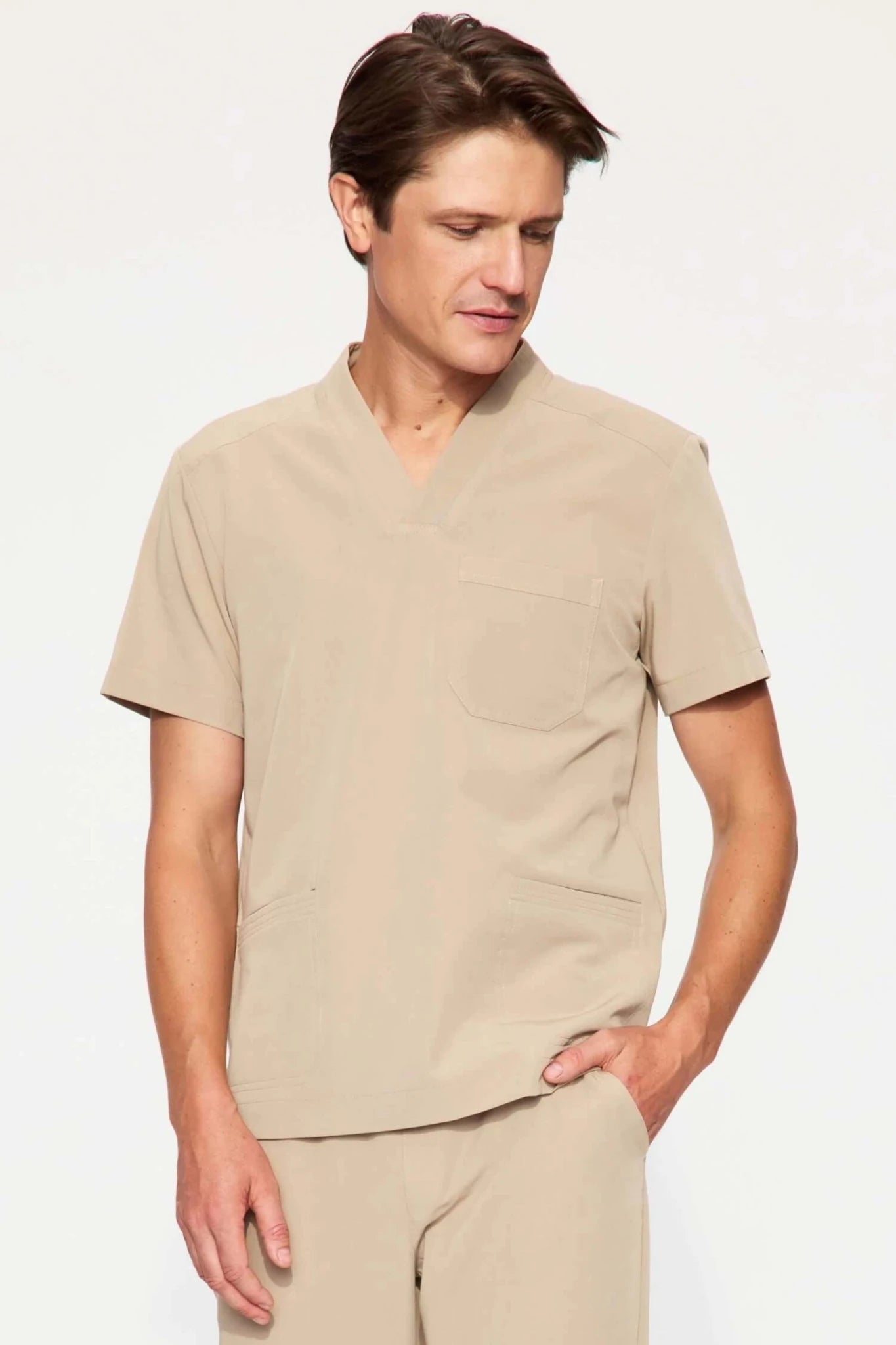
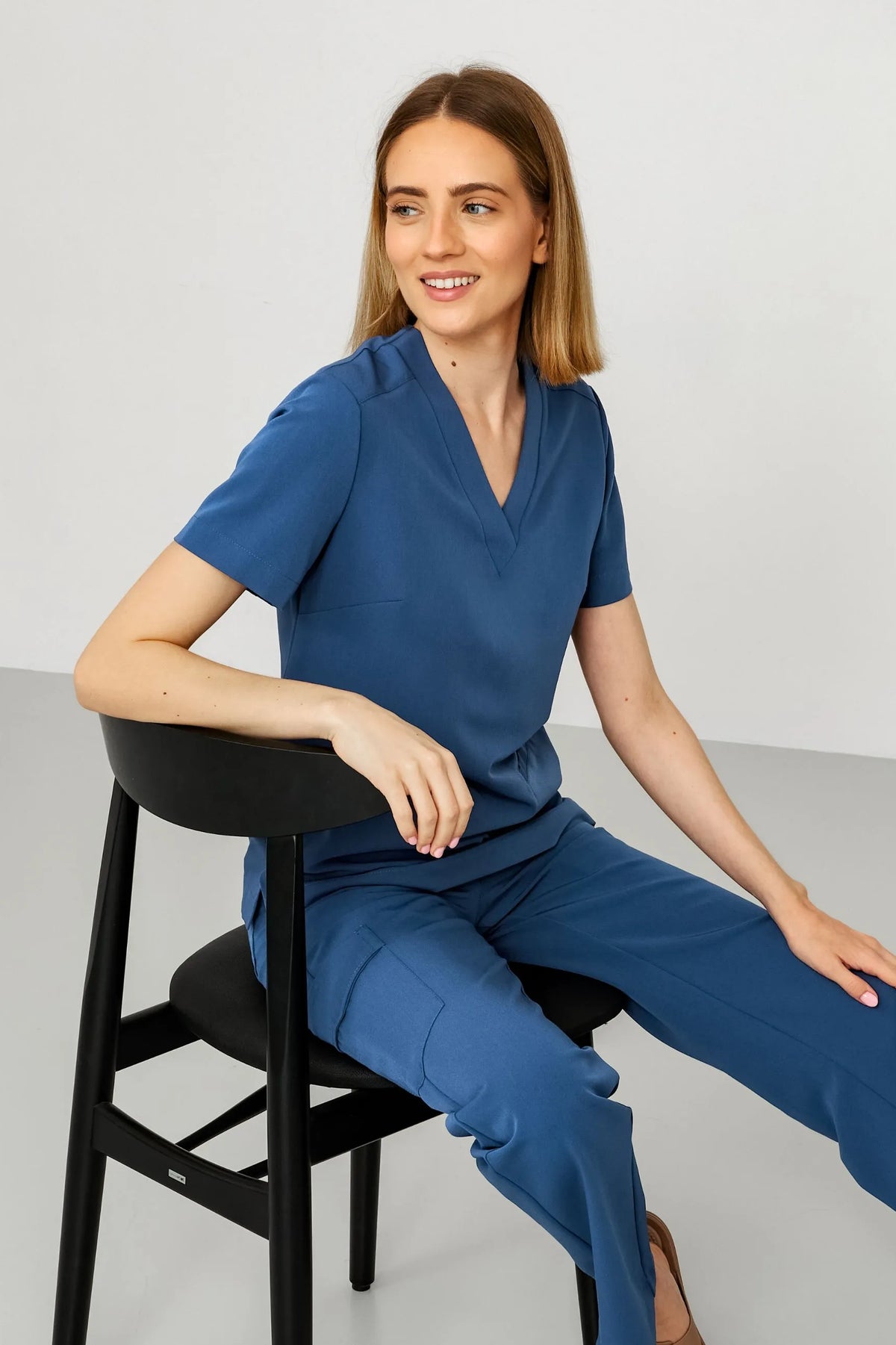
In the medka.eu offer, you can build a set by combining women's medical sweatshirts (for example MOXI or WELT model) with women's medical trousers tailored to your figure, or choose a ready-made one right away medical set for women in your favorite color. It's worth treating it as a system rather than individual purchases: two or three sets per rotation means you always have a fresh outfit, even when one is being washed and the other is drying.
What cut of sweatshirt and trousers will work best in the delivery room?
The most important rule is: the cut should not be disturbing. This seems obvious until you try to work in a sweatshirt that is either too tight and restricts arm movement, or too loose and catches on everything around you. In obstetrics, both extremes are a real problem, because you work a lot close to the patient and the equipment.
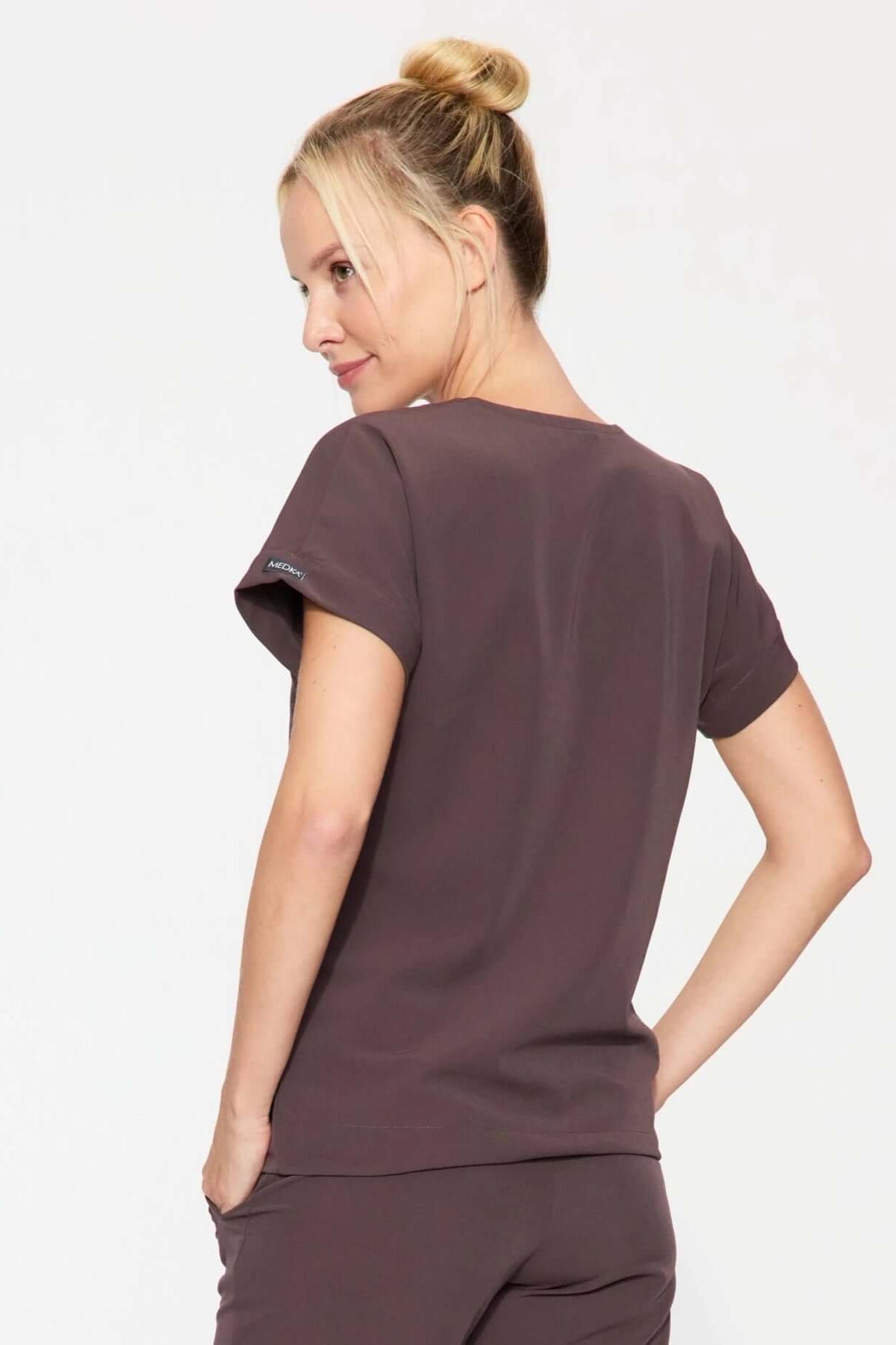
A sweatshirt with a slight waist usually beats a baggy cut, but it's not about being tight. The idea is that it has a defined line and doesn't look two sizes too big, while still leaving room in the arms and underarms. Check it out simply: during the fitting, raise both arms high above your head and make a movement as if you were passing something up. If the sweatshirt rides up and shows your belly or the fabric is tight on the back, it is not your size or cut.
When it comes to pants, the waist height is crucial. Low waist in the maternity ward is asking for trouble, because every time you bend down, your back is exposed. High waist or adjustable with a drawstring, it stays in place regardless of the position. Joggers (the GENUS model available at medka.eu is an example of such a cut) have a drawstring at the bottom of the leg, so they do not drag on the floor or roll up, which is of practical, not only aesthetic, importance when working in a sterile environment. A straight or slim cut with an elastic waistband is a safe choice if you prefer a classic look. Models of medical trousers such as NESSA, WELT or MARGO differ in the leg line and waistband finish, so the choice depends on how you move and what fits you more comfortably.
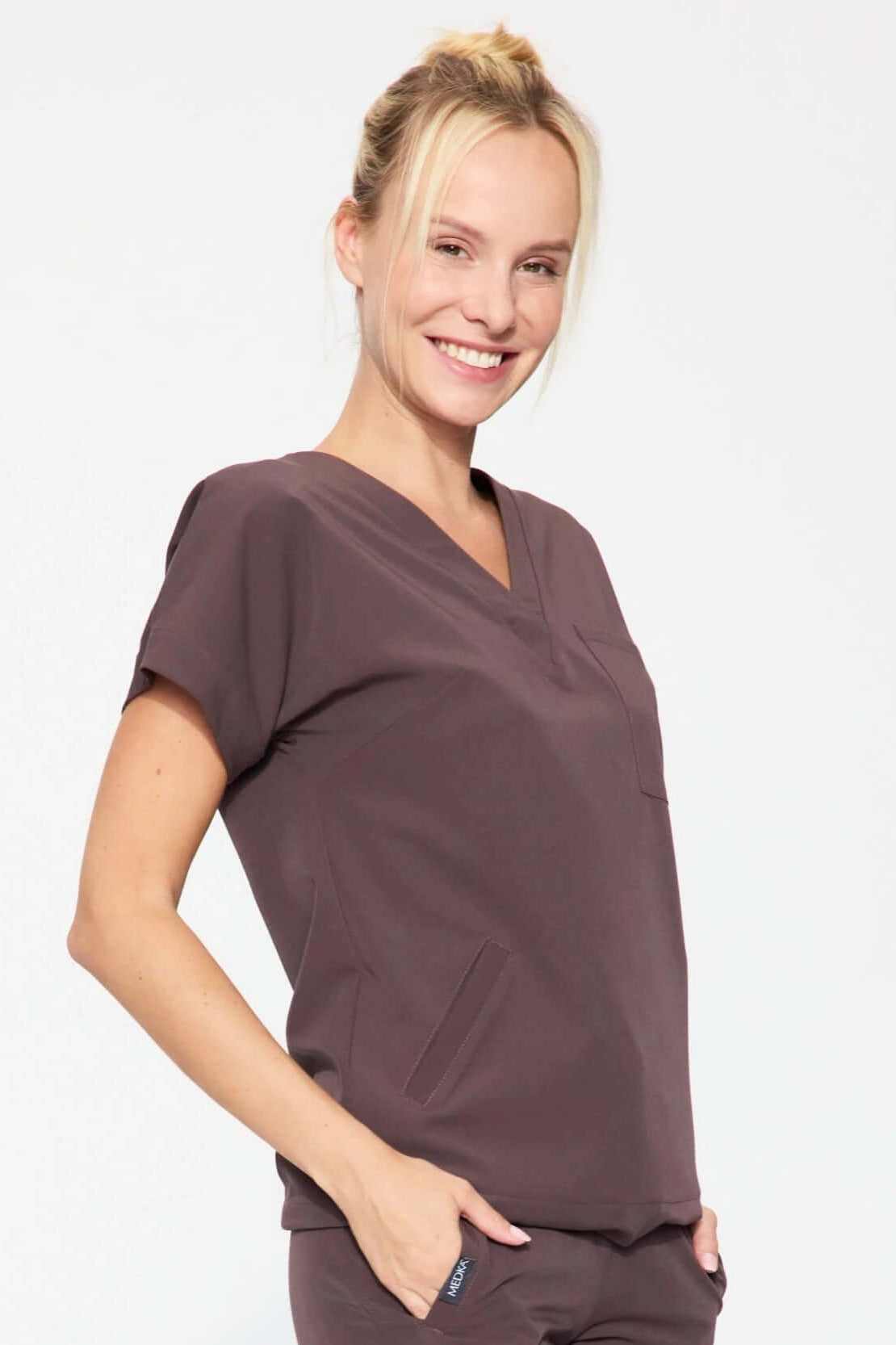
There is also the matter of pockets, trivial until you run out of them. The midwife carries small equipment, a pen, and sometimes a work phone. Shallow, single pockets means you constantly lose things. Deep, well-placed pockets in sweatshirts and trousers really change the comfort of being on duty.
Which fabric is best able to withstand being on duty and frequent washing?
The fabric determines two things at once: how you feel during the change and how the outfit looks after six months. The latter is sometimes underestimated, and it is what distinguishes clothes that you wear with pleasure from those that you are ashamed to put on after a quarter of a year.
Pure cotton is pleasant to the touch and airy, but it has two disadvantages that make themselves felt in maternity care: it creases and dries slowly. Pure polyester, on the other hand, is durable and quick-drying, but may not breathe, which means sweating during intense, warm duty. Therefore, in practice, mixtures work best. A fabric with a predominance of polyester, the addition of viscose for softness and a few percent elastane content provides a compromise that is difficult to achieve with pure fiber: the clothing drapes, creases little, breathes and is flexible. Medical clothing from medka.eu is made of such blends in which elastane is responsible for freedom of movement and viscose for the pleasure of wearing.
Elastane is an ingredient worth paying special attention to when wearing a midwife's outfit. Even 2-5% in the composition dramatically changes the behavior of the material. The fabric "works" with the body, adapts when crouching and reaching, and returns to shape. Without elastane, even a well-tailored sweatshirt begins to look tired after several hours of intense exercise and loses its line at the knees and elbows.
A practical note about washing, because the midwife's outfit is washed often and at higher temperatures than everyday clothes. Fabrics with elastane do not like very hot washing or aggressive drying, because it shortens the life of the fiber and takes away its elasticity. Washing at 40-60 degrees, depending on the manufacturer's recommendations, and avoiding high temperatures in the dryer extends the life of the set by months. It is worth checking the label and taking it seriously, because it, not the price, determines how long the outfit will stay in shape.
The color of the midwife's outfit, does it matter and how to choose it?
There is a common misconception here. Many people assume that there is a top-down, "mandatory" color for a midwife. In fact, in Polish institutions there is no single regulation requiring a specific color for this professional group. The rules of color are usually set by the regulations of a specific hospital or department, and they may require a specific color or allow some freedom. The restrictions regulated by law apply primarily to the operating theater, where separate requirements apply, and not to everyday clothing in the ward.
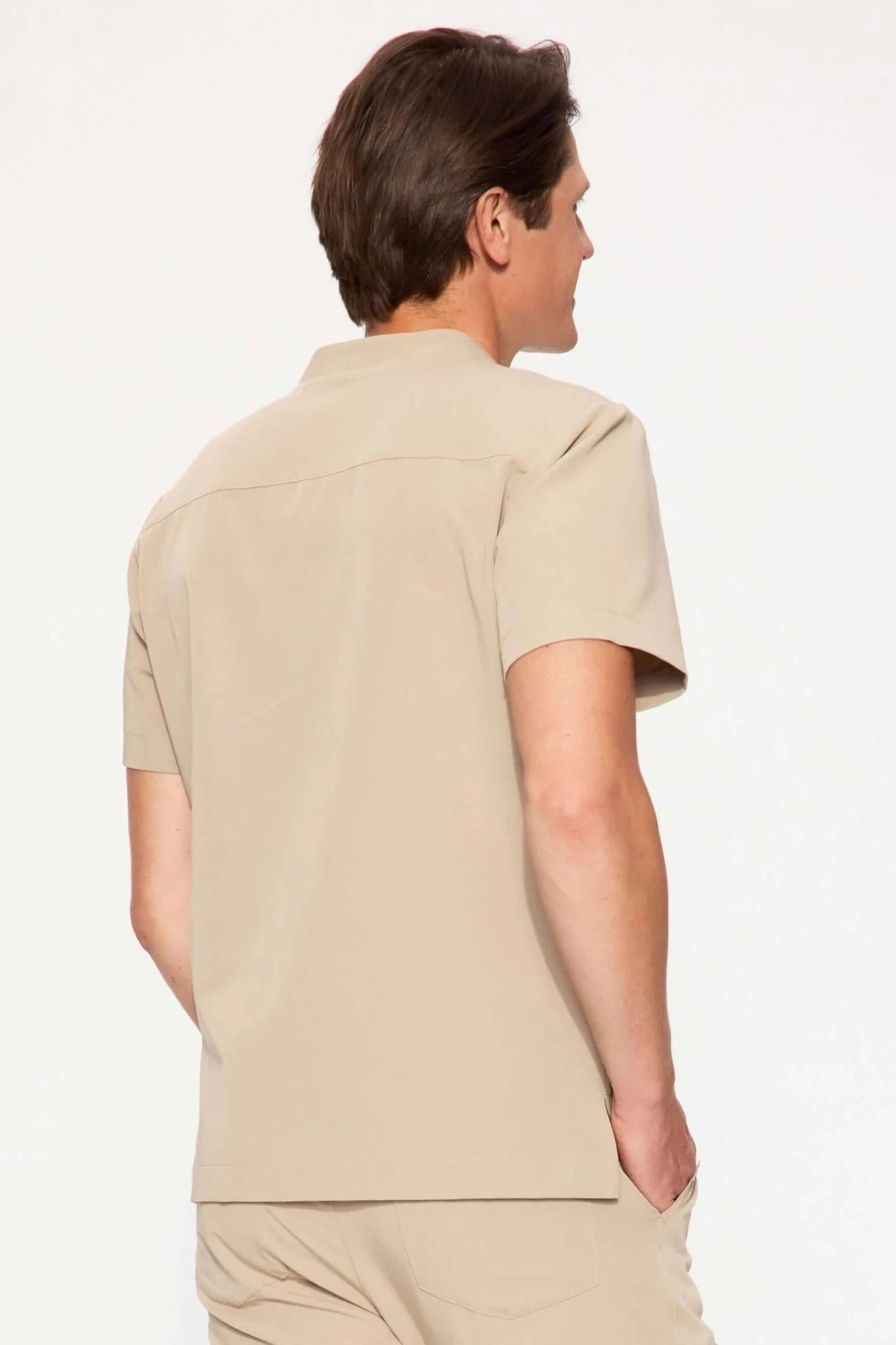
Pink is traditionally associated with midwifery because it is associated with care, warmth and motherhood. However, this is a convention, not an obligation. More and more often, midwives choose navy blue, bottle green, blue or classic white, as well as subdued earth tones such as khaki or tobacco. These darker and subdued colors have a practical advantage: minor dirt is less visible on them, which is important when working in a delivery room.
When choosing a color, it is worth thinking about two things at once. First of all, about the facility's regulations, because if the department requires a specific color, the decision is made for you. Secondly, if you have freedom, talk about what you feel good in and what suits your beauty. The color worn for many hours a day affects your well-being more than you think. The medka.eu offer includes both classic whites and navy blues, as well as entire collections in subdued shades, such as marine or snuff, so matching the regulations and each other is not mutually exclusive.
The table below shows how individual colors work in the daily work of a midwife.
| Color | Impression | Internship on the ward |
|---|---|---|
| White | Classic, clean, professional | Any dirt is visible and requires frequent washing |
| Pink | Warmth, care, traditional association | Lighter shades get dirty faster |
| Pomegranate | Seriousness, neatness, universality | Little visible dirt, easy to maintain |
| Teal/blue | Peace, trust | A good compromise between light and dark |
| Bottle green | Stability, naturalness | Practical, conceals stains well |
| Snuff/khaki | Modern elegance | Very practical, rare, stands out |
What's easy to forget when putting together an outfit?
Most mistakes come not from choosing a sweatshirt, but from omitting accessories. The first is footwear. You can have a perfectly matched set and suffer for the entire shift because the shoes are inappropriate. A midwife spends most of her shift on her feet, often in motion, so footwear should be full (covered toes and heels are a safety issue with the risk of contact with liquids), stable, cushioned and easy to wash off. Flip-flops and open clogs are a common mistake for beginners.
The second thing is identification. In a ward where the patient and her family are in tension, clear role designation builds trust. Some midwives decide to have their name and function embroidered on the sweatshirt because it looks professional and does not fall off in the wash like a badge. medka.eu offers personalization of clothing with embroidery, so the set can be immediately marked with the word "midwife" along with the name or name of the department.
The third thing is the number of sets. One outfit is not enough, two is the absolute minimum, and three is enough. With intensive washing, clothes wear out faster, so rotating between several sets means that none of them are washed every day and all of them last longer. This is a seemingly larger expense at the start, which actually reduces the cost over the year.
The fourth, often underestimated, is the top layer. Delivery rooms can be warm, but the duty room, corridor or night shift are a different temperature. A light sweatshirt worn over a set allows you to react to changes without having to change clothes. The offer also includes: medical dresses, which for some midwives are a comfortable alternative to the classic set, especially in the warmer months.
How do size and fit affect the comfort of the entire shift?
Size is the easiest area to make a mistake, because medical clothing does not always fit like everyday clothes of the same size. Over-the-head models are cut differently than zipped ones, and fitted styles fit different figures. Therefore, instead of being guided by habit, it is worth checking the size chart of a specific manufacturer and measuring yourself in key places: chest, waist and hip circumference.
A size that is too small takes its toll immediately, restricts movement and tightens the material in critical places. Too big is more insidious because it looks comfortable in the mirror, but at work it snags, rolls up and looks sloppy. The golden mean is a set that has room in the arms and underarms, but does not hang on the figure.
It's also worth thinking about the length. Pants that are too long drag and get dirty, pants that are too short expose your ankle every time you squat. Here, joggers with a cuff have an advantage over straight leg trousers because they adjust the length at the ankle. If you are in doubt between two sizes, in clothing with elastane it is usually safer to choose the smaller one, because the fabric has a reserve of elasticity, while a set that is too large will not correct anything.
Summary
A good midwife's outfit is made of several decisions that are easy to ignore when shopping for the first time. The cut should not interfere with the movement typical of the delivery room, the fabric with elastane gives freedom and maintains its shape despite frequent washing, and the color should be chosen according to the regulations of the facility and your own beauty, remembering that darker colors are simply more practical. The rest are clothing items that determine the comfort of the entire shift: full footwear, clear identification, a few sets for rotation and a layer for colder hours.
If you are just putting together an outfit or replacing a worn one, treat it as a system, not a single purchase. Two or three sets tailored to your figure, made of fabric that breathes and regains its shape, will last longer and will stop your clothes from being something you have to think about while on duty. The medka.eu offer includes sweatshirts, trousers, dresses and sets in various cuts and colors, with the possibility of personalization with embroidery, so putting together a coherent, comfortable outfit can be done in one place.
Frequently asked questions
Below we have collected short, specific answers to the questions that most often arise when choosing a midwife's outfit.
Does a midwife have to wear a specific color?
There is no nationwide regulation imposing a specific color for midwives. The colors are usually determined by the regulations of a given hospital or department. If the facility does not require a specific color, the choice is yours.
How many sets of outfits does a midwife need to start?
Two sets are an absolute minimum, three are comfortable. If you wash them frequently, rotating between several items means that none of them wear out so quickly, which reduces the cost over the year.
Is cotton or a blend with elastane better for a midwife's outfit?
In practice, a mixture with added elastane works better. Pure cotton is pleasant to the touch, but creases and dries slowly. Elastane allows freedom of movement and allows the garment to return to shape after crouching and reaching.
What footwear is appropriate for a midwife's outfit?
Full, covered at the front and back, stable, cushioned and easy to wash off. Open flip-flops and clogs do not protect the foot from contact with liquids and do not provide support when standing for many hours.
Can the midwife's outfit be personalized with embroidery?
Yes. Embroidery with the name and function on the sweatshirt looks professional, facilitates identification in the ward and, unlike a badge, does not fall off in the wash. medka.eu offers clothing personalization with embroidery.
At what temperature should you wash clothes with elastane?
Preferably at 40-60 degrees, as recommended on the label, and without aggressive high-temperature drying. Washing too hot shortens the life of the elastane fiber and deprives the fabric of its elasticity.
Will a medical dress work instead of a suit?
For some midwives, yes, especially in the warmer months. A medical dress can be a comfortable alternative to a sweatshirt and trousers, although many people find it more comfortable with trousers for work that requires frequent crouching.