




Physiotherapy is a profession in which it is easy to miss a gift, because intuition suggests things that the recipient either already has in three copies or will never take out of the box. Equipment for the office is selected based on a specific work method, not aesthetics. Training accessories wear out at a rate that cannot be seen from the outside. In addition, there is the body of the therapist himself, which is loaded in a very characteristic way: meta-analyses show that, after the lumbar section, the second most frequently reported site of pain among physiotherapists is the thumb. Gifts that take this specificity into account are incomparably better than another engraved mug. And if you are a patient, you also have rules that are rarely talked about out loud.
What is worth knowing about the work of a physiotherapist before choosing a gift?
Before you start browsing the stores, it's worth understanding two things: how the body is loaded and what relationship you have with the person receiving the gift. Both of these points determine the relevance of the gift more than the budget.
The workload profile in this profession is unusual and well documented. A meta-analysis published in 2023 in BMC Musculoskeletal Disorders that included 26 studies found the highest rates of musculoskeletal disorders in the lumbar spine (40.1 percent), followed by the thumb (35.4 percent), neck (26.4 percent) and shoulder (20.8 percent). A more recent systematic review estimated the overall prevalence of such conditions at 75.27 percent, with low back pain first (54.97 percent) and knee pain next (19.08 percent).
The second thumb is the hallmark of this profession and the point at which physiotherapy differs from other medical professions. Manual work, trigger point therapy, mobilization and deep tissue massage load the metacarpophalangeal joint of the thumb with hundreds of repetitions a day, and the pressure is exerted over a small surface. Any gift that transfers some of that work to the tool instead of the finger has real utility value in this profession.
The second thing is the way you move around the patient. The physiotherapist kneels, squats, sits on the mat, demonstrates exercises and, for part of the day, works in positions that would simply make an ordinary medical uniform burst at the seams. This is a profession in which clothes work differently than in a dentist's office or a medical ward, and this has a direct impact on shopping.
The third point concerns the hands. During therapy, rings, bracelets or watches are not worn on the wrist because they interfere with contact with the tissue and hand hygiene. Hand jewelry is therefore not considered a practical gift, although it still makes sense as a gift worn outside of work.
Can a patient give a gift to a physiotherapist?
This part concerns a large group of people looking for a gift, because a gift from a patient is the most common scenario after many months of rehabilitation. The answer is: usually yes, but to a limited extent and at the right moment.
The profession of physiotherapist is an independent medical profession within the meaning of the Act of September 25, 2015 on the profession of physiotherapist, and physiotherapists are subject to mandatory membership in the National Chamber of Physiotherapists and professional liability. The Act explicitly requires that the profession be performed with due diligence and in accordance with the principles of professional ethics. This means that accepting an expensive gift from a patient may be judged not only socially, but also professionally.
If the therapy took place in a facility financed from public funds, Art. 228 § 1 of the Penal Code, regarding accepting material or personal benefits in connection with the performance of a public function. Health care jurisprudence consistently assumes that small gifts of symbolic value given after treatment as a thank you are not treated as a bribe. Flowers and sweets fall into this category without a doubt. In private practice, the situation is more relaxed because the laws on public officials usually do not apply, but common sense still applies.
There are three practical conclusions from this. The gift is given after the end of the therapy cycle, not during it, because the moment of giving changes the meaning of the entire gesture. Money is lost in all forms, including vouchers and gift cards, which may come as a surprise because a gift card intuitively seems neutral. And the simplest thing: if the gift includes the thought of a better date or a longer visit next time, it is no longer a thank you.
| Who gives | Reasonable budget | What works | What is better to avoid |
|---|---|---|---|
| Patient rehabilitated under the National Health Fund | symbolic value | flowers, sweets, a card, a small pin | money, vouchers and gift cards, things of real value |
| Patient of a private practice | up to approximately PLN 150 | a small utility item, a supply of consumables, an honest opinion | gifts given during therapy |
| Collaborator, office team | PLN 100–300 | accessories, footwear, personalization with embroidery, collective collection | things that require knowing the size if no one does |
| Partner, family, close friend | PLN 250–700 | medical kit, hand relief tools, course | large equipment for the office selected without consultation |
| A gift for a diploma and the right to practice a profession | PLN 200–500 | first set, shoes, equipment bag, embroidery with title | excess gadgets with a spine motif |
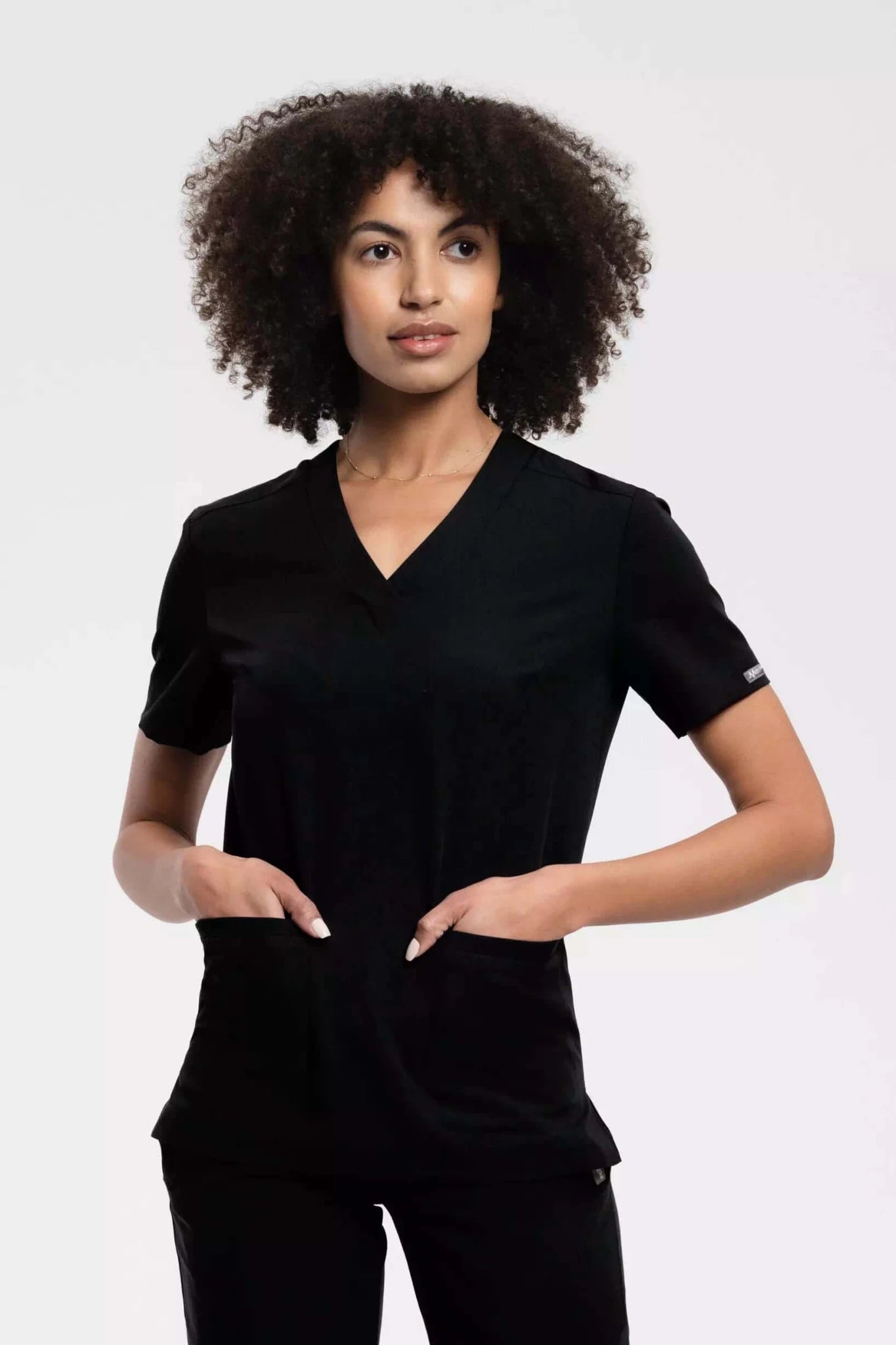
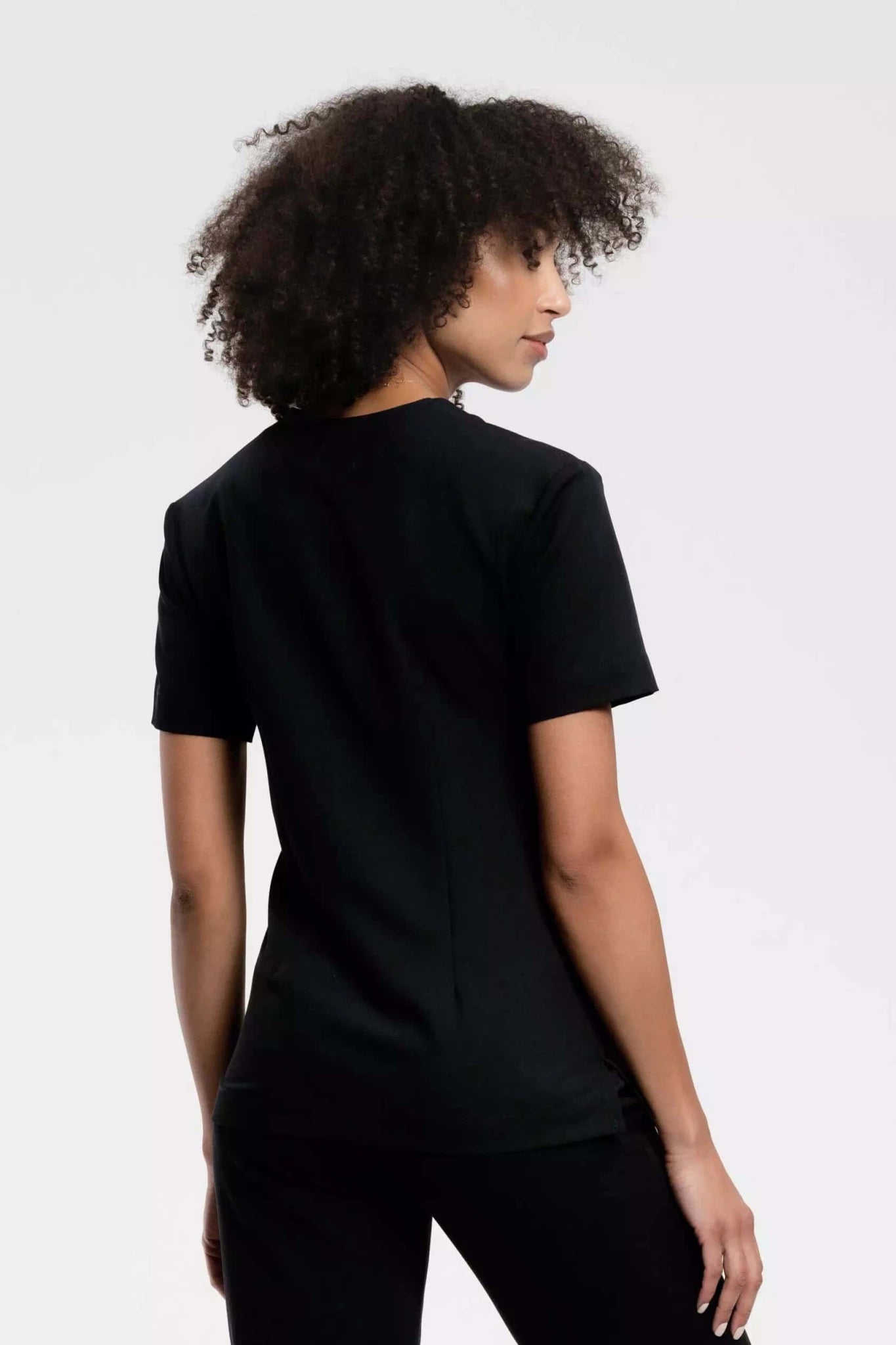
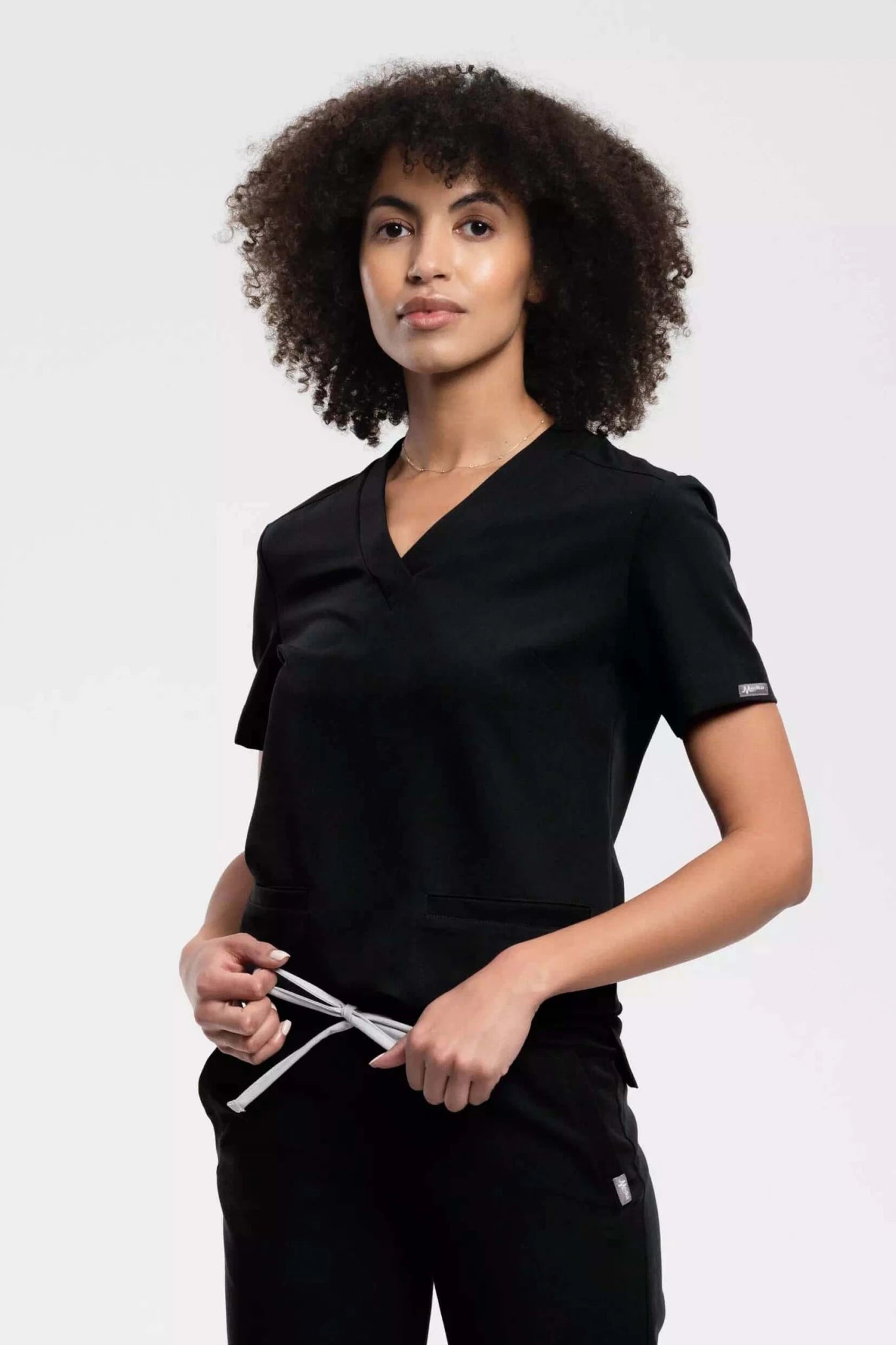
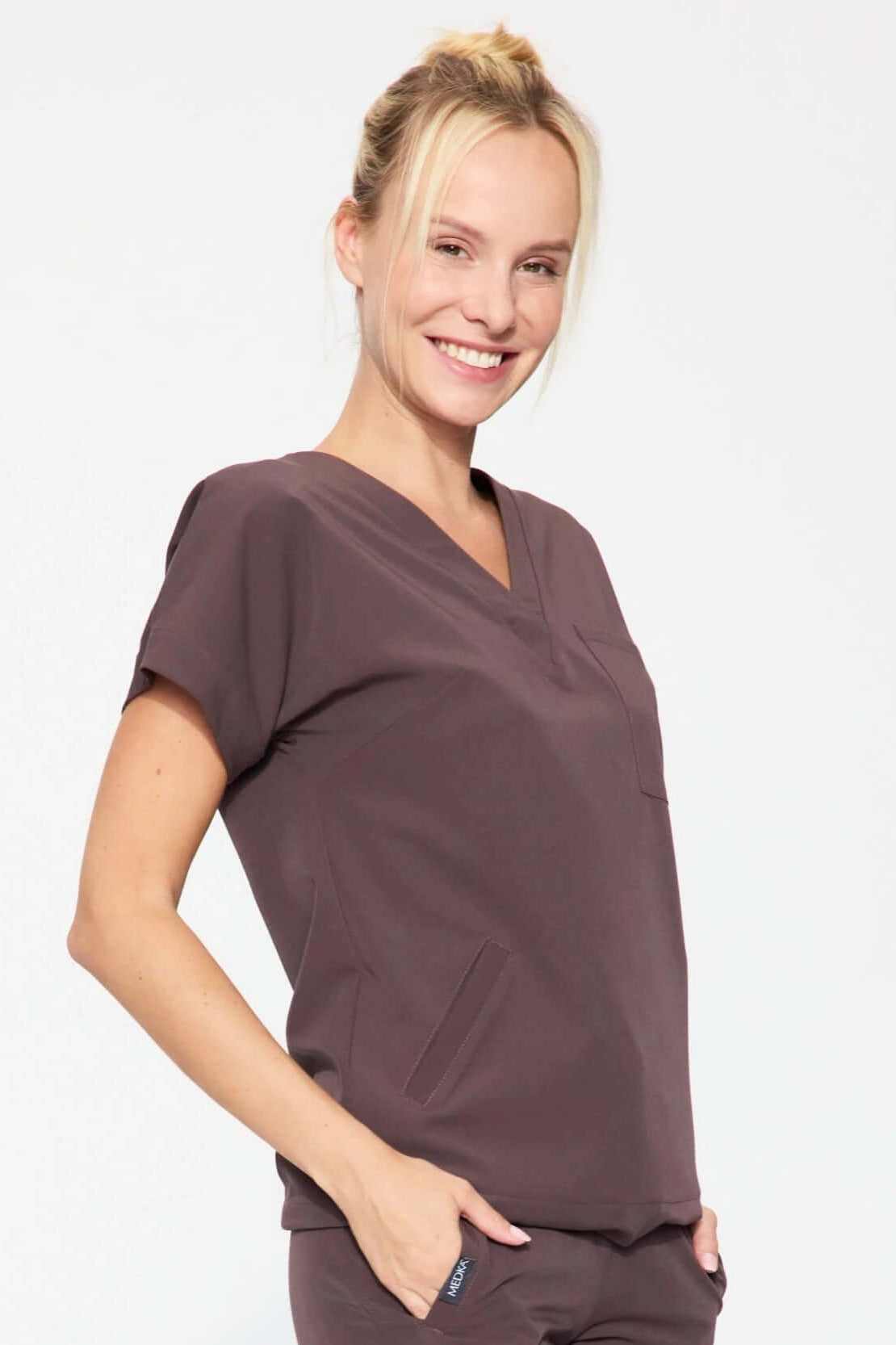
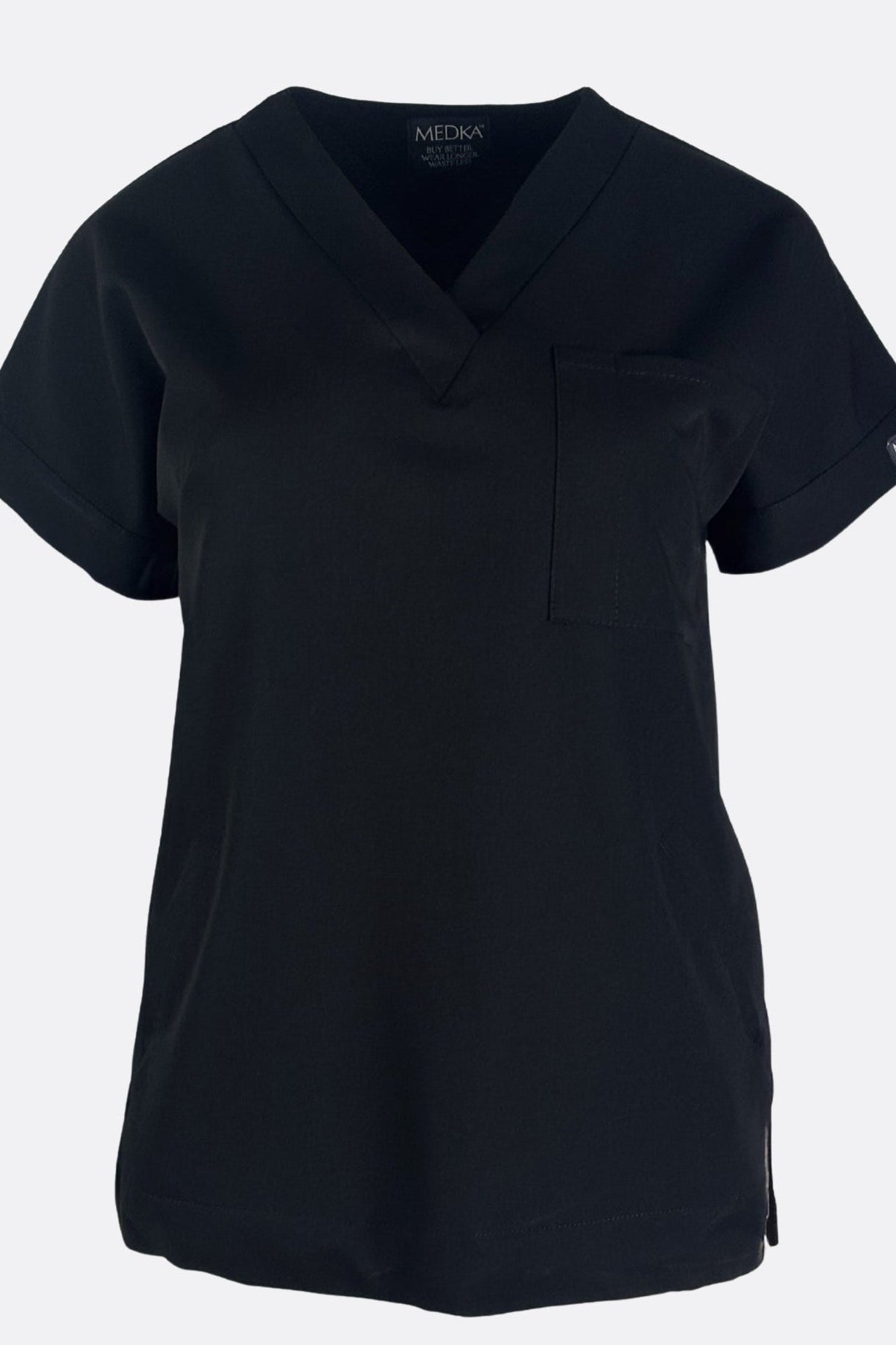
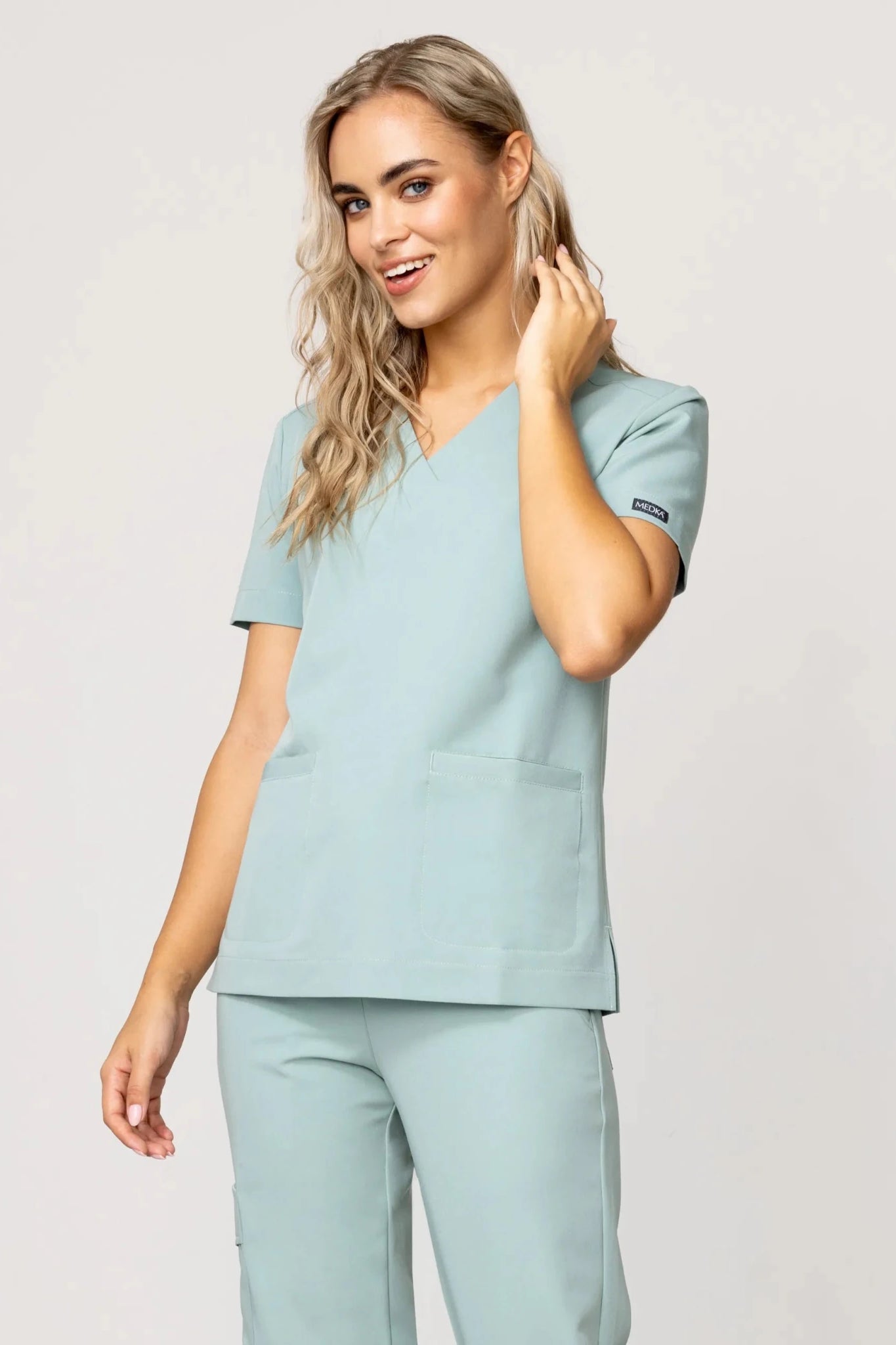
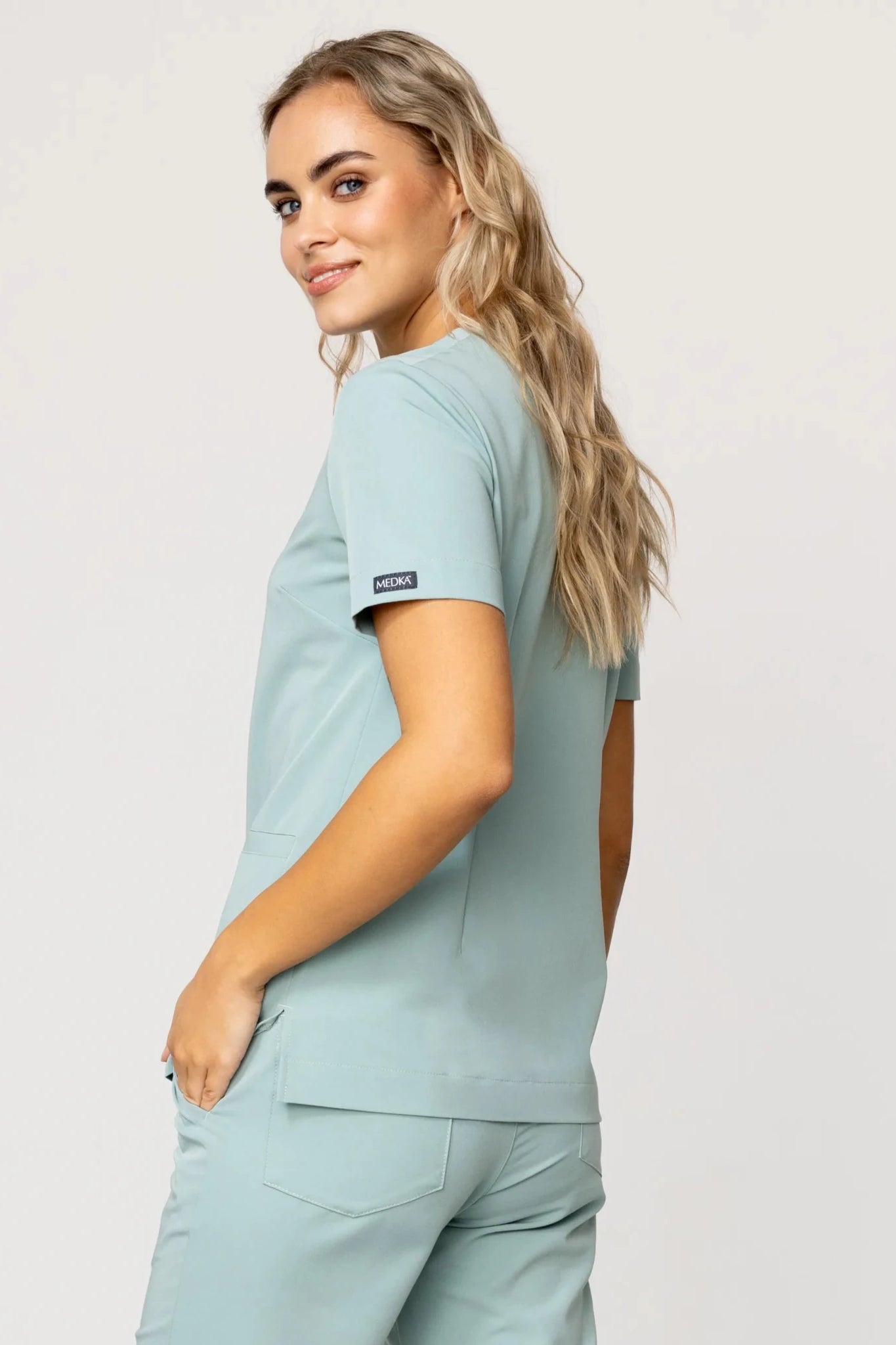
1. Medical kit made of fabric that can withstand kneeling
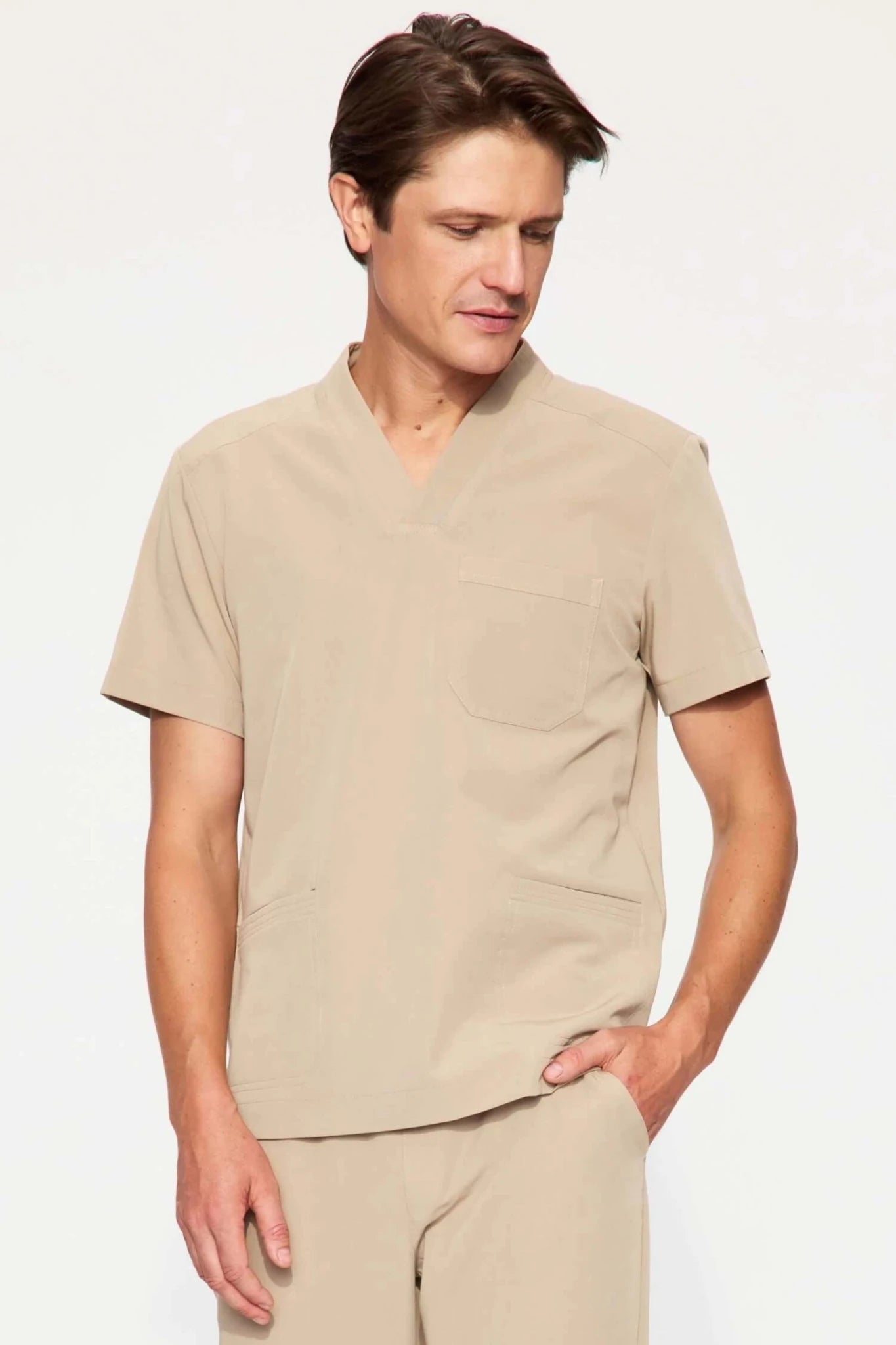
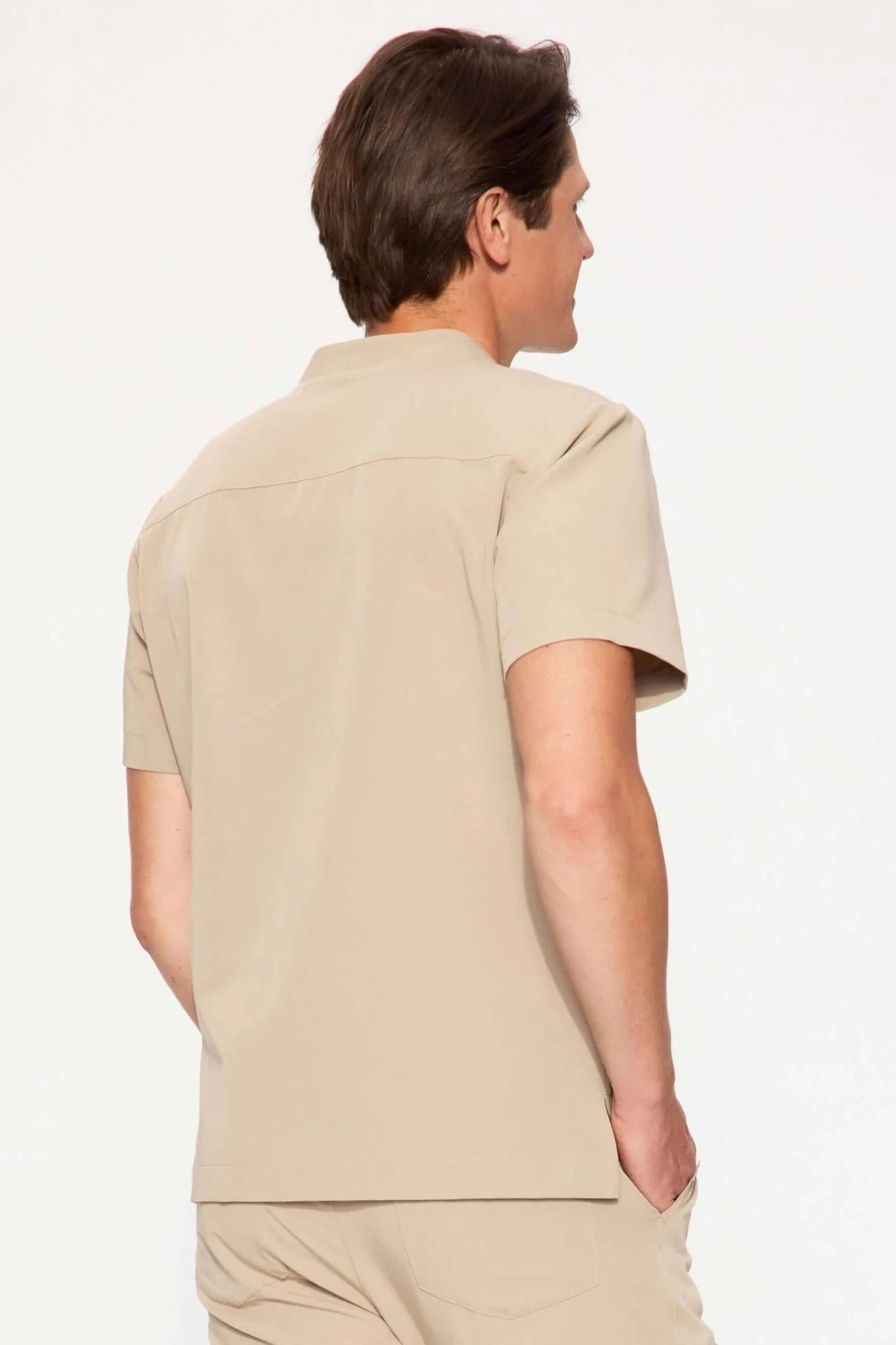
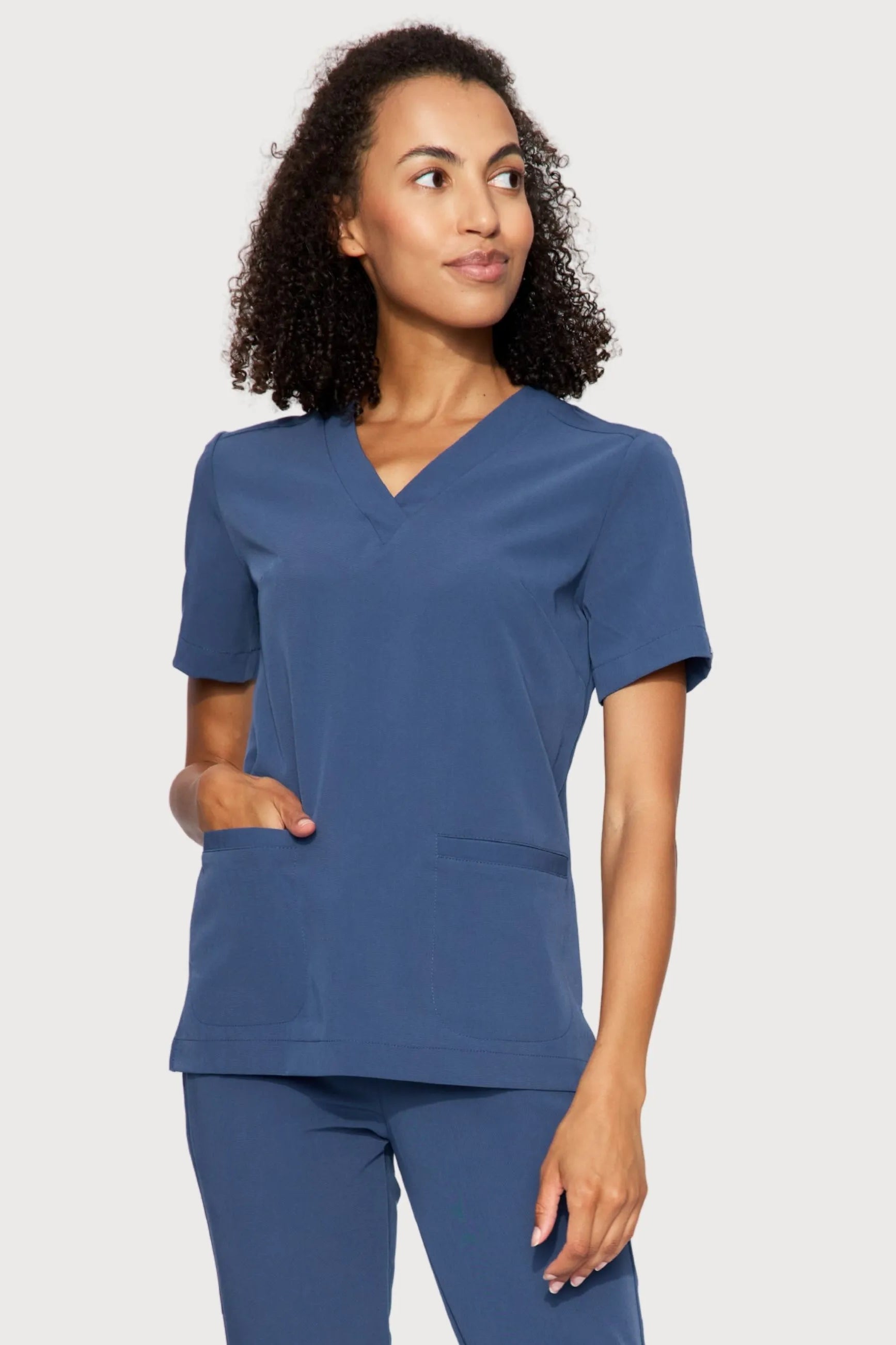
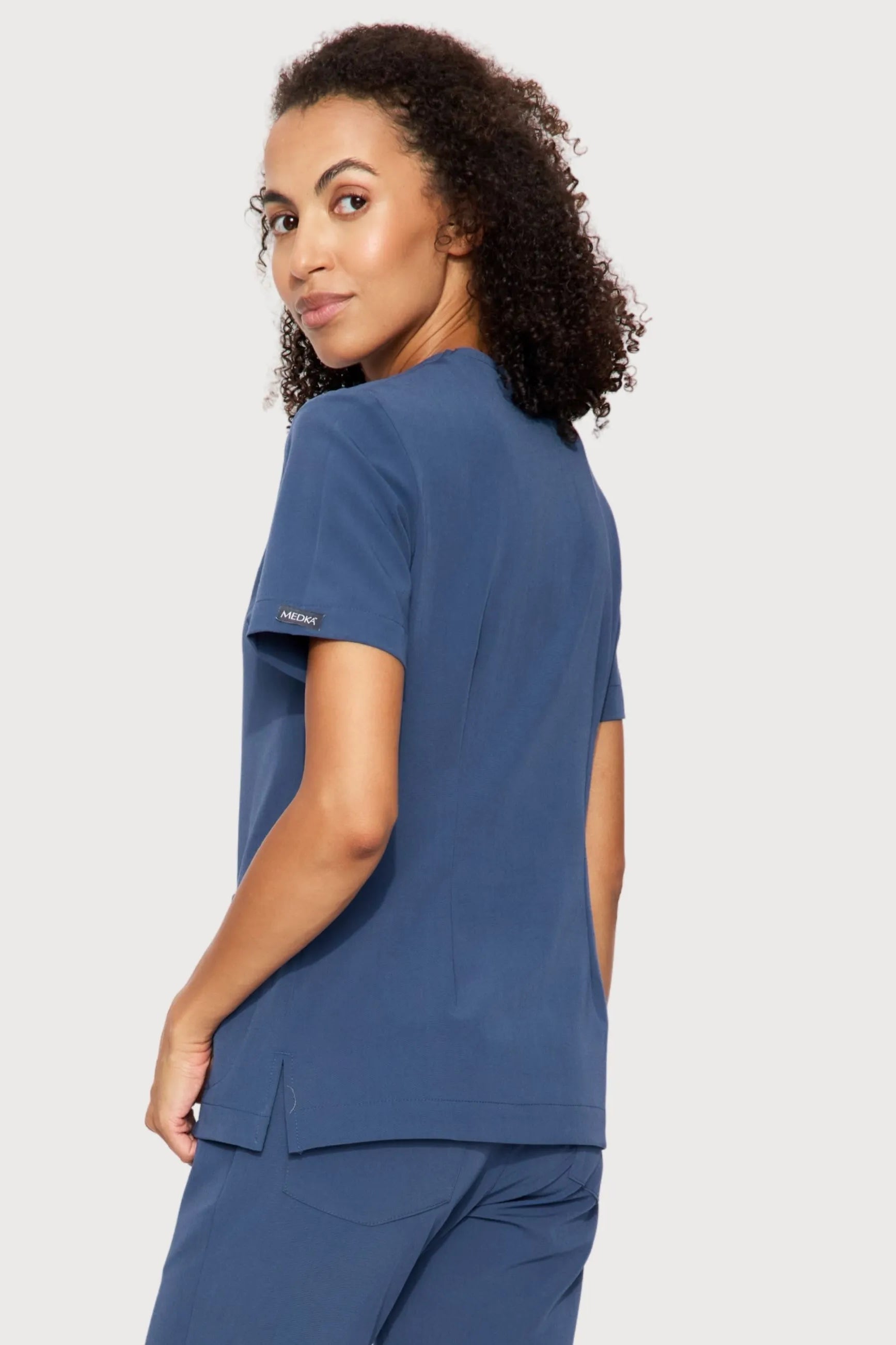
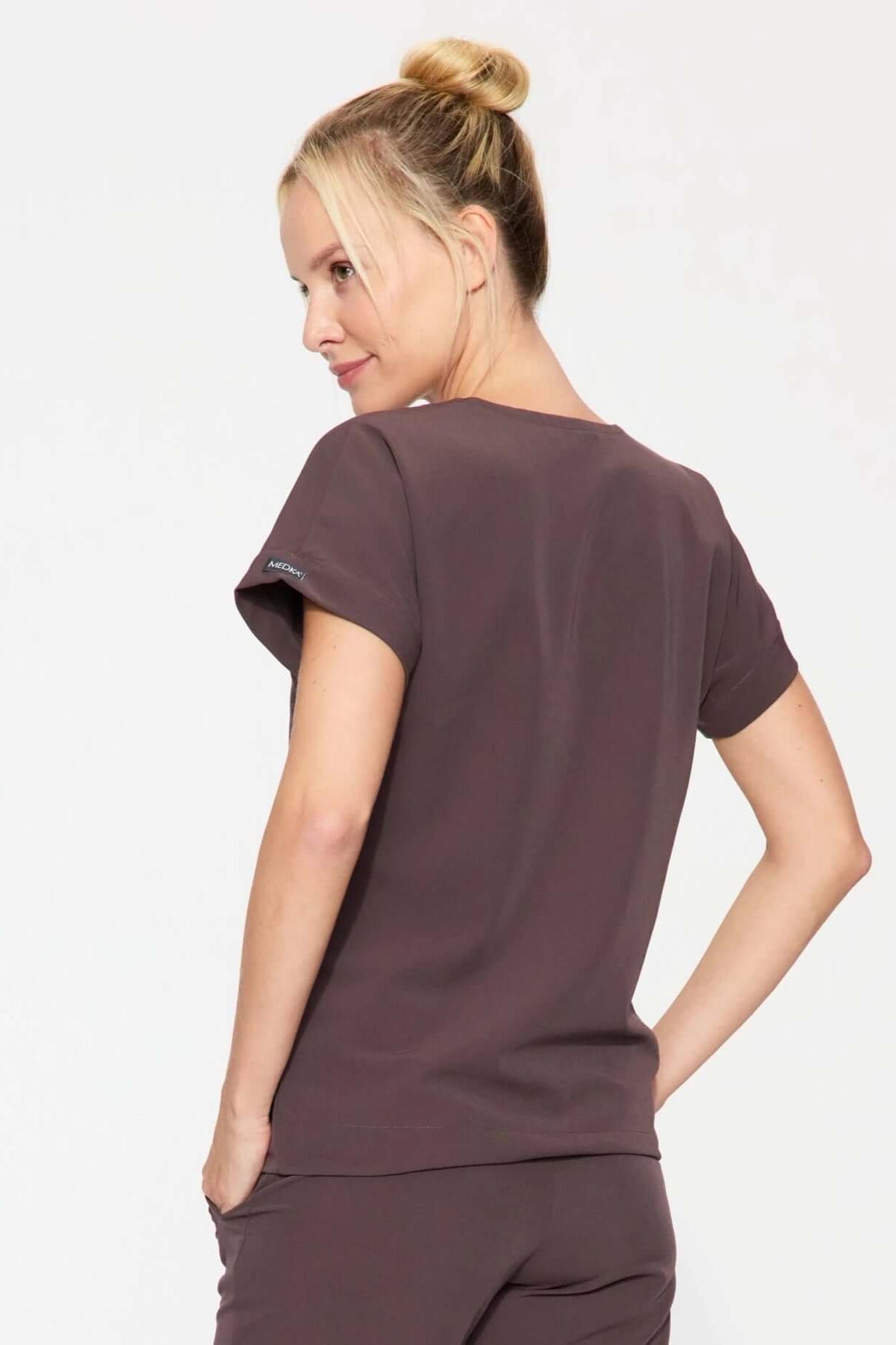
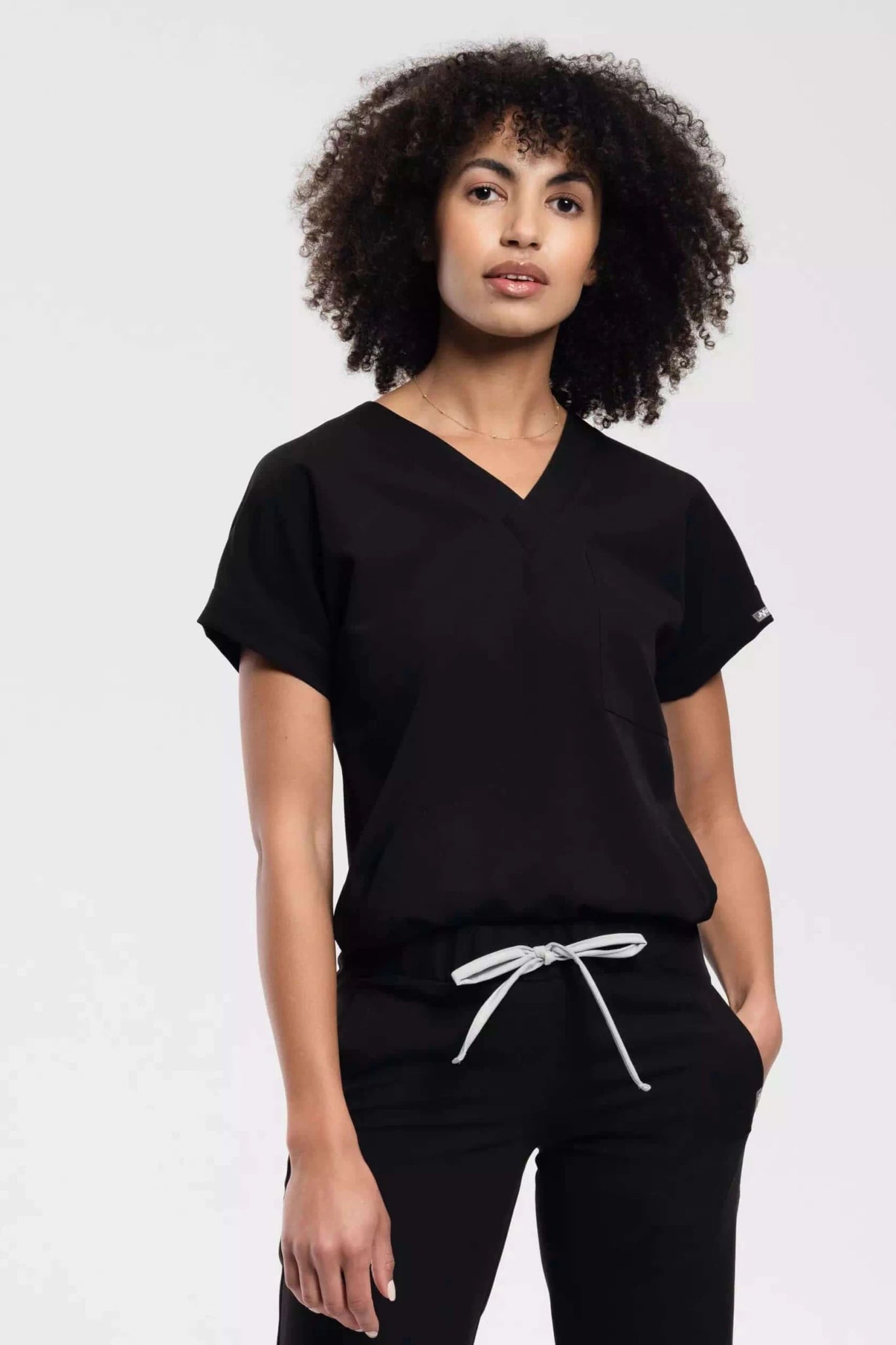
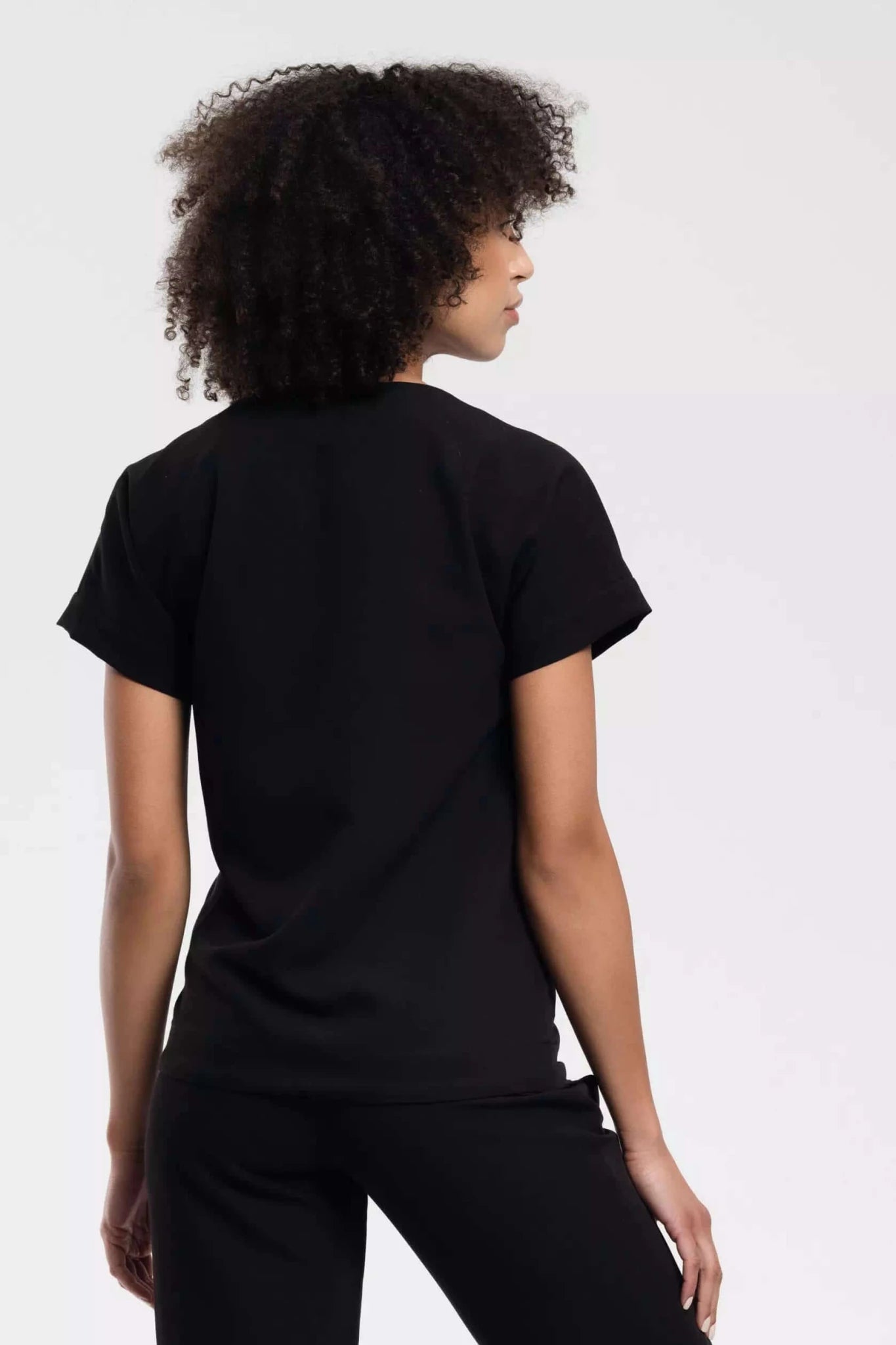
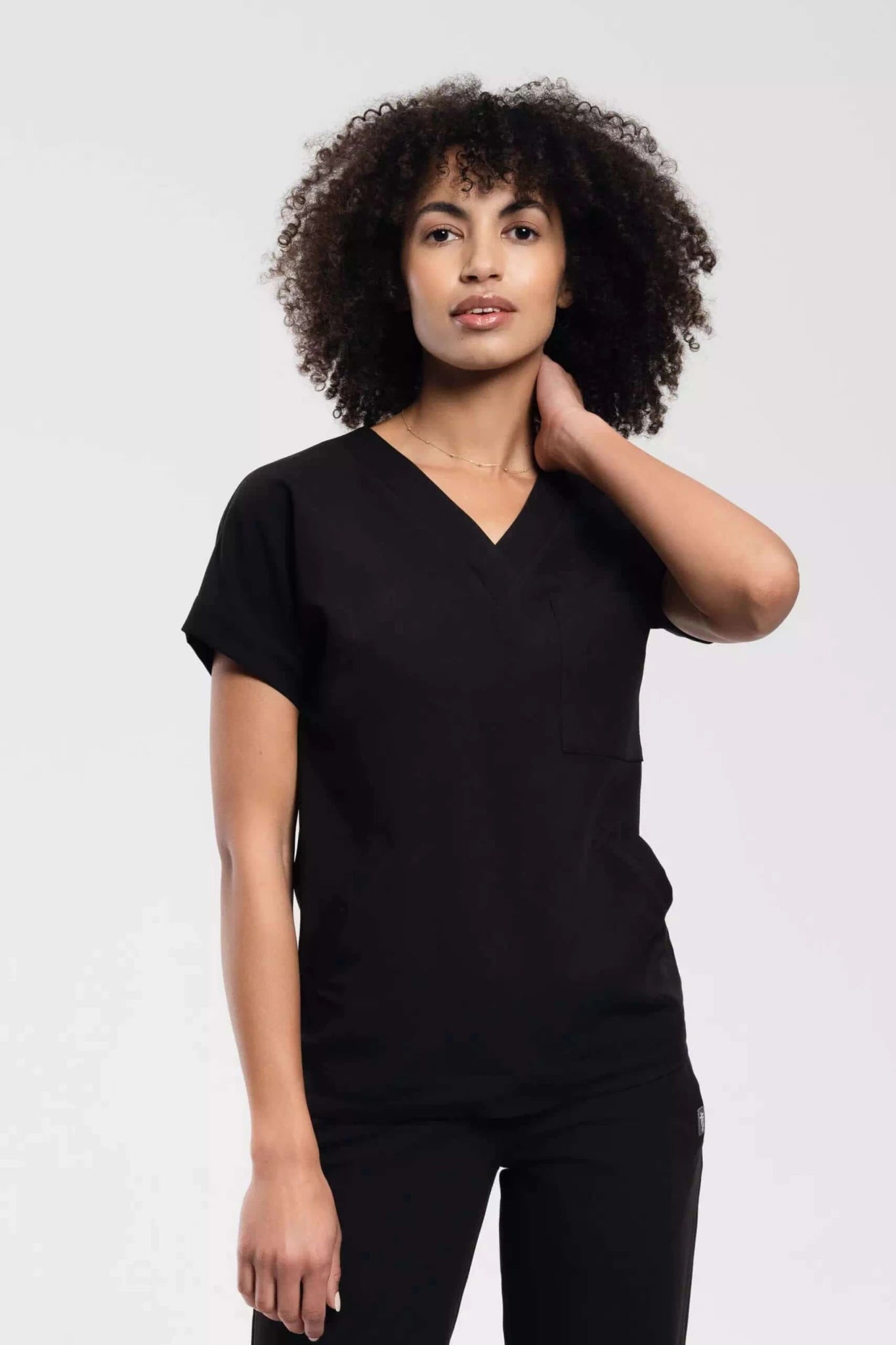
This is the most useful gift for a physiotherapist on the list, provided you get the right size. The mechanism is simple: the medical uniform is washed after each shift, and in this profession it also rubs against the mat, floor and therapeutic table, so it wears out faster than in offices where you mainly sit.
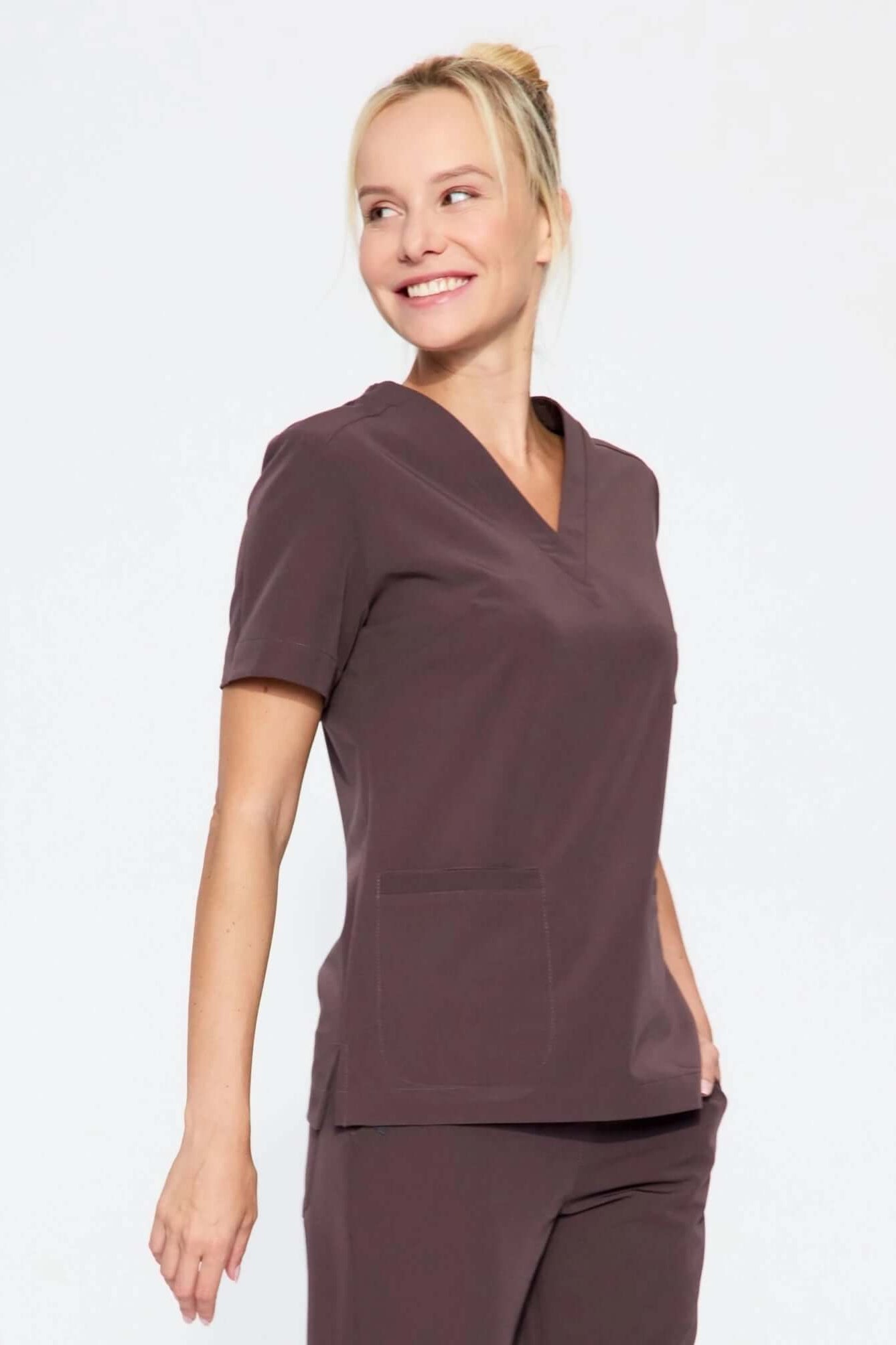
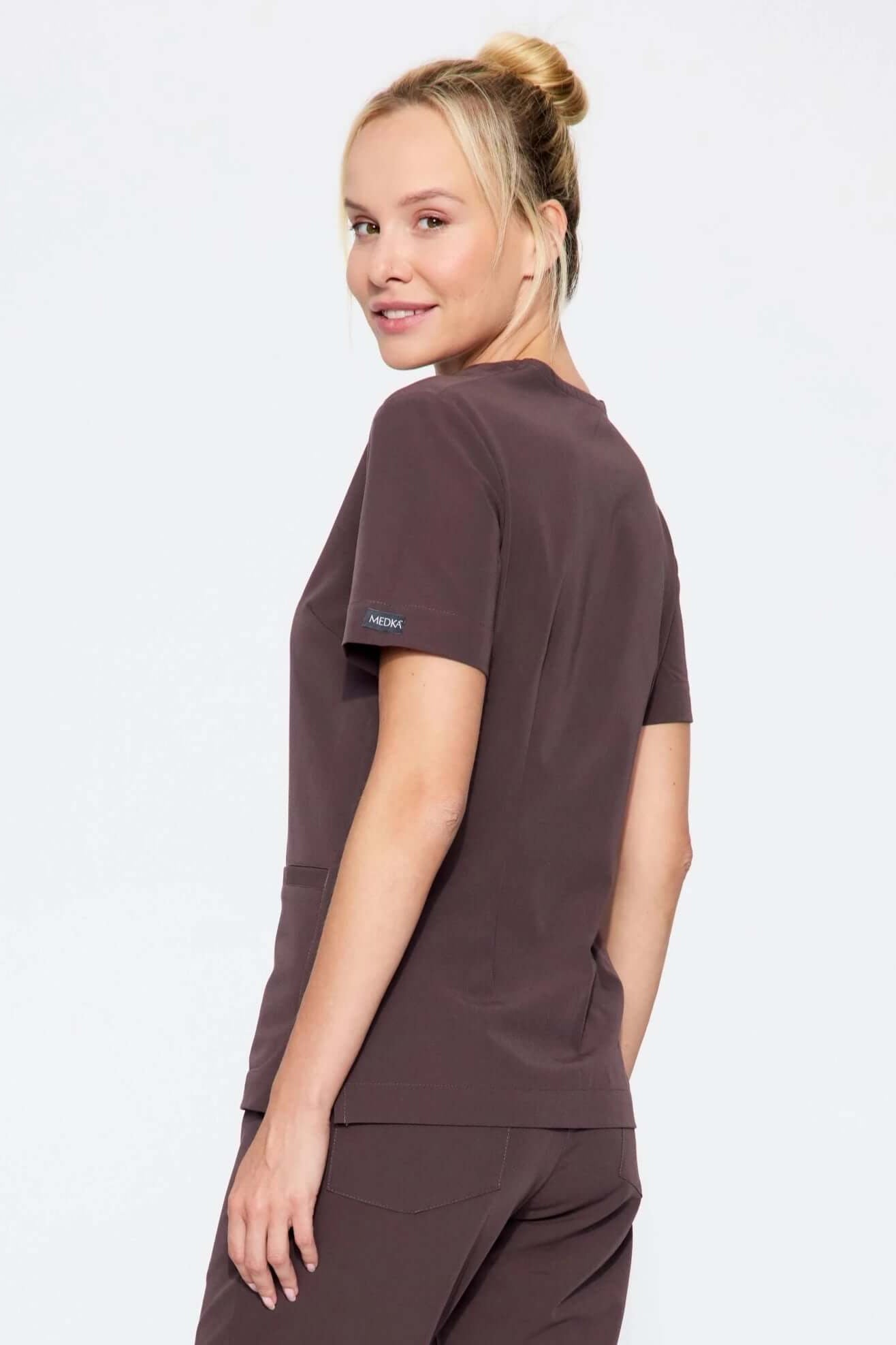
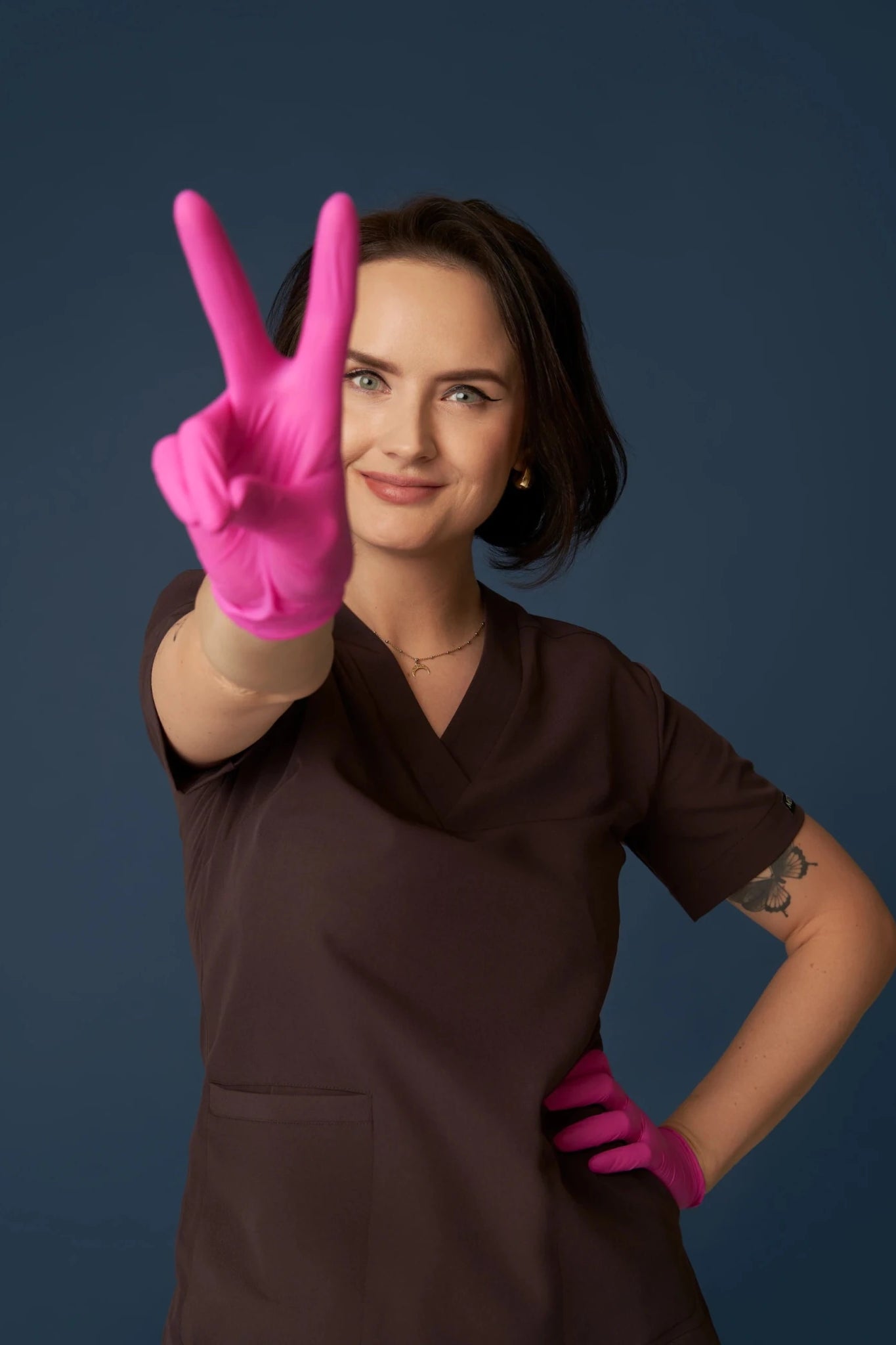
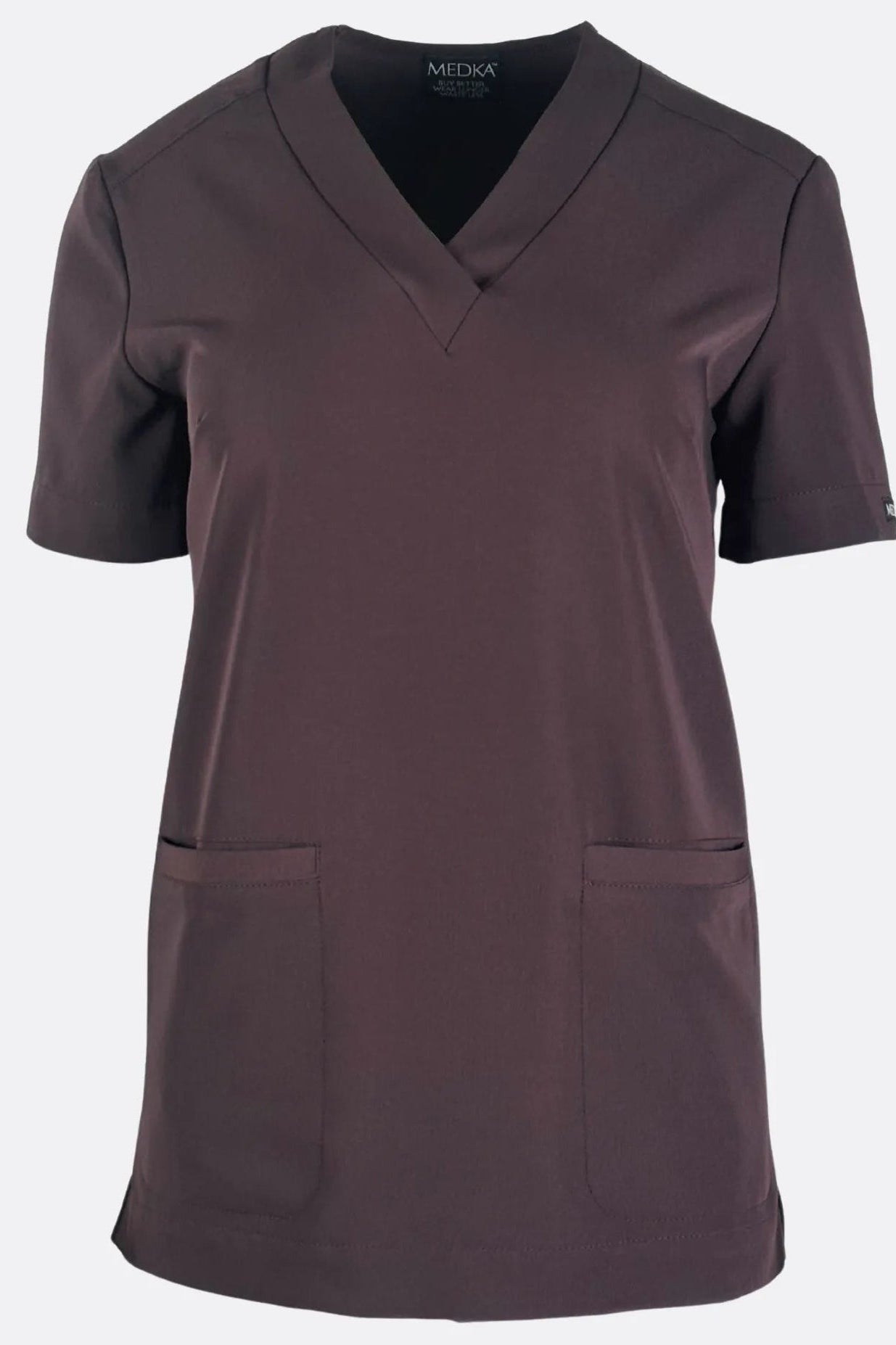
The elasticity of the fabric and the design of the pants are crucial, because when squatting and kneeling, a regular medical cut pulls at the crotch and rides up at the waist. The medka.eu offer is separate collection for physiotherapists, and next to it is full men's medical clothing with separate categories of sweatshirts, trousers and ready-made sets. A Fortis medical shirt costs PLN 209.90, and the entire set with matching trousers is usually in the range of PLN 400-450, as of September 2026.
Two details are more important than usual here. The trousers are available in two leg lengths and have additional adjustment at the waist, which makes a real difference in comfort when working in low positions. The sweatshirts have an adjustable cuff, so they can be adjusted so that they do not expose the back when bending over the patient. Just check in advance whether the facility imposes a single color scheme, because then the surprise turns into a problem.
2. Medical apron for diagnosis and consultation
A physiotherapist does not spend all day at the table. The first visit is an interview, a functional examination and a conversation about the therapy plan, i.e. a situation in which appearance matters more than during the procedure itself. In private offices, where the patient decides about a dozen or so visits, this is not a trivial matter.
Men's medical coats are among the most expensive items in this entire list, because prices start above PLN 300. For this reason, it is more of a gift from a loved one or a joint purchase of the entire team than a small gesture. There are versions with short and long sleeves, which is practical when working with your hands, because the long sleeve interferes with washing your forearms.
The limitation is real and worth calling out. The apron interferes with manual work and demonstration of exercises, so some physiotherapists never wear it. If the recipient works mainly at a table and on a mat, this gift will hang in the closet. In such a situation, it is better to add a second medical shirt to the set he is already wearing.
3. T-shirt under a set for a cold room
Rehabilitation rooms and offices can be cold because the patient is often undressed during therapy and the temperature is set for him, not for the therapist. A thin T-shirt worn under a sweatshirt solves this problem in the cheapest way possible and is an idea that rarely occurs to people outside the industry.
It's the composition that decides, not the style. Cotton absorbs sweat and releases it slowly, so after a few hours it turns into a cold compress next to the skin. Lyocell-type cellulose fibers absorb moisture deep into the structure and release it gradually, while polyester takes it outside and evaporates quickly, although it retains the smell more easily. The addition of a few percent elastane is important regardless of the base fiber, because without it the shirt rides up every time you raise your arms, and when demonstrating exercises, your arms are constantly raised.
However, there is a limitation that you need to be aware of before purchasing. The dark-colored bottom layer is visible under the light set, and the white one does not disappear under the white at all, because visibility is determined by the contrast to the skin, not the shade itself. If the recipient of the gift works in a light uniform, look for a color that is close to their skin tone.
4. Medical footwear with a sole that holds on the mat
The physiotherapist works on variable surfaces: a hard floor, a mat, sometimes a mattress. Medical footwear it must not slip, provide stable support when carrying the patient's weight and be washable after contact with massage oil, which will drip sooner or later.
This is one of the few categories in which the size can be determined discreetly, because the shoe number is easier to check than the sweatshirt size. Sensible models start at around PLN 200 and are determined by three features: the grip of the sole on a smooth floor, a washable surface and a full heel or heel stabilizing strap.
The reservation concerns habits, and in this profession it is serious. Some physiotherapists work only in sports shoes with a stiffened upper, because they provide better control during patient transfers, and will not switch to a lighter style regardless of the quality. It's worth figuring this out before you spend over two hundred zlotys.
5. Socks that don't slip down when you work on your knees
A seemingly trivial position, but resulting directly from the specificity of the profession. When you kneel, squat or sit on the mat, your pant leg rides up and your low sock slips off your heel. The result is an exposed ankle and the need for adjustments several times during the visit, which looks at least awkward for the patient.
A sock that reaches a few centimeters above the ankle solves this for an amount that no one even thinks twice about. In category socks There are models designed specifically for working in closed shoes for several hours. The material follows the same logic as a T-shirt: pure cotton retains moisture, and an admixture of technical fiber accelerates drying.
This is a gift that will never be the main gift, but works great as an addition to a larger purchase or as part of a set put together by several people on the team.
6. Embroidery with name and title on the sweatshirt
Personalization turns an ordinary piece of clothing into something that looks well-thought-out, and in this profession it has additional justification. Physiotherapists are sometimes confused with auxiliary staff in departments, and in multi-specialist offices the patient often does not know who he is actually talking to. The inscription on the sweatshirt works when the badge has just turned.
Service embroidery on clothing allows you to add your name, surname, professional title or office logo. The second variant makes sense mainly when ordering for the entire facility and works well where you are building a recognizable brand.
There is one big trap when it comes to giving a gift. Medical clothing personalized is usually not returnable, so the size must be certain, not probable. If you have the slightest doubt, buy an item without embroidery and add information that personalization can be ordered later.
7. A gift card when you don't know your size or taste
A gift card is considered a gift without any idea, which is completely wrong in the context of professional clothing. Size, style and color are three variables at once, and a mistake in any of them ends in replacement instead of joy.
The store sells gift cards, and when shopping for someone else, the following conditions are also important: free delivery over PLN 450 and 60 days to return. The card also solves the situation in which the recipient has very specific color preferences and simply prefers to choose themselves.
One limitation follows directly from the previous section. If you are a patient, the card is out of the question, because in practice it functions as the equivalent of money. So this idea stays with family, friends and colleagues.
8. Massage gun, i.e. relieving the thumbs
We return to the number with which this text began. Since the thumb is the second most frequently reported site of pain in this professional group, any tool that transfers some of the work from the finger to the device has value beyond convenience.
A percussion massager cannot replace manual therapy and no physiotherapist treats it as such. However, it is useful for preliminary loosening of tissues before actual work with the hands, which shortens the time the thumb spends under load. It is also used for self-therapy after a day of work, and this is the most convincing argument.
When choosing, what matters is not the number of attachments, but the weight of the device, volume and head stroke. Holding a heavy gun at arm's length for several minutes puts stress on the shoulder, which is another top statistic. Who won't this work for? For people who work exclusively with kinesitherapy and exercises, without a manual component, and for those who already have such equipment, which is currently one of the most common devices in offices.
9. Soft tissue therapy tools instead of fingers
The same logic as above, only in the manual version. Tools for the IASTM technique, i.e. instrumental soft tissue mobilization, transfer pressure from the pad to the edge of a metal or composite device. The therapist retains control of the direction and force, but the thumb does not work.
A gift works best when the recipient has already received training in this method or has directly mentioned it. Tools without training are equipment lying in a drawer, because the technique requires learning, not intuition.
A cheaper and more universal alternative is a set of simple point work devices. Here the condition is the opposite: the simpler the tool, the lower the risk that it will not suit the recipient's working method.
10. Thumb overlay for manual work
The cheapest of the ideas that directly address the problem described in the statistics. The overlay distributes pressure over a larger surface and allows you to increase strength without proportionate load on the joint, while maintaining tissue sensation that no larger tool can provide.
This is an ideal item as an addition or as a gift from a patient in a private practice, because it falls into the category of small utility items. It costs a fraction of what a percussion massager does and solves the same problem in one treatment.
However, you must know that this is a very individual thing. Some therapists cannot stand the loss of direct contact with the patient's skin and will not use the overlay even once. If you are not sure how the recipient works, treat it as an addition to a larger gift, not its core.
11. A set of resistance bands and mini bands for the office
Tapes are a consumable material, which patients usually do not know about. They crack, lose their elasticity, and some of them remain with patients as part of their homework. The supply in the office runs out regularly and needs to be replenished regularly, which makes tapes one of the few gifts that are guaranteed to be used.
What matters here is the completeness of the set, not the number of pieces of one resistance. The therapist needs several levels of resistance to adjust the load to the patient, and it is the extreme values that end up being used the fastest because they are used for people who are in very poor or very good shape.
Practical note for buyers: latex and latex-free tapes are not the same, and in a practice that accepts different patients, the latex-free version may be the only option. If you don't know which one to choose, the latex-free option is safer.
12. Roller and balls that will wear out anyway
Rollers, spot balls and double balls belong to the same category as tapes: equipment that is used every day and loses its properties after several months. The foam kneads, the surface hardens, and the balls simply disappear because they stay on the mat or go home with the patient.
A good gift in this category is distinguished by the density of the material, not the color or pattern. A roller that is too soft does not provide a therapeutic effect in people with large muscle mass, and a roller that is too hard is ineffective in patients sensitive to pain. A set that includes two hardness levels makes more sense than one more expensive item.
However, there is a risk of duplication here, greater than with any other idea on this list. Rollers are the most common gift given to physiotherapists and there is a real chance that the recipient already has three. It's worth asking someone at the office before you buy a fourth one.
13. A supply of kinesio taping tapes
Kinesiotaping is a method in which the material is disposable and the cost is usually borne by the office. The roll lasts for a dozen or so applications and then it simply runs out. This makes a stock of tapes the kind of gift that doesn't impress in a photo but has been used from day one.
Two things are important when choosing: the width adapted to the applications used and the quality of the adhesive, because cheap tape peels off after a few hours and the patient returns with a complaint. The standard width of five centimeters covers most applications and is a safe choice for someone who does not know the details of the recipient's work.
A separate category is rigid taping, used for stabilization, mainly in sports physiotherapy. If the recipient works with players, this type disappears the fastest.
14. Pad or knee pads for working on the floor
In the cited systematic review, knees occur with a frequency of approximately 19 percent and are a direct result of kneeling work, mat exercises, working with children and neurological patients. A gift that relieves this item is cheap and almost never makes it onto idea lists.
A soft knee pad or knee pads with a thin cushioning layer change the comfort of the entire shift for people working on the floor for a significant part of the day. The condition is the thinness of the material: a thick insole disturbs the sense of position and makes it difficult to get up quickly, so construction equipment does not work here.
This is an idea only for people who actually work low. An orthopedic physiotherapist who sees adults at the table will not use it even once, so it is worth establishing a patient profile before purchasing.
15. Massage cream or oil in a large package
Consumable material in its purest form. The office uses it at a pace that the patient cannot see, because not much is spent on one visit, but there are several visits a day. Wholesale packaging costs significantly less than retail packaging and is exactly what the therapist will not buy for himself as a gift.
When choosing, pay attention to two things. The glide should be adapted to the technique: a deep tissue massage requires more resistance than a relaxation massage, so oil with high glide can even be a hindrance. The second thing is the smell, which becomes intense after several visits a day, which is why unscented versions are more common in beauty salons than perfumed ones.
For whom does this not make sense? For physiotherapists who work exclusively with kinesitherapy and manual therapy without a lubricant, and there are more of them than you think.
16. Home visit equipment bag
Home and sports physiotherapy means transporting equipment several times a day: tapes, rollers, taping, towels, sometimes a folding table. An ordinary backpack breaks after a few months and the contents are mixed into one mass that has to be dug in front of the patient.
A good therapy bag has compartments, a stiff bottom and wide shoulder straps or a shoulder strap because it is carried with a real load. It's a more expensive gift than most of the ideas on this list, but for a person traveling to see patients, it changes the organization of the day more than any gadget.
There is one condition. If the recipient only works stationary, the bag will become travel luggage and nothing more. Before you buy, determine whether he visits patients at all.
17. A voucher for a massage or therapy for someone who treats others
The professional paradox of this group is well known: people who deal with other people's workloads are least likely to deal with their own. With the frequency of lumbar spine problems exceeding half of the respondents, this is not a joke, but a health problem on the scale of the entire profession.
A massage voucher gives you immediate relief. Consultation with another specialist, for example a hand therapist for thumb and wrist problems, takes longer, although it requires regularity from the recipient. The choice depends on whether you want to please or really help.
When purchasing, check opening hours and expiration date. A voucher for an office open until 4 p.m. is only a theoretical gift for a person who sees patients until 7 p.m., and such vouchers expire most often.
18. Specialist course or congress ticket
The Act on the profession of physiotherapist requires practicing the profession in accordance with current medical knowledge, and development in this profession is based on postgraduate courses: manual therapy, neurophysiological methods, dry needling, fascial techniques. Trainings are usually multi-module and mostly financed out of pocket, which means that the decision to enroll can be postponed for years.
Paying for such a course may be the only thing that finalizes the decision, and that's what sets this gift apart from the rest of the list. An additional argument: popular courses with a limited number of places sometimes sell out months in advance, so paying for a place has value regardless of price.
The condition is serious. You need to know in which direction the recipient is developing, because a neurodevelopmental method course for someone working with runners is a waste of money. If you don't have this knowledge, paying extra for a course you choose yourself works just as well and carries no risk.
19. The gift he takes out of the office
The last item is intentionally unrelated to work, because after eighteen ideas about the body, equipment and professional development, it is worth saying the obvious. Many people in this profession are fed up with the fact that every gift again concerns muscles and joints.
Tickets with a specific date, dinner with a reserved table, weekend trip, activities completely unrelated to medicine. This is especially true for people who run their own practice, because they usually work until the evening and have trouble setting boundaries.
One execution detail determines success. A gift with a set date works, a "we'll go out someday" gift never works. Booking an appointment is more important than the content of the gift itself.
What is better not to buy as a gift for a physiotherapist?
The list of unsuccessful ideas in this profession is long and most of them result from the realities of work, not the taste of the recipient. The list below sorts out the most common mistakes.
| A popular idea | Why it usually doesn't work | What to do instead |
|---|---|---|
| Therapy table | it is selected according to height, work technique and the size of the office, and prices reach several thousand | additional payment for a table chosen by the recipient |
| Ring, bracelet, wristwatch | removed for the duration of therapy, they interfere with manual work | a necklace or something worn outside the office |
| Another roller or ball | this is the most common gift in this professional group, the risk of duplicate is high | consumables: taping, tapes, oil |
| Candles and scented oils for the office | intense odors can be a problem with several patients a day | a scent for home, not for work |
| Engraved mug with a spine motif | an overused motif, there are usually several such items | a thermal mug without a motif, actually used between visits |
| Equipment for a method that the recipient does not know | tools without training stay in the drawer | paying for a course in this method |
| Money, vouchers and gift cards from the patient | treated as a cash equivalent, regardless of the amount | a thank you in writing or a reliable opinion on the Internet |
The last line is worth commenting on. For a physiotherapist running a private practice, a specific opinion describing the course of therapy has measurable marketing value and carries no risk for either party. It may be the best available thank you gift a patient can give, although it cannot be packaged.
Before you decide
After reviewing these nineteen items, a simple organizing principle emerges. What is worth buying is determined by the relationship, not the size of the wallet. The patient moves in a narrow field of small, symbolic gestures and this limitation has a meaning that is not worth circumventing. The office team and family have the freedom to buy things that they will actually use for the next year.
The second rule concerns accuracy and results directly from the statistics quoted at the beginning. The best gifts are those that address what actually hurts in this profession: an overloaded thumb, lumbar spine, knees from working on the floor. Consumables come next because they always run out and no one buys them as gifts. The worst results are items chosen only based on their profession and equipment chosen without knowledge of the recipient's working method.
If you're not sure about size, taste or patient profile, choosing between a gift card and a utility item is safer than guessing. And if you want one great gift, take five minutes to talk to someone in the office. The receptionist or cooperating therapist knows more about the recipient's preferences than any guide.
Frequently asked questions
Below are short, practical answers to questions that most often arise when choosing a gift for a person working in physiotherapy. They concern occasions, sizes and special situations. Notes on regulations are for informational purposes only and do not replace legal advice.
When is the best time to give a gift to a physiotherapist?
The strongest point in the calendar is September 8, i.e. World Physiotherapy Day, established in 1996 by World Physiotherapy, an organization of which the National Chamber of Physiotherapists is also a member. In addition, natural opportunities include defending your diploma, obtaining the right to practice your profession, opening your own office and completing the therapy cycle. The patient should give the gift after completing rehabilitation, not during it.
What gift is best for a physiotherapy student?
The best equipment is what the student will need during practical classes anyway: the first medical kit, washable shoes, a T-shirt under the sweatshirt. The medka.eu store offers a permanent 15 percent discount for verified students, so the real cost is sometimes lower than the price list. Specialized equipment makes less sense because the student does not yet know what method he will use.
How to choose the size of medical clothing without asking the recipient?
The easiest way is to check the tag on the sweatshirt the person is already wearing, or ask someone from the team. If both options fail, a gift card makes more sense than guessing, because the cuts of medical clothing differ between models, and the size from another brand does not translate one to one.
Does a physiotherapist work in medical clothing or sports clothing?
Depends on where you work. In hospitals and clinics, medical clothing is usually required, while in private offices and sports clubs, sportswear or branded polo shirts are more common. Before purchasing, it is worth determining what applies in a specific place, because a medical kit bought for someone working in a tracksuit will be useless.
Is it worth buying large equipment for a physiotherapist's office?
Rarely, unless this has been agreed in advance. The therapeutic table is selected according to the therapist's height, work technique and the size of the office, and the price differences reach several thousand zlotys. A much safer solution is to contribute to the equipment chosen by the person concerned.
What to do if the gift does not fit in size?
The medka.eu store has a 60-day return period, and returns and delivery over PLN 450 are free of charge, so the exchange does not generate additional costs. The exception is clothing personalized with embroidery, which is usually not returnable, so when giving a gift, it is better to make sure of the size first and order the embroidery later.
Can I just leave a review instead of a gift?
For a physiotherapist running a private practice, a reliable opinion is sometimes more valuable than a small gift, because it directly affects the number of new patients. It works best when it describes a specific course of therapy and its effect, rather than being limited to one judgmental sentence. It does not carry any risk on the part of the recipient.