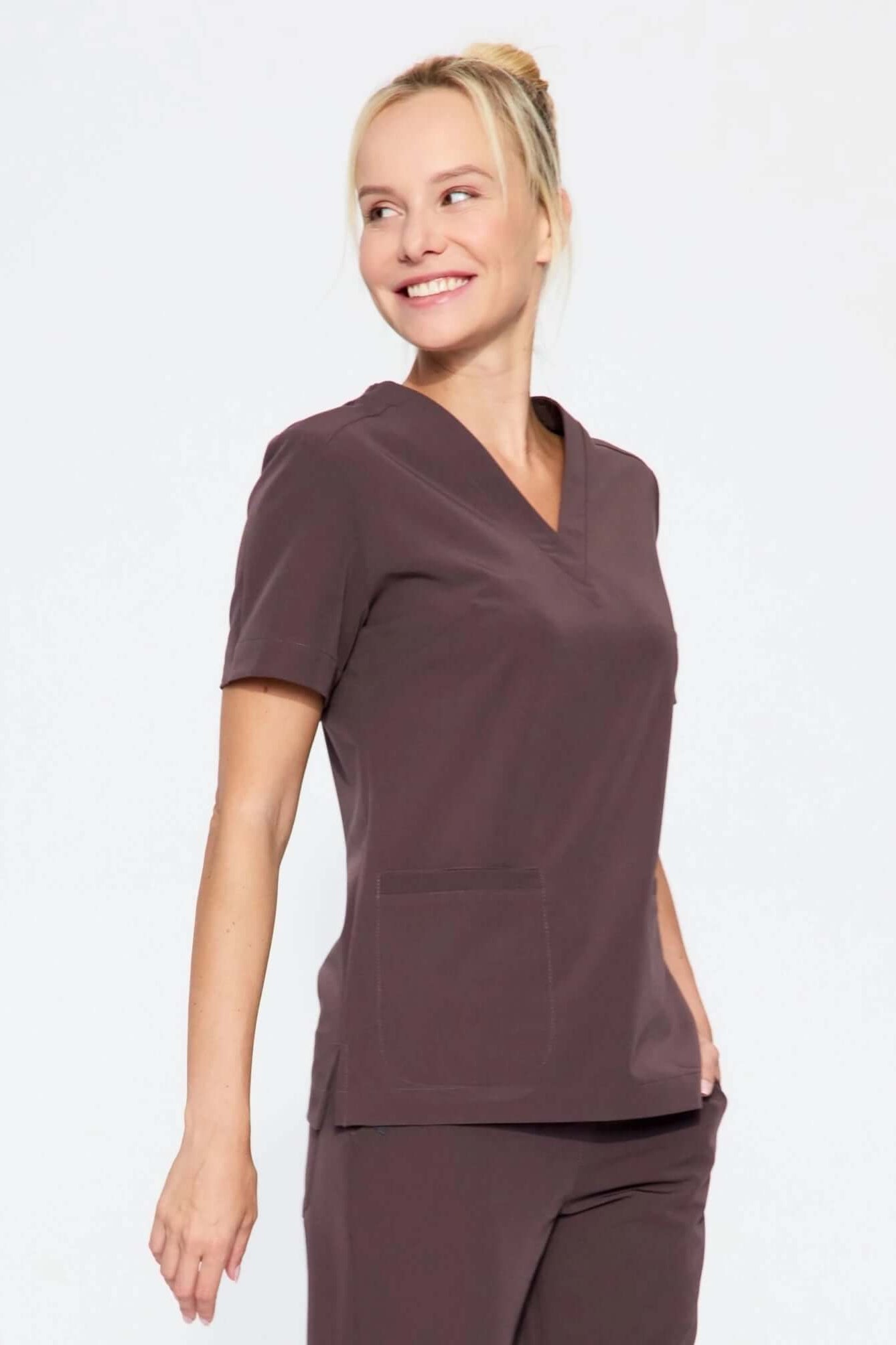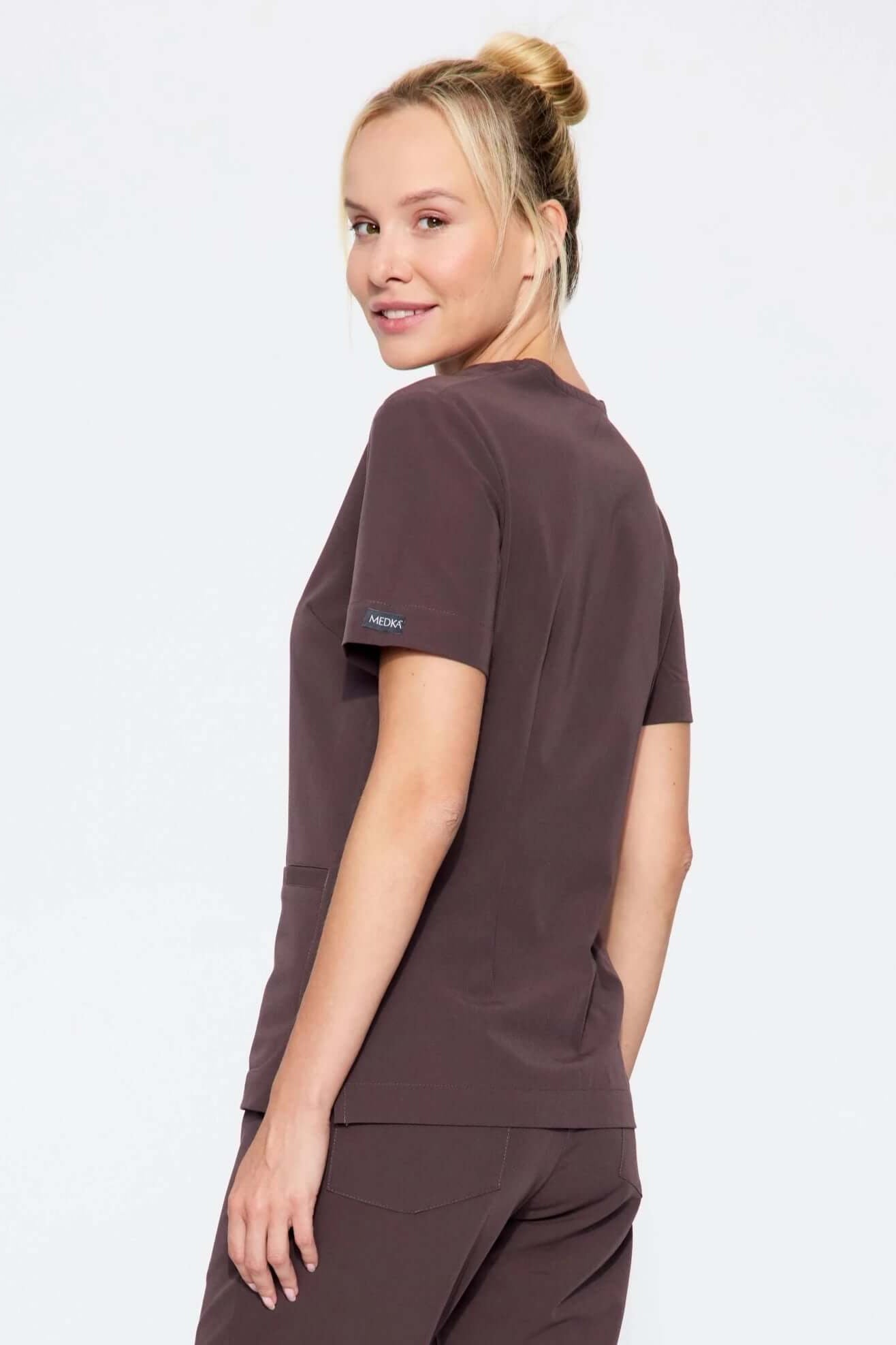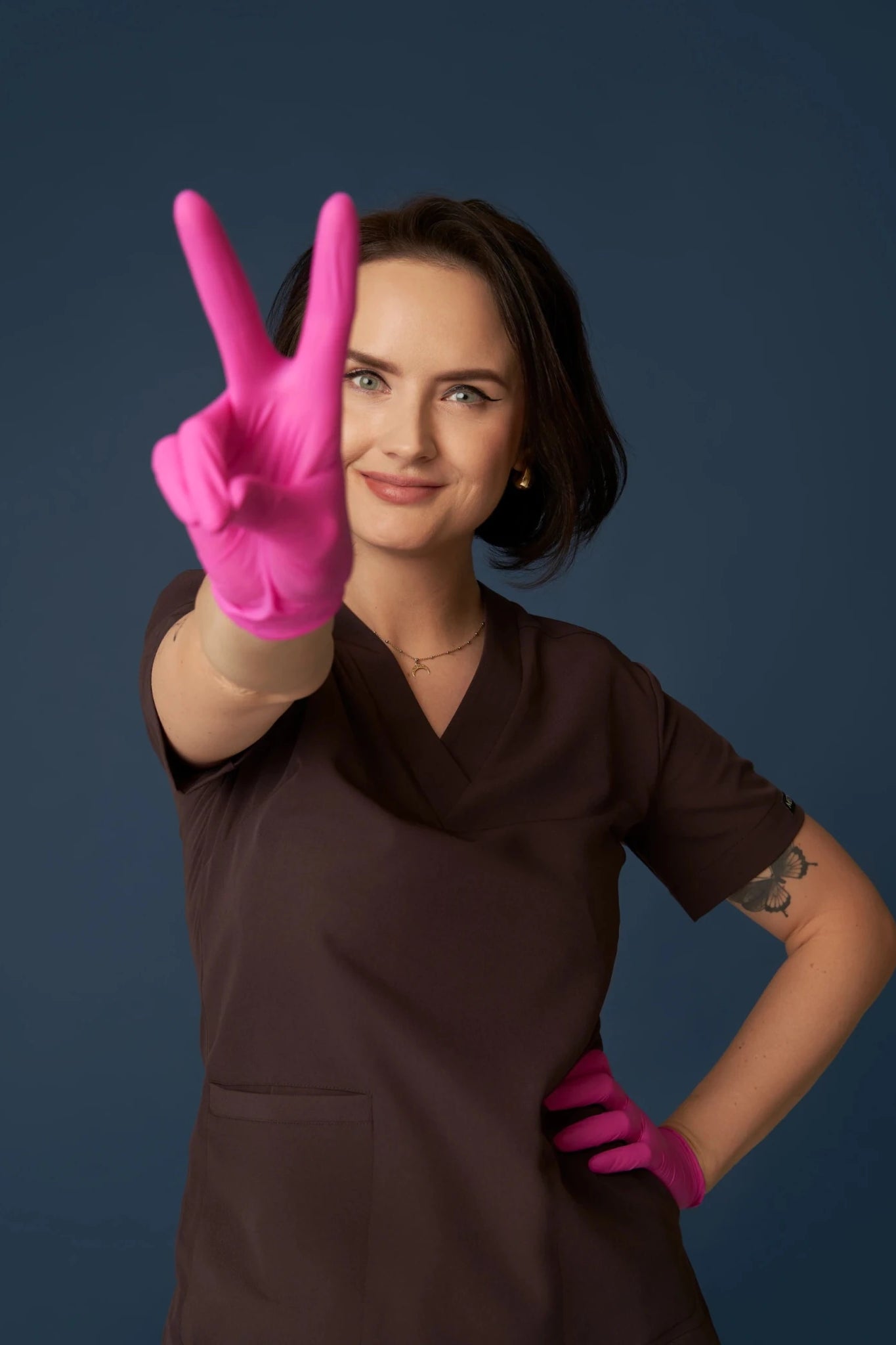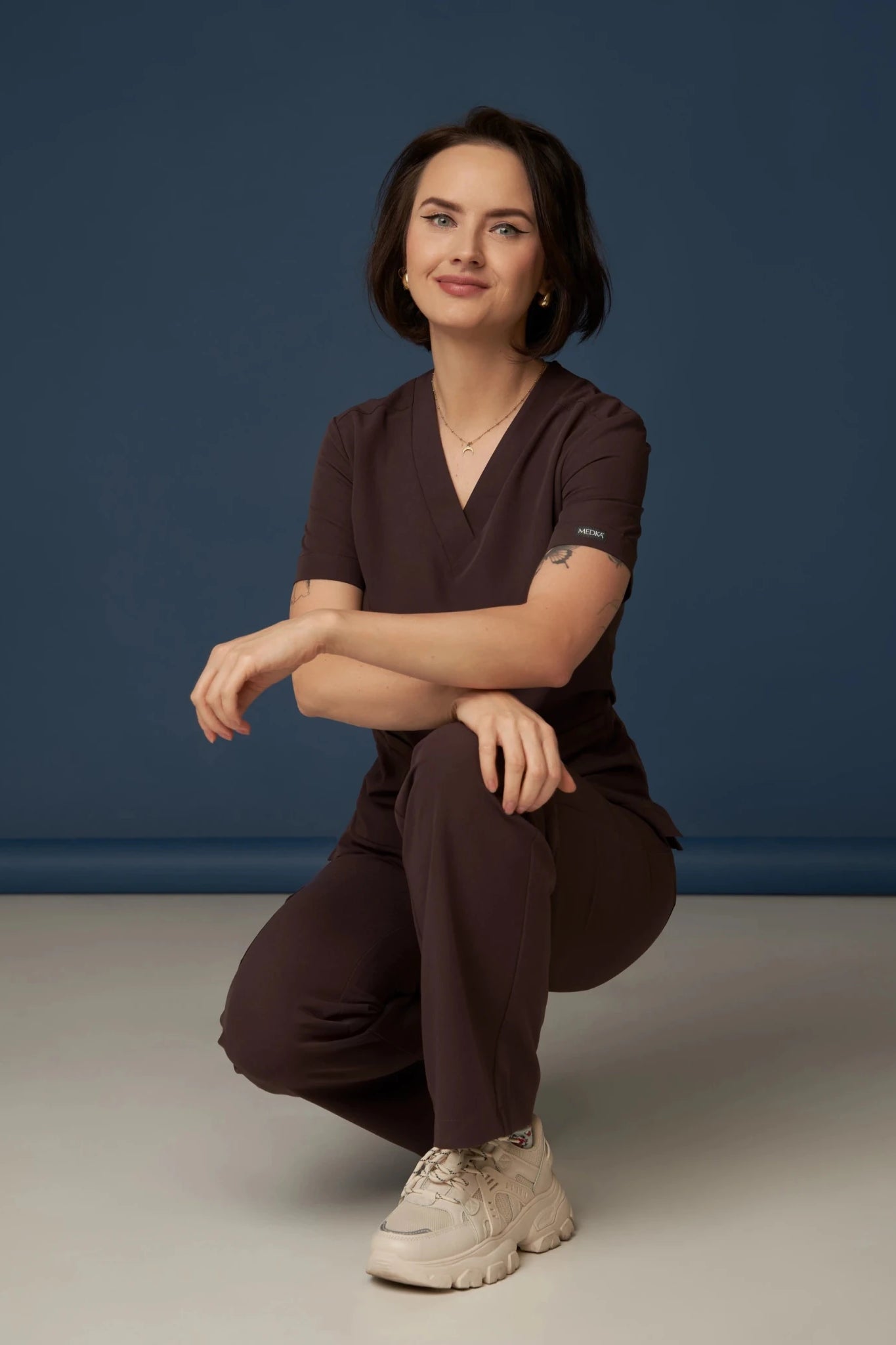





What is worn under scrubs is rarely talked about, and it determines the comfort of the shift more than the set itself. The reason is tangible: operating rooms are maintained in accordance with ventilation standards in the range of 20-24 degrees, wards are sometimes warmer by several degrees, and people move between one environment and another several times during a shift. There are also rules that look completely different in the operating theater than in the clinic, and details that become visible only after the tenth hour of work: a seam under the arm, a cuff that makes it difficult to expose the wrist, a color that is visible in the light of the operating lamp. A thin T-shirt costs a fraction of the cost of a set, and a poorly chosen one can ruin the entire outfit.
Why do you wear anything under scrubs at all?
The answer "because it's cold" is only half true. The bottom layer serves three functions at once, and only separating them explains why some people are satisfied with just the suit, while others find being on duty without a shirt unbearable.
The first function is the thermal buffer and here it is worth knowing the numbers. Ventilation standards for operating rooms, on which accreditation requirements are based, provide for maintaining the temperature in the range of 20-24 degrees Celsius with a relative humidity of between 20 and 60 percent. The reason has nothing to do with the comfort of the staff: the cooler environment limits the growth of microorganisms, and the surgical team works in several layers with an impermeable apron anyway. The problem is the rest of the team, i.e. people who are not dressed sterilely and are simply freezing after an hour in such a room.
The second function is moisture management. Scrubs they lie loosely and do not come into contact with the skin over the entire surface, so sweat flows and settles unevenly. The layer adjacent to the body distributes it and carries it away, as long as it is made of something that can do this. A cotton T-shirt cannot do this, and this is the source of the classic problem: it is warm for the first two hours, then the T-shirt gets soaked, stops evaporating and starts cooling.
The third function is coverage. Bright scrubs behave differently in the light of a treatment lamp than in a store mirror, and the lightening of the fabric after several dozen washes makes the matter even worse. This is a topic for a separate paragraph later, because intuition suggests a solution that does not work.
There is also a situation where the bottom layer makes no sense. A warm medical ward in the summer, without air conditioning, with short shifts: adding anything under the scrubs only increases the perceived temperature and accelerates sweating. Then a better move is to change the set to a lighter one rather than adding layers.
What can you wear under scrubs in the operating theater and in the ward?
This is where the most important boundary in the whole topic lies, and it is an organizational boundary, not an aesthetic one. The rules in the block and the rules in the ward are two different regimes and confusing them ends with the operating nurse drawing attention to you or, worse, being asked to leave the area.
In the semi-restricted and restricted zones of the block, hospital clothing is required and you can change into it in the locker room on site. Personal clothing should not extend beyond the set, and everything that came from outside stays in the cloakroom. Guidelines for surgical attire place great emphasis on removing clothing soaked with blood or body fluids immediately, and this also applies to the layer worn underneath.
The issue of long sleeves is more interesting, because the position on this matter has actually changed. Previously, it was recommended to cover shoulders in semi-restricted and restricted areas. The current recommendation only mentions the possibility of covering the arms while preparing the patient's skin for the procedure, because no evidence has been found to assess the benefits or harms of wearing long sleeves at other times. In other words: it is not a requirement, but a facility and individual decision.
The basis for this one situation, however, is specific. A study published in the American Journal of Infection Control in 2018 found that wearing long sleeves when preparing the surgical field reduced airborne contaminants. Therefore, in practice, a long-sleeved zipped sweatshirt worn over the set is more often seen underneath than a long sleeve shirt, which can be removed in a few seconds before surgical cleaning.
Outside the block, the situation is completely different. There are no zones in the medical ward, emergency department, clinic or private office, and the permissible underlayer is determined by the facility's regulations and common sense. Usually, no one has anything against a T-shirt, as long as its color does not violate the department's color policy and as long as the sleeve does not interfere with hand hygiene.
A practical tip before you spend your money: if you work mainly in an apartment building, check the regulations there before you buy a set of long-sleeved shirts. It may turn out that the only place you can put them on is from the parking lot to the locker room.
Which material works best under scrubs: cotton, polyester or lyocell?
The composition of the bottom layer determines comfort more than the cut, and the differences between fibers result from physics, not marketing. It is worth understanding the mechanism, because then the choice ceases to be a guess.
Cotton is hydrophilic and absorbent, but it retains moisture in the fiber structure and releases it slowly. In practice, this means that the T-shirt gets absorbed, sticks to the skin and at low ambient temperatures begins to act as a coolant. This is exactly the moment on duty when you start to get cold despite moving. Cotton works well for short shifts in warm rooms and is useless wherever you work long and intensively.
Polyester has the opposite effect: it does not absorb water, but transports it to the outer surface, where it evaporates. It dries the fastest of all and is therefore dominant in sportswear. However, it has a drawback that medical staff discover after a few shifts: the bacteria responsible for the odor grow more readily on synthetic fibers than on cellulose fibers, and work carried out at the University of Ghent showed a significantly stronger odor on synthetic fabrics after intense exercise than on natural fibers. With a twelve-hour shift, this is not a cosmetic detail.
Lyocell, most commonly sold under the name TENCEL, is a cellulose fiber obtained from wood pulp and behaves indirectly, but closer to the beneficial end. It is hydrophilic like cotton, so it absorbs moisture, but it does it deep into the fiber and releases it gradually, so less free water remains on the surface near the skin. Research by the fiber manufacturer indicates that lyocell absorbs about 50 percent more moisture than cotton, and the growth of odor-causing bacteria on it is lower than on cotton and polyester. These are data from the manufacturer, so they should be read with caution, but the direction coincides with independent observations regarding synthetics.
| Material | Behavior when sweating | Where it works | What to expect |
|---|---|---|---|
| Cotton | absorbs a lot, releases moisture slowly | short shifts, warm rooms | after a few hours, a wet and cool layer next to the skin |
| Polyester and sports blends | does not absorb, transports moisture outside | Emergency room, lots of movement, need to dry quickly | fastest drying, greatest tendency to retain odor |
| Lyocell with a touch of elastane | absorbs deep into the fiber and releases it gradually | long shifts in cold rooms | stable temperature next to the skin, smooth surface without abrasions |
| Merino wool | adjusts in both directions, odor resistant | cold rooms, work in the winter months | high price and trouble with washing at high temperature |
An admixture of elastane of a few percent is important regardless of the base fiber. The bottom layer has to lie close to the body and not wrinkle under scrubs, and without elasticity, each raise of the arms pulls up the T-shirt and it has to be adjusted after an hour.
What color to wear under light scrubs?
Here, intuition suggests a solution that doesn't work. Most people instinctively wear a white T-shirt under a white or vanilla sweatshirt, assuming that the white will disappear under the white. In practice, it can be seen perfectly.
The reason is simple: it is not the color that determines visibility, but the contrast to the skin. The fabric of the scrubs allows some light to pass through and the eye registers the boundary between the area under which there is skin and the area under which there is material. A white T-shirt on medium skin tone creates a lighter spot that clearly stands out from the neckline and forearms. Color close to the skin tone disappears much more effectively, because there is practically no difference in brightness.
The opposite principle works for dark and medium saturated scrubs. Under navy blue, espresso, bottle green or burgundy, a layer of black, navy blue or a shade close to the color of the sweatshirt is invisible, and at the same time it does not create a transparent effect when bending over the bed.
There are three little things that are easy to forget about in the store. The neckline of the T-shirt must be lower than the neckline of the medical sweatshirt because most sweatshirts have a V-neck and the round T-shirt underneath comes out on top. Prints, logos and lace are visible even through dense fabric, so a smooth surface is not a matter of taste. And the most prosaic thing: white underwear under light medical pants is visible for the same reason as the T-shirt, and the seams and elastic bands show through the fabric more strongly, the tighter the cut.
The simplest test before the first duty takes a minute. Put on the ensemble and stand under a bright spotlight, then bend over and straighten your arms. Everything you see in this position will also be visible in the treatment room.
How does a long shift change the requirements for the bottom layer?
With an eight-hour shift, most things go away. At twelve, and even more so at twenty-four hours, every construction detail begins to be felt, and the flaws reveal themselves in a quite predictable order.
First the stitches. Flat, thin stitching is unnoticeable for the first hours, and thick and convex seams begin to become visible in places of greatest friction: under the arms, under the bra strap, at the waist. When working in a job where you constantly raise your arms, chafing under the arm can be a real problem the next day.
Then the sleeves. A cuff with a thumb hole looks practical but can be a problem because it makes it difficult to expose the wrist. It's not just a matter of convenience. In a study simulating patient care, it was observed that people wearing long sleeves were less likely to cover their wrists when washing their hands, and the cuffs themselves were much more likely to come into contact with the patient and the surroundings than short sleeves. If the bottom layer has long sleeves, it must be able to be pulled up high and stay there.
The third thing is a change in the middle of the shift. A spare T-shirt in your locker is one of the cheapest and most underestimated investments when you're on duty twenty-four hours a day. Replacing only the bottom layer after twelve hours gives an effect disproportionate to the effort, much greater than changing the scrubs alone and leaving a wet T-shirt underneath.
Hygiene closes the list. Staff clothing becomes significantly contaminated after just one day of use, although most of it is caused by normal skin commensal bacteria. The bottom layer is in direct contact with the skin over the entire surface, so it is washed after each change, regardless of whether the scrubs look clean. Treating a T-shirt like underwear and not as part of a uniform is the right instinct here.
Socks, knee-high socks and compression: what to wear under leg scrubs?
This part of the topic is sometimes overlooked, although when working standing it is more important for your well-being at the end of the shift than all of the above. It starts with a trivial thing and ends with a medical device.
The height of the sock is a practical matter. Medical pants ride up when you crouch or sit on a stool, so your ankle or low sock exposes your ankle every time you bend down to see the patient. A sock that extends a few centimeters above the ankle solves the problem at no cost. The material follows the same logic as a T-shirt: pure cotton retains moisture in a closed shoe for twelve hours, while a mixture with an admixture of technical fiber dries faster.
Compression products are a separate topic. When working in a standing position, feeling of heavy legs and swelling around the ankles at the end of the shift, use knee-high socks or stockings with graduated pressure, the strongest above the ankle and decreasing towards the knee. In the German classification, the first compression class is approximately 18–21 mmHg and this is usually the level considered preventively. It is worth knowing that there is also a French scale with other ranges, so comparing only class numbers between manufacturers can be misleading.
However, this is the area of medical devices, not clothing, and there are contraindications. Advanced peripheral neuropathy, ischemia of the lower limbs or allergy to the material exclude or limit the use of compression, and the selection of the class in the case of existing venous ailments should be made after medical consultation. For a healthy person who works mainly while sitting, buying compression socks is an unjustified expense.
How to layer all year round?
Medical uniform works in several environments at once and the time of year changes the equation more than the calendar would suggest, because the air conditioning works regardless of what is outside the window. The list below organizes typical situations.
| Situation | The layer underneath | What to avoid |
|---|---|---|
| Operating block, air-conditioned room | a tight-fitting longsleeve or a zipped sweatshirt thrown over the set | private clothing extending beyond the scrubs and thick layers under the apron |
| Conservation department, heating season | a thin short-sleeved T-shirt, or a longsleeve for rounds | cotton, which will get soaked after a few hours |
| Emergency department, a duty with a large number of calls | quick-drying layer, be sure to have a spare one in the cupboard | thick weaves and anything that restricts arm movement |
| Counseling and primary care in the summer | most often there is no layer, just a lighter set is enough | adding a T-shirt just to hide the see-through effect |
| Access in winter | change of clothes in place, underwear fresh | work in what you came to the hospital with |
The conclusion from this table is less obvious than it looks. The biggest mistake is not choosing the wrong material, but treating the bottom layer as a permanent element of the uniform all year round. The same T-shirt that saves your shift in the block in January will only be an additional source of sweat in a warm ward in July.
What exactly should I buy and how much do I need?
After determining where you work and how long the shift lasts, the choice comes down to three parameters: fiber, a cut that fits without restricting movement and a color that matches the scrubs you have. The rest is a matter of number of pieces.
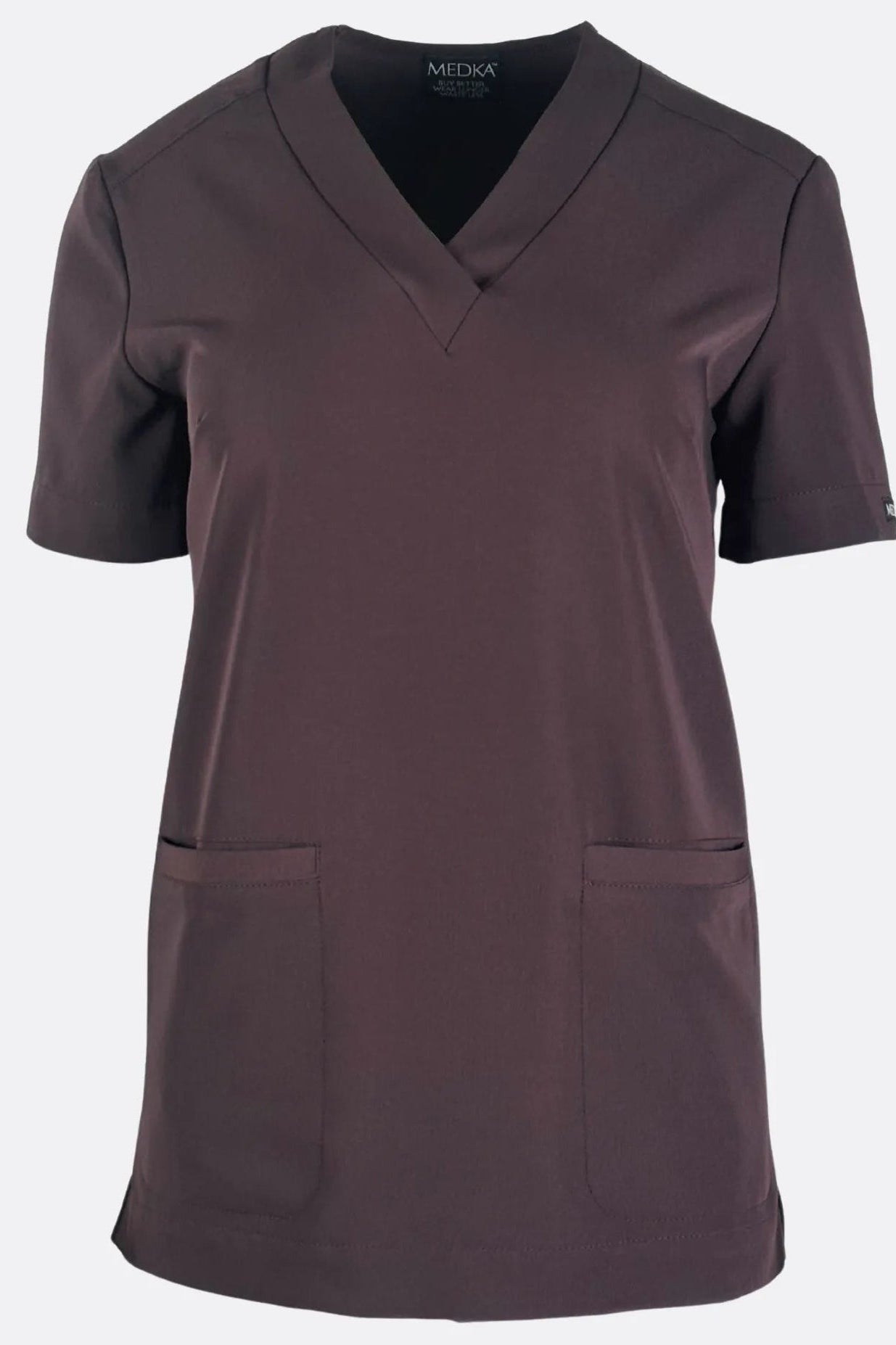
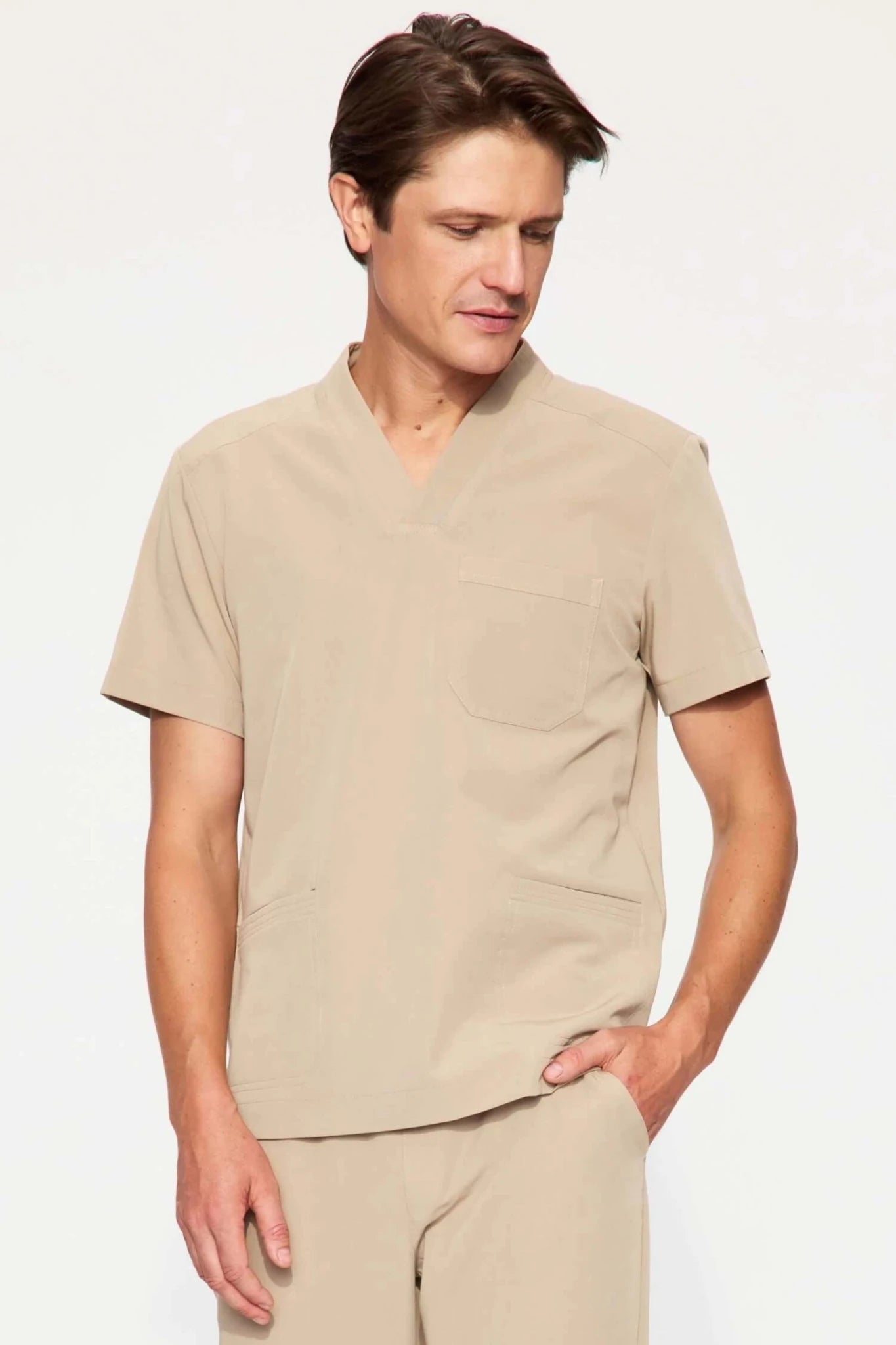
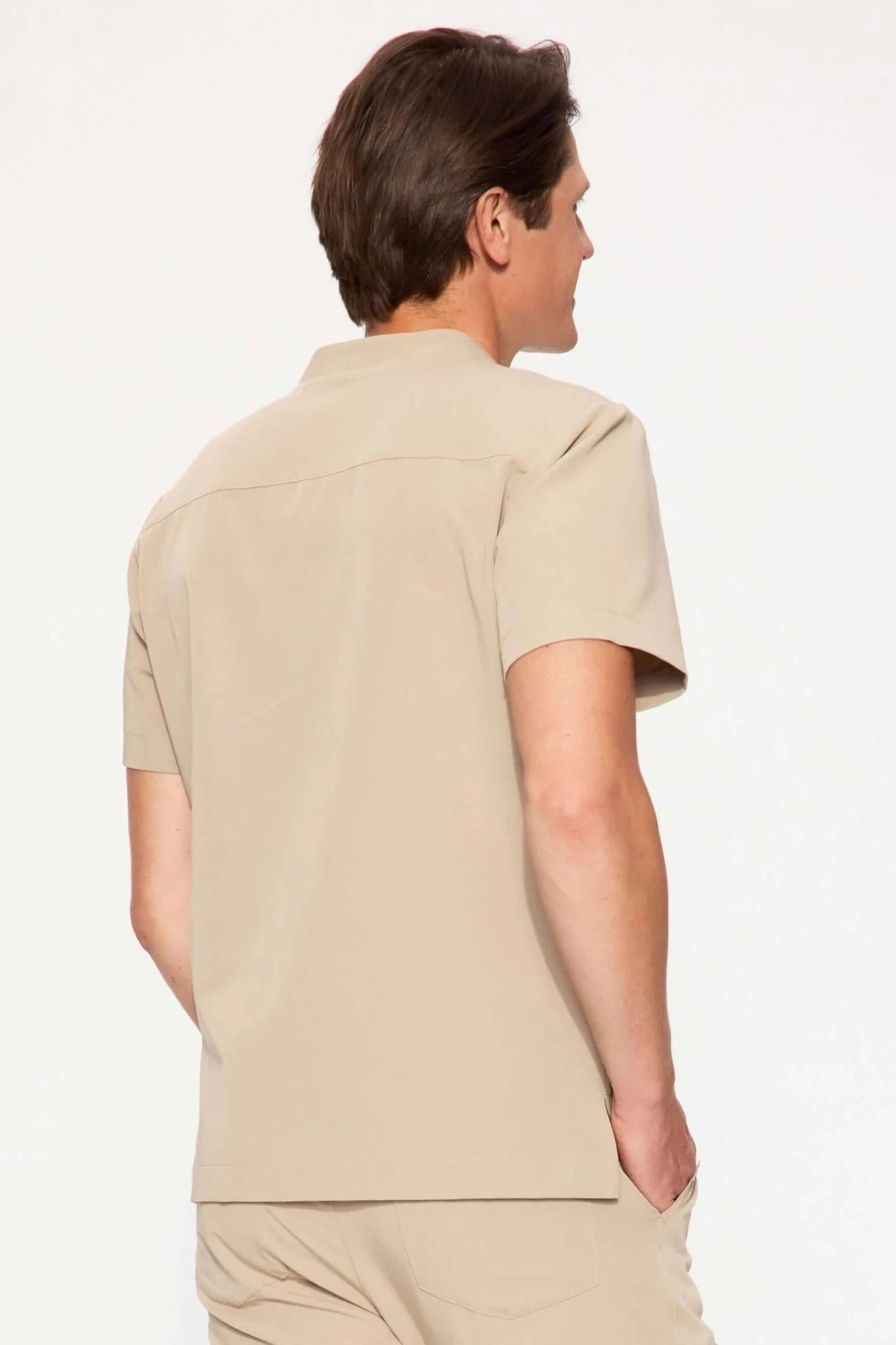
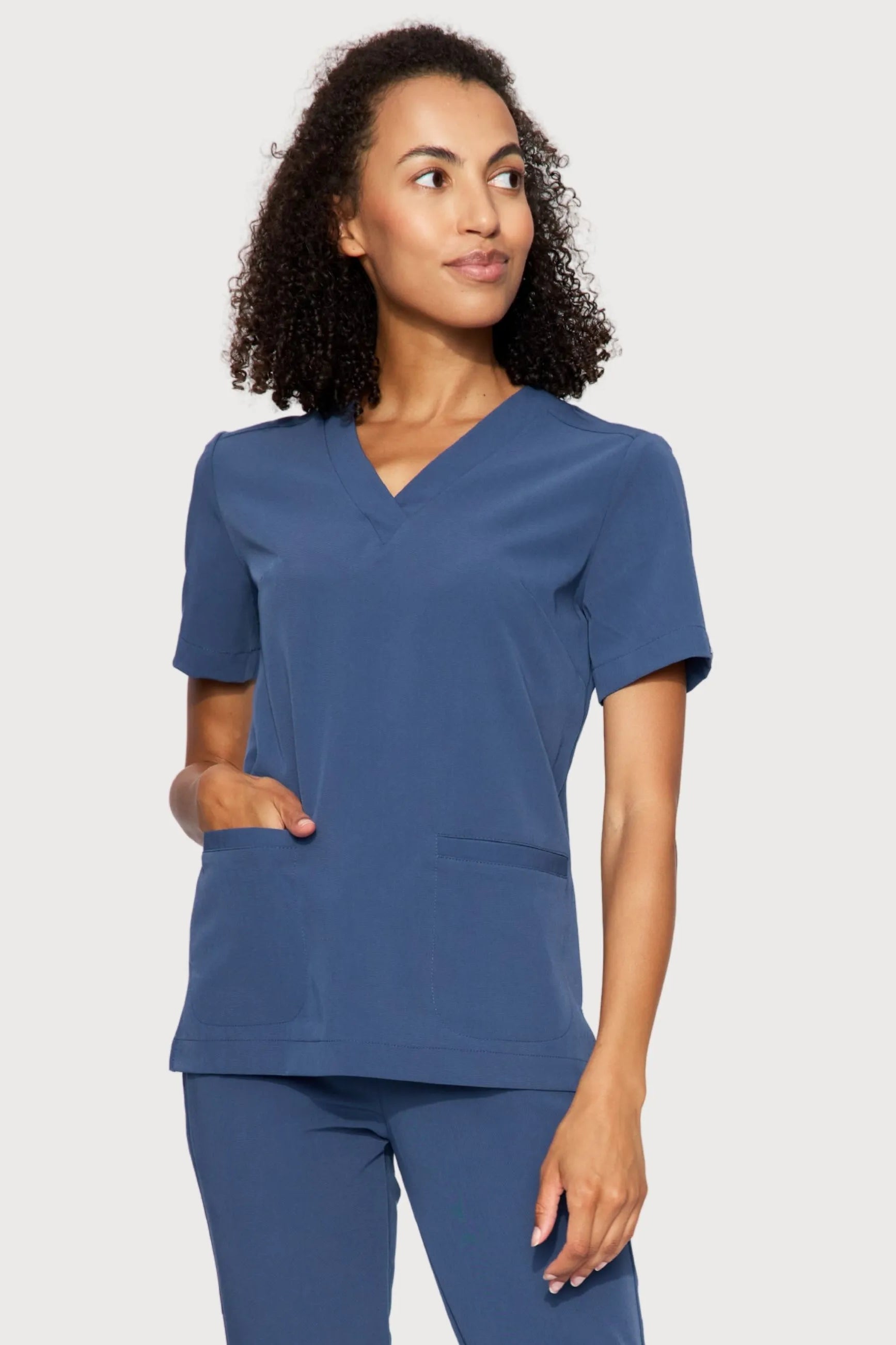
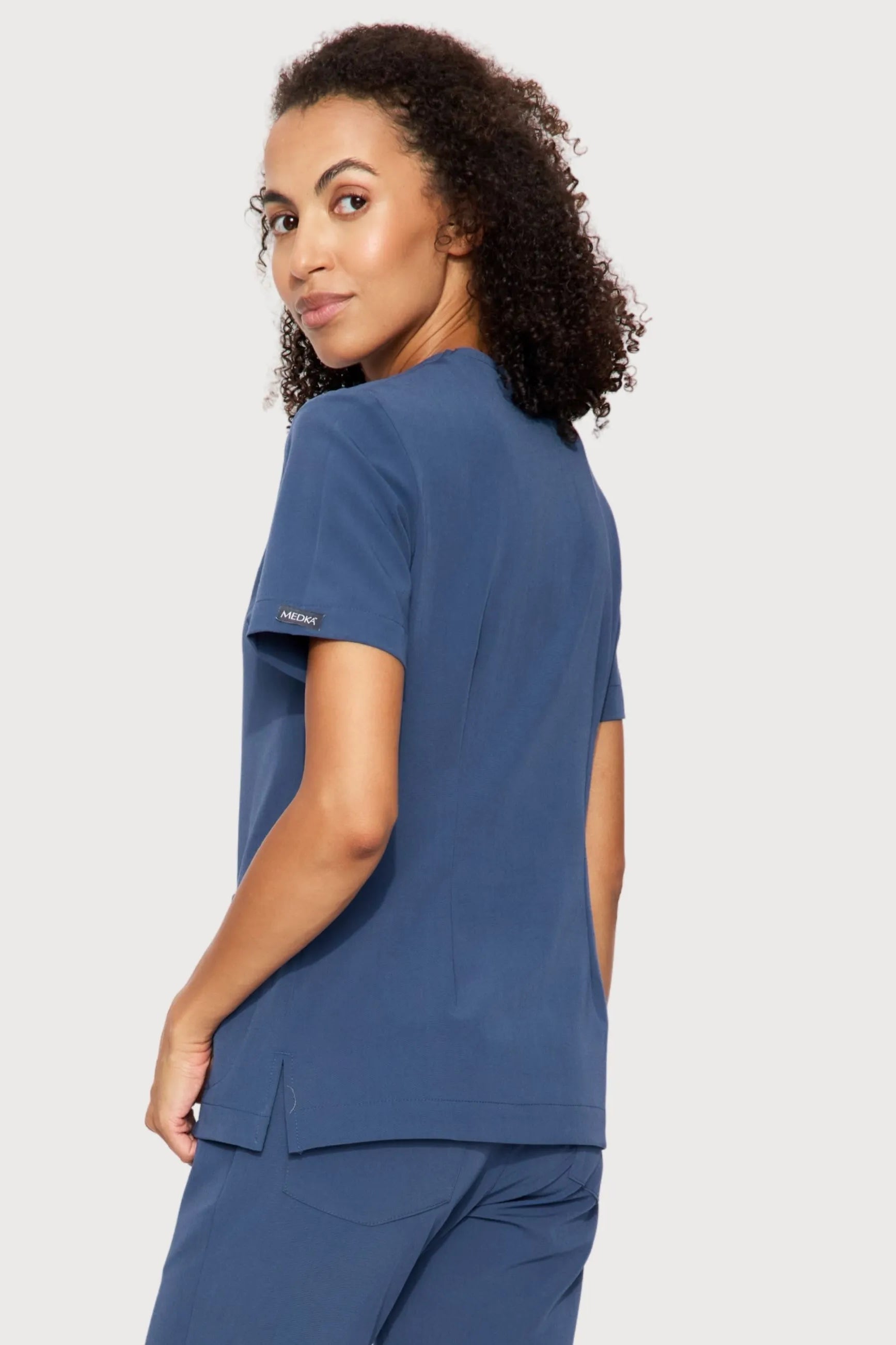
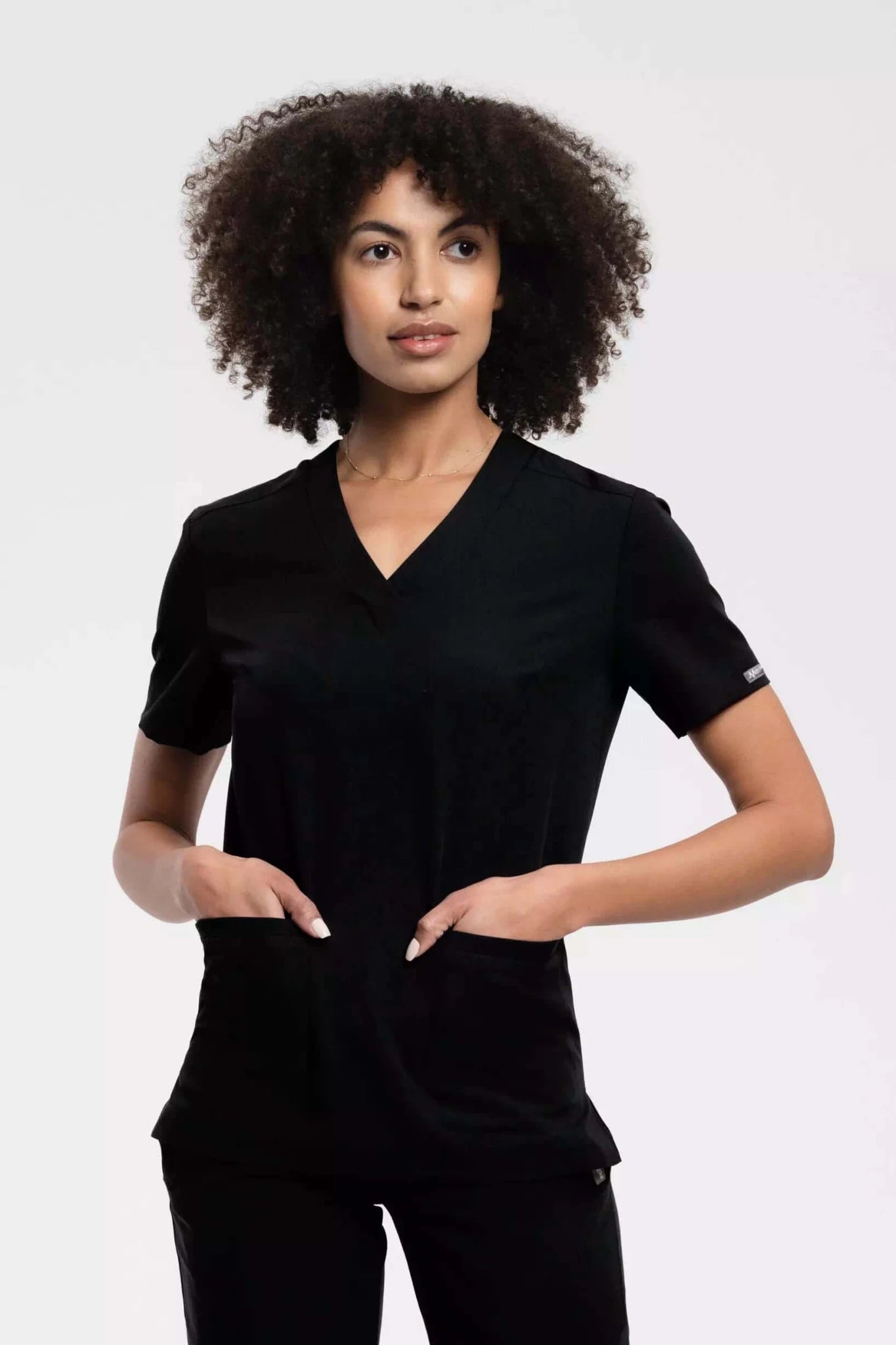
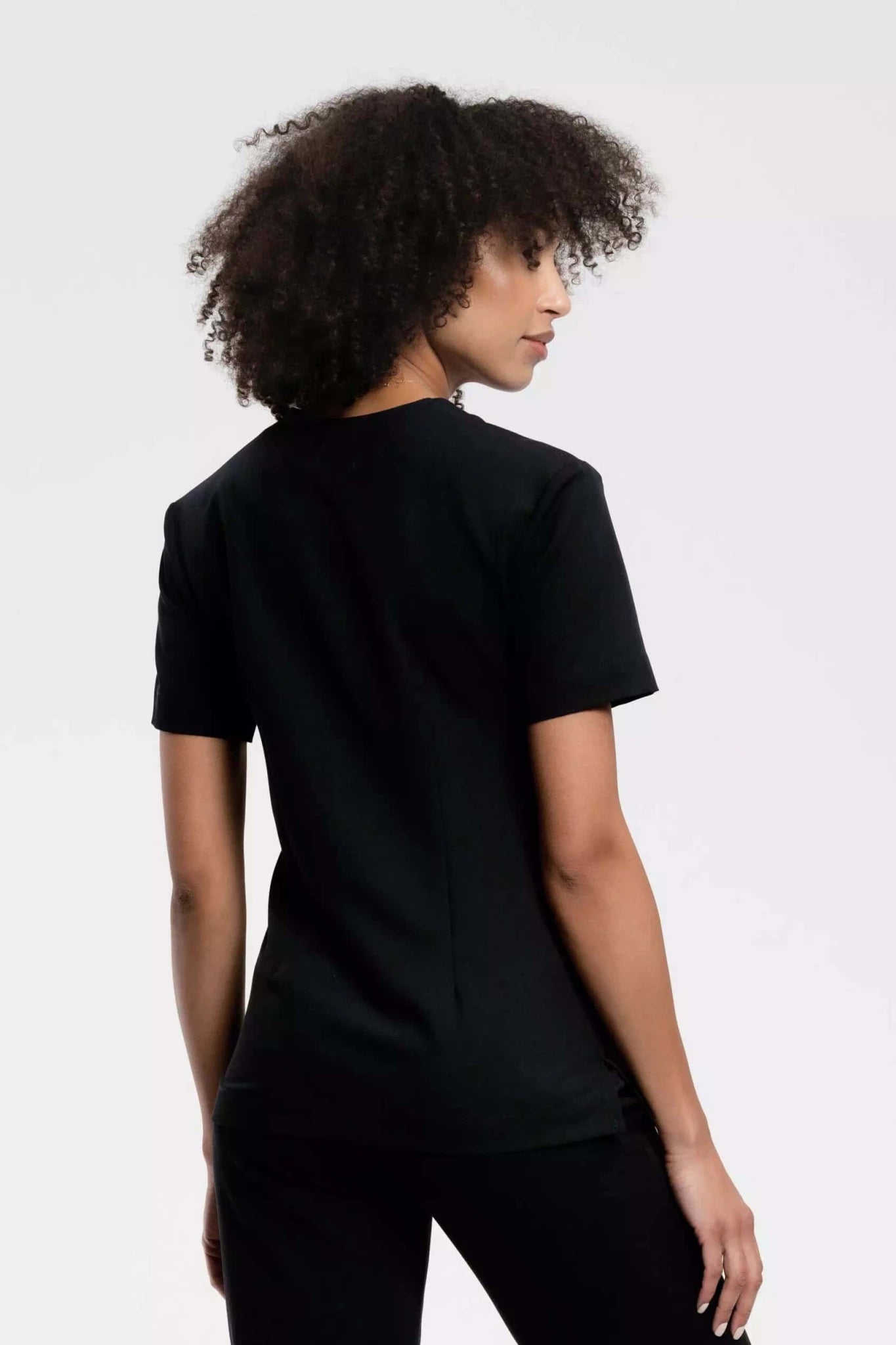
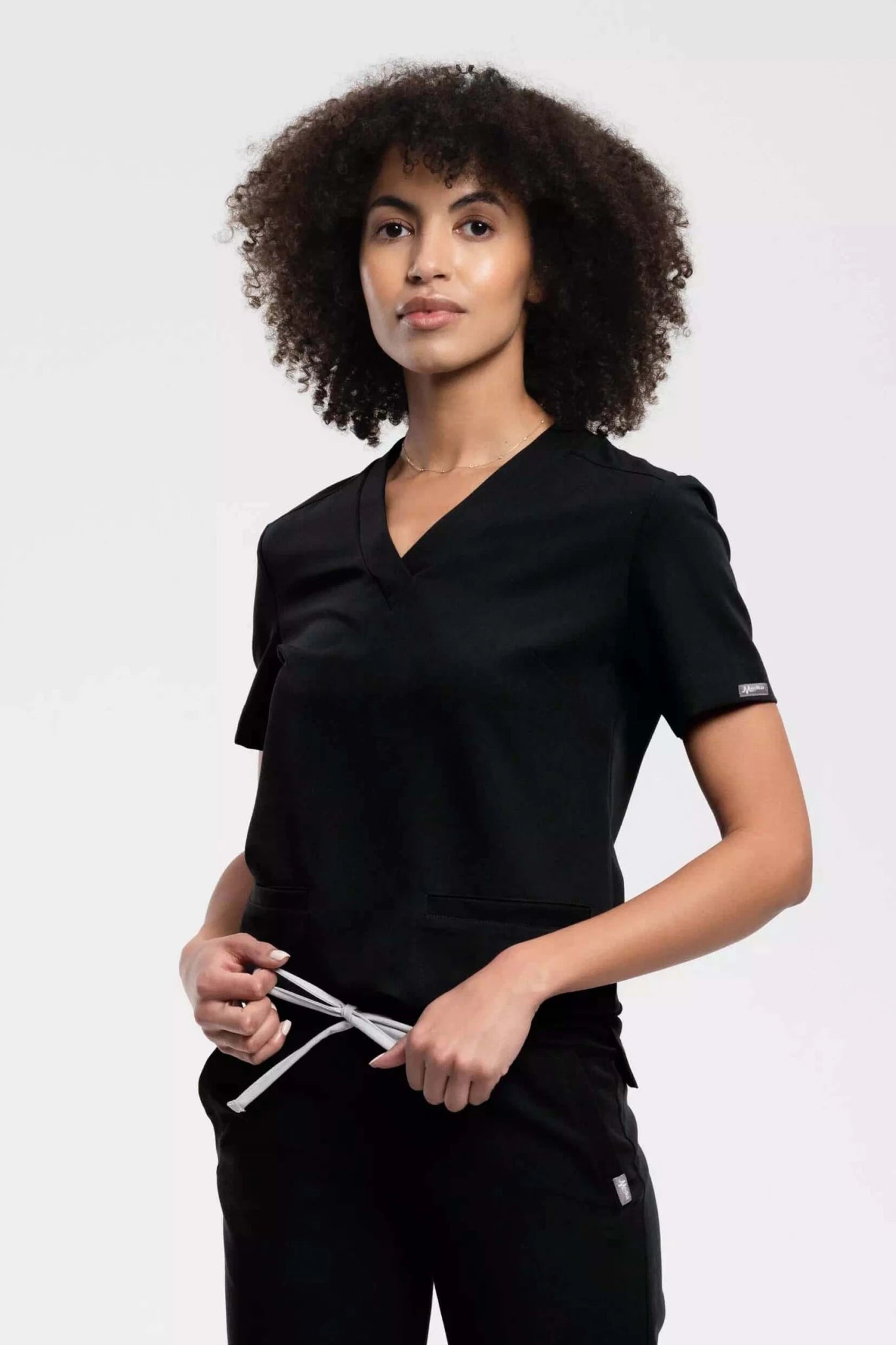
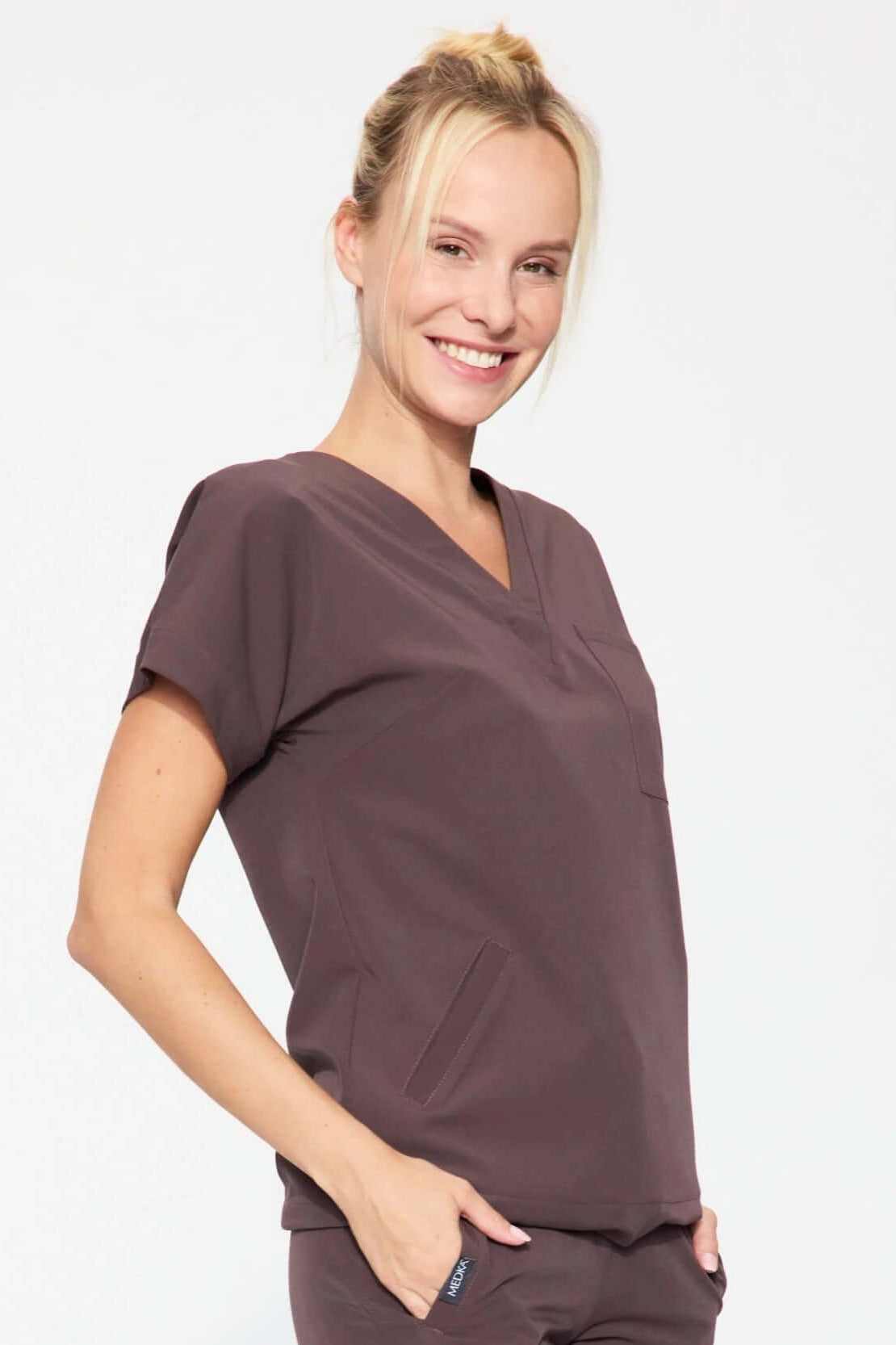
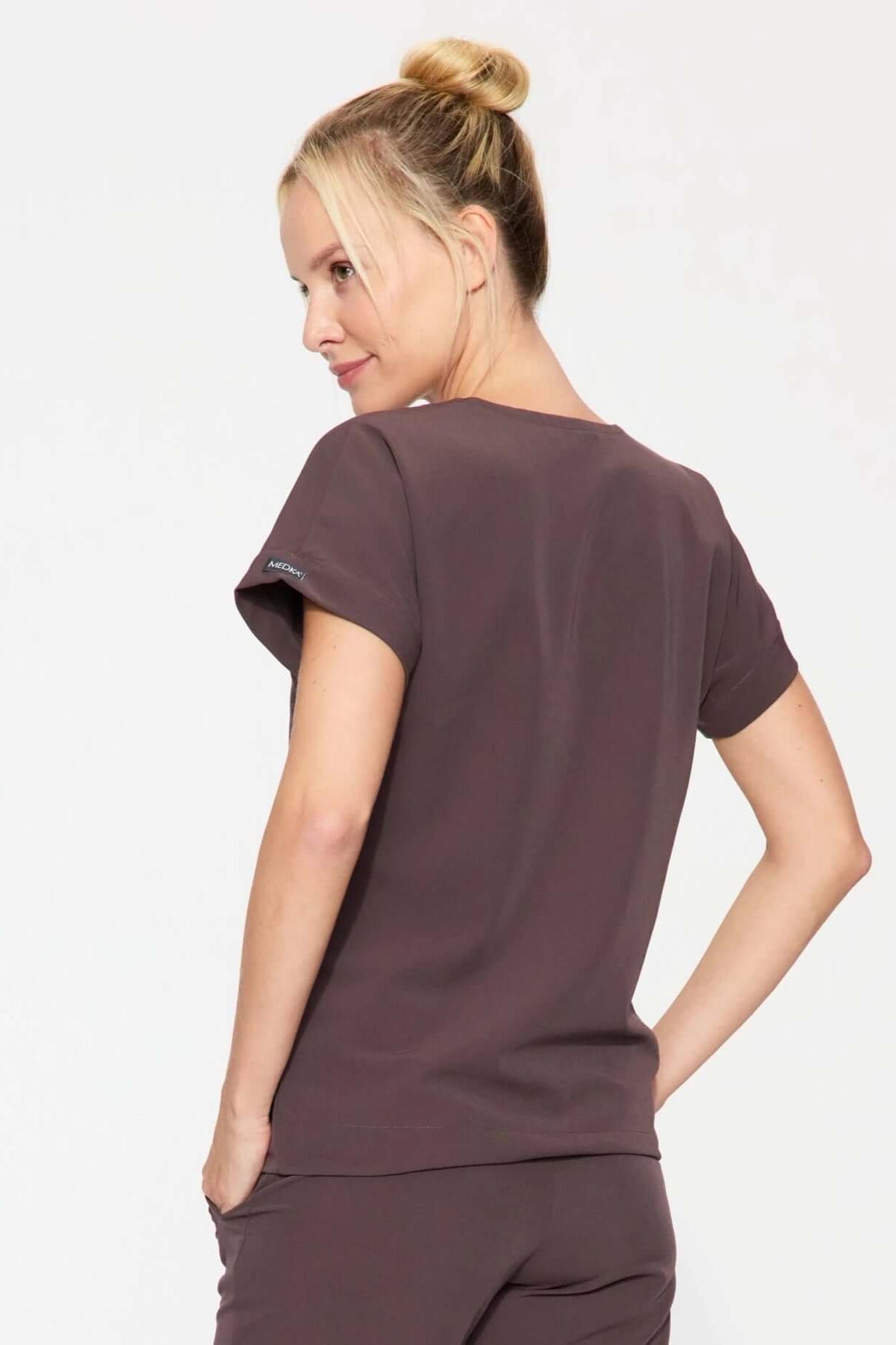
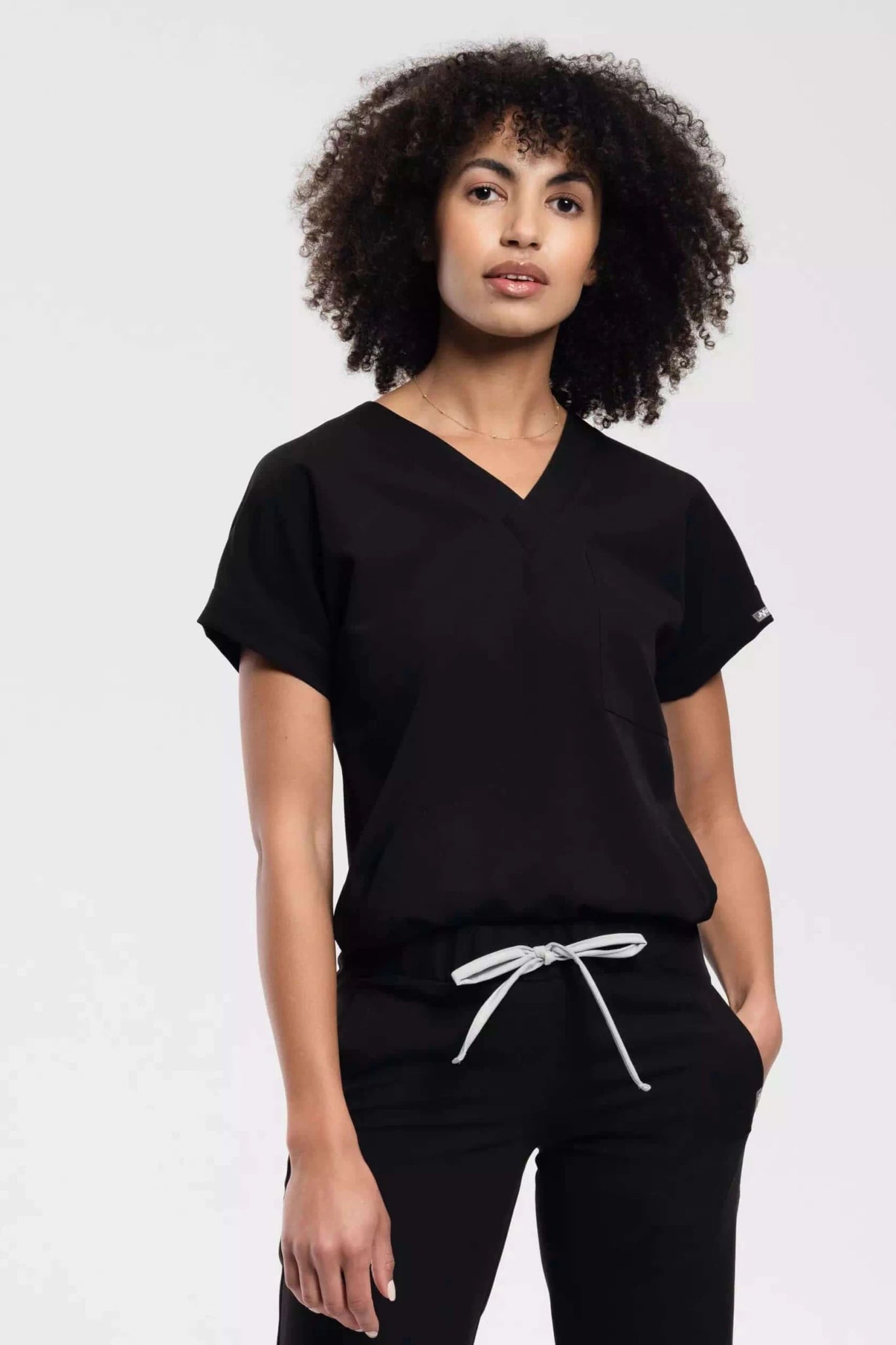
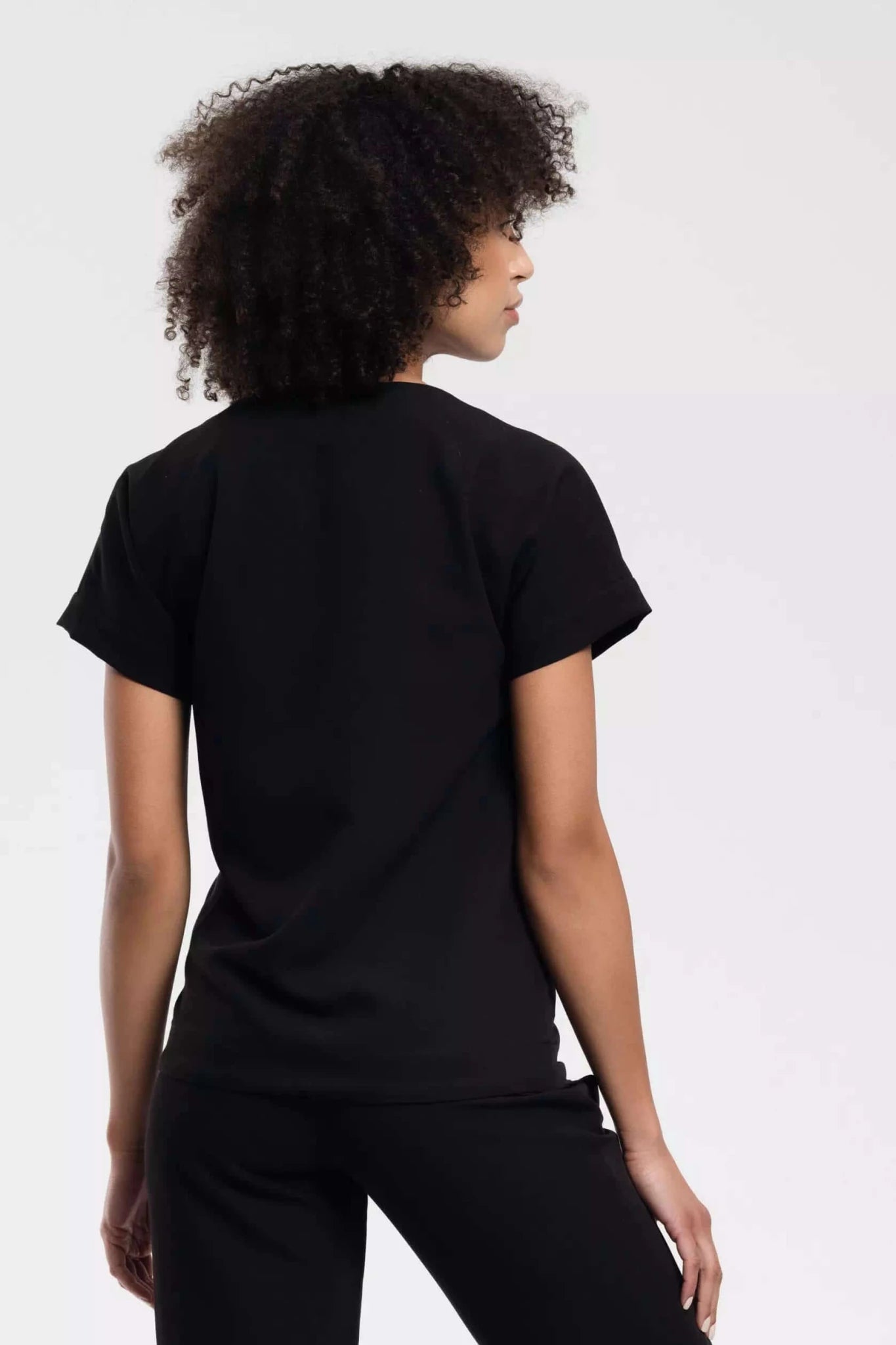
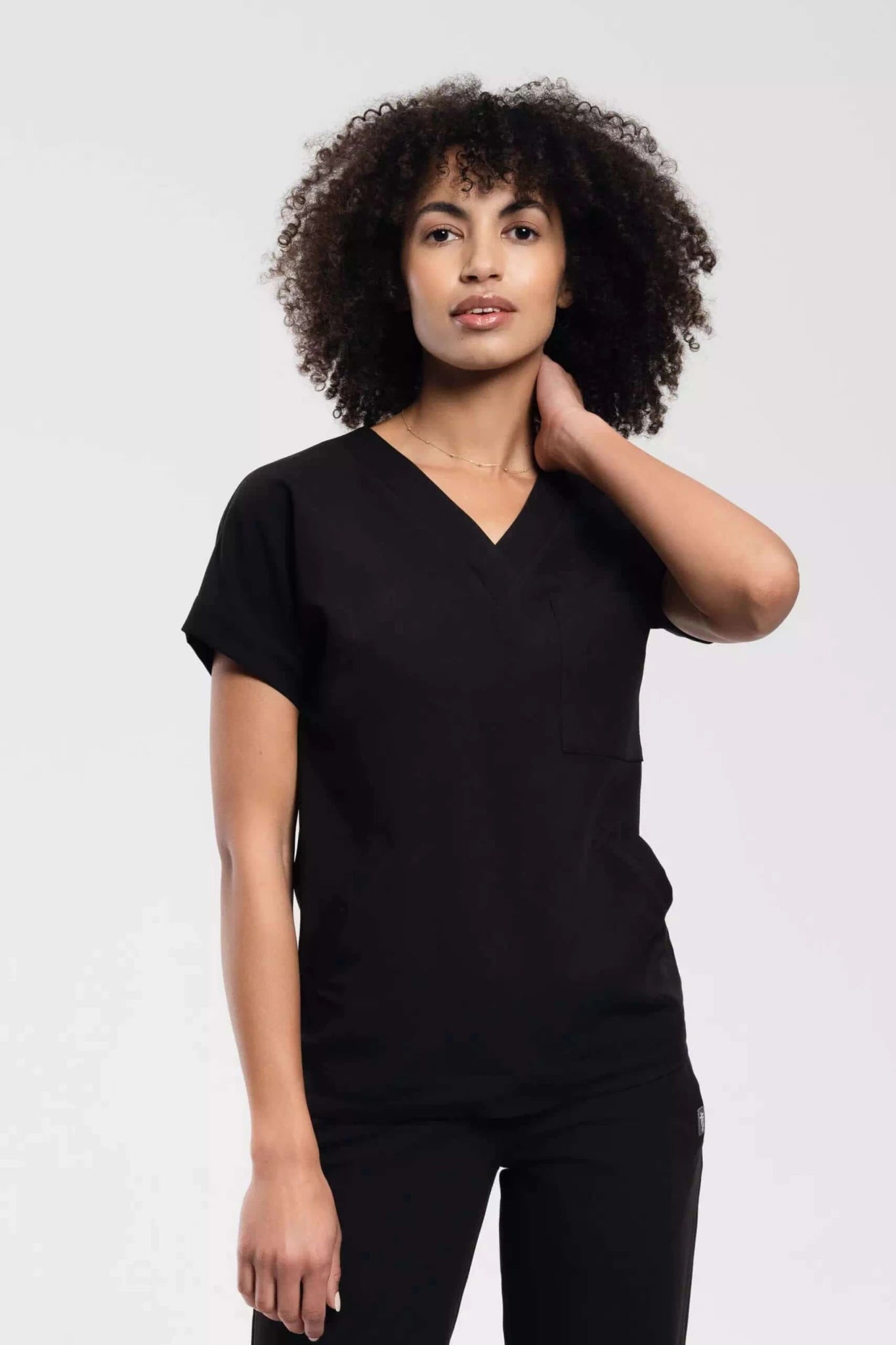
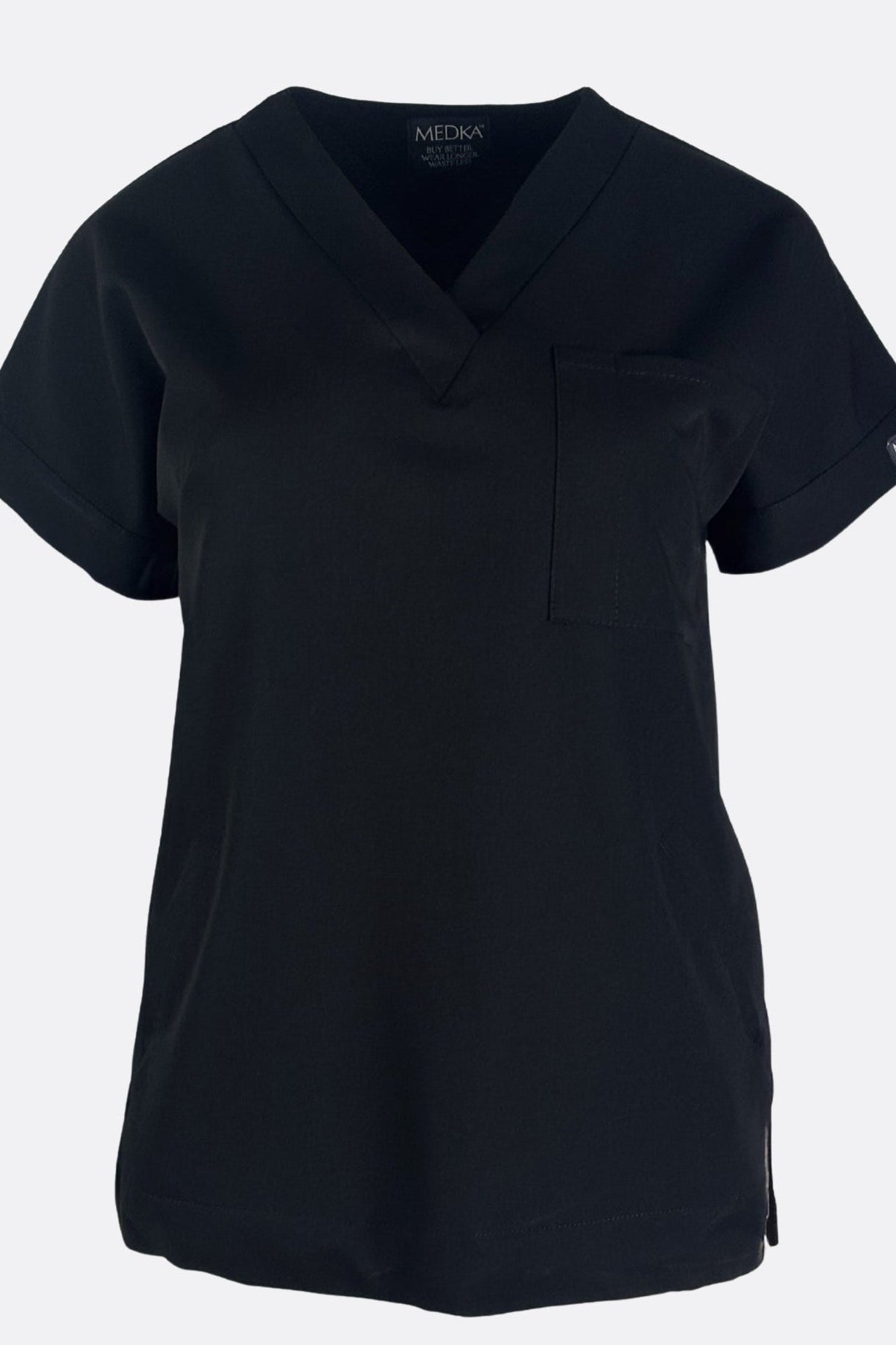
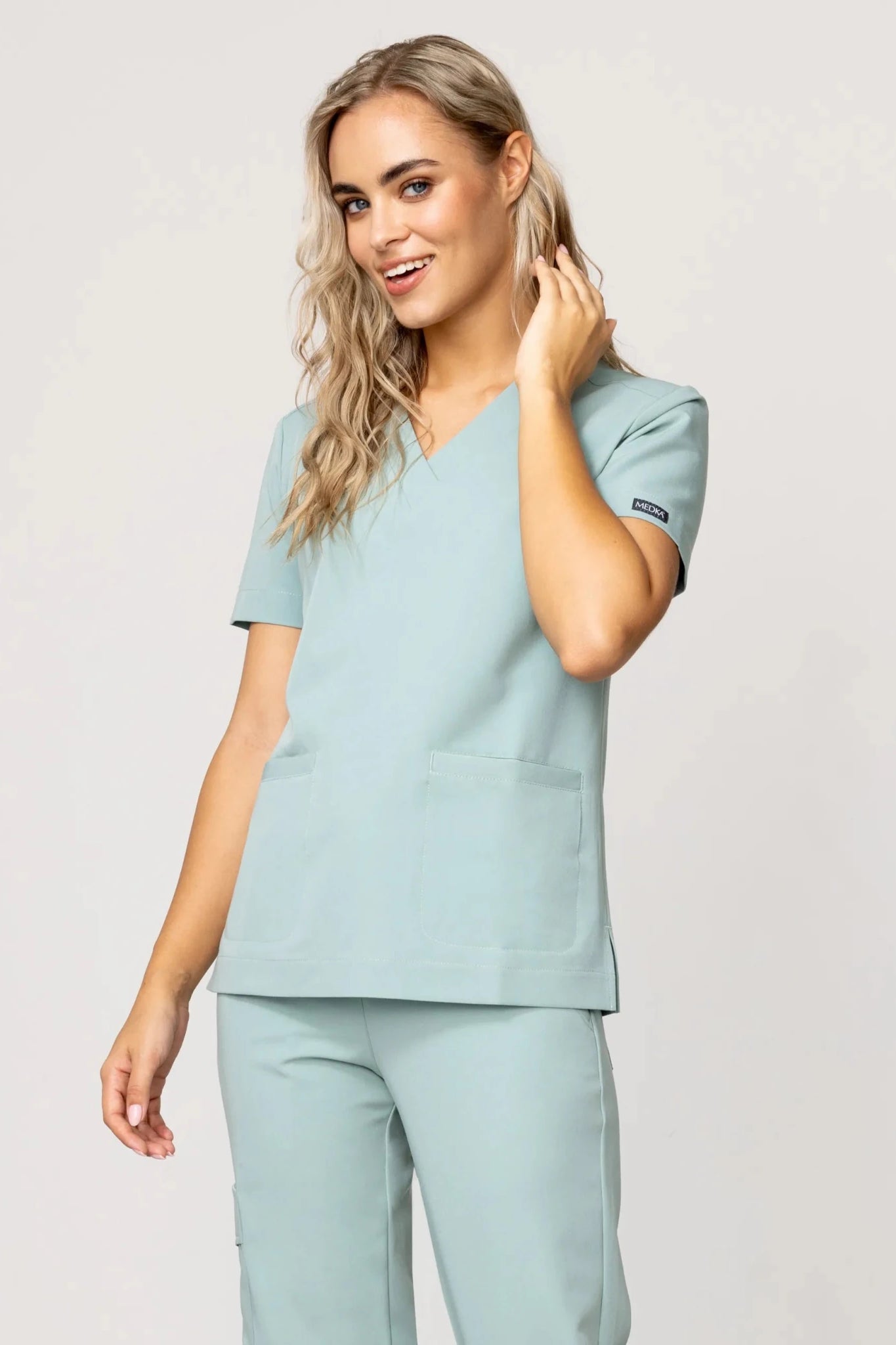
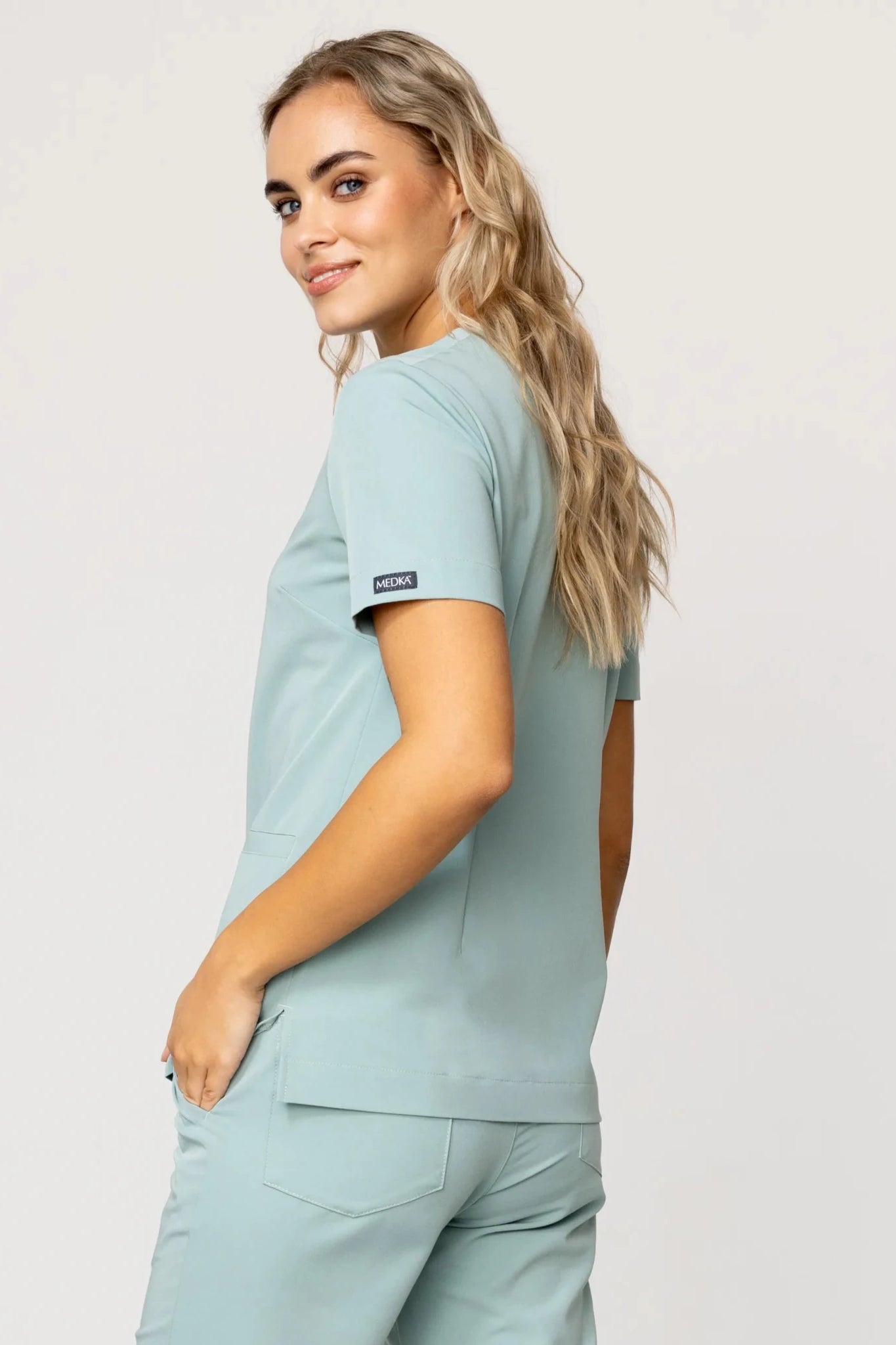
The medka.eu store offers: medical t-shirts long-sleeve shirts that hit exactly this segment. The composition is 95 percent TENCEL lyocell and 5 percent elastane, i.e. cellulose fiber with an admixture of stretch, which corresponds to what was described above: absorbing moisture deep into the fiber instead of holding it to the skin, plus elasticity, thanks to which the T-shirt does not ride up when the arms are raised. The price, as of September 2026, is PLN 169.90, the sizes range from XXS to 3XL, and the cut is slightly fitted, which, when worn under a loose suit, is of practical, not aesthetic, importance.
It is worth saying directly where this offer has limitations. Longsleeve is available in three colors: black, navy blue and cherry smoke. These are opaque colors, great for dark and medium-saturated scrubs, but under a set, white, vanilla or another very light shade will be visible, and no fabric density will change this. If you work in white, you should look for a base layer in a tone similar to the skin, regardless of the brand.
Apart from T-shirts, two things from the same shelf are useful. Medical socks in the version reaching above the ankle, they solve the problem of exposed legs when squatting, a medical footwear, on offer including Crocs Brooklyn at PLN 259.90, concludes the topic from below. When shopping online, the conditions are also of real importance: a permanent 15 percent discount for verified students, free delivery from PLN 450 and a 60-day return period, which reduces the risk of choosing the wrong size when purchasing a T-shirt without trying it on.
How many pieces? For a regular job without on-call duties, two T-shirts are enough because they are washed after each shift and one always dries. With five or six shifts a month, a sensible minimum is three, with the third being the spare one that stays in the locker to be replaced halfway through the day. Buying five pieces to start with rarely makes sense, because after a month it usually turns out that one color is worn three times more often than the others.
And a situation in which the entire purchase is pointless. If you work only in the block area, where hospital clothing is required and private layers are prohibited, and zip-up sweatshirts are provided by the department, a longsleeve underneath will not be used. Similarly in a warm ward without air conditioning, where an additional layer does more harm than good. In both cases, it is better to spend the money on a second set of scrubs.
Before you add a layer
When you put all these elements together, the picture is quite simple, although it is composed of things that none of them individually look important. The layer under the scrubs is responsible for temperature, moisture and coverage, and which of these functions is the most important in your case depends directly on the place of work and the length of the shift.
The rules can be reduced to a few. Check the regulations of the zone where you work before you buy anything, because there are restrictions in the block that are not known in the ward. Choose the fiber for the length of the shift, not for the price: cotton will last for eight hours in a warm room and will fail for twelve in a cool one. Match the color of the bottom layer to the color of the scrubs, not to your own wardrobe, remembering that white under white is visible. The sleeve should be able to be pulled up above the wrist and stay there.
A final note concerns proportions. The T-shirt under the scrubs costs a fraction of the cost of the set, but it affects the comfort of changing at least as much. At the same time, it's easy to go overboard here and end up with a wardrobe that you don't wear because the unit turned out to be warmer or the regulations were stricter than expected. Two pieces for a trial, one month of observation, then a decision about the rest.
Frequently asked questions
Below are short, practical answers to the questions that arise most often on this topic. They concern materials, care and special situations. It is always worth confirming the rules applicable in a specific facility in its internal regulations.
Can I wear a regular cotton T-shirt under scrubs?
You can, but it only works for short shifts in warm rooms. Cotton absorbs sweat and releases it slowly, so after a few hours the T-shirt remains moist and begins to cool, especially in air-conditioned rooms. For twelve-hour shifts, a fiber with better moisture management, such as lyocell with an admixture of elastane, works better.
How often should you wash a T-shirt worn under scrubs?
After each change. The bottom layer is in direct contact with the skin over the entire surface, and staff clothing becomes significantly contaminated after just one day of use. Treat it like underwear, not an outerwear item, regardless of whether the scrubs look clean.
What bra works best under scrubs throughout the entire shift?
Seamless or with flat stitching, in a color similar to the skin tone and without decorative elements that show through. After twelve hours of movement, the biggest problem is abrasion under the belt and under the circumference, so wide, soft finishes have an advantage here over models stiffened with underwires.
Are scrubs translucent and how to check it before purchasing?
Bright sets shine through to a greater extent than visible in store lighting, and after several dozen washes, the fabric brightens even more. The simplest test is to put on the suit and stand under a bright spotlight, then bend over and raise your arms. Everything visible in this position will also be visible to the patient.
Is it better to wear a zip-up sweatshirt over a T-shirt instead of a T-shirt underneath?
In many situations, yes, especially in the block and in treatment rooms. The zip-up sweatshirt can be removed a few seconds before washing hands and before entering the sterile area, which cannot be done with a layer worn underneath. The disadvantage is that it does not wick sweat away from the skin, so during intense movement it may be a worse solution than a tight-fitting long sleeve.
What to wear under scrubs during pregnancy?
Elastic layers that fit without compressing the waist and larger sets instead of maternity clothes work well, because scrubs are loose anyway. In case of leg swelling and standing work, compression is sometimes considered, but the selection of the compression class during pregnancy should be discussed with the attending physician and not based on the product description.
Does the color of the backing layer have to comply with department rules?
Sometimes that's the case. Some institutions impose colors that distinguish professional groups and cover everything that is visible, including the sleeve sticking out from under the scrubs. Before you complete a set of T-shirts, check the department's regulations, because in some hospitals only neutral colors or colors consistent with the color of the set are allowed.