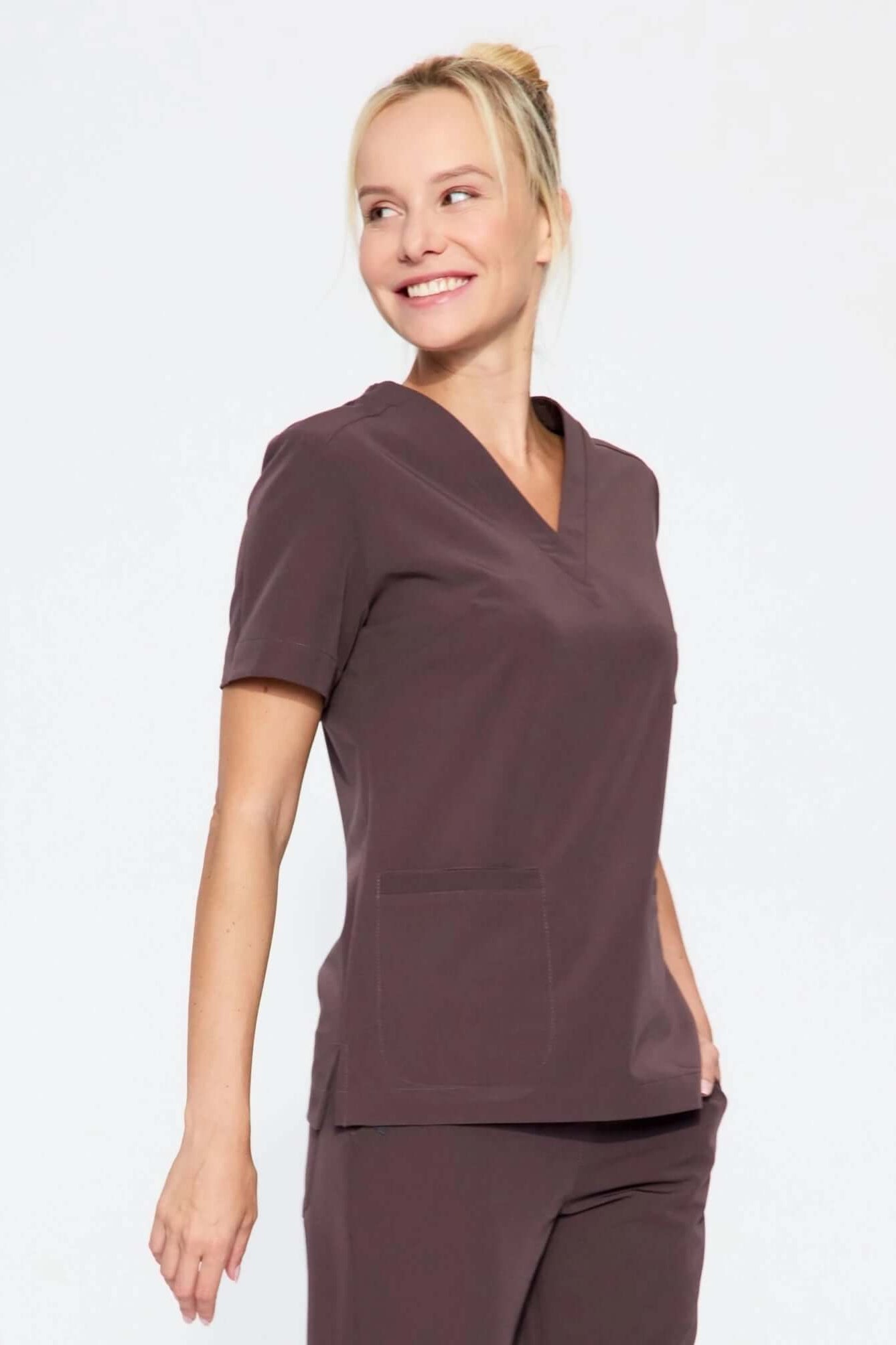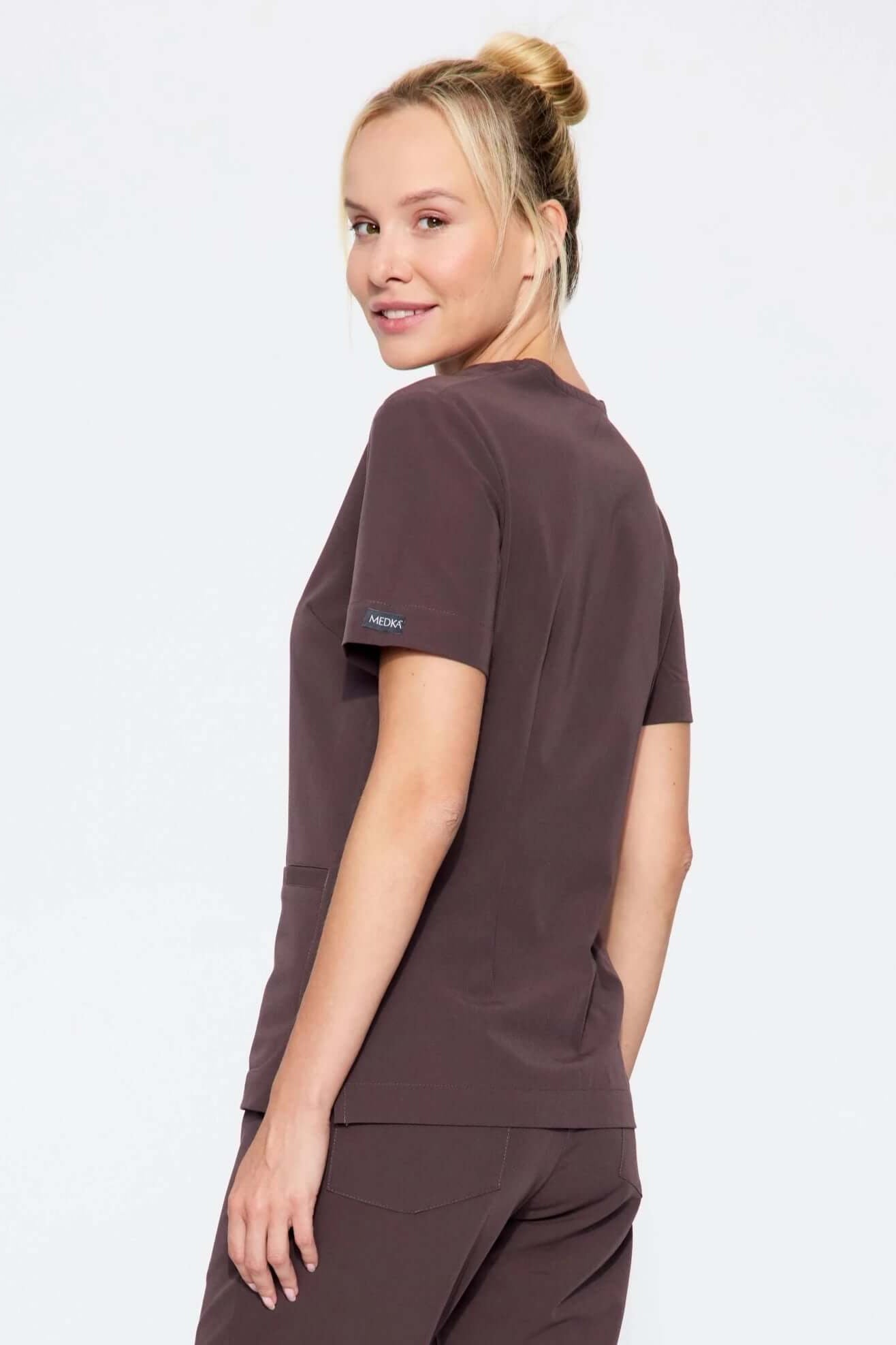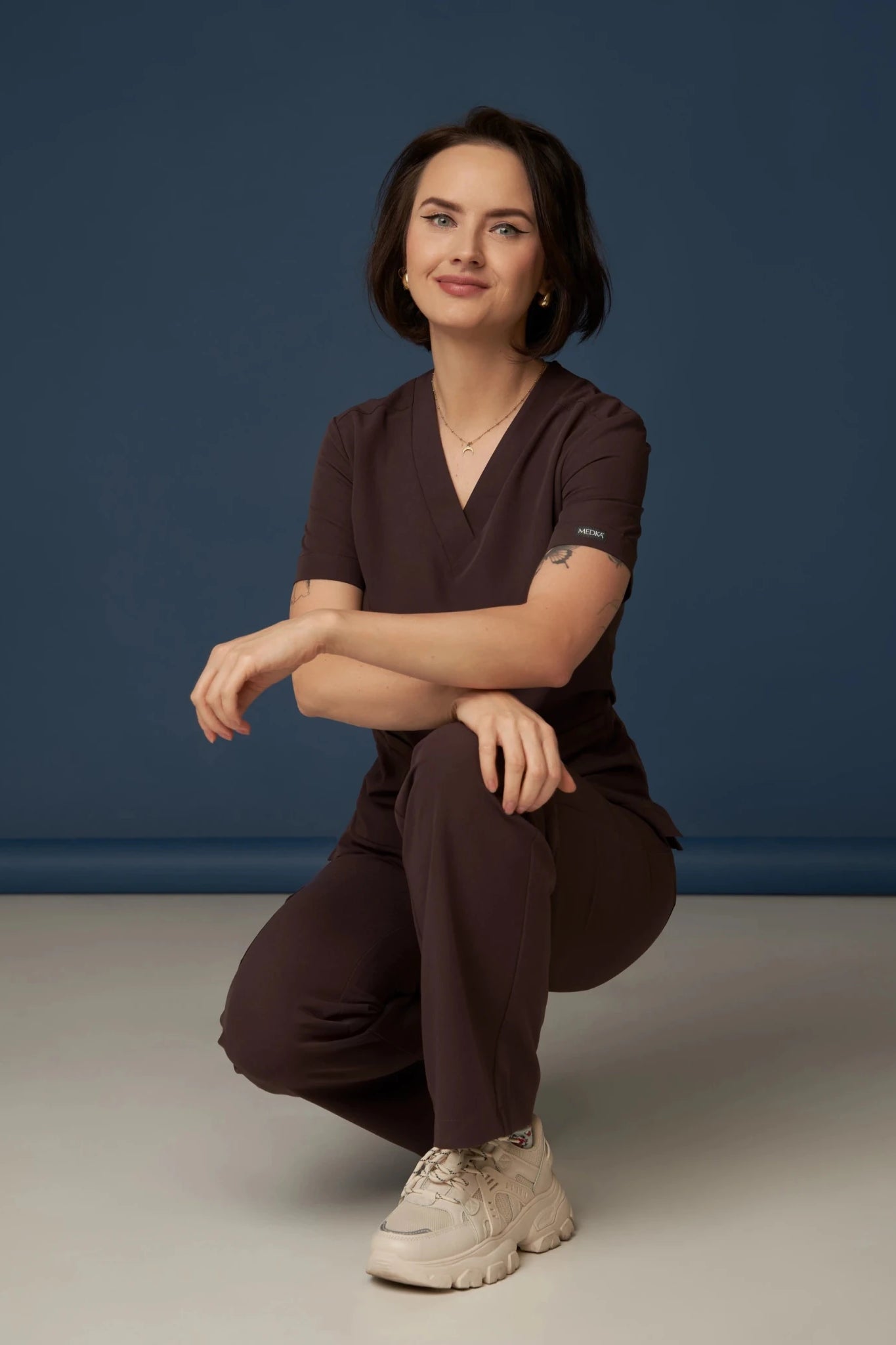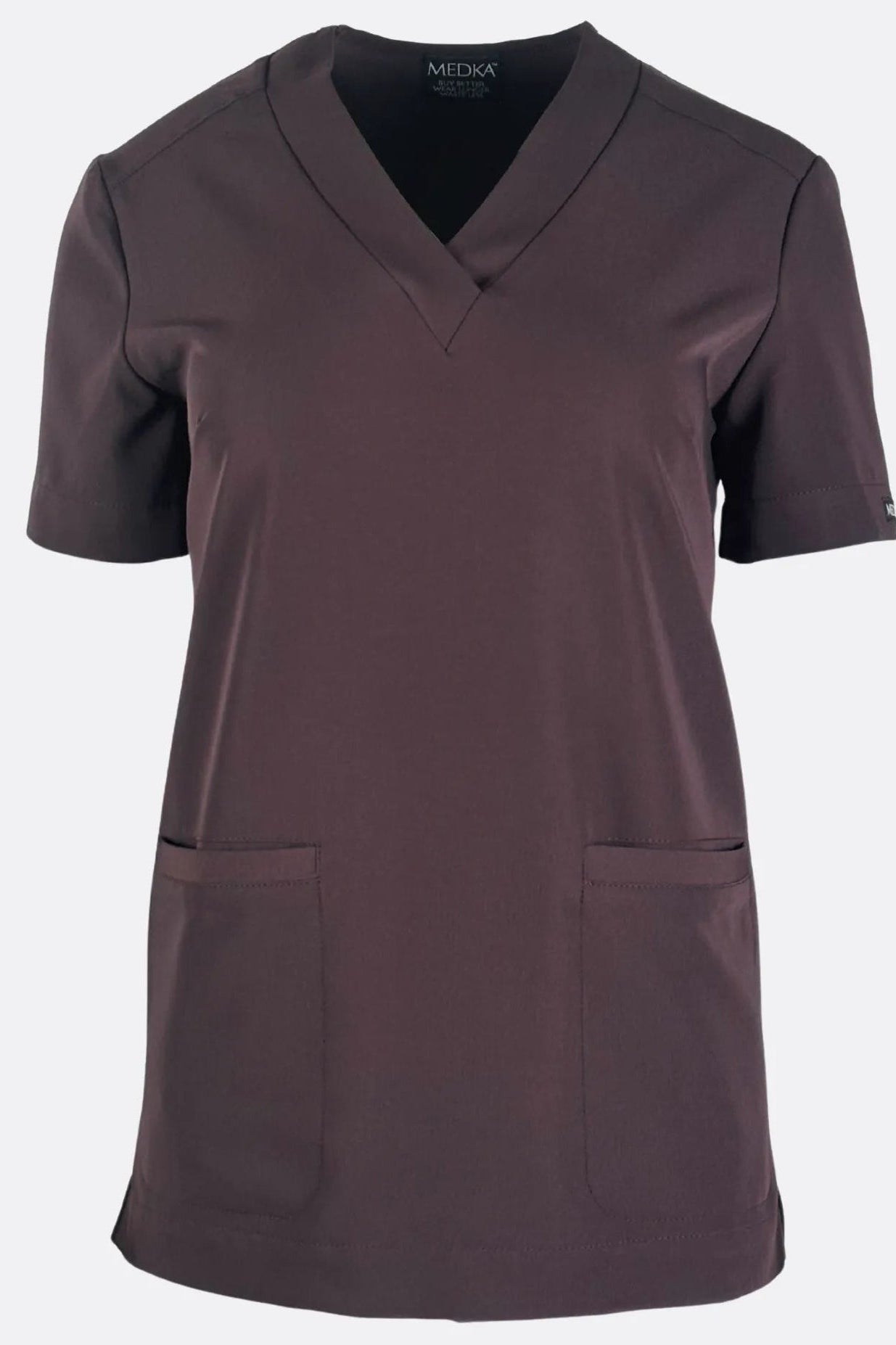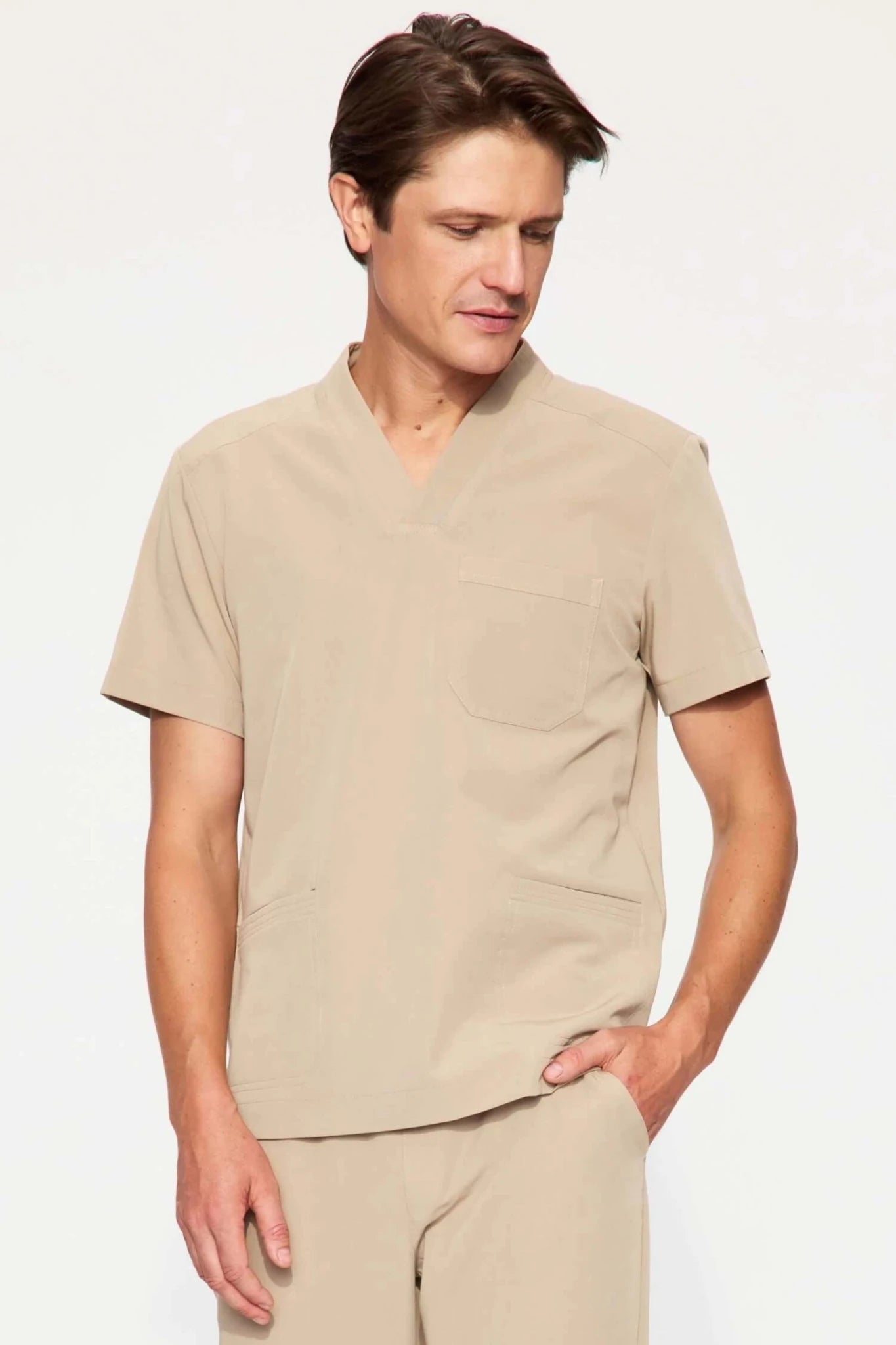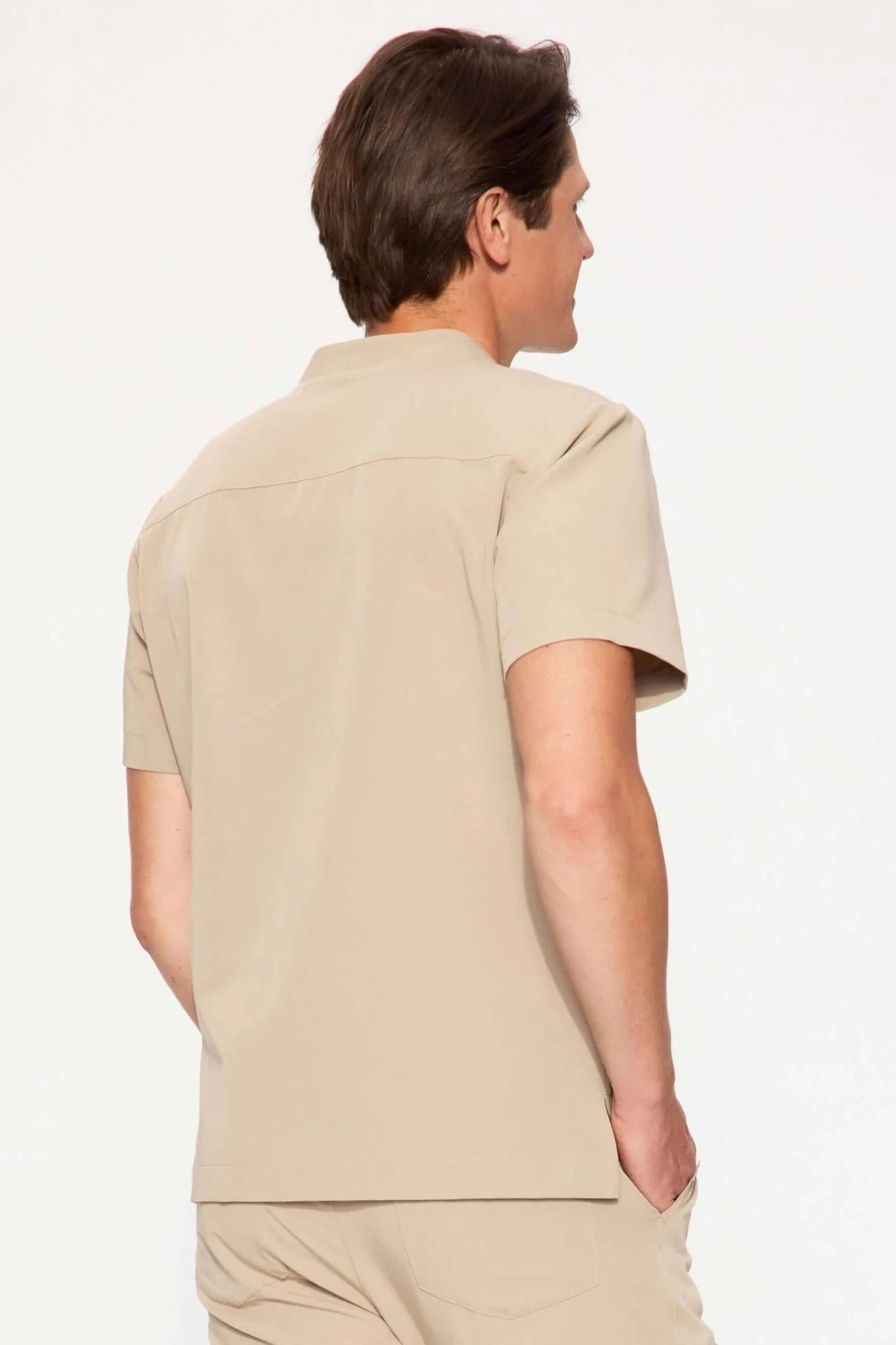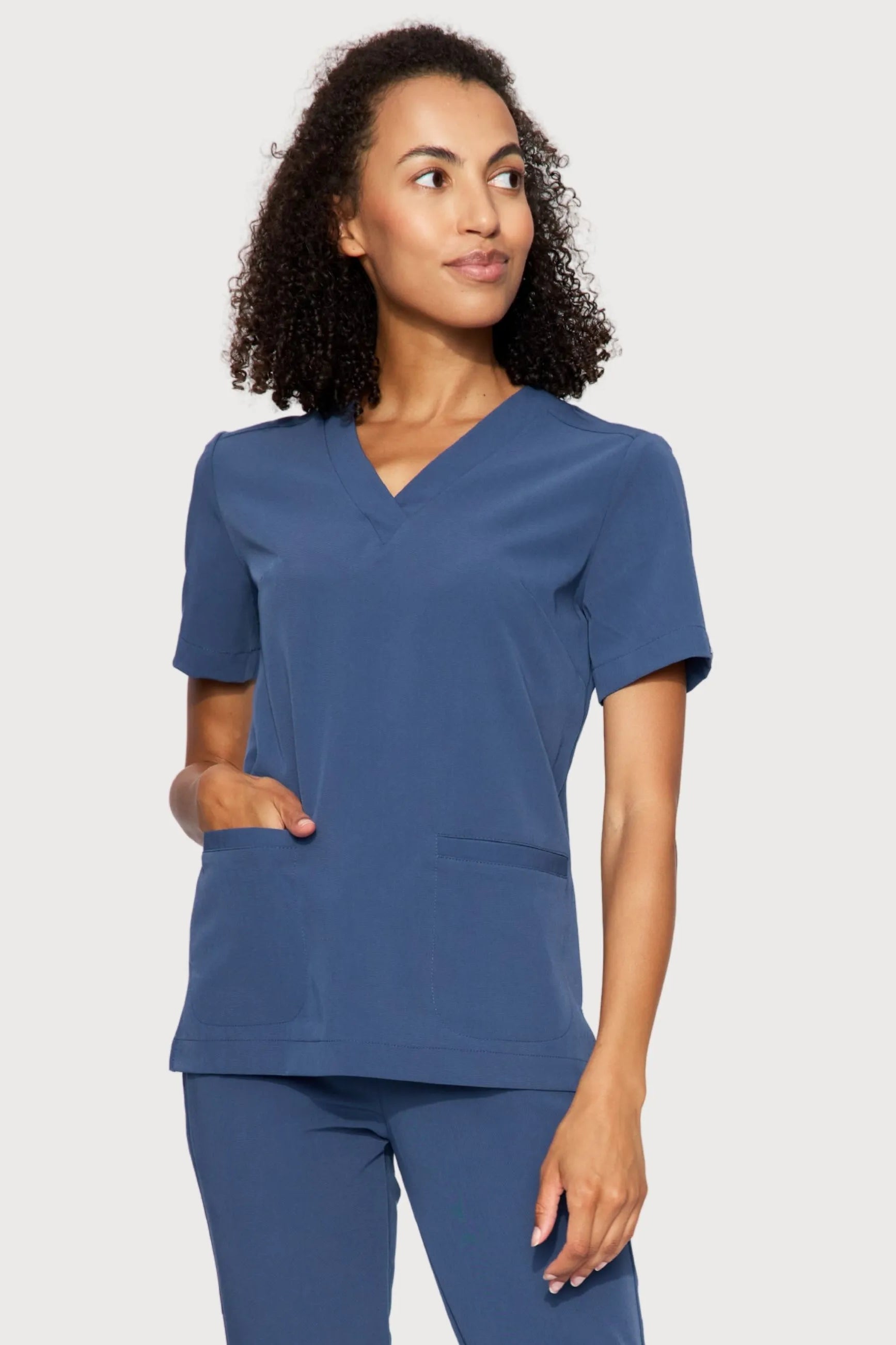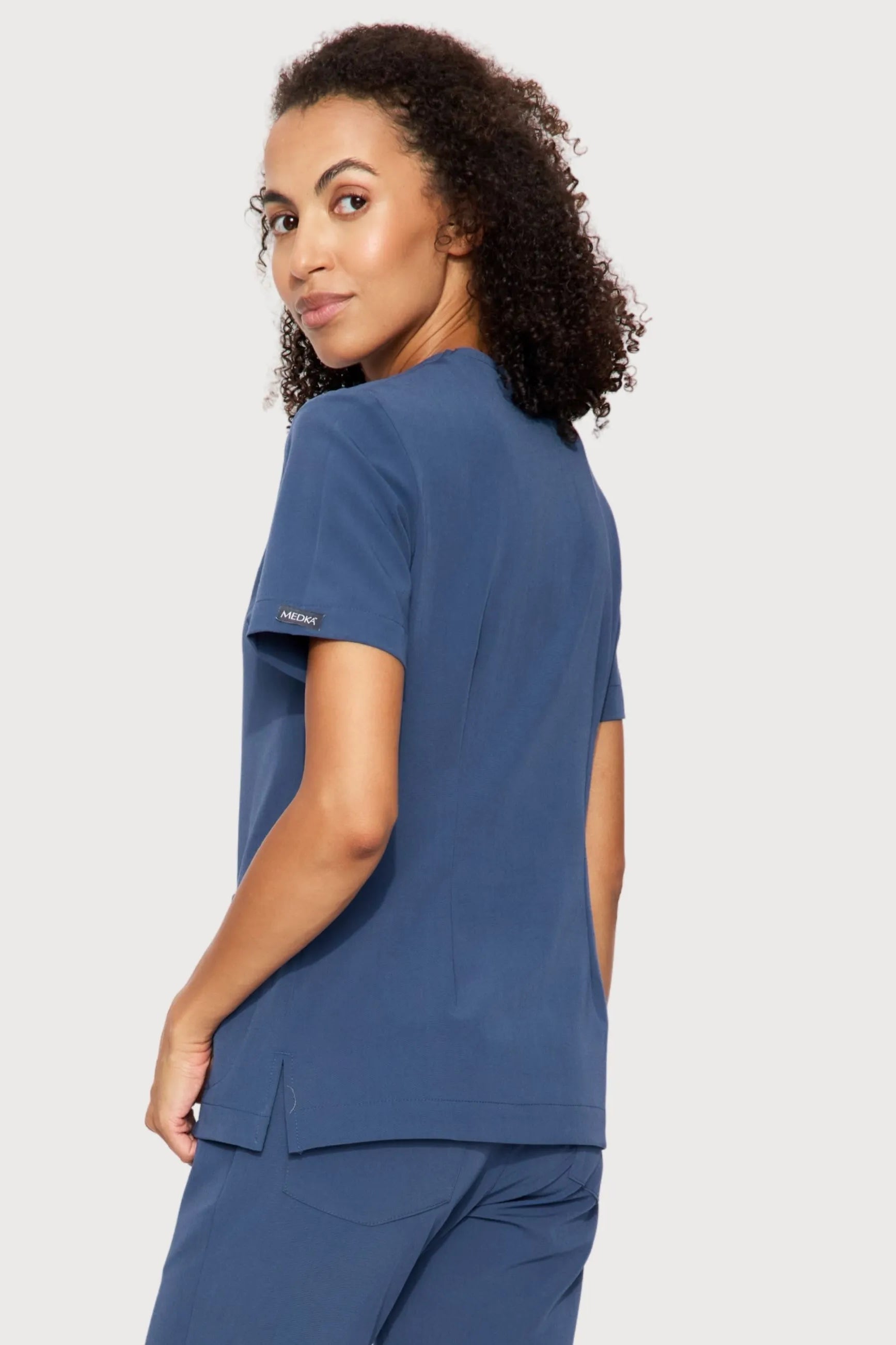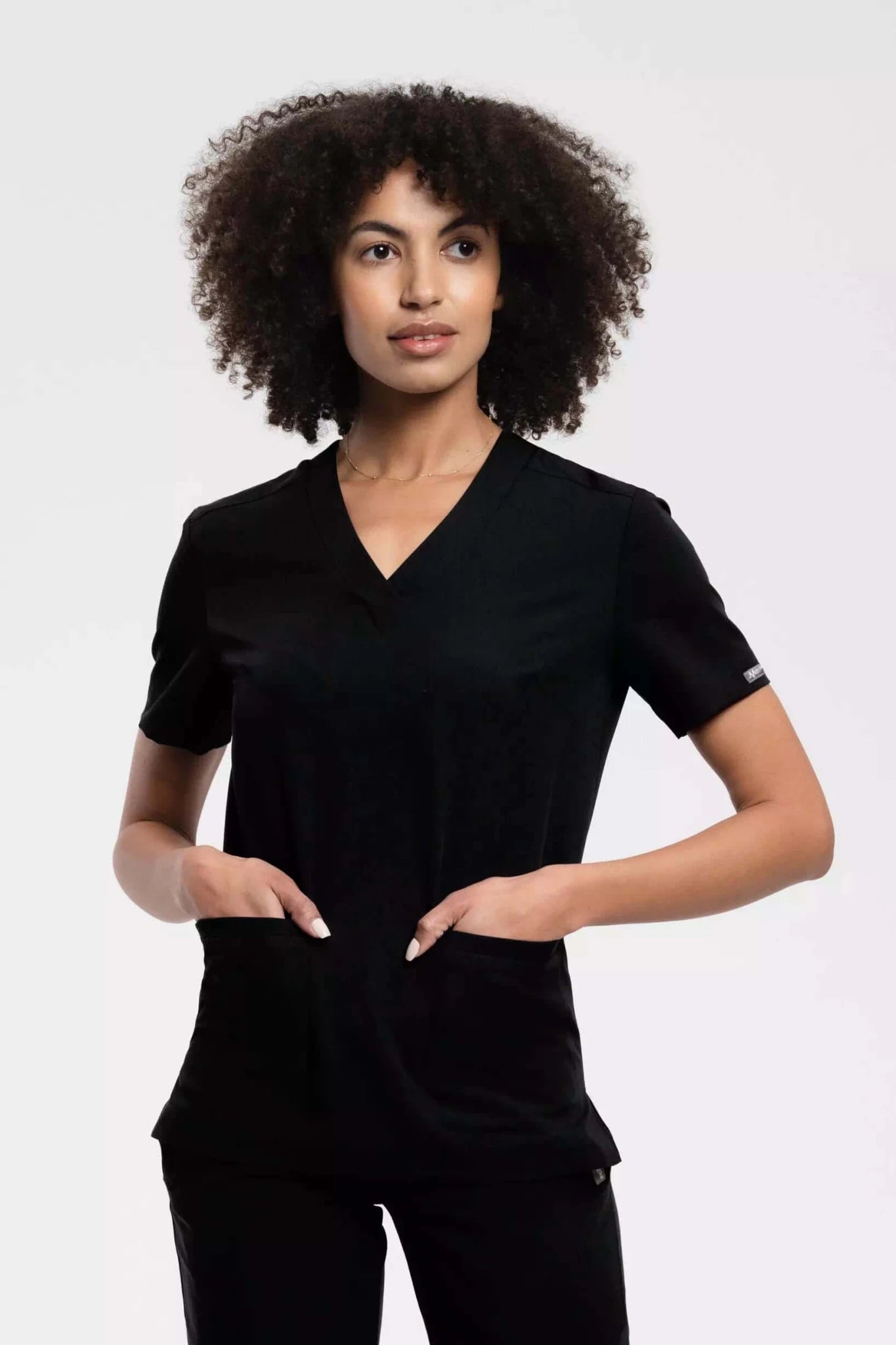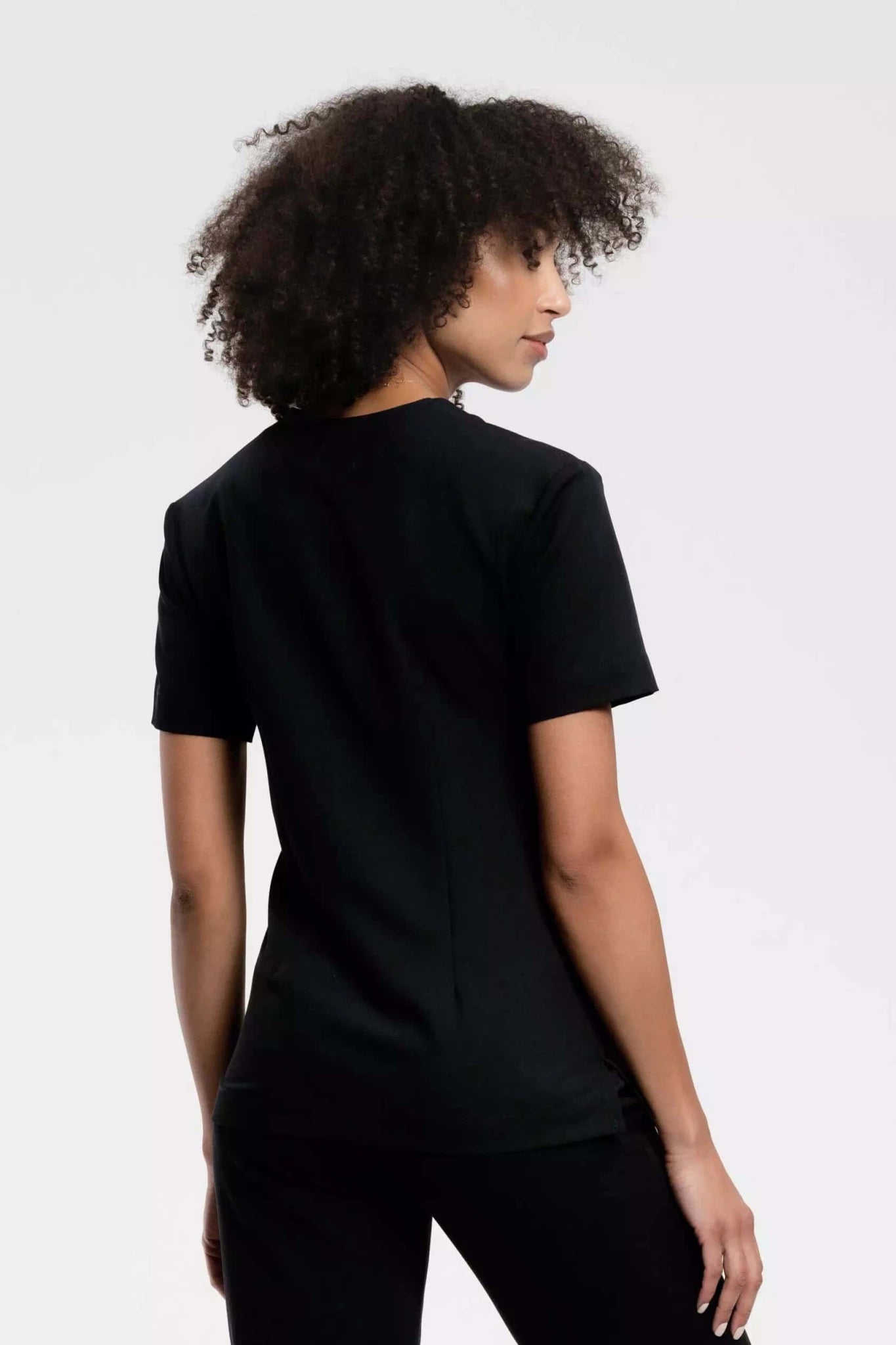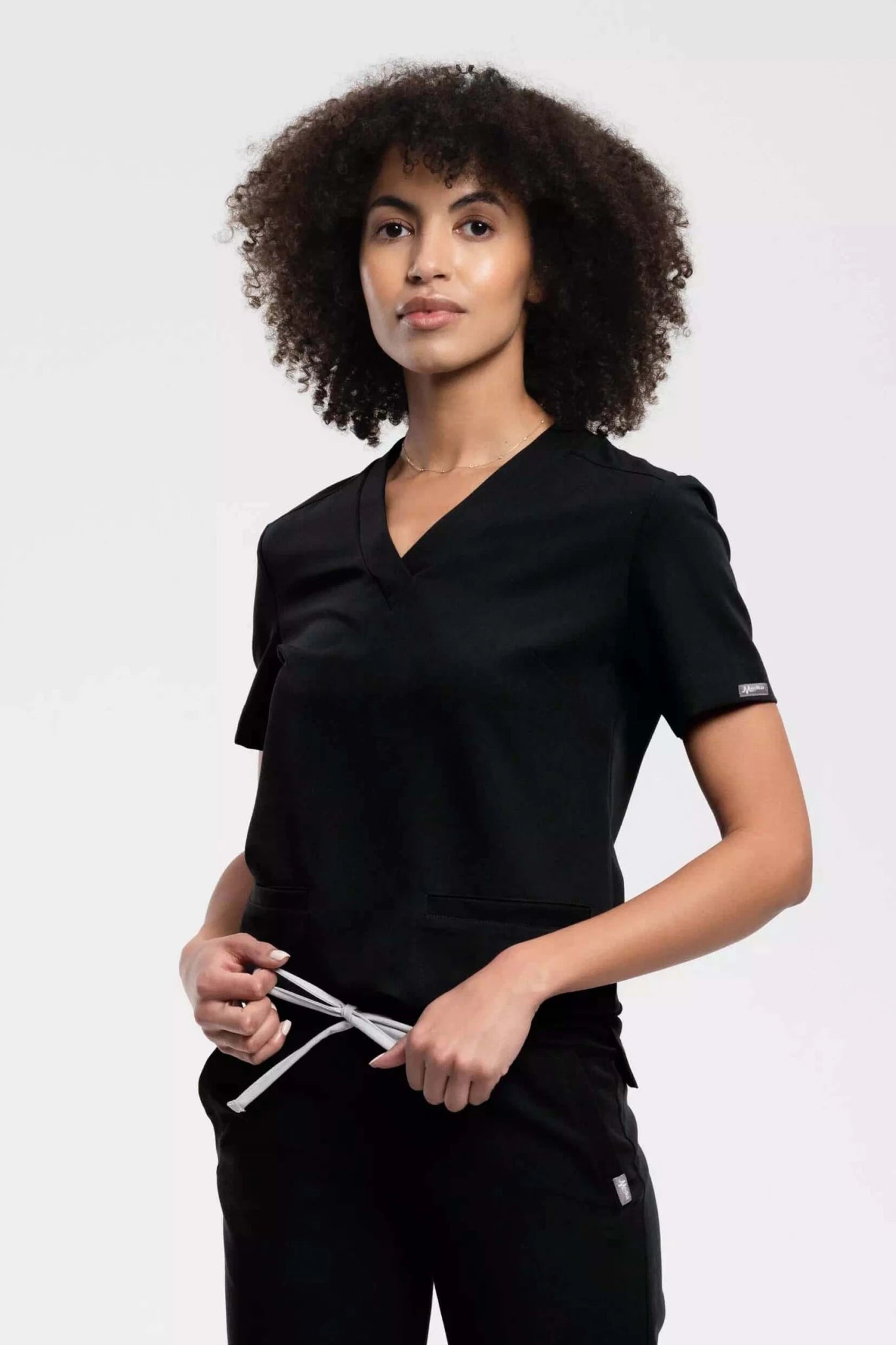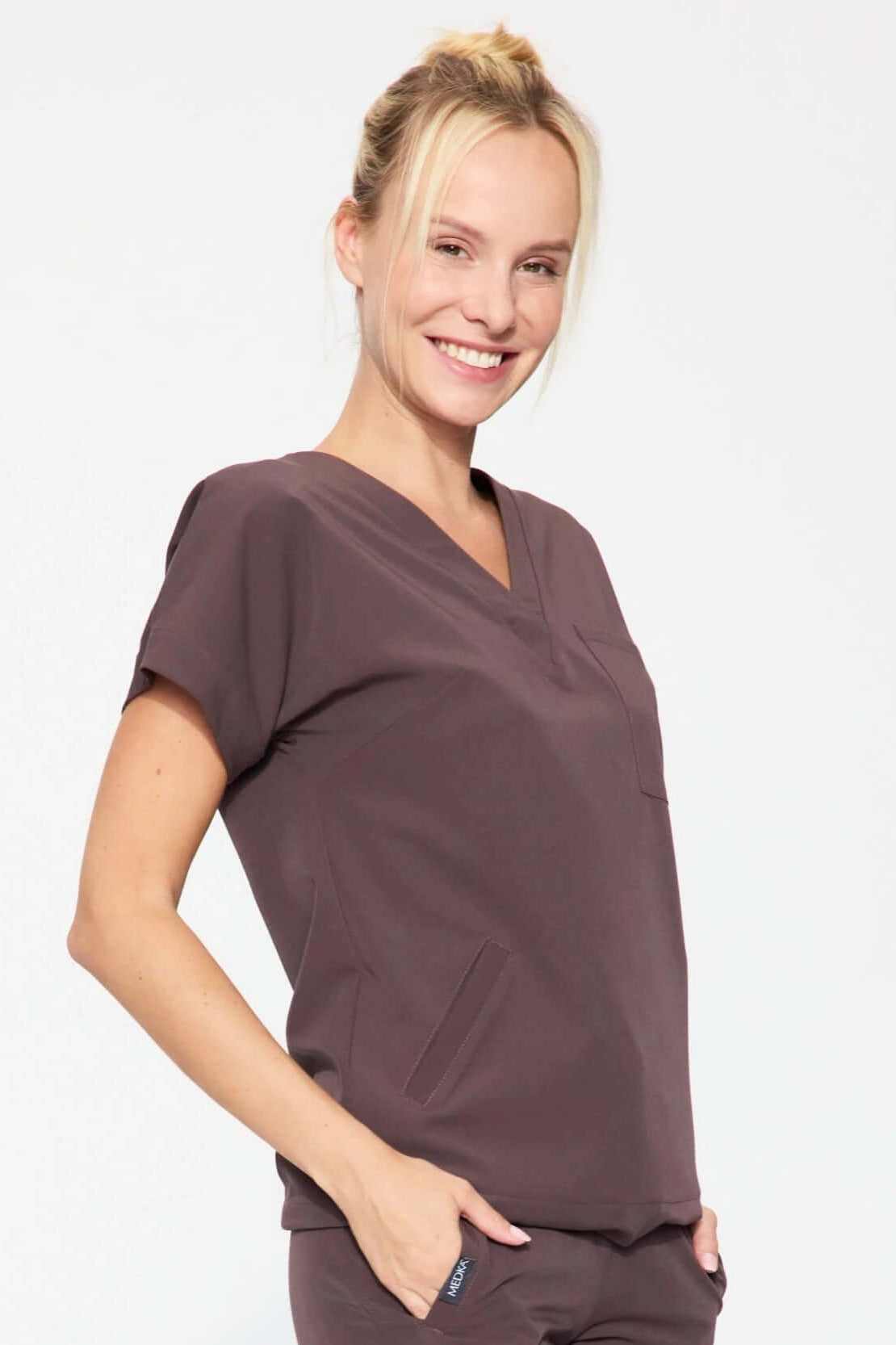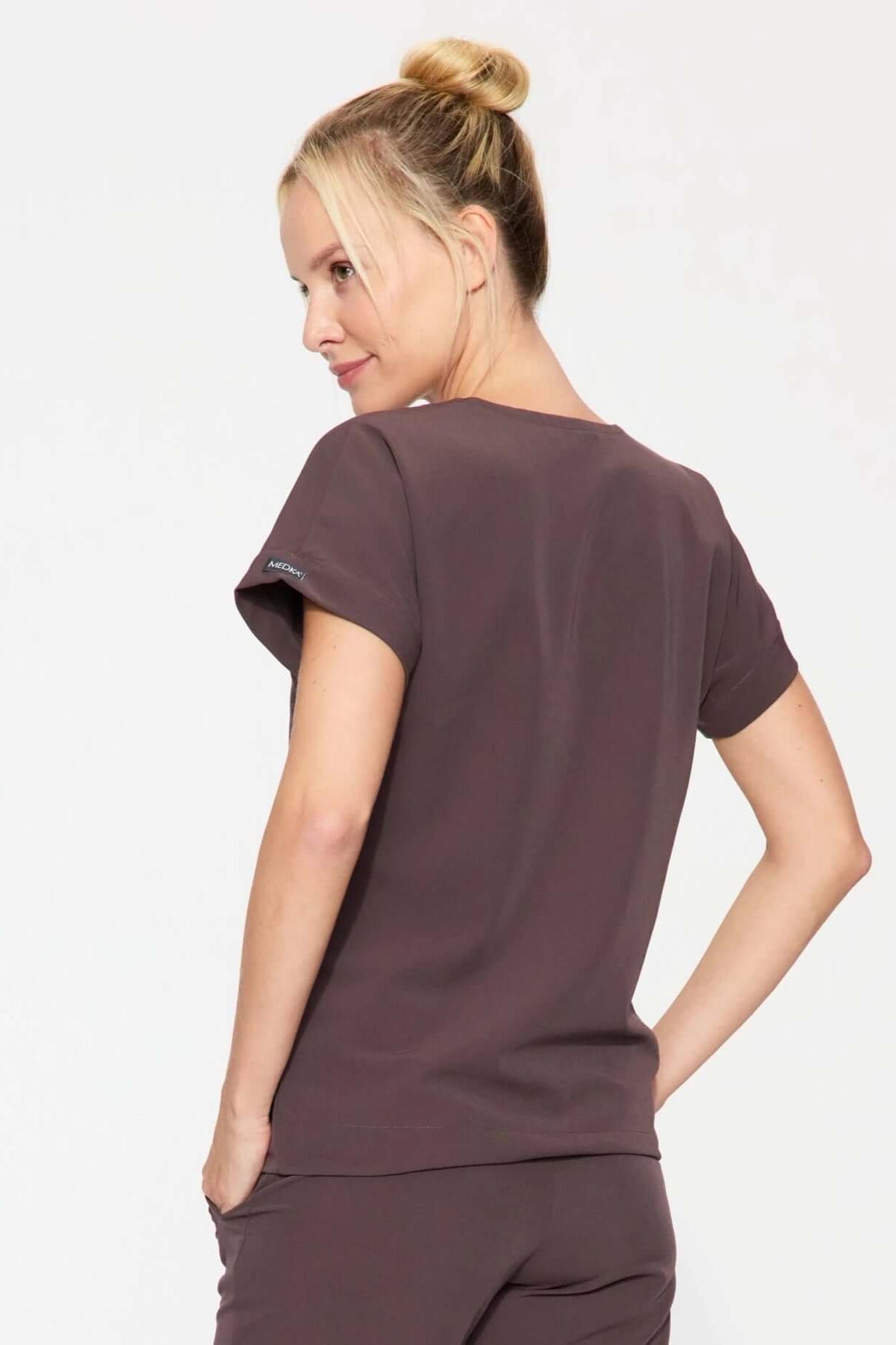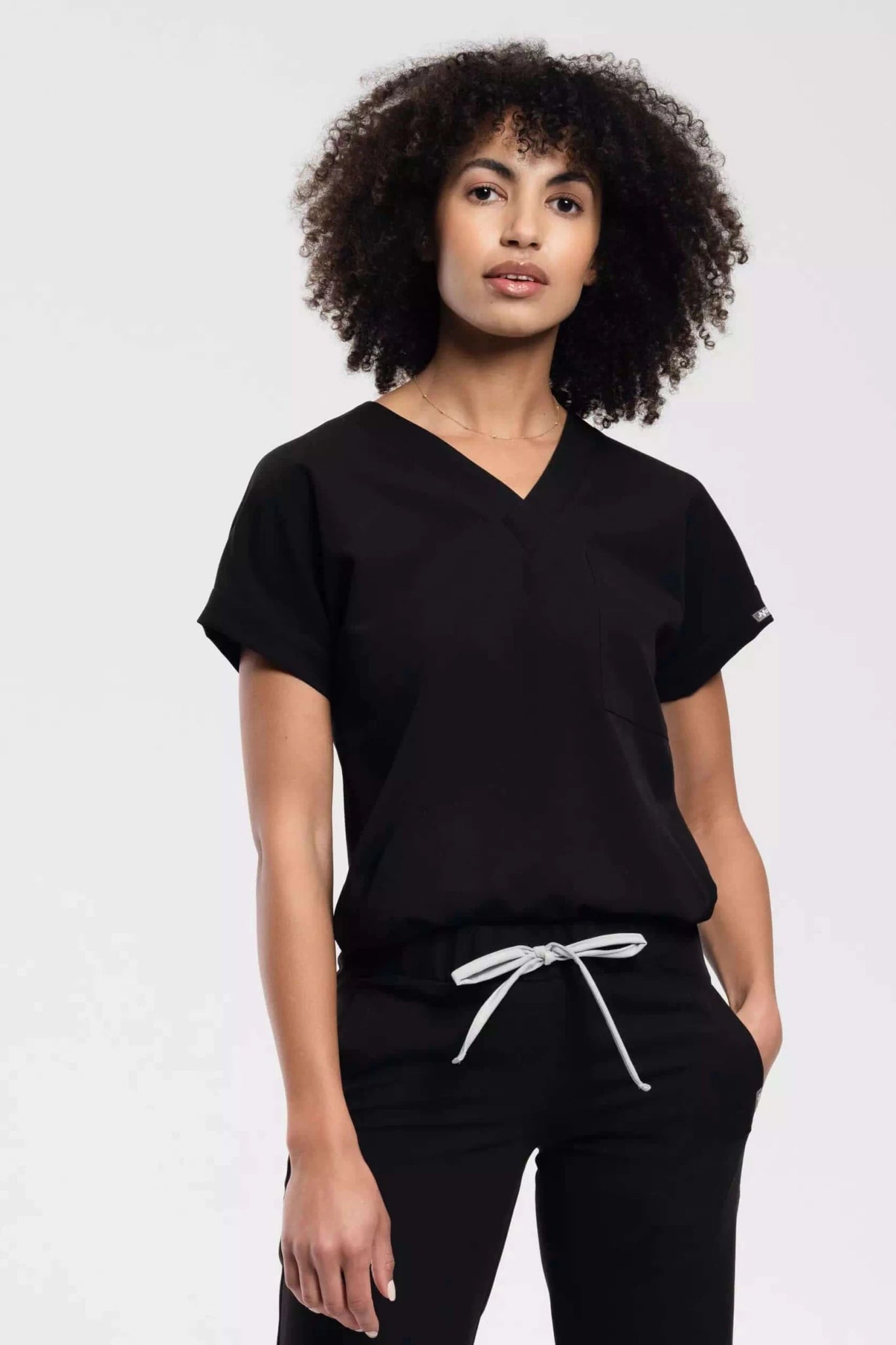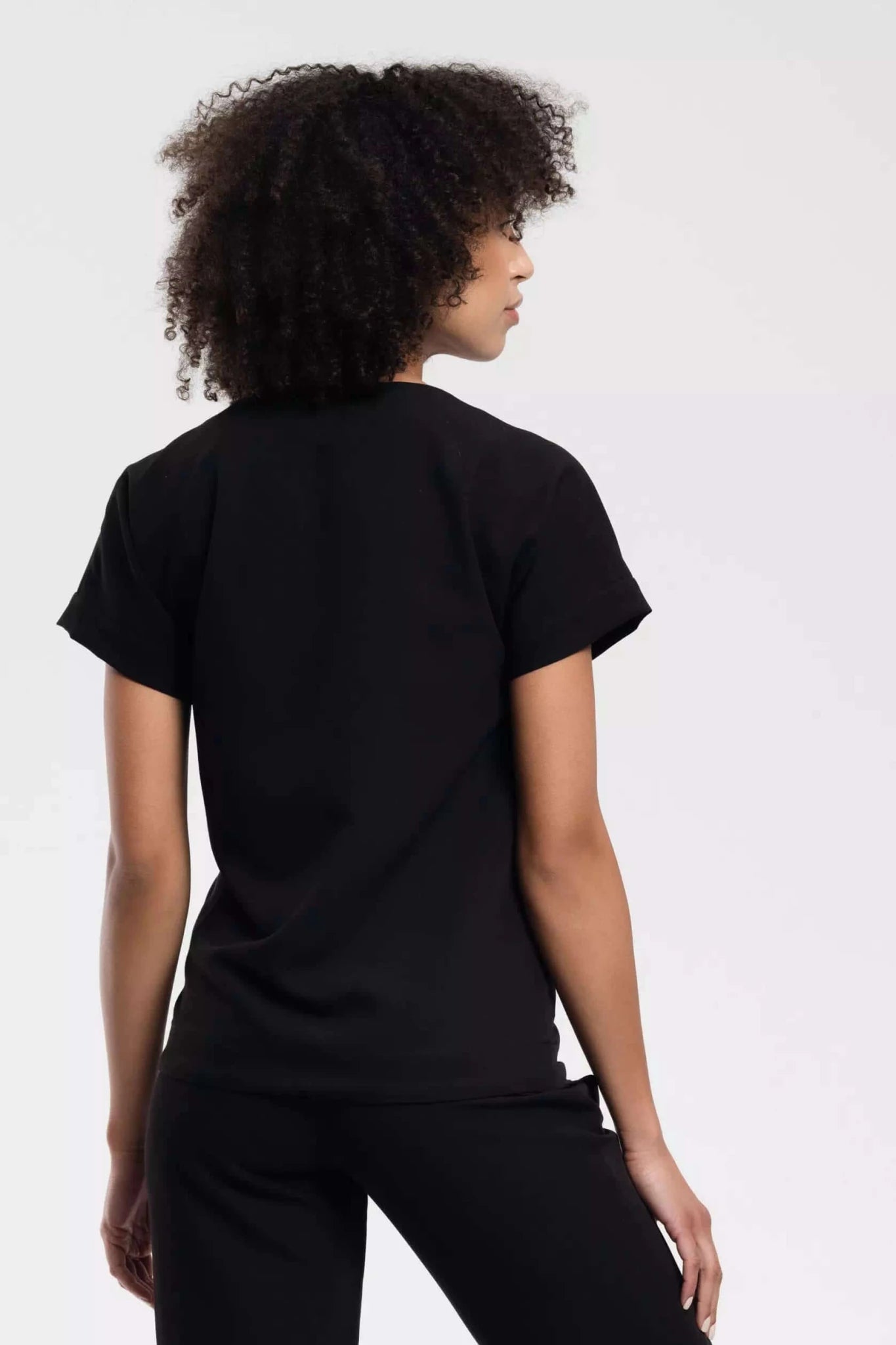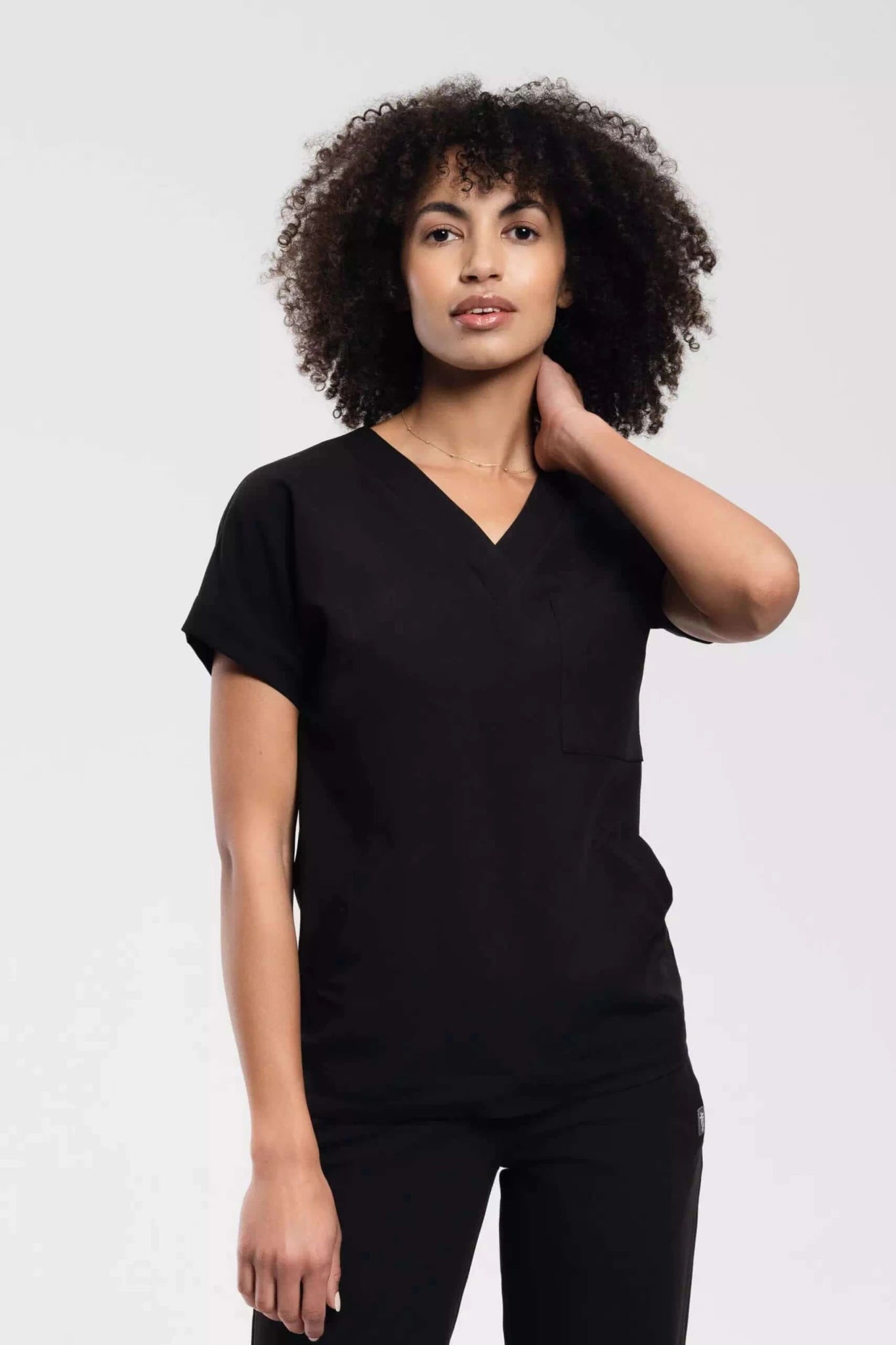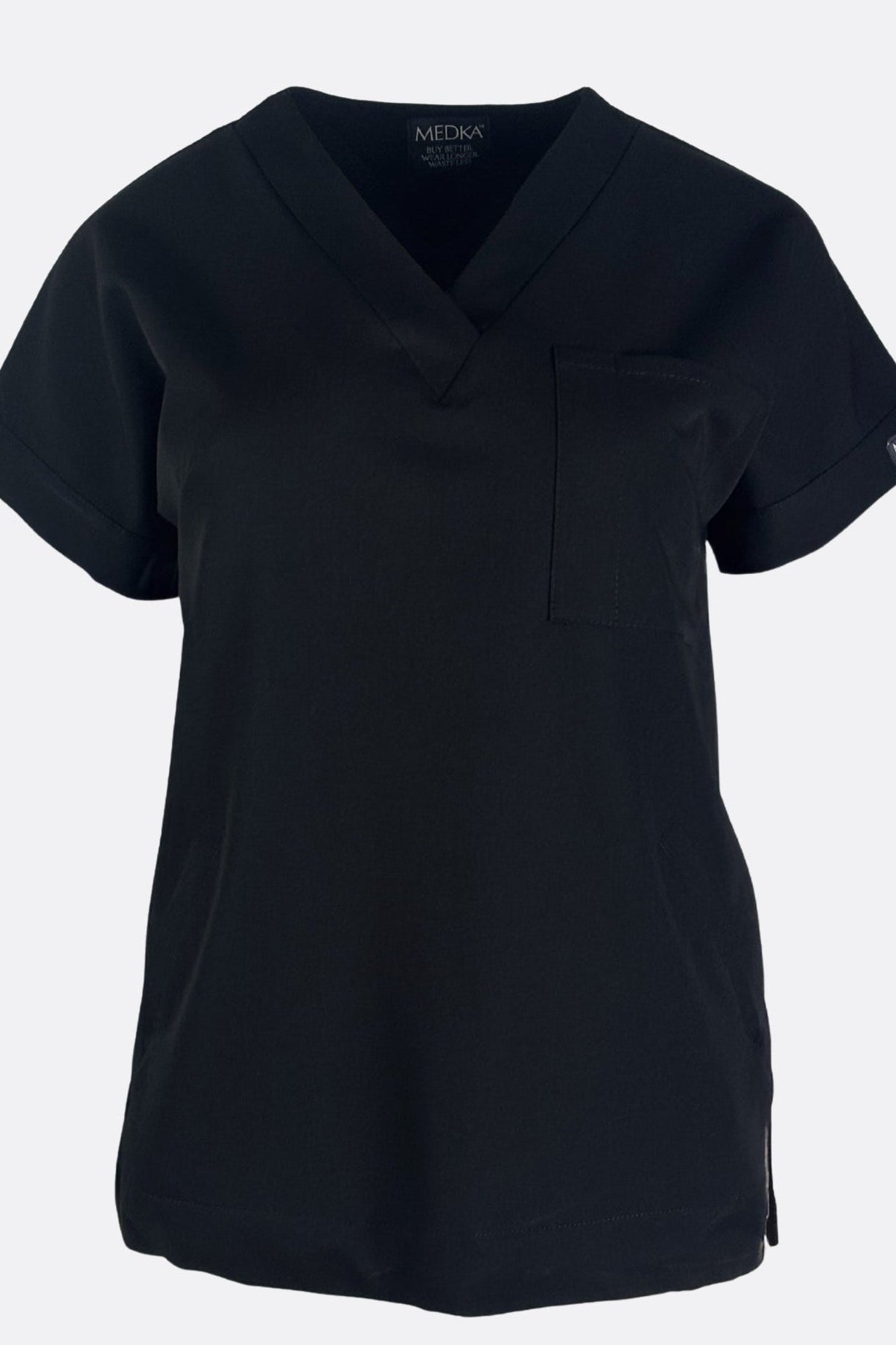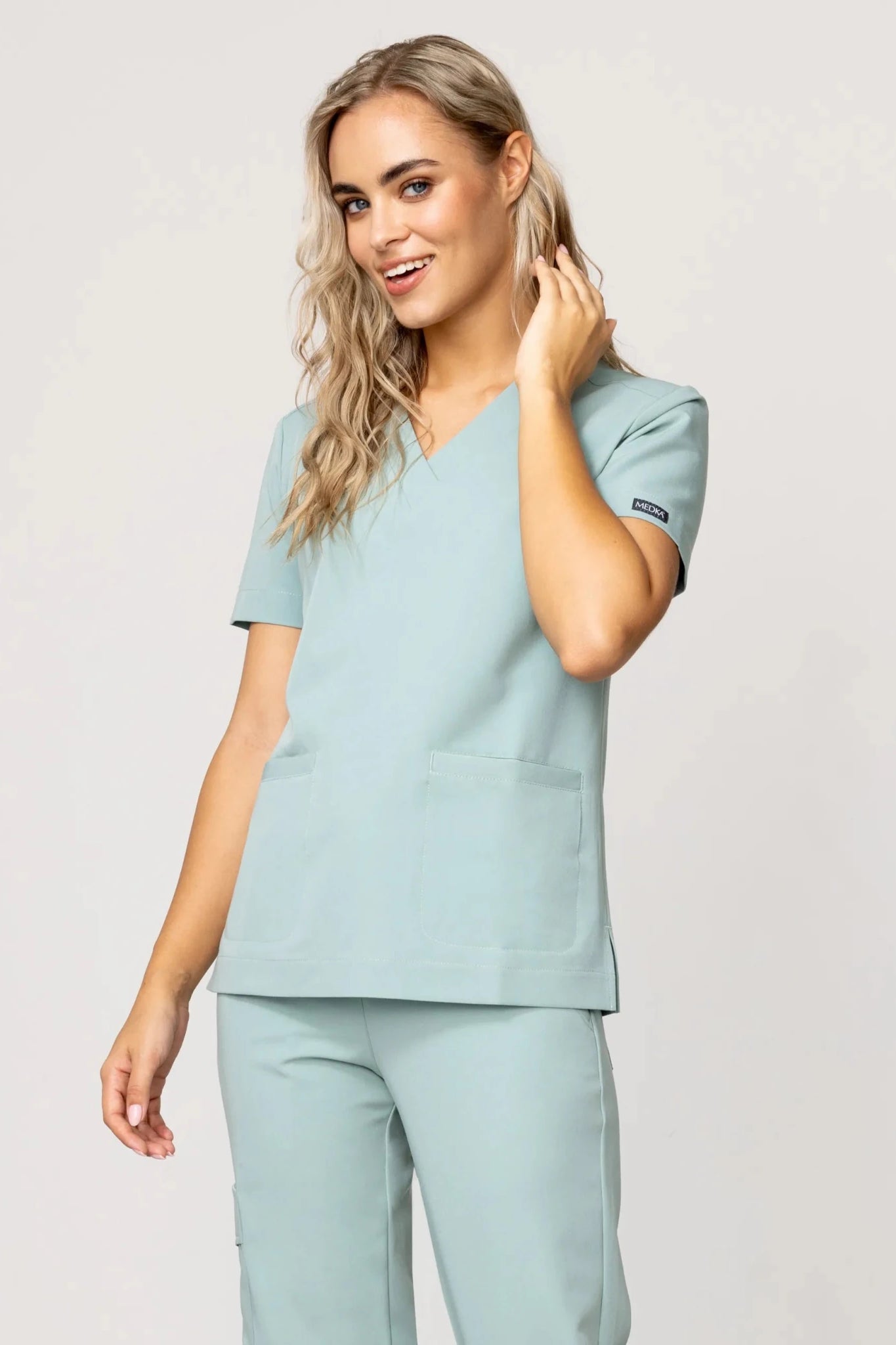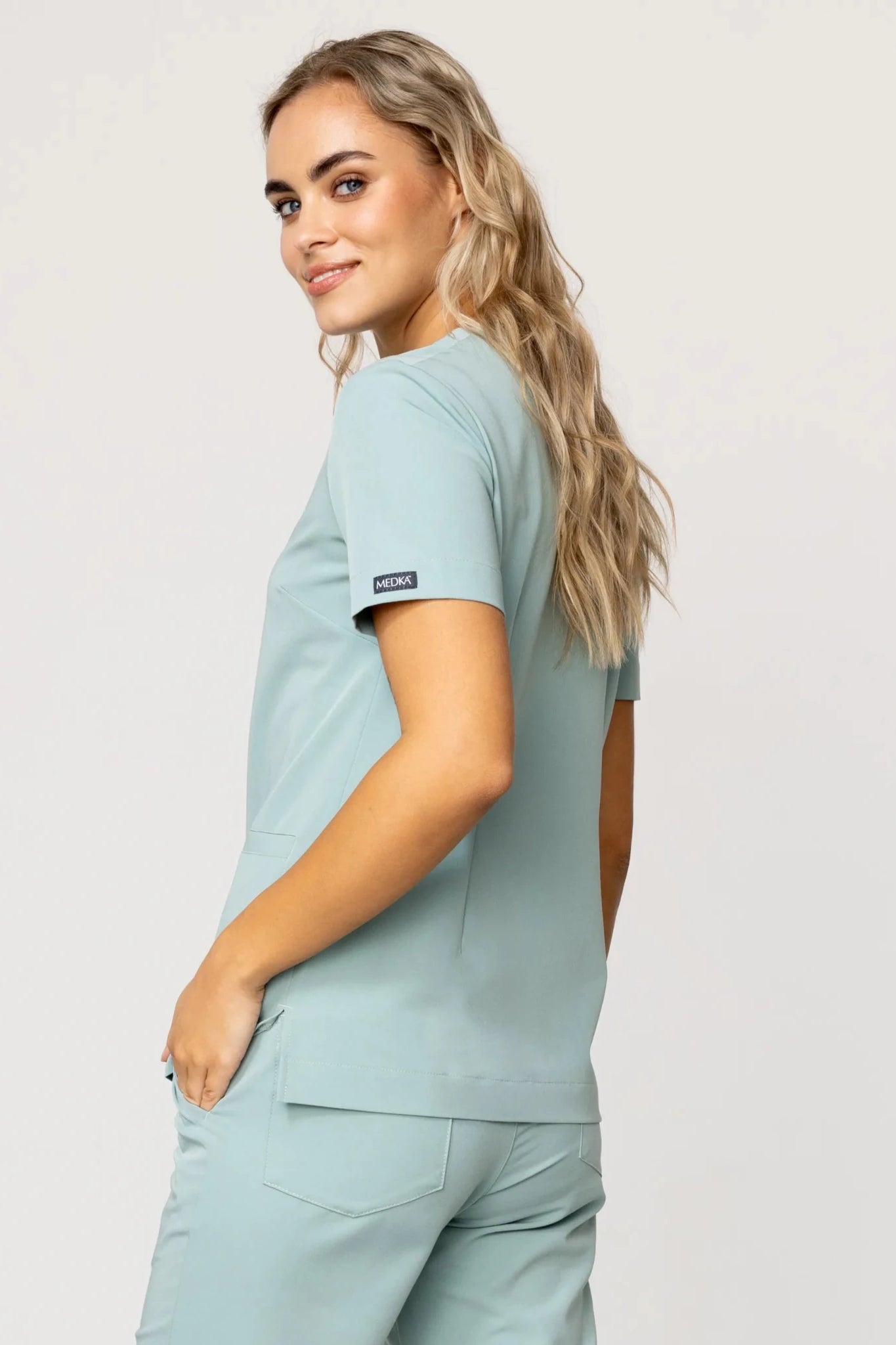





At first glance, the choice seems obvious: the set is comfortable and fits itself, so why complicate things. The problem is that "set" and "separately" is not a choice between better and worse, but between two different ways of combining the same, well-made clothing, and which one wins depends on your figure, workplace and how you want to complement your wardrobe. A person with a well-proportioned figure, working in a place where no one imposes a specific model, will almost always look better in a full set. Someone who wears size S on top and L on the bottom will wear a single-size suit for the entire shift. These are two different situations and two different answers. Therefore, instead of asking what is better "in general", it is worth breaking down the decision into factors that actually determine it, because only then will you see which side you are on.
What does the set actually provide and what is not visible in the product photo?
Let's start with what speaks in favor of the set, because it is the most common and for many people the right choice. The biggest advantage of the set is simple, although it is easy to downplay it: the sweatshirt and trousers are designed as one whole. The same color, the same material weight, the same way the fabric fits the figure. This sounds trivial until you compare two separately purchased items, which are theoretically "navy blue", but in fact one is a cool shade and the other a warmer one. When it comes to clothes that are worn every day and looked at closely, such a discrepancy is obvious.
Color consistency isn't the only benefit. The set saves you a daily decision. In the morning you don't have to wonder whether this sweatshirt goes with these pants, because everything works fine. In facilities where a uniform image of the team is important, the set makes it easier to maintain order: the patient recognizes the staff faster, and the office or ward looks better organized. There is also the issue of price: a ready-made set is often slightly cheaper than the same two elements purchased separately.
However, it is worth highlighting one thing right away so as not to narrow your thinking. The set and separate parts are not a choice between a better or worse uniform, but two ways of combining the same, well-made elements. When the fabric is breathable, flexible and resistant to frequent washing, and the finish is refined, either way gives you clothes that will last for years. That's why the rest of this guide assumes that we're talking about clothing from a decent, specialized source, and focuses on what really makes the difference when it comes to choosing: fit, color, and how you'll replenish your wardrobe over time.
When alone wins: the problem of body proportions
Here we come to the strongest argument for buying parts separately, and it is an argument that applies to surprisingly many people. Few people have a perfectly proportioned figure according to the average size tables on which sets are designed. The set assumes that if you wear M on top, you also wear M on bottom. Bodies are rarely so polite.
Let's take a specific example. A person with a pear-shaped body type, with a narrower top and wider hips, when buying a set in a size fitted to the hips, gets a sweatshirt that hangs like a bag. When you buy a fitted set, you get pants that you can't button up. There is no good solution here within one size. The solution is to buy a sweatshirt in one size and pants in another, which is exactly what a set does not offer by definition. It works analogously with the "inverted triangle" type, with wide shoulders and narrow hips, where the proportions are reversed. In both cases, the separate selection of top and bottom is not a whim, but a condition for the clothes to be suitable for long hours of work.
It is worth remembering that when it comes to trousers, it is usually the hip circumference that is important, not the waist circumference, because the waist is easy to adjust and you cannot cheat on too narrow hips. This is where thoughtful design solutions come in handy. Additional adjustment at the waist ensures that the pants do not fall or tighten, even if your weight changes slightly from time to time, and the adjustable drawstring on the sweatshirt allows you to adjust the top to your figure without any alterations at the seamstress's. It is worth mentioning the leg length separately: some models are available in two lengths, which allows you to match your height instead of shortening the pants. These details really alleviate the problem of proportions. However, if your top and bottom are more than one size apart, no adjustment will make up for it and purchasing them separately simply becomes more reasonable. This is the moment when "separately" ceases to be an alternative to the set, and becomes the only version that makes sense.
Why doesn't your everyday size work?
Whether you go for the complete set or the separate pieces, there's a trap that spoils both options equally, and it's worth defusing it before you order anything. We instinctively reach for the size we wear every day. In medical clothing, this is often a mistake.
A uniform has a different structure and purpose than regular clothes. He must provide more freedom, because a medic's job involves constantly bending over the patient, reaching up, crouching, and walking quickly around the ward. A sweatshirt assessed only while standing in the mirror can be embarrassing when it stretches on your back when you bend over or rides up over your pants when you walk. Therefore, it is worth trying on medical clothing while moving, not only while standing, and choosing it taking into account how it will behave with a full range of movements.
In addition, there is the nature of the fabric. Elastane-blend fabrics, found in good medical clothing, stretch and drape over the body, so they give you natural room for freedom and help you stay closer to your size. The composition also affects how the clothes behave after washing, so when purchasing a given model for the first time, it is worth looking at the size chart of a specific manufacturer and relying on it, not just the habit from your private wardrobe. And this is also a subtle argument for purchasing them separately: when you buy the parts separately, you choose the size for a specific top and bottom style, which do not have to fit identically.
Color, dress code and color code of the facility
Before you even decide on the set versus separately, there is a boundary condition that can narrow down your choice or even make it for you: the rules in your workplace. Skipping this step is the most common way to disappointment and unnecessary expense.
Many hospitals and clinics use color coding, in which the color of the uniform identifies the employee's role. Historically, white was assigned to doctors, navy blue or blue to nurses, and green to operating room staff, and green and blue in the operating theater are not a coincidence, because as complementary colors to red blood, they reduce the fatigue of the surgeon's eyes during long procedures. Nowadays, the rigid rules have become much looser, especially in public institutions and the beauty industry, where the entire palette dominates today, from earthy beiges to pastels. But they didn't come loose everywhere. In private clinics, the opposite happens: there is a strict dress code, sometimes imposing specific models from one manufacturer to build brand recognition.
The practical conclusion is that when choosing a color, you start by checking the facility's regulations, not your own preferences. If your unit requires a specific shade of navy blue, it determines the framework within which you move. And here comes the subtle advantage of the set: when the facility imposes one color for the entire team, the set ensures that the top and bottom are exactly the same shade, which can be more difficult to match when purchasing separately from different series. On the contrary, if you have complete freedom and want to combine contrasting colors or build your own style, for example in an aesthetic medicine office, a separate selection gives you freedom that a set does not naturally have.
Uniform as a system that you complete over the years
This thread changes the way you look at the entire purchase and when deciding whether to buy a set or separately, it is more important than a one-time difference in price. You don't buy good medical clothing once and for all, you build a wardrobe out of it, which you add to over the years. And if so, it is worth thinking in advance not about a single set, but about how this set will grow.
The starting point is a simple observation: individual elements of the uniform wear out at different rates. A sweatshirt, more susceptible to dirt and frequent washing, usually requires replacement sooner than trousers, which last longer. This is directly related to the question "set or separate". By purchasing separately from the beginning, you can replace individual parts when they need it, without renovating the whole thing, and you can easily match the pants with another sweatshirt in the same shade. When a given brand keeps its colors and styles on offer, choosing the same shade over time is not a problem, so this route gives you a lot of freedom.
On the other hand, the set can also be thought of as a system, rather than as a closed purchase. Just add additional pants to the sweatshirt or a second sweatshirt to the pants. Having two pairs of pants for one sweatshirt or two sweatshirts for one pants extends the period between washes and keeps your wardrobe looking fresher for longer. The choice between a set and separate parts comes down not to what is "better", but to whether you prefer to start with a ready-made, coherent set or immediately build your own, flexible base that you develop in your own way.
How much does it cost and how to make a decision?
To finish the numbers, the prices are approximate, as of August 2026, because they depend on the brand, fabric composition and style. In a specialized store with good medical clothing, a single sweatshirt is usually around PLN 190, trousers around PLN 210, and a ready-made set of sweatshirt and trousers is usually around PLN 390-460, depending on the model and style. When you buy parts separately, you add up their prices, so if both items fit you in the same size, the finished set may be more convenient and slightly more affordable. However, if you only need one part, for example you add pants to a sweatshirt you already have, purchasing them separately is a natural choice. For students and people shopping for the entire team, it is worth checking out discounts on group purchases and student discounts, which in many stores actually reduce the cost.
| Criterion | The set wins when | Separately wins when |
|---|---|---|
| Silhouette | Top and bottom fit the same size | The top and bottom are a size or more apart |
| Dress code | The facility imposes one color for the team | You are free to combine colors or styles |
| Replenishing your wardrobe | You want a ready-made, coherent set and a spare sweatshirt | You prefer to replace and add individual parts over the years |
| Everyday comfort | You appreciate that everything fits in advance in the morning | You don't mind choosing your own |
| Price | Both items fit the same size | You only need one item to get started |
So how do you decide? Start with the two questions that make the most difference. First, make sure your top and bottom fit the same size. If so, a set is a natural, comfortable and usually slightly more affordable choice. If they differ even by size, you should choose separate ones, because no set will make up for poorly fitting proportions, and with good clothing, the problem is not the quality, but the ability to hit both circumferences at the same time. Secondly, check the facility's regulations, because they may narrow the range or even impose a specific model, and it is better to know this before the purchase than after. Once you have these two issues out of the way, the rest is the more enjoyable part: choosing the color and style you like, and deciding whether you prefer to start with a ready-made set or immediately build your own, flexible base of sweatshirts and trousers, which you will develop in your own way. In both variants, if you choose refined clothing from a reliable source, you will get a uniform that will serve you for a long time.
Frequently asked questions
Below are short, specific answers to questions that most often arise when assembling medical clothing and which are worth answering before purchasing.
Is a medical set cheaper than buying a sweatshirt and pants separately?
Typically, yes, many stores price a set for less than the sum of the separate pieces, so if both in the same size fit you, the set can be a saving. However, it is worth comparing specific prices, because the difference is not a rule. And remember that with different sizes of the top and bottom, the apparent saving of the set disappears because you get a part that does not fit.
Can I buy a sweatshirt and pants in different sizes?
Yes, and for some silhouettes it is the best solution. If your top and bottom are different sizes, sizing separately allows you to hit both circumferences instead of compromising. It is best to measure the circumference of the chest, waist and hips, compare it with the manufacturer's size chart and select each part independently.
What size of medical clothing to choose: as in everyday clothes?
Not necessarily. Medical clothing it has a different cut and must provide more freedom of movement, so the size from your private wardrobe can be misleading. It is best to measure the circumference of the chest, waist and hips and compare it with the size chart of a specific brand. Solutions such as an adjustable sweatshirt cuff, pants waist adjustment or two leg lengths that allow you to fine-tune the fit without visiting a seamstress are also helpful.
Can I choose any color of medical clothing?
It depends on the facility. Some hospitals and clinics use color coding to identify the employee's role or impose a specific shade or model, especially in private clinics that care about their brand image. In other places there is complete freedom. Before purchasing, it is best to check the regulations or ask your supervisor to avoid unnecessary expenses.
If I buy the same part separately, will I get the same shade?
In the case of clothing from a stable offer, this is usually the case, because brands maintain their colors and styles for a long time, so choosing the same pants or sweatshirt after some time is not a problem. To be sure, it is worth remembering the color name and model. If the color is seasonal or on sale, it's wise to buy a spare immediately to ensure a consistent shade.
Can I buy another pair of trousers with one medical shirt?
Absolutely, and it's a practical solution, because pants and sweatshirts wear out at different rates. Having two pairs of pants with one sweatshirt or two sweatshirts with one pants extends the period between washes and allows you to replace individual, worn-out items. Buying separately from the beginning makes it easier to choose exactly the same model and shade later.